


Introduction
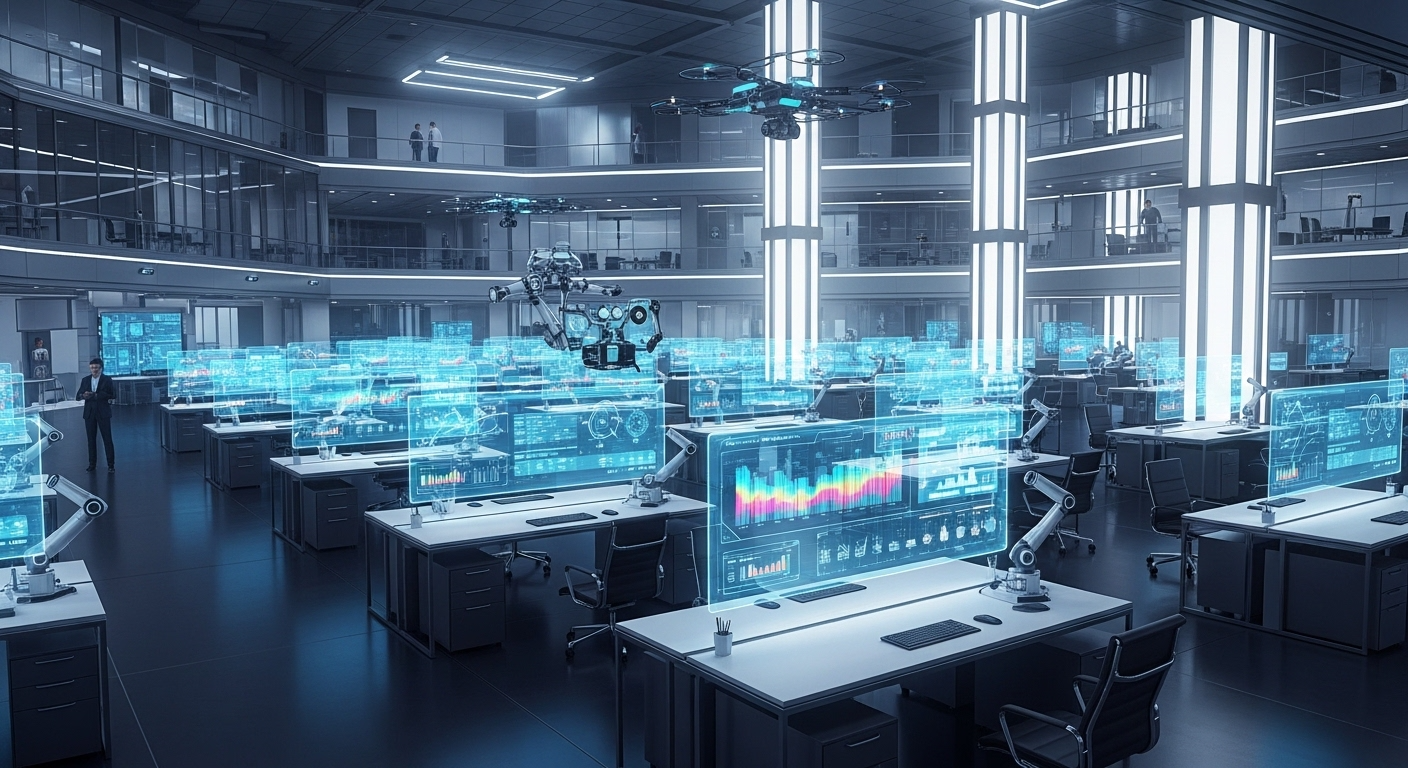
For years, Artificial Intelligence has been positioned as a powerful business tool helping teams analyze data, automate repetitive tasks, and improve decision-making. But in 2026, a major shift is taking place.
AI is no longer just supporting work. It is becoming the workforce itself.
Organizations are beginning to deploy AI systems that can execute tasks, manage workflows, make decisions, and continuously optimize operations much like human employees. This evolution marks the rise of the digital workforce, where AI acts not as a tool, but as an active participant in enterprise operations.
From Tools to Teammates: The Evolution of AI
The transformation of AI into a digital workforce can be understood in three phases:
Phase 1: AI as a Tool
- Data analysis
- Reporting and dashboards
- Task automation
- Human-driven execution
Phase 2: AI as an Assistant
- Recommendations and insights
- Chatbots and virtual assistants
- Decision support systems
Phase 3: AI as a Workforce (Current Shift)
- Autonomous task execution
- Workflow orchestration
- Real-time decision-making
- Continuous learning and improvement
In this phase, AI systems are no longer passive they are active contributors to business outcomes.
What Is a Digital Workforce?
A digital workforce refers to a network of AI-powered agents and systems that:
- Perform tasks traditionally handled by humans
- Operate across multiple business functions
- Collaborate with other systems and teams
- Execute decisions in real time
- Continuously learn and improve performance
Unlike traditional automation, which focuses on specific tasks, a digital workforce operates at a process and system level.
Core Capabilities of an AI Digital Workforce
1. Autonomous Execution
AI systems can complete tasks end-to-end without human intervention.
2. Cross-Functional Coordination
They operate across departments such as finance, HR, supply chain, and IT.
3. Real-Time Decision-Making
AI responds instantly to changes in data and business conditions.
4. Continuous Learning
Performance improves over time through feedback and data analysis.
5. Scalability
AI systems can scale operations without increasing headcount.
How AI Digital Workers Operate Inside Enterprises
AI digital workers function similarly to human employees, but with greater speed and consistency.
Step 1: Understanding Objectives
AI interprets business goals such as “optimize inventory” or “process invoices.”
Step 2: Breaking Down Tasks
It divides goals into actionable steps across systems.
Step 3: Executing Workflows
AI interacts with enterprise platforms to complete tasks.
Step 4: Making Decisions
It evaluates multiple options and selects the best course of action.
Step 5: Learning and Improving
Results are analyzed to refine future performance.
Real-World Use Cases of Digital Workforce AI
1. Finance Operations
AI systems:
- Process invoices
- Reconcile accounts
- Detect anomalies
- Manage financial reporting
2. Human Resources
AI handles:
- Employee onboarding
- Payroll processing
- Performance tracking
- Policy compliance
3. Supply Chain Management
AI digital workers:
- Monitor inventory levels
- Predict demand
- Optimize logistics routes
- Respond to disruptions
4. Customer Support
AI systems:
- Resolve queries
- Manage tickets
- Personalize interactions
- Complete service workflows
5. IT and Infrastructure
AI:
- Monitors system health
- Fixes issues automatically
- Optimizes performance
- Enhances cybersecurity
Business Impact: Why This Shift Matters
1. Increased Productivity
AI digital workers operate 24/7 without fatigue.
2. Faster Execution
Tasks are completed in seconds instead of hours.
3. Reduced Costs
Organizations can scale operations without proportional increases in labor costs.
4. Improved Accuracy
AI reduces errors caused by manual processes.
5. Enhanced Agility
Businesses can respond to changes in real time.
Human + AI: The Hybrid Workforce Model
The rise of a digital workforce does not eliminate human roles—it transforms them.
Humans Focus On:
- Strategy and planning
- Creativity and innovation
- Decision oversight
- Ethical governance
AI Handles:
- Execution
- Optimization
- Data-driven decisions
- Routine workflows
This creates a hybrid workforce, where humans and AI collaborate to achieve better outcomes.
Challenges of Building a Digital Workforce
While the benefits are significant, organizations must address several challenges:
Integration Complexity
Connecting AI systems with existing infrastructure can be difficult.
Data Quality
AI performance depends on accurate and reliable data.
Governance and Control
Clear guidelines are needed to manage AI autonomy.
Security Risks
Autonomous systems introduce new vulnerabilities.
Workforce Adaptation
Employees must adapt to new roles and responsibilities.
A Practical Roadmap to Building a Digital Workforce
Step 1: Identify High-Impact Areas
Focus on processes with high volume and complexity.
Step 2: Strengthen Data Infrastructure
Ensure real-time, high-quality data availability.
Step 3: Start with Assisted AI
Introduce AI as a support system before enabling autonomy.
Step 4: Transition to Autonomous Systems
Allow AI to execute tasks with defined controls.
Step 5: Scale Across the Organization
Expand AI capabilities across departments.
The Future: AI as the Core of Enterprise Operations
The concept of a digital workforce is only the beginning.
In the near future:
- AI systems will collaborate across entire enterprises
- Workflows will be fully autonomous
- Organizations will operate as self-optimizing systems
This will redefine how businesses are structured, managed, and scaled.
Strategic Insight
Most organizations today are still:
- Using AI as a tool
- Running isolated automation projects
- Experimenting with limited use cases
However, leading companies are:
- Building AI-powered workforce layers
- Deploying autonomous systems in core operations
- Redesigning their operating models around AI
The gap between these two approaches is growing rapidly.
Conclusion
AI is no longer just a tool that supports work it is becoming the workforce itself.
This transformation represents a fundamental shift in how businesses operate. By embracing AI as a digital workforce, organizations can unlock:
- Greater efficiency
- Faster execution
- Continuous optimization
- Scalable growth
The future belongs to enterprises that move beyond tools and build AI-driven workforces capable of running operations autonomously.
For more Contact US
Similar Posts

Industry Insights & Trends
Bank for International Settlements (BIS): Why Businesses Shouldn’t Ignore AI Bubble Risks
Artificial Intelligence (AI) has become one of the most transformative technologies of the decade. From automating customer support…
Industry Insights & Trends
Usage-Based Artificial Intelligence Pricing Is Becoming a Critical Business Concern in 2026
Artificial Intelligence is no longer an emerging technology reserved for innovation labs and tech giants. It has become…