


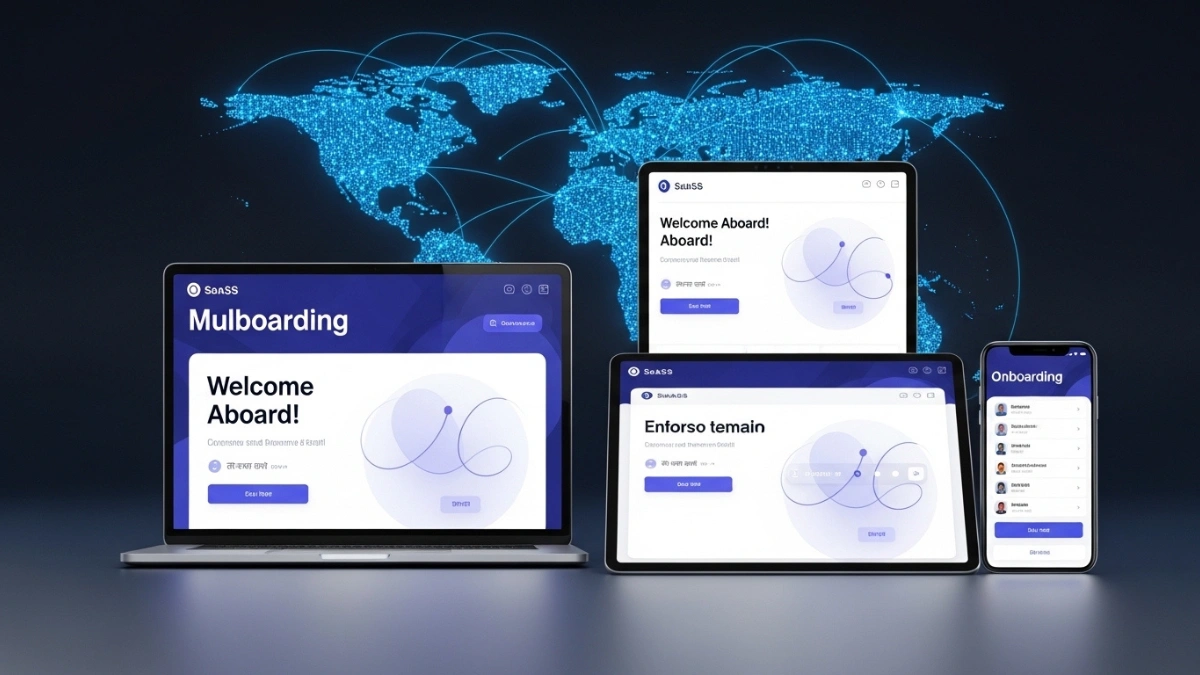
In a hyper-connected digital economy, products are no longer confined by geography. A SaaS platform built in one country can gain users across continents within days of launch. However, while distribution has become global, user understanding has not. This is where localization and multilingual feature walkthroughs emerge as a powerful differentiator.
Feature walkthroughs are often the first meaningful interaction users have with your product. They guide, educate, and shape perception. If that experience fails to resonate linguistically or culturally, users disengage no matter how powerful your product is.
This in-depth blog explores every dimension of localization in feature walkthroughs, from fundamentals to advanced strategies, real-world challenges, and future innovations.
Understanding Localization in Feature Walkthroughs
Localization is the process of adapting a product experience to meet the expectations of users in different regions. In the context of feature walkthroughs, this includes:
- Translating text into multiple languages
- Adjusting tone and communication style
- Adapting visuals and UI elements
- Aligning with cultural norms and expectations
Multilingual walkthroughs ensure that users can interact with your product in their preferred language but true localization goes much deeper than translation.
A literal translation may tell users what to do, but proper localization ensures they understand why it matters.
The Global Shift Driving Localization
1. Explosion of International Users
Digital adoption in regions like India, Southeast Asia, Africa, and Latin America is accelerating rapidly.
- Millions of new users are coming online every year
- Many are non-native English speakers
- Mobile-first audiences expect intuitive, localized experiences
Products that fail to localize risk losing massive growth opportunities.
2. Rise of Product-Led Growth (PLG)
In a PLG model, users explore products independently without sales assistance.
- Walkthroughs act as “digital sales reps”
- Clear communication becomes critical
- Language barriers directly impact revenue
3. Increasing Competition in SaaS
Global markets are crowded. Users have multiple alternatives.
- A localized experience can be the deciding factor
- Even small UX improvements can boost retention
- Companies are investing heavily in onboarding optimization
Deep Dive: Core Components of Multilingual Walkthrough
1. Language Translation vs. Localization
It’s important to distinguish between the two:
- Translation: Converting text from one language to another
- Localization: Adapting the entire experience for cultural relevance
Example:
A “Get Started” button might be translated correctly but still feel unnatural if the tone doesn’t match local expectations.
2. Tone and Communication Style
Different regions respond to different tones:
- Western markets may prefer casual and friendly language
- Asian markets may favor formal and respectful communication
- Some cultures value brevity, while others prefer detailed guidance
3. Layout and Design Flexibility
Language impacts UI design significantly:
- German and Russian text tends to be longer
- Chinese and Japanese characters are more compact
- Arabic and Hebrew require right-to-left (RTL) layouts
Without flexible UI, walkthroughs can break visually.
4. Symbolism and Visual Meaning
Icons, colors, and imagery vary across cultures:
- Colors can carry different emotional meanings
- Hand gestures or symbols may be misinterpreted
- Visual storytelling must align with local context
5. Behavioral Context
User behavior differs by region:
- Some users prefer guided onboarding
- Others prefer self-exploration
- Digital literacy levels vary widely
Walkthrough complexity should adapt accordingly.
Business Impact of Localized Walkthroughs
1. Higher Activation Rates
Users who understand onboarding are more likely to complete it.
- Faster time-to-value
- Reduced drop-offs
- Increased feature adoption
2. Increased Revenue Opportunities
Localized walkthroughs can highlight:
- Premium features
- Upsell opportunities
- Region-specific offerings
3. Reduced Support Costs
Clear onboarding reduces dependency on customer support.
- Fewer tickets
- Faster issue resolution
- Improved user satisfaction
4. Stronger Brand Trust
Users trust products that feel native.
- Builds emotional connection
- Enhances credibility
- Encourages long-term loyalty
Implementation Strategy: Step-by-Step
1. Identify Target Markets
Start with data:
- Where are your users coming from?
- Which regions show growth potential?
- What languages are most in demand?
2. Prioritize Languages Strategically
Instead of translating into dozens of languages, focus on impact:
- English (global default)
- Spanish (widely spoken)
- Hindi (rapidly growing digital audience)
- Mandarin (large user base)
3. Use Scalable Localization Tools
Adopt tools that allow:
- Easy content updates
- Real-time translation sync
- Collaboration with translators
4. Design for Flexibility
Ensure your UI supports:
- Variable text lengths
- Multiple scripts
- RTL layouts
5. Test with Native Speakers
Localization quality depends on real-world validation:
- Conduct usability testing
- Gather feedback from local users
- Iterate based on insights
6. Maintain and Update Continuously
Localization is not a one-time effort:
- Update walkthroughs with new features
- Keep translations consistent
- Monitor performance metrics
Common Challenges and How to Overcome Them
1. Inconsistent Translations
Different translators may produce inconsistent results.
Solution: Use centralized glossaries and style guides
2. Increased Development Complexity
Supporting multiple languages adds technical overhead.
Solution: Use modular and scalable UI frameworks
3. Cultural Misalignment
Even well-translated content can feel “off.”
Solution: Involve local experts or native reviewers
4. Performance Issues
Heavy localization scripts can slow down apps.
Solution: Optimize assets and use lightweight frameworks
Real-World Use Cases
Mobile Apps
Apps targeting global audiences use:
- Language-based onboarding flows
- Region-specific notifications
- Simplified UI for emerging markets
SaaS Platforms
Enterprise tools implement:
- Role-based multilingual walkthroughs
- Personalized onboarding journeys
- Integration with analytics tools
E-commerce Platforms
Online stores leverage localization for:
- Currency and language adaptation
- Region-specific promotions
- Local payment method guidance
Future of Localization in Walkthroughs
AI-Driven Personalization
Artificial intelligence will enable:
- Real-time translation
- Behavior-based walkthrough customization
- Smart recommendations
Voice-Guided Walkthroughs
Users may soon interact with products via:
- Voice assistants
- Audio-based onboarding
- Multilingual voice support
Context-Aware Systems
Future walkthroughs will adapt based on:
- User skill level
- Device type
- Geographic behavior patterns
Hyper-Localized Experiences
Beyond language, products will adapt to:
- Regional regulations
- Local workflows
- Market-specific features
Conclusion
Localization and multilingual feature walkthroughs are redefining how products connect with users globally. In a world where user attention is limited and competition is fierce, clarity and cultural relevance are essential.
A well-localized walkthrough does more than guide it builds trust, reduces friction, and accelerates adoption. It transforms a product from being “globally available” to truly “globally usable.”
Companies that invest in localization today are not just improving UX they are building the foundation for scalable, sustainable global growth.
For more Contact Us
Similar Posts

Product & Tools
The Role of DevOps Automation in Faster Software Delivery
In today’s rapidly evolving digital landscape, businesses must continuously improve their software development processes to remain competitive. Customers…

Product & Tools
The Powerful Rise of AI-Powered Tools Over Traditional Software in 2026
The global software industry is experiencing one of the most important technological transformations in decades. Businesses that once…