


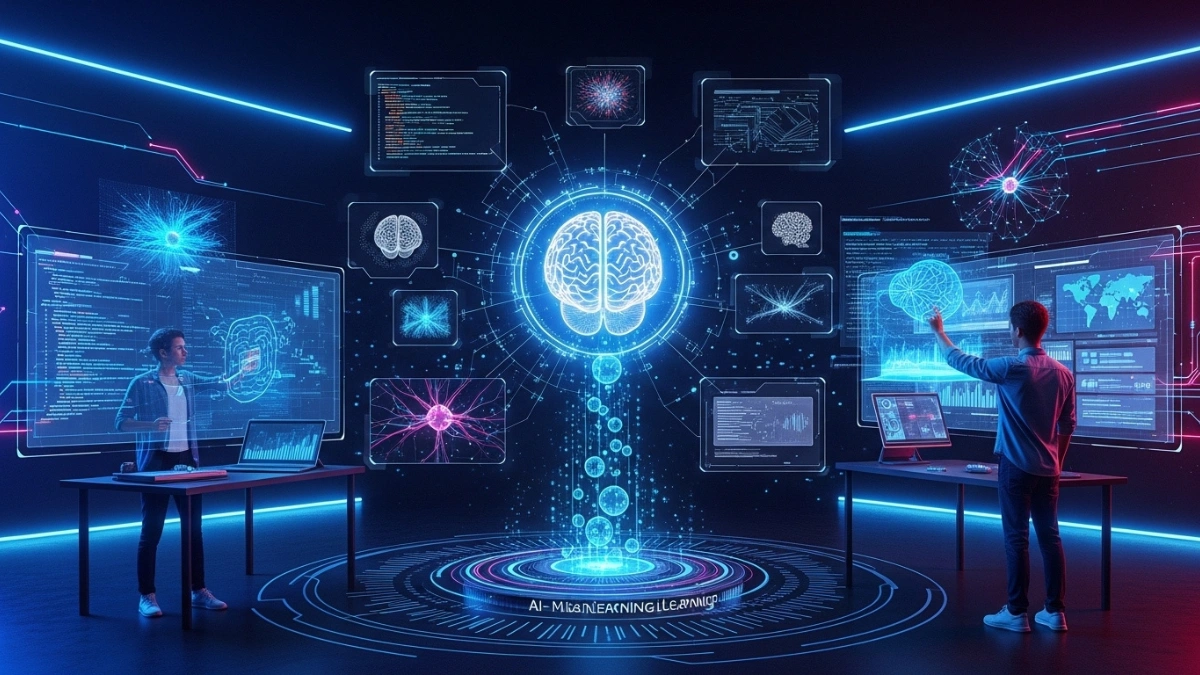
The world of machine learning is evolving at an unprecedented pace, and at the center of this transformation lies the integration of Generative AI. What was once a discipline rooted heavily in mathematics, coding, and model optimization is now becoming more intuitive, accessible, and application-driven. Generative AI is not merely an addition to machine learning it is reshaping its very foundation.
From intelligent chat systems to AI-generated images, code, and simulations, generative models are influencing how developers, businesses, and even beginners interact with machine learning systems. As a result, the concept of “machine learning basics” is being redefined to include new skills, tools, and ways of thinking.
1. Evolution from Traditional Machine Learning to Generative AI
Traditional machine learning focused on predictive tasks classification, regression, clustering where models learned patterns from historical data to make decisions. This required a structured workflow involving data collection, cleaning, feature engineering, model selection, and evaluation.
With Generative AI, the paradigm has shifted. Models are now capable of creating new content rather than just analyzing existing data.
This transformation brings several changes:
- The emphasis is moving from building models from scratch to leveraging powerful pre-trained systems
- Developers can generate outputs such as text, images, and even code instantly
- The learning process is becoming more interactive and exploratory
Generative AI is essentially turning machine learning from a purely analytical tool into a creative and collaborative system.
2. Generative AI as a Co-Pilot for Learning and Development
One of the most impactful developments is the role of Generative AI as an intelligent assistant or co-pilot.
For learners and professionals alike, it can:
- Explain complex ML concepts in simple language
- Generate working code examples in seconds
- Suggest improvements to models and workflows
- Debug errors and provide optimization strategies
This dramatically reduces the time required to understand and implement machine learning solutions. Instead of spending hours searching for answers, users can engage in real-time conversations with AI systems that guide them through problems step by step.
This co-pilot model is revolutionizing education and productivity in the ML space.
3. The Rise of Prompt Engineering as a Core Skill
As Generative AI becomes central to machine learning, a new skill has emerged: prompt engineering.
Prompt engineering involves crafting precise and effective inputs to guide AI systems toward desired outputs. It requires:
- Understanding how models interpret language
- Structuring queries for clarity and context
- Iterating prompts to refine results
This represents a shift from traditional programming logic to a more conversational and experimental approach. Developers are no longer just writing code they are designing interactions with intelligent systems.
In many cases, the quality of output depends more on the prompt than on the underlying algorithm, making this skill essential in modern ML workflows.
4. Accelerating Innovation Through Rapid Prototyping
Generative AI significantly reduces the time required to build and test machine learning applications.
Previously, creating a prototype involved:
- Gathering and labeling data
- Training multiple models
- Evaluating performance over time
Now, with generative tools:
- Prototypes can be built in hours instead of weeks
- Ideas can be tested quickly with minimal resources
- Iterations can happen almost instantly
This speed empowers startups, researchers, and enterprises to experiment more freely and bring innovations to market faster. It also encourages a culture of continuous improvement and creativity.
5. Synthetic Data Generation and Its Impact
Data has always been the backbone of machine learning, but acquiring high-quality data can be expensive, time-consuming, and sometimes impossible due to privacy concerns.
Generative AI addresses this challenge by enabling synthetic data generation.
Key benefits include:
- Creating realistic datasets for training models
- Augmenting limited or imbalanced data
- Simulating rare or extreme scenarios
For example, in healthcare, synthetic patient data can be generated without compromising privacy. In autonomous driving, simulations can create edge-case scenarios that are difficult to capture in real life.
This capability not only enhances model performance but also expands the scope of what machine learning can achieve.
6. Democratization of Machine Learning
One of the most significant outcomes of integrating Generative AI is the democratization of machine learning.
Previously, ML was largely limited to:
- Data scientists
- AI researchers
- Skilled programmers
Today, generative tools allow:
- Business professionals to analyze data using natural language
- Designers to create AI-driven visuals
- Educators to develop intelligent learning systems
This accessibility is breaking down barriers and enabling a wider audience to participate in AI innovation. Machine learning is no longer confined to technical experts it is becoming a universal tool.
7. Bridging the Gap Between Theory and Real-World Application
Traditional ML education often required a strong foundation in mathematics and statistics before practical implementation. While these fundamentals remain important, Generative AI is changing how they are introduced.
Learners can now:
- Build applications early in their journey
- Experiment with models without deep theoretical knowledge
- Understand concepts through hands-on experience
This practical-first approach makes learning more engaging and effective. It also helps learners see the real-world impact of machine learning, which increases motivation and retention.
8. Enhancing Existing Machine Learning Pipelines
Generative AI is not replacing traditional machine learning it is enhancing it.
In modern workflows:
- Generative models assist in data preprocessing and augmentation
- Predictive models handle structured analysis and decision-making
- AI systems collaborate to produce more accurate and intelligent outcomes
For instance, a generative model might create training data, while a traditional ML model uses that data for predictions. This synergy leads to more robust and efficient systems.
9. Ethical Challenges and Responsible AI Development
The integration of Generative AI introduces new ethical challenges that cannot be ignored.
Some of the key concerns include:
- Bias in generated content
- Spread of misinformation
- Lack of transparency in decision-making
- Potential misuse of AI-generated outputs
As a result, ethical considerations are becoming a core part of machine learning basics. Developers must ensure that AI systems are:
- Fair and unbiased
- Transparent and explainable
- Secure and privacy-conscious
Responsible AI development is no longer optional it is essential for building trust and ensuring long-term sustainability.
10. Impact Across Industries
The influence of Generative AI extends across multiple industries, transforming how machine learning is applied.
- Healthcare: AI-generated diagnostics, medical imaging, and drug discovery
- Finance: Fraud detection, risk analysis, and automated reporting
- Education: Personalized learning experiences and AI tutors
- Marketing: Content generation, customer insights, and campaign optimization
- Software Development: Automated coding, testing, and debugging
These applications highlight the versatility and power of integrating generative models into machine learning workflows.
11. The Changing Role of Machine Learning Engineers
As Generative AI becomes more prevalent, the role of ML engineers is evolving.
Instead of focusing solely on building models, they are now responsible for:
- Integrating AI systems into real-world applications
- Designing user interactions with generative models
- Monitoring and improving AI performance
- Ensuring ethical and responsible usage
This shift requires a broader skill set that combines technical expertise with creativity, problem-solving, and critical thinking.
12. Future Trends and Opportunities
Looking ahead, the integration of Generative AI will continue to shape the future of machine learning.
Emerging trends include:
- Multimodal AI systems that combine text, images, audio, and video
- More efficient and lightweight models for edge computing
- Increased collaboration between humans and AI
- Greater emphasis on personalization and user-centric design
These trends suggest that machine learning will become even more embedded in everyday life, influencing how we work, learn, and interact with technology.
Conclusion
The integration of Generative AI into machine learning marks a significant turning point in the evolution of artificial intelligence. It is transforming the way models are built, how data is used, and how users interact with technology.
By making machine learning more accessible, efficient, and creative, Generative AI is redefining what it means to understand the basics. It is shifting the focus from technical complexity to practical application, from isolated development to collaborative intelligence.
As this integration continues to evolve, those who embrace these changes will be better positioned to innovate and lead in an increasingly AI-driven world.
For more Contact Us
Similar Posts

AI
Cybersecurity Insurance Market Experiences Rapid Growth
As cyber threats continue to evolve in complexity and scale, businesses around the world are facing unprecedented digital…

AI
Sports Analytics Trends Powered by Machine Learning in 2026
The world of sports is undergoing one of the biggest technological transformations in history. For decades, sports success…