



The world of software development is changing faster than ever before. Over the last few decades, software engineers were mainly known for writing thousands of lines of code, fixing bugs, managing databases, and manually building applications from the ground up. Coding was considered the primary and most important skill in the technology industry.
Today, however, the software industry is undergoing a major transformation. Artificial Intelligence (AI), automation, cloud computing, DevOps, low-code platforms, and advanced development frameworks are reshaping the role of developers worldwide. Traditional coding roles are evolving from purely technical positions into more strategic, collaborative, and innovation-driven careers.
Modern developers are no longer expected to simply write code all day. Instead, they are becoming:
- AI collaborators
- Solution architects
- Cloud engineers
- Automation specialists
- Security-conscious developers
- Business-focused technologists
This transformation is not reducing the importance of software engineers it is redefining what it means to be a developer in the digital age.
The Evolution of Software Development
Software development has evolved significantly over the years.
Early Era of Software Development
In the early days of computing, software engineering involved:
- Writing machine-level instructions
- Working with limited hardware resources
- Manual debugging
- Long development cycles
- Minimal collaboration tools
Developers often spent weeks or months creating basic software applications because programming languages and tools were much less advanced.
The Rise of Modern Programming
As technology improved, higher-level programming languages such as:
- C
- Java
- Python
- JavaScript
- C++
- PHP
made software development faster and more accessible.
This era introduced:
- Web development
- Mobile applications
- Enterprise systems
- Agile development
- Open-source collaboration
Coding became the core skill of the digital economy.
The AI and Automation Era
Now, the software industry is entering another revolutionary phase.
Artificial Intelligence tools can:
- Generate code automatically
- Detect bugs
- Suggest improvements
- Create documentation
- Optimize algorithms
- Perform testing
- Build UI layouts
This is fundamentally changing how developers work.
Instead of spending hours writing repetitive code, developers can now focus on innovation, architecture, and strategic problem-solving.
Why Traditional Coding Roles Are Evolving
Several powerful technological and business trends are driving this transformation.
1. Artificial Intelligence Is Reshaping Development
AI-powered coding assistants such as:
- GitHub Copilot
- ChatGPT
- Cursor AI
- Amazon CodeWhisperer
- Claude AI
are rapidly becoming part of daily software development workflows.
These tools can:
- Generate functions
- Build APIs
- Write SQL queries
- Create frontend components
- Suggest optimizations
- Fix syntax issues
within seconds.
This dramatically increases developer productivity.
How AI Changes Developer Responsibilities
Because AI can automate repetitive coding tasks, developers are increasingly focusing on:
- Reviewing AI-generated code
- Improving software architecture
- Validating business logic
- Managing application scalability
- Ensuring cybersecurity compliance
Developers are shifting from “manual coders” to “technology supervisors.”
2. Software Delivery Expectations Are Faster Than Ever
Modern businesses expect software products to be developed rapidly.
Customers demand:
- Faster updates
- Continuous improvements
- Real-time bug fixes
- High-performance applications
- Seamless user experiences
Traditional development cycles that once took years are no longer acceptable.
Companies now rely on:
- Agile methodologies
- Continuous Integration (CI)
- Continuous Deployment (CD)
- DevOps pipelines
- Automated testing systems
As a result, developers must understand automation and workflow optimization not just coding.
3. Cloud Computing Has Changed Everything
Cloud platforms such as:
- AWS
- Microsoft Azure
- Google Cloud Platform
have transformed software development.
Applications are now built using:
- Microservices
- Containers
- Kubernetes
- Serverless architecture
- Distributed systems
This requires developers to understand infrastructure alongside programming.
Modern Developers Must Know:
- Cloud deployment
- Infrastructure automation
- API management
- Scalability planning
- Monitoring systems
- Performance optimization
Traditional coding alone is no longer enough.
4. DevOps and DevSecOps Are Expanding Developer Roles
Previously, development and operations teams worked separately.
Today, DevOps combines:
- Development
- Operations
- Testing
- Deployment
- Monitoring
into a unified workflow.
Modern developers are expected to:
- Manage CI/CD pipelines
- Automate deployments
- Monitor application health
- Handle infrastructure configurations
- Improve system reliability
At the same time, DevSecOps integrates security directly into development workflows.
This means developers must also understand:
- Secure coding
- Threat detection
- Vulnerability management
- Compliance standards
- Identity management
Security is becoming part of every coding role.
5. Low-Code and No-Code Platforms Are Growing
Businesses increasingly use low-code and no-code platforms to accelerate digital transformation.
These platforms allow users to:
- Build apps visually
- Automate workflows
- Create dashboards
- Manage business processes
without writing extensive code.
Examples include:
- Power Apps
- Bubble
- OutSystems
- Mendix
- Zapier
How This Impacts Developers
Developers are no longer spending time building basic internal tools from scratch.
Instead, they focus on:
- Advanced integrations
- Enterprise architecture
- Custom backend systems
- AI integrations
- Complex application logic
This creates higher-value engineering roles.
The Rise of AI-Augmented Developers
One of the biggest changes in the industry is the rise of AI-augmented developers.
These developers use AI as a productivity partner.
Instead of manually coding every feature, they:
- Generate starter code
- Automate repetitive tasks
- Accelerate debugging
- Improve documentation
- Optimize workflows
AI acts as a “coding copilot” rather than a replacement.
Skills Becoming More Valuable in Modern Development
As coding roles evolve, certain skills are becoming increasingly important.
1. Problem-Solving and Critical Thinking
AI can generate code, but it cannot fully understand complex human problems.
Developers who can:
- Analyze business challenges
- Design efficient systems
- Make strategic decisions
- Solve scalability issues
will remain highly valuable.
Problem-solving is becoming more important than memorizing syntax.
2. System Design and Architecture
Modern software systems are highly complex.
Applications now involve:
- APIs
- Cloud services
- Databases
- Security layers
- Third-party integrations
- Edge computing
Developers must understand how entire systems interact rather than focusing only on isolated code blocks.
3. Communication and Collaboration
Software engineering is becoming more collaborative.
Developers regularly work with:
- Designers
- Product managers
- Security teams
- Cloud engineers
- AI specialists
- Business stakeholders
Strong communication skills are becoming essential.
4. AI Collaboration Skills
Developers must now understand how to work effectively with AI systems.
Important skills include:
- Prompt engineering
- AI validation
- AI debugging
- Workflow automation
- Model evaluation
The ability to guide AI effectively is becoming a core engineering skill.
5. Cybersecurity Awareness
Cyber threats are increasing globally.
Modern developers must understand:
- Data privacy
- Authentication systems
- Secure APIs
- Encryption
- Access control
- Vulnerability prevention
Security is no longer optional in software engineering.
Traditional Roles That Are Rapidly Changing
Software Developers → Solution Engineers
Developers are increasingly responsible for solving business problems rather than only writing code.
Their work now includes:
- Workflow optimization
- AI integration
- Scalability planning
- User experience improvements
QA Testers → Automation Engineers
Testing is becoming heavily automated.
Modern QA professionals use:
- AI-driven testing
- Automated test frameworks
- Continuous testing systems
- Performance monitoring tools
Manual testing roles are evolving into engineering-focused positions.
Frontend Developers → Experience Engineers
Frontend development now focuses heavily on:
- User behavior
- Accessibility
- Responsive design
- Performance optimization
- Interactive experiences
Developers are becoming user-experience specialists.
DevOps Engineers → Platform Engineers
Infrastructure management is becoming more automated and scalable.
Platform engineers now focus on:
- Cloud optimization
- Kubernetes management
- Infrastructure-as-Code
- Reliability engineering
- Automation systems
Database Administrators → Data Platform Engineers
Modern data systems require expertise in:
- Big data
- Cloud databases
- Real-time analytics
- AI data pipelines
- Distributed storage
Traditional database roles are becoming more strategic.
Challenges Facing Developers During This Transition
1. Continuous Learning Pressure
Technology changes rapidly.
Developers must constantly learn:
- New frameworks
- AI tools
- Cloud technologies
- Security practices
- Automation systems
Continuous education is becoming essential for career growth.
2. Fear of AI Replacing Jobs
Many developers worry about AI-driven job losses.
While some repetitive tasks may disappear, entirely new roles are emerging.
AI still requires:
- Human supervision
- Strategic thinking
- Ethical decision-making
- Complex problem-solving
The industry is evolving not disappearing.
3. Increased Competition
Because AI tools make development easier, more people can enter the software industry.
Developers must now differentiate themselves through:
- Creativity
- Architecture expertise
- Leadership
- Domain knowledge
- Innovation skills
4. Ethical and Security Concerns
AI-generated code may contain:
- Security vulnerabilities
- Licensing issues
- Biases
- Performance problems
Human developers remain essential for validation and governance.
Industries Most Affected by This Evolution
The transformation of coding roles is impacting nearly every industry.
Healthcare
AI-powered healthcare applications require secure and scalable systems.
Finance
FinTech companies demand highly secure and automated platforms.
E-Commerce
Businesses need real-time personalization and cloud scalability.
Manufacturing
Automation and IoT systems require advanced software integration.
Education
EdTech platforms increasingly use AI-powered learning systems.
The Future of Software Development Careers
The future developer will not simply be a coder.
Instead, developers will become:
- AI orchestrators
- Digital architects
- Automation leaders
- Cybersecurity-aware engineers
- Product-focused innovators
Coding will remain important, but strategic thinking will become even more valuable.
Future Technologies Influencing Developer Roles
Generative AI
AI-generated software development will continue growing rapidly.
Hyperautomation
Automation will dominate software delivery pipelines.
Quantum Computing
Future developers may need entirely new programming approaches.
Edge Computing
Applications will increasingly process data closer to users.
Extended Reality (XR)
AR and VR development roles will expand.
Blockchain Integration
Secure decentralized systems will continue evolving.
How Developers Can Stay Relevant
To remain competitive, developers should:
- Learn AI-assisted development
- Improve system design skills
- Understand cloud infrastructure
- Practice cybersecurity
- Focus on problem-solving
- Develop communication abilities
- Continuously learn new technologies
Adaptability will become the most important skill.
The Human Advantage in Software Development
Despite rapid automation, humans still possess capabilities AI cannot fully replicate:
- Creativity
- Emotional intelligence
- Ethical reasoning
- Innovation
- Strategic planning
- Business understanding
The future will likely involve human-AI collaboration rather than full automation.
Conclusion
Traditional coding roles are evolving because the software industry itself is evolving. Artificial Intelligence, automation, cloud computing, DevOps, and low-code technologies are transforming how applications are designed, developed, tested, and maintained.
Developers are no longer just coders they are becoming strategic technology professionals responsible for solving business challenges, managing intelligent systems, and creating scalable digital experiences.
While AI will automate repetitive tasks, human creativity, problem-solving, and decision-making will remain irreplaceable. The future belongs to developers who embrace change, continuously learn, and adapt to new technologies.
Software development is entering a new era where success is not defined only by the ability to write code, but by the ability to combine human intelligence with powerful digital tools to build innovative solutions for the future.
For more Contact Us
Similar Posts
Development
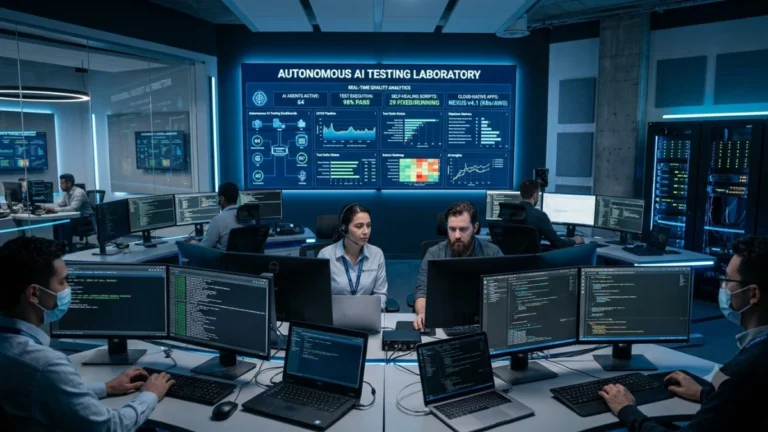
Autonomous Testing and Agentic Quality Engineering Are Transforming Software Quality in 2026
The software industry is experiencing one of the most significant transformations in its history. As organizations accelerate digital…
Development
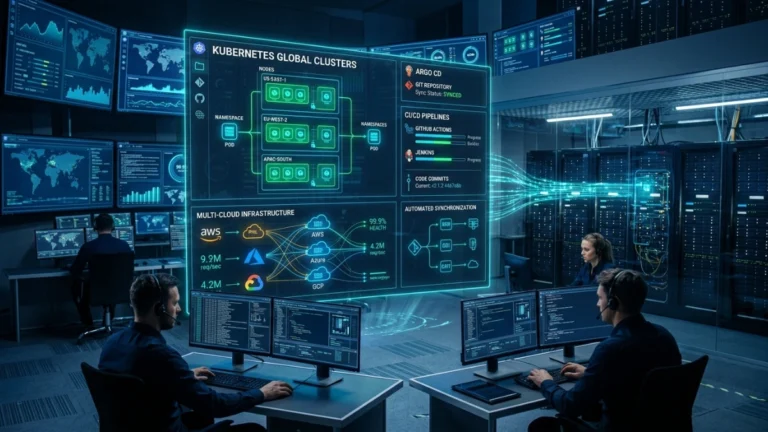
5 Game-Changing Factors Behind GitOps Adoption Growth
The modern software industry is evolving at an extraordinary pace. Organizations today are deploying applications faster than ever…