


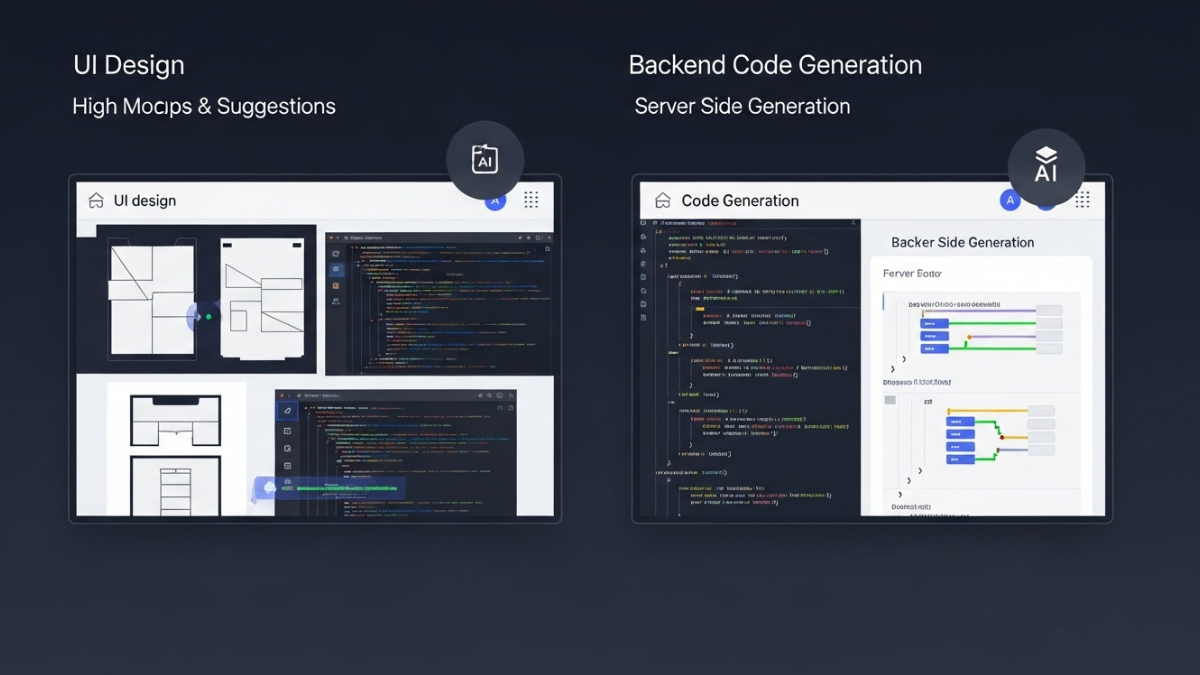
Introduction: Development Has Crossed a Structural Line
Web and app development has always evolved new frameworks, better tooling, faster runtimes. But in 2026, the change is not incremental. It is structural.
Generative AI tools are no longer experimental assistants or novelty code generators. They are actively reshaping how applications are designed, built, tested, deployed, and maintained. The developer’s role is shifting from writing every line of code to orchestrating systems, validating outputs, and designing outcomes.
This is not about replacing developers. It’s about redefining what development work actually means.
What “Generative AI Tools” Mean in 2026
In earlier years, generative AI in development mostly meant:
- Code autocomplete
- Basic snippet generation
- Simple bug explanations
In 2026, generative AI tools operate across the entire development lifecycle, including:
- UI and UX generation
- Frontend and backend scaffolding
- API design and documentation
- Automated testing and test data generation
- Performance tuning and refactoring
- Deployment configuration and monitoring
These tools don’t just assist they actively participate in building software. Telegram
Faster Prototyping and Shorter Build Cycles
One of the most visible changes is speed.
Generative AI enables teams to:
- Convert product ideas into working prototypes in hours
- Generate production-ready UI components from design prompts
- Scaffold full applications with consistent architecture
This dramatically reduces the time between concept and validation. Product teams can test ideas faster, discard weak concepts earlier, and iterate with real user feedback.
In 2026, speed is no longer a competitive advantage it’s the baseline expectation.
Frontend Development Is Becoming Intent-Driven
Frontend work has traditionally been labor-intensive:
- Styling
- Responsive layouts
- Accessibility fixes
- Cross-browser issues
Generative AI tools now generate:
- Semantic HTML
- Responsive CSS layouts
- Component libraries aligned with design systems
- Accessibility-aware UI structures
Developers increasingly describe what they want rather than building it piece by piece. The role shifts from construction to review, refinement, and integration.
This doesn’t reduce frontend complexity it changes where expertise is applied.
Backend Development Is Becoming More Declarative
Backend development is also being reshaped.
Generative AI can:
- Design REST or GraphQL APIs
- Generate database schemas
- Produce validation logic and error handling
- Draft authentication and authorization flows
Developers still define rules, constraints, and architecture but much of the boilerplate work is automated.
As a result, backend engineers spend more time on:
- Data modeling decisions
- Performance considerations
- Security and compliance
- System scalability
The work becomes higher leverage, not simpler.
Testing and QA Are Being Transformed
Testing has historically lagged behind development speed. Generative AI is changing that balance.
Modern AI tools can:
- Generate unit, integration, and API tests
- Create realistic test data
- Identify edge cases developers overlook
- Update tests automatically when code changes
This supports continuous testing models and aligns perfectly with QAOps and CI/CD pipelines.
However, human oversight remains critical. AI-generated tests still require:
- Validation of test relevance
- Risk-based prioritization
- Business logic understanding
Quality is improving but only where teams use AI responsibly.
Design and Development Are Converging
Generative AI is narrowing the gap between design and development.
Design artifacts wireframes, mockups, design systems can now be translated directly into code. This reduces:
- Misinterpretation
- Rework
- Design-to-dev handoff delays
Developers collaborate earlier with designers, focusing on behavior and usability rather than pixel replication.
In 2026, the most effective teams treat design and development as a single, continuous workflow.
The Rise of the “AI-Augmented Developer”
The developer role itself is evolving.
Successful developers in 2026:
- Understand how to prompt and guide AI tools
- Know when to trust output and when not to
- Focus on system thinking, not syntax
- Take responsibility for correctness, security, and maintainability
Coding skills still matter but they are no longer sufficient on their own.
The new competitive edge is judgment.
Risks and New Responsibilities
Generative AI introduces new risks that teams must manage carefully.
Verification Debt
Blindly trusting AI-generated code can lead to:
- Hidden bugs
- Security vulnerabilities
- Performance issues
Teams must establish strong review and validation processes.
Security and Compliance Concerns
AI-generated code may:
- Introduce insecure patterns
- Violate internal standards
- Miss regulatory requirements
Security reviews cannot be automated away.
Over-Reliance on Tooling
When teams stop understanding their own systems, long-term maintainability suffers.
The smartest organizations treat AI as:
An accelerator not a replacement for engineering discipline
Architecture and Governance Matter More Than Ever
As generative AI accelerates development, architecture decisions become more critical, not less.
Without strong:
- Coding standards
- Design patterns
- Review processes
- Governance frameworks
AI simply helps teams build bad systems faster.
In 2026, mature organizations pair generative AI with:
- Clear architectural principles
- Automated quality gates
- Strong DevOps and QAOps practices
Business Impact: Faster Delivery, Leaner Teams
From a business perspective, the impact is clear:
- Faster time to market
- Smaller but more capable teams
- Reduced development costs per feature
- Greater ability to experiment and pivot
Companies that adopt generative AI responsibly gain compounding advantages.
Those that resist fall behind quickly.
What Web & App Teams Should Do Now
To adapt effectively, teams should:
- Introduce generative AI gradually not everywhere at once
- Define clear quality and security standards
- Train developers in AI-assisted workflows
- Maintain strong human review practices
- Focus on outcomes, not lines of code
Generative AI is powerful but only when paired with intent and discipline.
Final Thoughts: Development Is Becoming More Strategic
Generative AI tools are not making development less important. They are making it more strategic.
In 2026, the value of developers lies not in how fast they type but in:
- How well they design systems
- How clearly they define intent
- How responsibly they manage risk
- How effectively they deliver outcomes
Web and app development isn’t being automated away.
It’s being elevated.
If your organization is navigating AI-driven changes in web or app development and wants to modernize delivery without sacrificing quality, a clear development and AI strategy is now essential. For more Details please contact Contact Us
Similar Posts

AI
Cybersecurity Insurance Market Experiences Rapid Growth
As cyber threats continue to evolve in complexity and scale, businesses around the world are facing unprecedented digital…

Development
Autonomous Testing and Agentic Quality Engineering Are Transforming Software Quality in 2026
The software industry is experiencing one of the most significant transformations in its history. As organizations accelerate digital…