



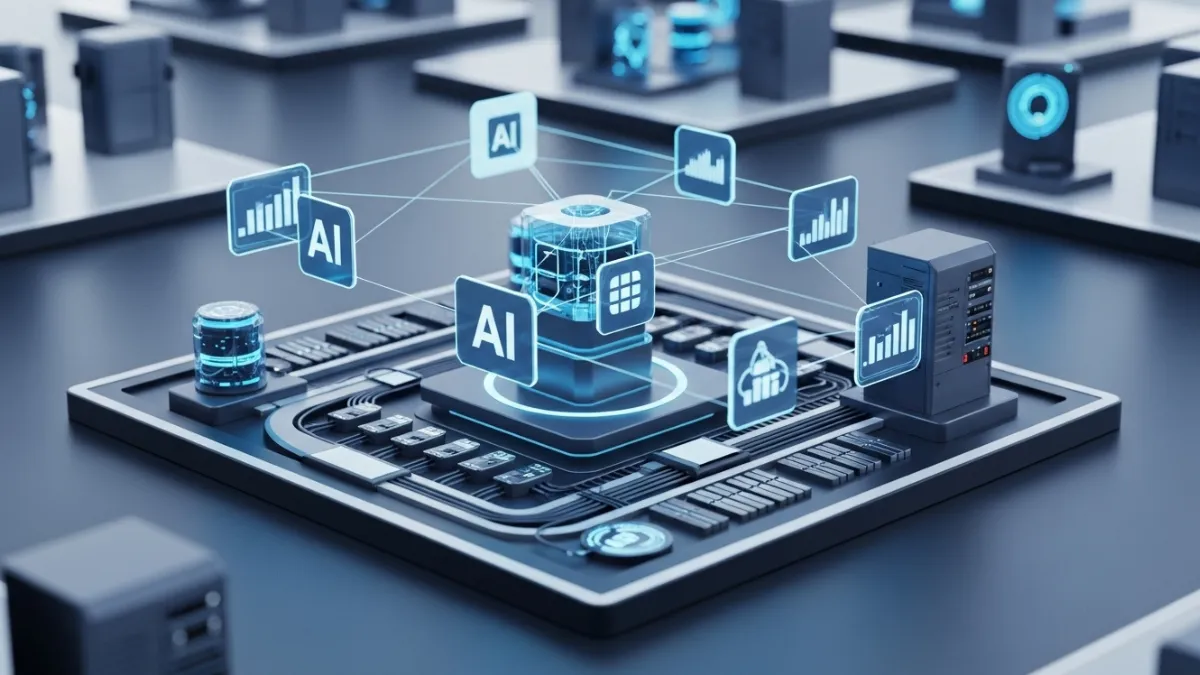
Introduction: The AI Conversation is Fundamentally Transforming
For the last decade, artificial intelligence lived in the “innovation” bucket. It was explored through pilots, labs, proofs of concept, and experimental teams. Success was measured in demos, not durability.
That era is over.
In 2026, AI is no longer treated as a differentiator you experiment with. It is treated as infrastructure something organizations depend on daily, much like cloud computing, networking, or databases. Companies are no longer asking “Should we use AI?” They are asking:
“How do we run the business without it?”
This shift changes everything: investment models, governance, architecture, talent, and leadership accountability.
What It Means When AI Becomes Infrastructure
Infrastructure has a very specific meaning in business:
- It must be reliable
- It must scale
- It must be secure
- It must be governed
- It must work quietly in the background
Once AI crosses into this category, experimentation gives way to operational discipline.
AI infrastructure supports:
- Decision-making systems
- Customer interactions
- Risk assessment
- Automation at scale
- Revenue and cost efficiency
Failure is no longer an inconvenience it’s a business risk.
Why the Innovation Framing No Longer Works
1. AI Is Embedded Across Core Operations
AI is no longer isolated to R&D teams.
In most organizations today, AI already influences:
- Marketing performance and personalization
- Customer support and service automation
- Fraud detection and risk scoring
- Demand forecasting and pricing
- Software development and testing
When AI touches core workflows, it stops being optional. Innovation budgets are discretionary. Infrastructure budgets are not.
2. Business Dependence Changes the Risk Profile
When AI systems fail, consequences are immediate:
- Incorrect decisions
- Operational disruption
- Customer trust erosion
- Regulatory exposure
This forces organizations to treat AI like any other critical system with redundancy, monitoring, and controls.
Innovation tolerates failure. Infrastructure cannot.
3. AI Delivers Ongoing Value, Not One-Time Breakthroughs
Innovation is often about breakthroughs. Infrastructure is about continuous utility.
AI delivers value incrementally:
- Faster processes
- Better decisions
- Lower costs
- Higher consistency
This aligns AI spend with operational budgets, not experimental funding.
The Market Shift: From Pilots to Production
Across industries, a clear pattern has emerged:
- Fewer AI pilots
- Fewer innovation showcases
- More production-grade systems
Organizations are standardizing:
- AI platforms
- Data pipelines
- Model lifecycle management
- Governance frameworks
This industrialization of AI is the strongest signal that it has become infrastructure.
AI Infrastructure Requires Different Leadership Thinking
From “Championing Innovation” to “Owning Outcomes”
When AI was experimental, leadership roles focused on:
- Sponsorship
- Vision
- Advocacy
Now, leadership is expected to:
- Ensure uptime
- Manage risk
- Prove ROI
- Guarantee compliance
This shifts accountability from innovation teams to core business leadership.
From Speed to Stability
Early AI adoption rewarded speed. Infrastructure rewards stability.
Organizations are prioritizing:
- Explainability over novelty
- Predictability over maximum accuracy
- Governed deployment over rapid experimentation
The fastest AI is no longer the best AI. The most reliable AI is.
Data Becomes a Supply Chain, Not an Asset
Once AI becomes infrastructure, data stops being “fuel” and starts being a supply chain.
This introduces new priorities:
- Data quality over data volume
- Lineage and traceability
- Consent and lawful use
- Controlled access
Weak data foundations cripple AI infrastructure just as faulty power grids cripple cities.
Governance Is No Longer Optional
Infrastructure is regulated by nature.
As AI becomes foundational, regulators and boards expect:
- Clear accountability
- Auditable decision logic
- Risk controls
- Human oversight
Governance is no longer about slowing AI down it’s about making it safe to depend on.
Organizations that ignore this reality face:
- Regulatory intervention
- Forced shutdowns
- Reputational damage
The Economic Signal: AI Spend Is Moving to Core Budgets
One of the clearest market indicators is financial.
In 2026:
- AI spend is moving from innovation budgets to operational expenditure
- CFOs are involved in AI prioritization
- ROI expectations mirror other infrastructure investments
This reframes AI from “growth option” to business necessity.
Infrastructure Thinking Changes Architecture
Platform Over Point Solutions
Infrastructure demands standardization.
Organizations are consolidating:
- AI tooling
- Model platforms
- Data environments
This reduces fragmentation and increases reliability.
Integration Over Isolation
AI infrastructure must integrate with:
- Existing systems
- Business workflows
- Security and compliance frameworks
Isolated AI solutions create fragility. Integrated systems create resilience.
Talent Expectations Are Changing
When AI was innovation, organizations hired:
- Researchers
- Specialists
- Experimenters
As infrastructure, they need:
- Engineers
- Platform architects
- Risk and governance experts
- Operators
The talent mix shifts from discovery to delivery and maintenance.
Why Some Organizations Are Struggling
Companies that still treat AI as innovation often face:
- Pilot fatigue
- Fragmented solutions
- Inconsistent value
- Regulatory surprises
They invest heavily but fail to scale because infrastructure thinking was never applied.
What Treating AI as Infrastructure Enables
Organizations that make the shift gain:
- Predictable performance
- Faster enterprise-wide adoption
- Lower long-term costs
- Easier compliance
- Stronger trust with customers and regulators
AI stops being a conversation starter and becomes a business enabler.
What Leaders Must Do Differently in 2026
To treat AI as infrastructure, leaders must:
- Anchor AI to business-critical processes
- Fund AI as a long-term capability
- Invest in data and governance early
- Demand reliability, not demos
- Hold teams accountable for outcomes
This is not less ambitious it’s more serious.
Final Thoughts: Infrastructure Is the Highest Form of Maturity
Calling AI “infrastructure” is not a downgrade. It’s a recognition of success.
Infrastructure is what businesses rely on when they cannot afford failure. AI has reached that point.
In 2026, the most competitive organizations are not those experimenting the most—but those operationalizing AI responsibly, reliably, and at scale.
AI is no longer innovation.
It’s the backbone of modern business.
And like all infrastructure, it rewards discipline far more than excitement. lets’ Discuss at Contact Us
Similar Posts
Industry Insights & Trends
Cybersecurity Strategies That Protect Your Business from Serious Threats
Cybersecurity is no longer a secondary consideration in digital transformation. It is a foundational requirement. As enterprises accelerate…

Industry Insights & Trends
Why Enterprises Are Killing Tool Sprawl in 2026
Introduction: More Tools Didn’t Make Enterprises Safer or Faster For over a decade, enterprises responded to every new…