



Introduction: This Isn’t Just Another AI Product Launch
For years, software tools evolved in predictable ways: better UX, incremental features, tighter integrations. That model is now breaking.
With its latest wave of AI product releases, Anthropic isn’t just adding features it’s challenging the foundations of how software tools are built, priced, and differentiated. The implications go far beyond AI assistants or productivity boosts. This shift forces every SaaS and enterprise software provider to ask an uncomfortable question:
What happens when AI can replicate core product value faster than roadmaps can keep up?
What Anthropic Actually Launched and Why It Matters
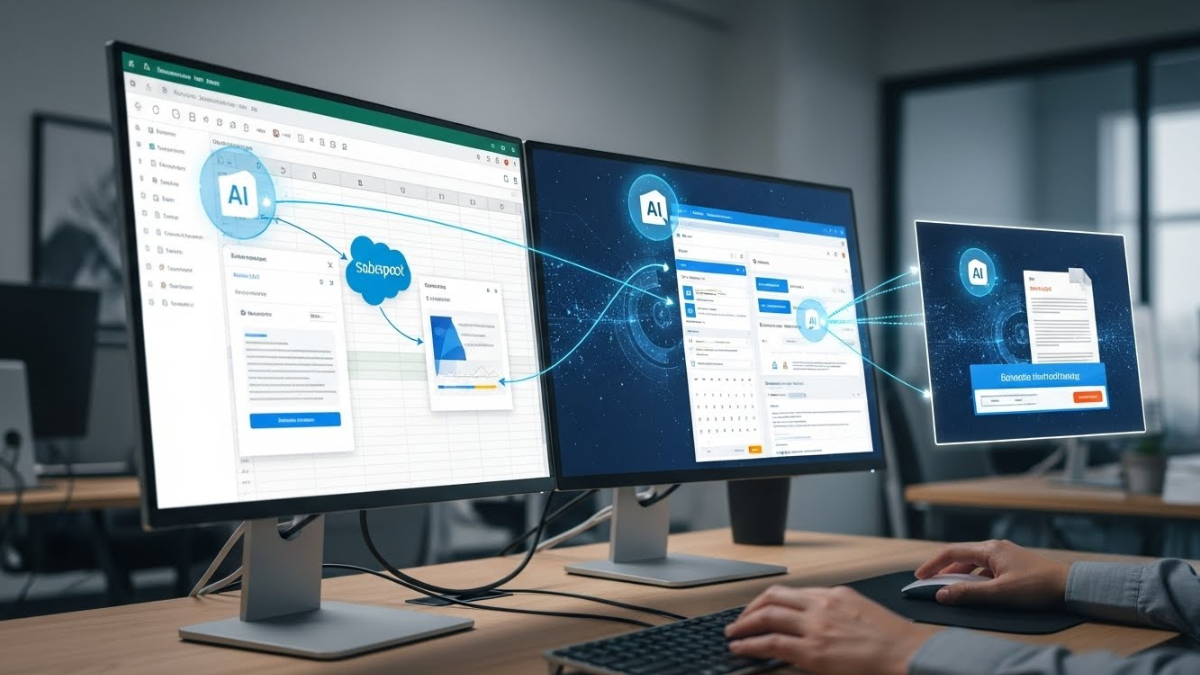
Anthropic’s recent product moves center around agentic AI tools systems that don’t just respond to prompts but actively perform tasks, collaborate with users, and operate across files, workflows, and applications.
Key characteristics of these tools include:
- Persistent context across tasks
- File and system interaction
- Multi-step execution without constant user input
- Rapid development cycles some tools reportedly built largely by AI itself
This isn’t AI bolted onto software. This is AI acting like software.
The Real Disruption: Features Are Becoming Commodities
Traditionally, SaaS differentiation came from:
- Feature depth
- Workflow optimization
- Proprietary interfaces
Anthropic’s approach threatens that model. When AI agents can:
- Draft documents
- Analyze data
- Manage workflows
- Generate code
- Coordinate tasks
then entire product categories risk being flattened.
A CRM feature, a project management workflow, or a reporting dashboard is no longer defensible if an AI agent can replicate 80% of its value on demand.
From Tools to Capabilities: A Strategic Shift
The old question for product teams was:
What features should we build next?
The new question is:
What capabilities must we own that AI cannot easily abstract away?
This marks a shift from feature-based competition to capability-based strategy.
Winning tools in this new era will focus on:
- Deep domain specialization
- Trusted data ownership
- Workflow authority
- Compliance, governance, and security
- Ecosystem integration
AI can generate outputs but it cannot easily replace contextual authority.
Why Traditional SaaS Roadmaps Are at Risk
Anthropic’s rapid iteration exposes a structural weakness in traditional product development:
- Human-built roadmaps move slowly
- AI-generated capabilities move fast
- Feature parity can be reached in weeks, not years
This creates a dangerous gap. By the time a SaaS company ships a planned feature, an AI agent may already be doing it without requiring users to adopt a new tool.
The result? Feature velocity no longer guarantees relevance.
The Pricing Model Problem
AI-driven tools also challenge SaaS pricing assumptions.
If AI can:
- Replace multiple tools
- Collapse workflows
- Reduce user effort
then per-seat, per-feature pricing starts to feel outdated.
Anthropic’s trajectory suggests a future where:
- Value is tied to outcomes, not licenses
- Pricing aligns with usage or results
- Bundled AI capabilities replace fragmented subscriptions
SaaS companies that fail to rethink pricing risk being undercut by AI-native alternatives.
Security, Compliance, and Trust Become Differentiators
One area where AI tools face real friction is trust.
As AI agents gain more autonomy, enterprises worry about:
- Data exposure
- Unintended actions
- Compliance violations
- Auditability
This creates opportunity for established tools that can offer:
- Strong governance
- Clear access controls
- Transparent audit trails
- Regulatory alignment
In this sense, Anthropic’s disruption doesn’t eliminate traditional software it raises the bar for trust and accountability.
What Product Leaders Should Be Doing Right Now
1. Audit Your Product’s Defensibility
Ask honestly:
- Which features could an AI agent replicate?
- What value depends on proprietary data or domain expertise?
- Where do customers trust us beyond convenience?
If the answers are unclear, that’s a warning sign.
2. Shift From “AI Features” to “AI Strategy”
Adding AI buttons isn’t enough.
Product teams need to define:
- How AI reshapes workflows
- Where human oversight remains essential
- How AI enhances not replaces core value
This requires cross-functional alignment between product, engineering, legal, and security.
3. Redesign the User Relationship
As AI agents take over tasks, users interact less with interfaces and more with outcomes.
This means:
- Fewer clicks
- More automation
- Higher expectations
Products must evolve from tools users operate to systems users trust.
The Competitive Landscape Is Shifting
Anthropic’s moves highlight a broader industry reality: competition is no longer limited to direct rivals.
A SaaS product now competes with:
- AI platforms
- Agentic workflows
- Custom AI setups
- User-built automations
This makes strategic positioning more important than ever. Survival depends on clarity of purpose, not feature breadth.
Final Thoughts: This Is a Strategy Reset, Not a Trend
Anthropic’s new AI products are not just impressive they’re destabilizing. They force a rethink of:
- What software is
- How value is delivered
- Why users choose tools
For software companies, the takeaway is clear:
AI will not replace all tools but it will expose weak ones.
The winners will be those who understand where AI fits—and where it doesn’t—inside their product strategy.
If your organization is reassessing its software, product, or AI strategy in this new landscape, explore technology and product consulting at Contact Us
Similar Posts
Product & Tools
Amazon Introduces Creative Agent for Ads: A New Era of AI-Driven Advertising
The advertising industry is undergoing a massive transformation, and Creative Agent is at the center of this evolution.…