



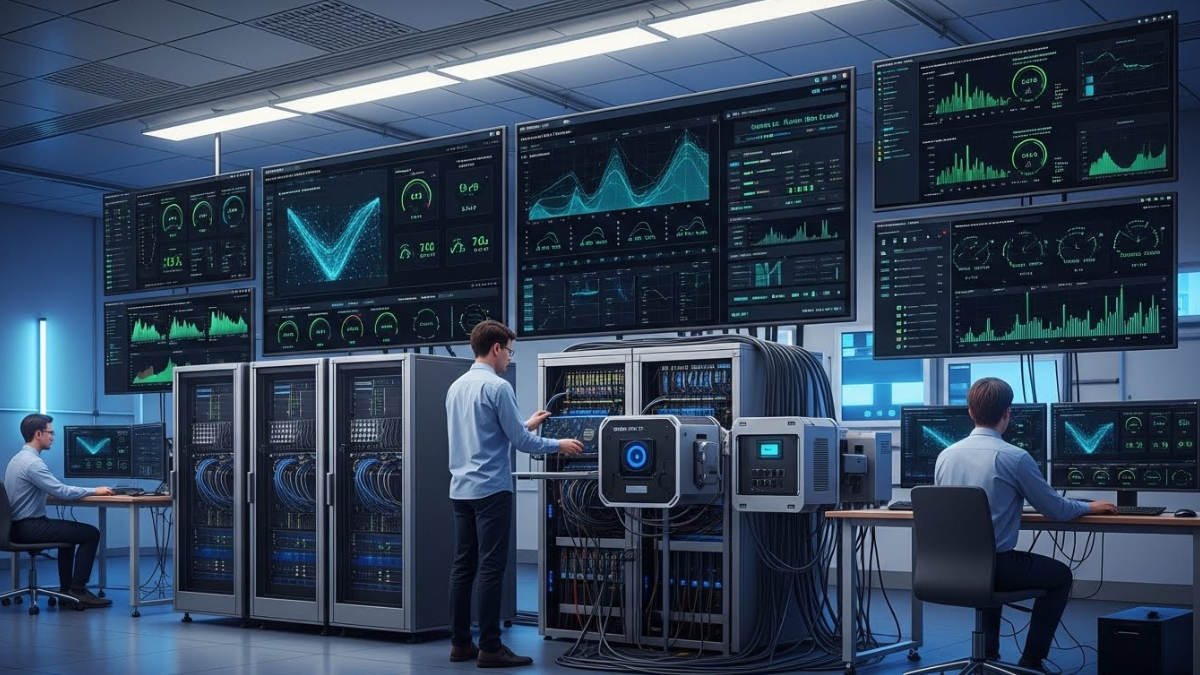
Introduction: Why Traditional Machine Learning Batch Processing Is No Longer Enough
Transformer architectures have been the foundation of modern AI, but the next-gen transformer model breakthrough in 2026 marks a major turning point for Machine Learning. These advances go beyond incremental performance gains, introducing new ways to improve efficiency, scalability, and contextual understanding across complex tasks.
The Machine Learning world sees “breakthrough” announcements almost every week. Most of them quietly disappear. But the latest generation of transformer models is different not because they’re bigger, but because they’re smarter, more efficient, and more deployable.
This new wave of transformer research focuses on solving the problems enterprises actually face: cost, latency, adaptability, and real-world performance. In short, transformers are finally growing up.
Why Traditional Transformers Hit a Wall
Classic transformer models delivered massive gains in language understanding, vision, and multimodal tasks but they came with serious drawbacks:
- Exploding compute costs
- High memory consumption
- Poor efficiency in low-data scenarios
- Difficult deployment outside large cloud environments
For many companies, transformers were impressive but impractical. Training was expensive, inference was slow, and fine-tuning required significant infrastructure investment.
The next generation is attacking these limitations directly.
What’s New in Next-Gen Transformer Architectures
Recent transformer breakthroughs focus on efficiency over scale. Instead of simply increasing parameter counts, researchers are redesigning how transformers process information.
Key improvements include:
1. Smarter Attention Mechanisms
New attention variants reduce quadratic complexity, allowing models to:
- Handle longer contexts efficiently
- Scale without proportional cost increases
- Perform better in real-time applications
This makes transformers viable for streaming data, logs, and real-time signals.
2. Improved Few-Shot and Low-Data Learning
Next-gen transformers show dramatic gains in:
- Few-shot learning
- Domain adaptation
- Rapid fine-tuning
This is critical for enterprises where labeled data is scarce or expensive. Models can now adapt faster with less retraining.
3. Modular and Composable Design
Instead of monolithic architectures, newer transformers support:
- Modular layers
- Task-specific adapters
- Dynamic routing
This allows teams to reuse core models while customizing behavior per use case reducing retraining costs and deployment friction.
4. Better Hardware Alignment
New designs are optimized for modern accelerators:
This tight alignment between model architecture and hardware drastically improves performance-per-watt and inference speed.
Why This Is a Big Deal for Production ML
The biggest shift isn’t research accuracy it’s deployability.
Next-gen transformers enable:
- Lower inference costs
- Faster response times
- Smaller infrastructure footprints
- Edge and hybrid deployments
This changes who can use transformers. They’re no longer reserved for hyperscalers.
Business Impact: From Research to Revenue
For businesses, this breakthrough translates directly into value:
- Faster product iteration through easier fine-tuning
- Lower operational costs via efficient inference
- New use cases in real-time decision systems
- Improved personalization without massive retraining
Transformers are moving from experimental tools to core business infrastructure.
What Machine Learning Teams Should Do Now
To prepare for this shift, The teams should:
- Audit current transformer workloads for inefficiency
- Explore modular fine-tuning approaches
- Re-evaluate inference pipelines
- Align model choices with hardware strategy
The competitive advantage won’t come from the biggest model but from the most efficiently deployed one.
Final Thoughts
The next generation of transformers marks a turning point. It is moving away from brute-force scale and toward architectural intelligence. Teams that adapt early will build faster, cheaper, and more resilient systems.
If your organization wants to modernize its Machine Learning stack and deploy next-gen models in production, explore AI and machine learning solutions at Contact Us
Similar Posts
Marketing
9 Proven Benefits of AI Search Integration for Better Content Discovery
AI search integration is transforming how content is discovered, summarized, and ranked in modern search engines. In 2026,…
AI
Data Quality Scoring Is Becoming Standard, Not Optional
In the early days of machine learning and analytics, teams often rushed toward model training with one assumption:…