



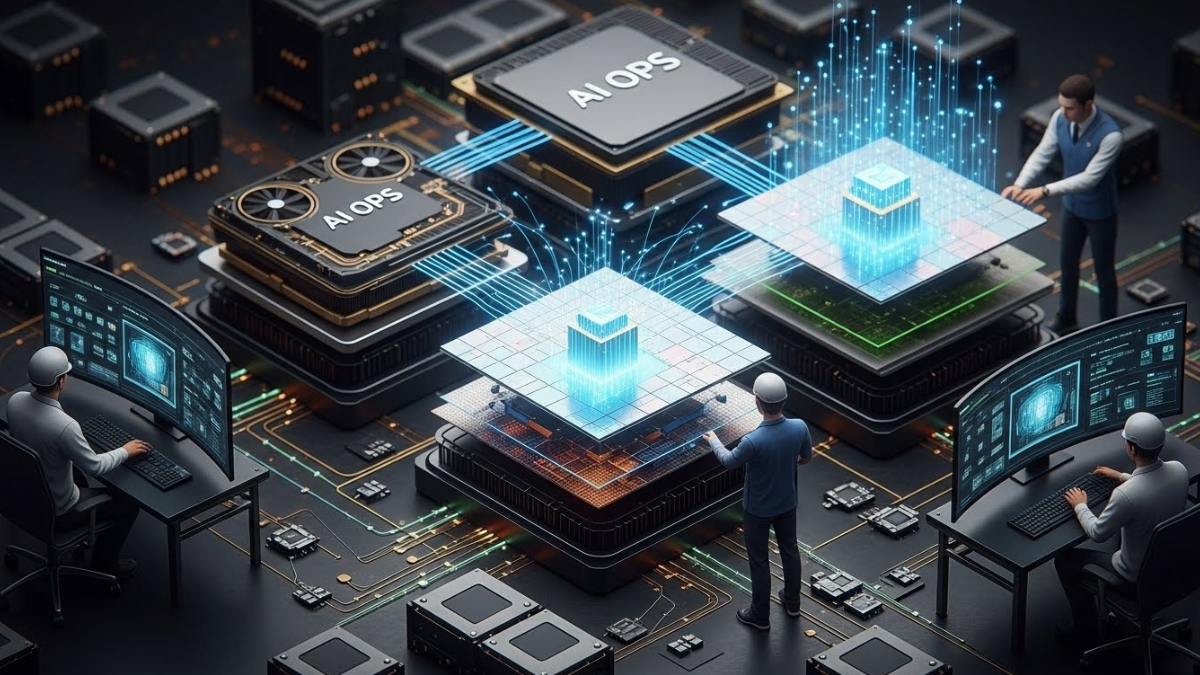
Introduction: Nvidia Didn’t Launch a Product, It Changed the Rules
At CES 2026, NVIDIA didn’t just announce hardware. It redefined how AI systems should be engineered from silicon to software.
1. Hardware and Software Are No Longer Separate Worlds
Nvidia’s new AI tech proves one thing:
Performance now comes from co-design, not brute force.
AI engineers must understand:
- Chip capabilities
- Memory pipelines
- Inference optimization
This is no longer optional.
2. AI Ops Moves Closer to the Metal
Traditional AI Ops focused on:
- Models
- Pipelines
- Monitoring
Nvidia’s approach pulls AI Ops downward into:
- GPU scheduling
- Inference acceleration
- Energy optimization
This reduces latency, cost, and failure points.
3. Software Engineering Becomes Performance Engineering
With It’s stack:
- Poor architecture is immediately exposed
- Inefficient code becomes expensive
- Optimization becomes a core skill
Software engineers now share responsibilities with infra teams.
4. What This Means for Enterprises
Enterprises adopting It’s AI tech gain:
- Faster deployment cycles
- Lower AI operational costs
- Better scalability across cloud & edge
But only if teams are properly architected.
5. The New Skillset Engineers Need
2026 AI engineers must understand:
- Hardware-accelerated AI
- AI Ops tooling
- System-level debugging
- Production AI reliability
Anything else is surface-level AI.
Conclusion: Nvidia Is Forcing Maturity
Nvidia’s CES 2026 announcements mark the shift from experimental AI to industrial AI. Teams that adapt will dominate. Teams that don’t will outsource.
Need help designing AI systems that actually scale in production?
See how Nautics Technologies delivers enterprise AI & software solutions: Nauticsou.com
Similar Posts
Marketing
9 Proven Benefits of AI Search Integration for Better Content Discovery
AI search integration is transforming how content is discovered, summarized, and ranked in modern search engines. In 2026,…
AI
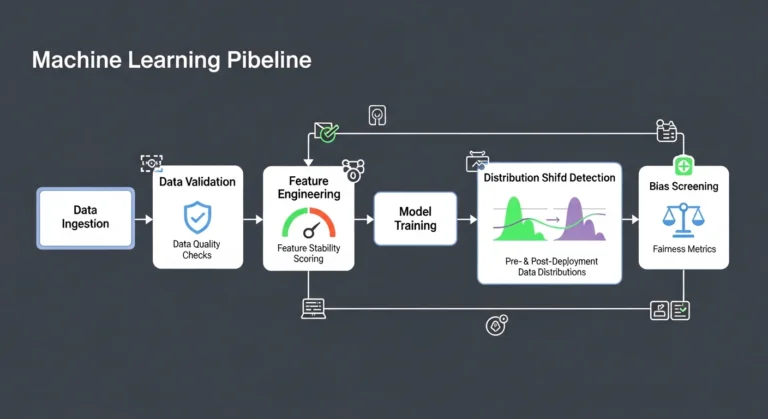
Data Quality Scoring Is Becoming Standard, Not Optional
In the early days of machine learning and analytics, teams often rushed toward model training with one assumption:…