



Category
Share on
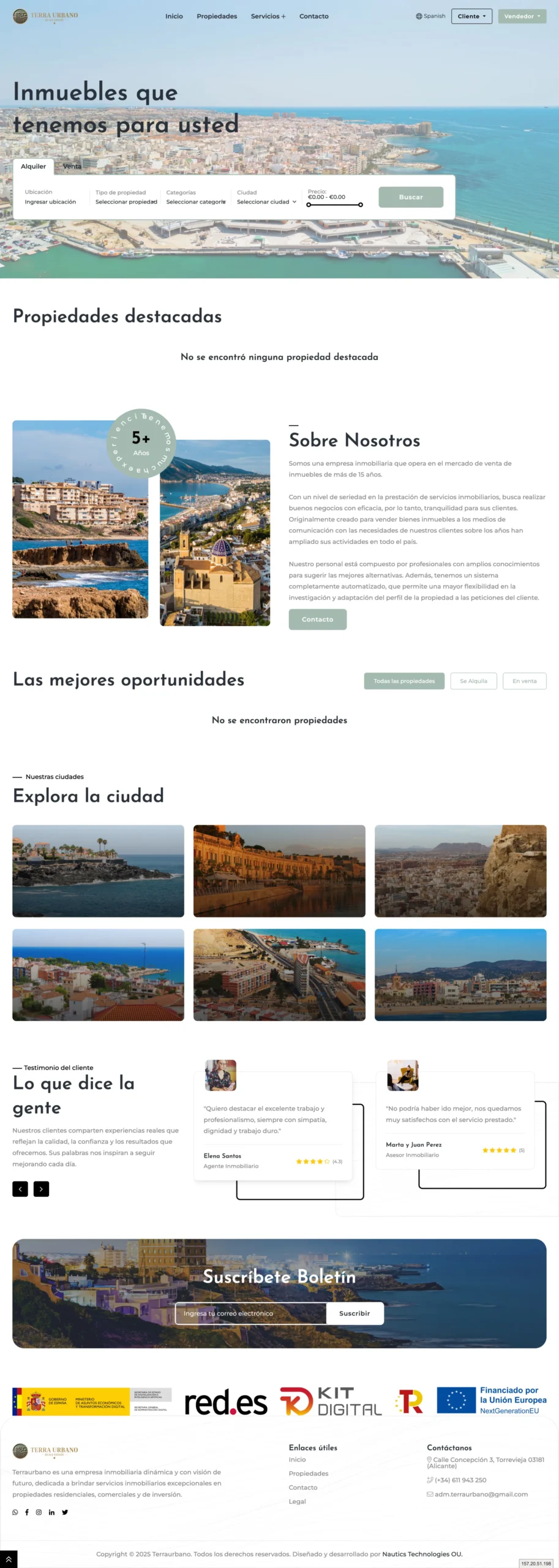
This project originated through our collaboration with Sarah Katrina, a certified digital vendor involved in government-supported digital transformation programs. Under this initiative, eligible businesses receive digital benefits to modernize their operations, including hardware and online presence.
TerraUrbano Home was a real estate agency that had been approved for this digital benefit. While the laptop procurement was handled directly by Sarah Katrina, we were brought in to deliver the core digital asset: a completely new, modern, and fully customizable real estate website.
At the time of engagement, TerraUrbano Home was using a basic 360° real estate website solution. While functional, it was limited in flexibility, design control, and internal usability. TerraUrbano Home saw the government program as an opportunity not just to “refresh” their website, but to rebuild it properly with long-term control and scalability in mind.
This was not a theme replacement.
This was a custom platform rebuild designed for real-world operations.
Once the discovery phase began, it became clear that TerraUrbano Home’s expectations went far beyond a standard real estate website.
Secure and controlled data access
This project was complex not because of scale, but because of expectations vs usability.
TerraUrbano Home wanted a fully custom system, but their team was non-technical. Most custom platforms fail here by being powerful but unusable.
We had to balance:
TerraUrbano Home was already using a 360° solution. That meant:
This wasn’t just a public website. It was an internal operating system:
Poor role design would have caused chaos.
We approached this as a custom product build, not a website project.
Before design or development, we defined:
This step prevented rework later.
We designed the full interface using Figma, focusing on:
Every screen was designed with real users in mind, not designers.
The entire system was built using Laravel.
Key backend features included:
This was not a CMS hack.
It was a purpose-built backend system.
One of the most critical requirements was ease of use.
We implemented a drag-and-drop-style page management system that allowed:
This removed daily developer dependency entirely.
We integrated:
This consolidated operations into a single system.
If you want please Contact us