



Introduction: The Performance Marketing Illusion
For over a decade, performance marketing was treated as the growth engine. If you could track clicks, attribute conversions, and optimize bids, growth felt predictable. Spend more, get more. Scale followed spreadsheets.
That model is breaking.
In 2026, performance marketing still matters but on its own, it no longer builds durable growth. Many companies are spending aggressively, optimizing endlessly, and still stalling. CAC rises, attribution weakens, and returns flatten.
The issue isn’t execution.
It’s overreliance.
Performance marketing has become a powerful amplifier but an increasingly poor foundation.
Why Performance Marketing Stopped Being Enough
1. Attribution Is No Longer Reliable
The promise of performance marketing was precision. That promise is gone.
Today’s reality:
- Cookie loss and privacy restrictions
- Modeled and delayed conversions
- Platform-reported metrics that can’t be audited
- Fragmented customer journeys
Teams still optimize but they optimize imperfect signals. Decisions feel data-driven, yet outcomes drift.
When attribution weakens, performance marketing loses its ability to guide strategy.
2. Performance Optimizes Demand It Doesn’t Create It
Performance marketing captures existing intent. It doesn’t generate trust, preference, or memory.
This leads to a ceiling effect:
- Early gains are strong
- Scaling becomes expensive
- Incremental spend produces diminishing returns
Once you’ve exhausted high-intent demand, performance marketing starts competing for the same audiences at higher cost.
Growth stalls not because ads stopped working but because brand stopped compounding.
3. CAC Inflation Is Structural, Not Tactical
Rising acquisition costs aren’t caused by bad campaigns.
They’re caused by:
- Platform competition
- Audience saturation
- Algorithmic bidding wars
- Short-term optimization loops
Even well-run performance programs now face structural CAC pressure.
This means:
You can optimize performance but you can’t optimize your way out of economics.
What Performance Marketing Does Well and What It Doesn’t
Performance marketing is excellent at:
- Capturing demand
- Testing offers
- Scaling proven messages
- Driving short-term revenue
It struggles with:
- Building trust
- Creating differentiation
- Increasing pricing power
- Improving retention
- Reducing long-term acquisition cost
Growth requires all of these.
Performance alone delivers none of them sustainably.
The Shift: Growth Is Becoming Brand-Led Again
This doesn’t mean returning to vague brand campaigns or awareness for awareness’ sake.
Modern brand-led growth looks different:
- Clear positioning
- Consistent narrative
- Product-aligned messaging
- Thought leadership
- Trust built across touchpoints
Brand is no longer a “top-of-funnel expense.”
It’s a conversion multiplier.
Brands with strong memory and trust:
- Convert better
- Retain longer
- Pay less for traffic
- Close faster
Performance marketing works better when brand does its job.
Retention Is Overtaking Acquisition as the Growth Lever
One of the biggest shifts in 2026 is where growth comes from.
More companies are realizing:
- Fixing churn beats scaling spend
- Improving onboarding beats more leads
- Lifecycle optimization beats funnel expansion
Performance marketing is optimized for acquisition.
Growth today is increasingly post-conversion.
Without strong retention, performance marketing becomes a leaky bucket.
Why Product and Brand Are Now Growth Channels
In high-performing companies:
- Product experience reinforces brand promise
- Onboarding teaches value quickly
- Messaging matches reality
- Support becomes part of positioning
This alignment creates:
- Word-of-mouth
- Organic inbound
- Lower paid dependency
Performance marketing cannot compensate for weak product-brand alignment.
The Rise of Thought Leadership and Credibility-Driven Growth
In B2B and services markets especially, growth is being driven by:
- Expertise visibility
- Founder-led content
- Credible opinions
- Clear POVs
Buyers trust brands that teach them something, not just retarget them.
Performance ads increasingly act as reinforcement not discovery.
Performance Marketing Without Brand Creates Fragile Growth
Companies built purely on Marketing often share the same symptoms:
- Constant budget pressure
- Inconsistent demand
- Heavy discounting
- Weak loyalty
- High churn
Growth depends on constant spend.
The moment budgets tighten, growth collapses.
That’s not growth. That’s dependency.
What Balanced Growth Looks Like in 2026
High-performing organizations now structure growth like this:
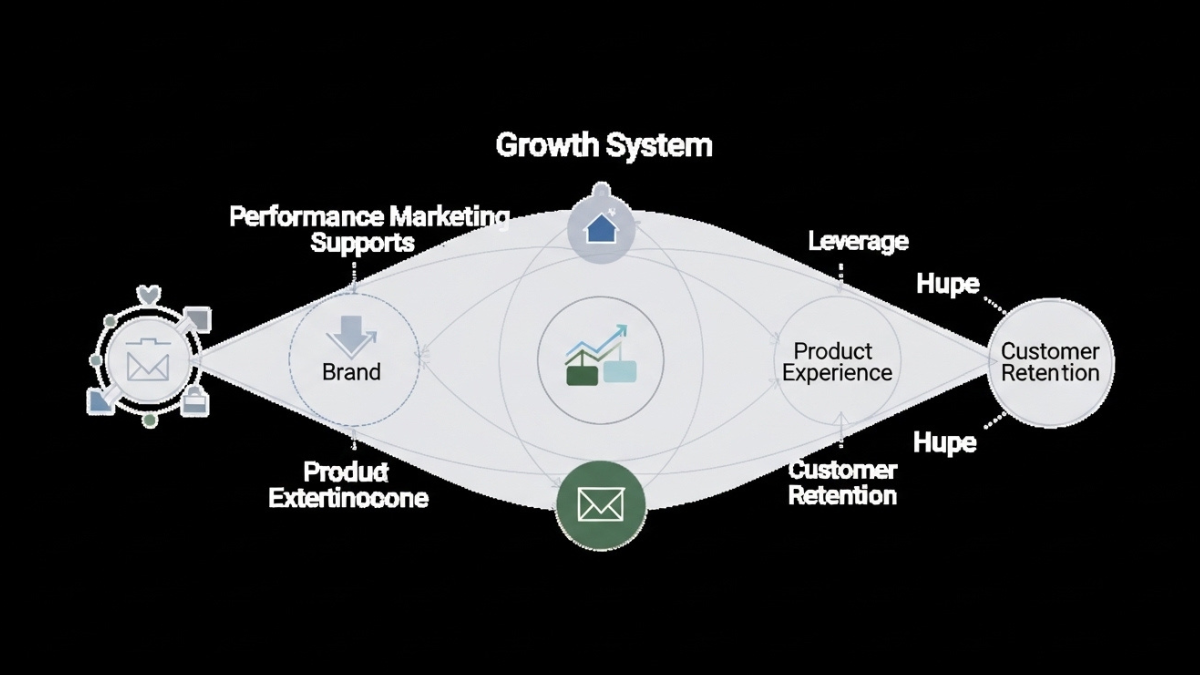
- Brand creates trust, memory, and differentiation
- Product delivers on the promise
- Content & thought leadership build authority
- Retention systems compound value
- Performance marketing captures and scales demand
Marketing becomes a lever, not the engine.
How Leaders Should Rethink Growth Strategy
If you’re leading growth today, the questions have changed:
- What do we stand for clearly?
- Why should buyers remember us?
- Where does trust come from in our funnel?
- How much of our growth depends on paid spend?
- What happens if ad costs double?
If the answers are uncomfortable, marketing is doing too much work.
The Hard Truth: Performance Marketing Is Easy to Start and Hard to Sustain
This thrives in early stages:
- Clear ICP
- Untapped demand
- Cheap attention
As markets mature, growth shifts from efficiency to leverage.
Brand, retention, and trust create leverage.
Performance alone does not.
Final Thoughts: Performance Marketing Isn’t Dead It’s Just Not Enough
This still matters. It always will.
But in 2026, it is no longer a growth strategy on its own.
Growth today comes from:
- Being remembered
- Being trusted
- Being clear
- Being consistent
This works best when it amplifies these not when it replaces them.
The companies growing now aren’t spending the most.
They’re building brands that make every dollar work harder.
Performance marketing can scale growth.
Only brand can sustain it. For info Lets connect atContact Us
Similar Posts
Marketing
9 Proven Benefits of AI Search Integration for Better Content Discovery
AI search integration is transforming how content is discovered, summarized, and ranked in modern search engines. In 2026,…

Marketing
Autonomous Orchestration: 5 Powerful Strategies Transforming Marketing Workflows
Marketing automation has moved far beyond scheduled email sequences and rule-based drip campaigns. Today, we are witnessing the…