


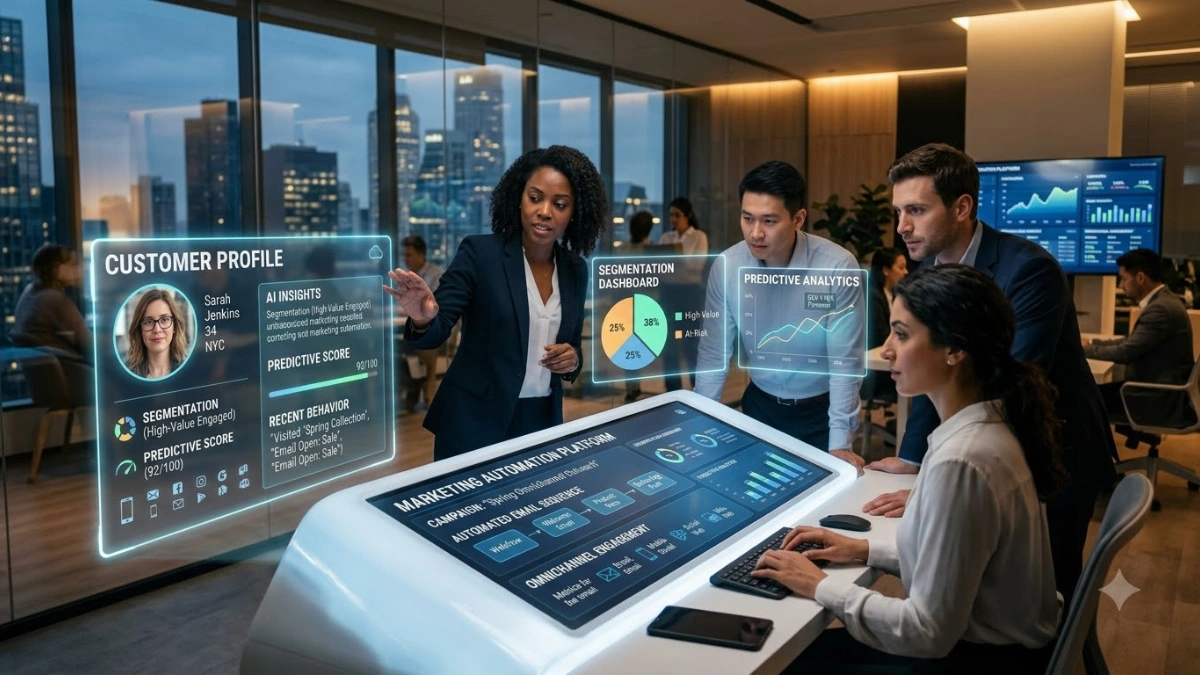
The modern customer expects more than generic advertisements, mass emails, and one-size-fits-all marketing campaigns. In today’s digital-first business environment, consumers want brands to understand their preferences, anticipate their needs, and deliver relevant experiences at the right time through the right channel.
This shift in customer expectations has given rise to one of the most significant trends in modern marketing: Hyper-Personalization at Scale.
Powered by advanced marketing automation platforms, data analytics, artificial intelligence, and customer relationship management (CRM) systems, hyper-personalization enables businesses to create highly relevant experiences for thousands or even millions of customers simultaneously.
As competition continues to increase across industries, companies that fail to deliver personalized experiences risk losing customers to brands that can.
This blog explores how hyper-personalization through marketing automation is transforming customer engagement, why businesses are investing heavily in it, and what the future holds for personalized marketing in 2026 and beyond.
What Is Hyper-Personalization?
Hyper-personalization goes beyond traditional personalization.
Traditional personalization might involve addressing a customer by name in an email or recommending products based on previous purchases.
Hyper-personalization takes things much further by leveraging:
- Real-time customer behavior
- Purchase history
- Browsing patterns
- Location data
- Engagement history
- Customer preferences
- Predictive analytics
- AI-driven insights
The goal is to deliver highly tailored content, recommendations, and experiences that feel uniquely relevant to each individual customer.
Instead of treating customers as part of broad segments, businesses can engage them as individuals.
Why Hyper-Personalization Matters More Than Ever
Modern consumers are overwhelmed with digital content.
Every day they receive:
- Marketing emails
- Social media advertisements
- SMS promotions
- Push notifications
- Retargeting campaigns
- Product recommendations
With so much competition for attention, generic messaging often gets ignored.
Research consistently shows that customers are more likely to engage with brands that offer personalized experiences.
Benefits include:
Higher Engagement Rates
Personalized content captures attention because it aligns with customer interests and needs.
Increased Conversion Rates
Customers are more likely to take action when presented with relevant offers and recommendations.
Improved Customer Loyalty
Relevant experiences strengthen customer relationships and encourage repeat business.
Better Customer Satisfaction
Consumers appreciate brands that understand their preferences and reduce friction in their journey.
Greater Marketing ROI
Marketing budgets become more efficient when campaigns target the right audience with the right message.
The Evolution of Marketing Automation
Marketing automation has evolved dramatically over the past decade.
Early automation systems focused primarily on:
- Scheduled email campaigns
- Basic lead nurturing
- Contact management
Today’s marketing automation platforms offer advanced capabilities such as:
- AI-powered recommendations
- Predictive lead scoring
- Customer journey orchestration
- Dynamic content generation
- Behavioral targeting
- Automated segmentation
- Omnichannel campaign management
This evolution has made hyper-personalization at scale possible.
Businesses no longer need to manually create separate campaigns for every customer segment.
Automation handles the complexity while maintaining personalized experiences.
Key Technologies Driving Hyper-Personalization
Artificial Intelligence
Artificial intelligence is the engine behind modern personalization.
AI can analyze enormous amounts of customer data and identify patterns that humans may overlook.
Applications include:
- Product recommendations
- Content recommendations
- Predictive customer behavior
- Churn prediction
- Customer lifetime value analysis
AI enables businesses to make smarter marketing decisions in real time.
Customer Data Platforms (CDPs)
Customer Data Platforms consolidate data from multiple sources into a unified customer profile.
Sources may include:
- Websites
- Mobile apps
- CRM systems
- Email platforms
- Social media channels
- Customer support systems
This unified view allows marketers to understand customers more comprehensively.
Predictive Analytics
Predictive analytics uses historical data to forecast future customer behavior.
Businesses can predict:
- Purchase likelihood
- Customer churn
- Product preferences
- Future engagement levels
This enables proactive marketing rather than reactive marketing.
Marketing Automation Platforms
Modern automation platforms connect customer data, AI, and communication channels.
They automate actions such as:
- Email sequences
- Lead nurturing workflows
- Customer onboarding
- Re-engagement campaigns
- Personalized offers
This creates seamless customer experiences across the entire journey.
Hyper-Personalization Across the Customer Journey
Awareness Stage
At the awareness stage, businesses can deliver highly relevant advertisements and content based on:
- Search behavior
- Industry interests
- Demographics
- Online activity
Potential customers receive information that directly addresses their needs.
Consideration Stage
As prospects evaluate solutions, automation platforms can deliver:
- Personalized emails
- Relevant case studies
- Industry-specific content
- Product comparisons
This helps move customers through the decision-making process more effectively.
Purchase Stage
During the buying process, businesses can:
- Recommend relevant products
- Offer customized discounts
- Provide targeted incentives
- Simplify checkout experiences
These tactics help increase conversion rates.
Post-Purchase Stage
Personalization does not stop after the sale.
Automation can trigger:
- Welcome sequences
- Product education
- Cross-selling opportunities
- Upselling recommendations
- Customer satisfaction surveys
These efforts improve retention and customer lifetime value.
Real-World Applications of Hyper-Personalization
E-Commerce
Online retailers use hyper-personalization extensively.
Examples include:
- Personalized product recommendations
- Dynamic website content
- Customized promotions
- Abandoned cart recovery campaigns
These strategies significantly improve sales performance.
Financial Services
Banks and financial institutions use personalization to recommend:
- Investment products
- Loan solutions
- Insurance plans
- Financial planning services
Recommendations are based on customer behavior and financial profiles.
Healthcare
Healthcare organizations use automation to provide:
- Appointment reminders
- Personalized wellness content
- Preventive care recommendations
- Patient engagement programs
This improves patient outcomes and satisfaction.
B2B Marketing
B2B companies leverage hyper-personalization for:
- Account-based marketing
- Personalized outreach
- Lead nurturing
- Industry-specific content
These approaches improve lead quality and shorten sales cycles.
Omnichannel Personalization: The New Standard
Today’s customers interact with brands through multiple channels.
These channels include:
- Websites
- Mobile applications
- Social media
- SMS
- Live chat
Modern automation platforms ensure that personalization remains consistent across every touchpoint.
For example:
A customer who browses a product on a website may later receive:
- A personalized email
- A social media advertisement
- A mobile app notification
All messaging remains relevant and aligned with their interests.
Challenges of Hyper-Personalization
While the benefits are significant, businesses also face challenges.
Data Privacy Concerns
Customers increasingly expect transparency regarding data collection and usage.
Organizations must comply with regulations such as:
- GDPR
- CCPA
- Other regional privacy laws
Trust remains essential.
Data Quality Issues
Poor-quality data leads to poor personalization.
Businesses must invest in:
- Data cleansing
- Data governance
- Data integration
Reliable data is the foundation of effective automation.
Technology Integration
Many organizations operate multiple marketing systems.
Integrating:
- CRM platforms
- Automation tools
- Analytics systems
- Customer databases
can be complex but necessary.
Maintaining Human Connection
Automation should enhance customer relationships, not replace human interaction.
The most successful brands balance technology with genuine customer engagement.
Best Practices for Implementing Hyper-Personalization
Create a Unified Customer View
Consolidate data from all customer touchpoints.
Focus on Customer Value
Personalization should solve customer problems rather than simply drive sales.
Start Small and Scale Gradually
Begin with key customer segments and expand as systems mature.
Leverage AI Responsibly
Use AI to improve experiences while respecting customer privacy.
Continuously Optimize
Monitor campaign performance and refine personalization strategies regularly.
Future Trends Shaping Hyper-Personalization
Several emerging trends are expected to define the future of personalized marketing.
Real-Time Personalization
Brands will increasingly personalize experiences instantly based on live customer behavior.
AI-Generated Content
Artificial intelligence will create personalized content at unprecedented scale.
Predictive Customer Journeys
Businesses will anticipate customer needs before customers explicitly express them.
Voice and Conversational Personalization
Voice assistants and chatbots will deliver more tailored interactions.
Privacy-First Personalization
Companies will focus on balancing personalization with stronger privacy protections.
Conclusion
Hyper-personalization at scale is no longer a futuristic concept it is becoming a business necessity.
Consumers expect brands to understand their preferences, anticipate their needs, and deliver meaningful experiences across every interaction. Marketing automation platforms, combined with artificial intelligence and advanced analytics, are making this level of personalization possible on a massive scale.
Organizations that successfully implement hyper-personalization can achieve higher engagement, stronger customer loyalty, improved conversions, and greater marketing efficiency. Meanwhile, businesses that continue relying on generic marketing strategies risk falling behind in an increasingly competitive marketplace.
As we move further into 2026 and beyond, hyper-personalization will continue to redefine customer engagement, transforming how brands build relationships, deliver value, and drive sustainable growth in the digital era.
For more Contact Us
Similar Posts
Marketing
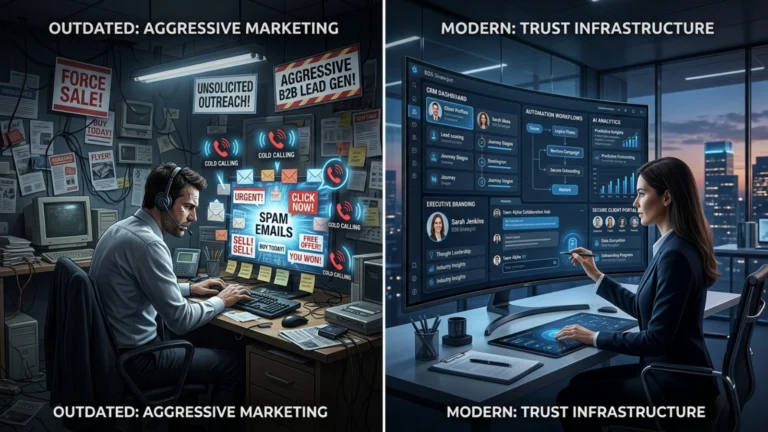
B2B Brands Are Focusing More on Trust Infrastructure in 2026
Why Trust Has Become the Most Important Growth Asset in 2026 The B2B business environment has changed dramatically…
Marketing
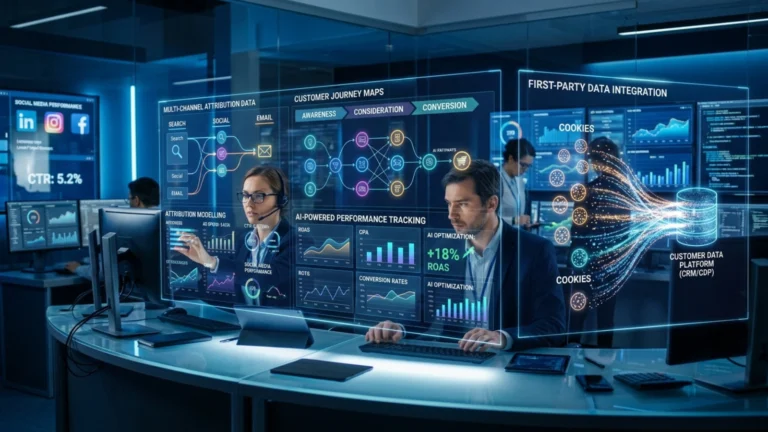
Why Attribution & Measurement Are Becoming a Major Problem in Digital Marketing
In the early days of digital advertising, performance marketing felt simple. Businesses could launch a campaign, track clicks,…