


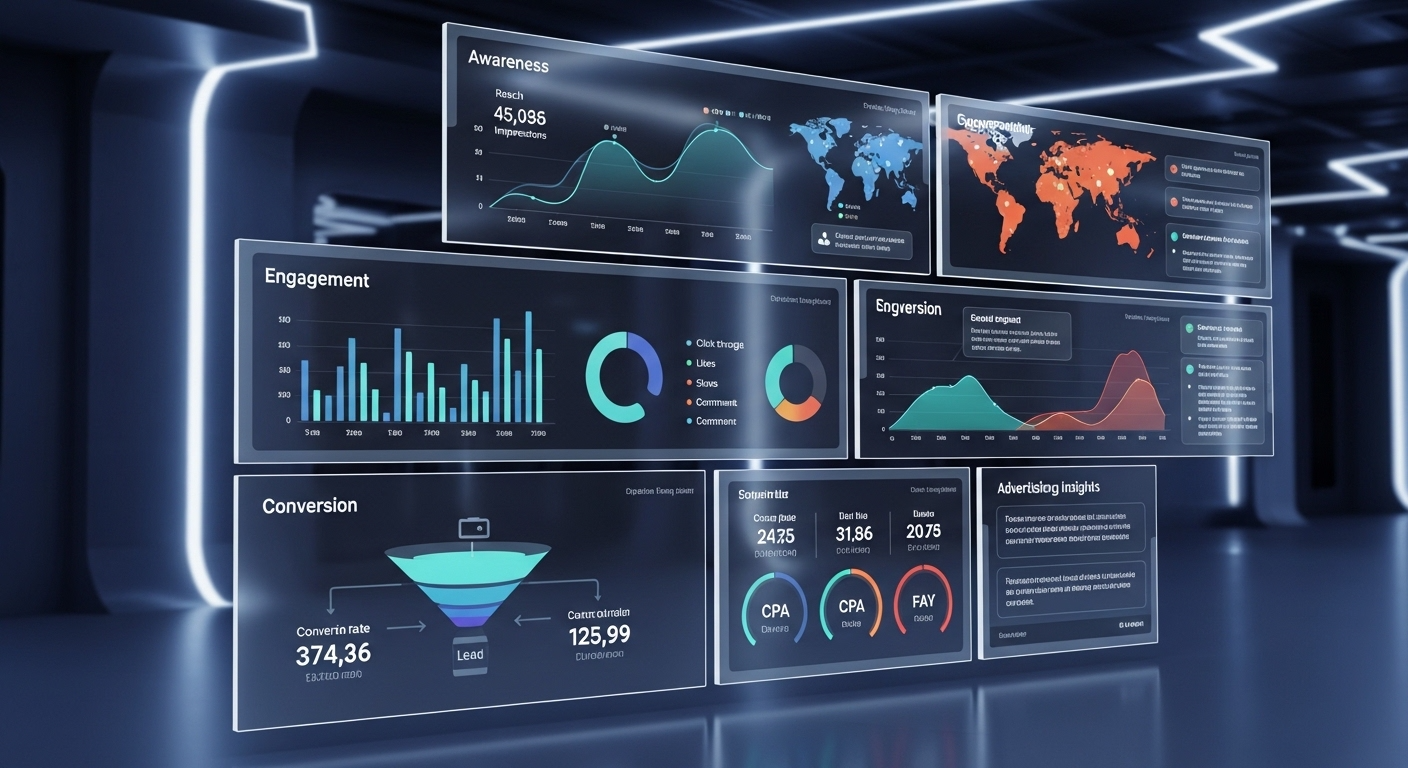
For many years, performance marketing was primarily associated with bottom-of-the-funnel activities. Marketers focused heavily on conversions, measuring the success of campaigns through metrics such as cost per acquisition, click-through rates, and return on ad spend. Platforms like paid search, retargeting ads, and affiliate marketing dominated performance strategies because they could be directly tied to measurable results.
However, the landscape of digital marketing has evolved dramatically. As privacy regulations change, advertising platforms automate targeting, and customer journeys become more complex, performance marketing is expanding beyond direct conversions.
Today, performance marketing is becoming a full-funnel discipline, integrating brand awareness, customer engagement, and long-term retention alongside traditional conversion optimization. This shift reflects a deeper understanding that sustainable growth requires influencing every stage of the customer journey.
Understanding the Marketing Funnel
The marketing funnel describes the stages a potential customer moves through before making a purchase decision. Traditionally, marketers divided this journey into three primary stages:
Top of Funnel (Awareness)
Potential customers discover a brand, product, or service for the first time.
Middle of Funnel (Consideration)
Customers research options, compare alternatives, and evaluate value propositions.
Bottom of Funnel (Conversion)
Customers make the final decision to purchase or subscribe.
Historically, performance marketing focused almost exclusively on the bottom stage. Campaigns targeted users who were already close to making a purchase.
While this approach generated short-term revenue, it overlooked the broader journey that leads customers to conversion in the first place.
Why Performance Marketing Is Expanding Across the Funnel
Several industry shifts are driving this evolution.
Changing Privacy Regulations
Privacy laws and platform policies have significantly reduced the ability to track users across websites and apps. This makes it more difficult to attribute conversions directly to specific ad interactions.
As a result, marketers must focus more on influencing earlier stages of the customer journey rather than relying solely on last-click attribution.
Longer and More Complex Customer Journeys
Modern consumers interact with brands across multiple touchpoints before making a purchase decision. These touchpoints may include:
- social media content
- video platforms
- search engines
- email newsletters
- product reviews
- community discussions
Customers rarely convert immediately after seeing a single advertisement. Instead, they gradually build familiarity and trust.
Full-funnel performance marketing recognizes that early interactions play a crucial role in eventual conversions.
AI-Driven Advertising Platforms
Advertising platforms increasingly rely on artificial intelligence to optimize campaign performance. These systems analyze large datasets to determine which users are most likely to convert over time.
AI optimization works best when platforms receive signals from multiple stages of the funnel, including engagement, video views, and content interactions not just purchases.
This encourages marketers to design campaigns that drive broader engagement rather than focusing only on immediate conversions.
The New Structure of Full-Funnel Performance Marketing
Modern performance marketing strategies now address each stage of the customer journey.
Top-of-Funnel: Building Awareness
At the top of the funnel, the goal is to introduce the brand to new audiences and generate interest.
Typical tactics include:
- video advertising
- social media discovery campaigns
- influencer collaborations
- educational content marketing
- brand storytelling campaigns
Although these campaigns may not produce immediate conversions, they build awareness that increases the effectiveness of later performance campaigns.
Middle-of-Funnel: Driving Engagement
Once customers are aware of a brand, they begin evaluating whether it meets their needs.
Middle-funnel strategies focus on nurturing this interest by providing deeper information and encouraging interaction.
Examples include:
- product comparison content
- educational webinars
- interactive landing pages
- retargeting campaigns
- lead generation offers
These activities help move potential customers closer to purchase decisions.
Bottom-of-Funnel: Converting Customers
The bottom of the funnel remains the core of traditional performance marketing. At this stage, campaigns focus on encouraging final purchase decisions.
Common tactics include:
- search advertising targeting high-intent keywords
- retargeting ads for previously engaged users
- promotional offers or discounts
- optimized checkout experiences
The key difference today is that these campaigns work more effectively when supported by earlier funnel stages.
Post-Purchase Funnel: Retention and Expansion
Full-funnel performance marketing also recognizes that the customer journey does not end at the initial purchase.
Retention strategies help increase lifetime customer value through:
- email engagement campaigns
- loyalty programs
- personalized product recommendations
- subscription models
- referral incentives
Performance marketers now measure success not only by acquisitions but also by long-term customer relationships.
The Role of Data in Full-Funnel Marketing
Data analytics plays a central role in full-funnel performance marketing.
Modern marketers track a variety of signals across the customer journey, including:
- video engagement metrics
- website interaction patterns
- email open and click rates
- product page behavior
- customer lifetime value
These data points provide a more comprehensive understanding of how marketing activities influence customer decisions over time.
Creative Strategy as a Performance Lever
As advertising platforms automate targeting and bidding strategies, creative content is becoming the primary differentiator in campaign performance.
Full-funnel marketing requires a diverse range of creative assets designed for different stages of the funnel.
For example:
- storytelling videos for awareness
- educational content for consideration
- product-focused ads for conversions
Continuous creative testing allows marketers to identify which messages resonate most effectively with audiences.
Organizational Changes in Marketing Teams
The shift toward full-funnel performance marketing is also changing how marketing teams operate.
Historically, organizations often separated brand marketing and performance marketing teams.
Today, these functions increasingly collaborate because brand awareness campaigns directly influence performance outcomes.
Integrated marketing teams coordinate strategies across:
- content marketing
- paid advertising
- social media engagement
- email campaigns
- product marketing
This collaboration ensures consistent messaging throughout the customer journey.
Measuring Success in Full-Funnel Marketing
Full-funnel marketing requires broader performance metrics than traditional conversion-focused models.
Important indicators now include:
- brand awareness growth
- audience engagement levels
- lead quality
- customer acquisition costs
- lifetime customer value
By analyzing the entire funnel, marketers can better understand how each stage contributes to overall growth.
Challenges of Full-Funnel Performance Marketing
While full-funnel strategies offer many advantages, they also introduce challenges.
Attribution Complexity
Tracking how multiple touchpoints influence a single purchase remains difficult, especially with privacy limitations.
Marketers must often rely on probabilistic models rather than precise attribution.
Content and Creative Demands
Full-funnel marketing requires a larger volume of creative assets to support each stage of the customer journey.
Producing and testing these assets requires additional resources.
Cross-Team Coordination
Successful full-funnel strategies require alignment between marketing teams, product teams, and data analysts.
Organizations must ensure that messaging and data insights flow across departments.
The Future of Performance Marketing
Looking ahead, full-funnel performance marketing will continue to evolve as technology advances.
Emerging trends include:
- AI-driven audience segmentation
- predictive marketing analytics
- personalized advertising experiences
- real-time customer journey optimization
These innovations will enable marketers to design increasingly sophisticated campaigns that influence customers throughout the entire lifecycle.
Conclusion
Performance marketing is no longer limited to driving immediate conversions. As digital ecosystems grow more complex and customer journeys expand across multiple touchpoints, marketers must influence every stage of the funnel.
Full-funnel performance marketing integrates brand awareness, engagement, conversion, and retention into a unified strategy designed for sustainable growth.
By understanding and optimizing the entire customer journey, organizations can build stronger relationships with their audiences and achieve more consistent long-term results.
In the modern marketing landscape, performance is no longer just about the last click it is about the entire journey that leads to it.
For more Contact US
Similar Posts
Marketing
B2B Brands Are Focusing More on Trust Infrastructure in 2026
Why Trust Has Become the Most Important Growth Asset in 2026 The B2B business environment has changed dramatically…

Marketing
Why Attribution & Measurement Are Becoming a Major Problem in Digital Marketing
In the early days of digital advertising, performance marketing felt simple. Businesses could launch a campaign, track clicks,…