


Introduction
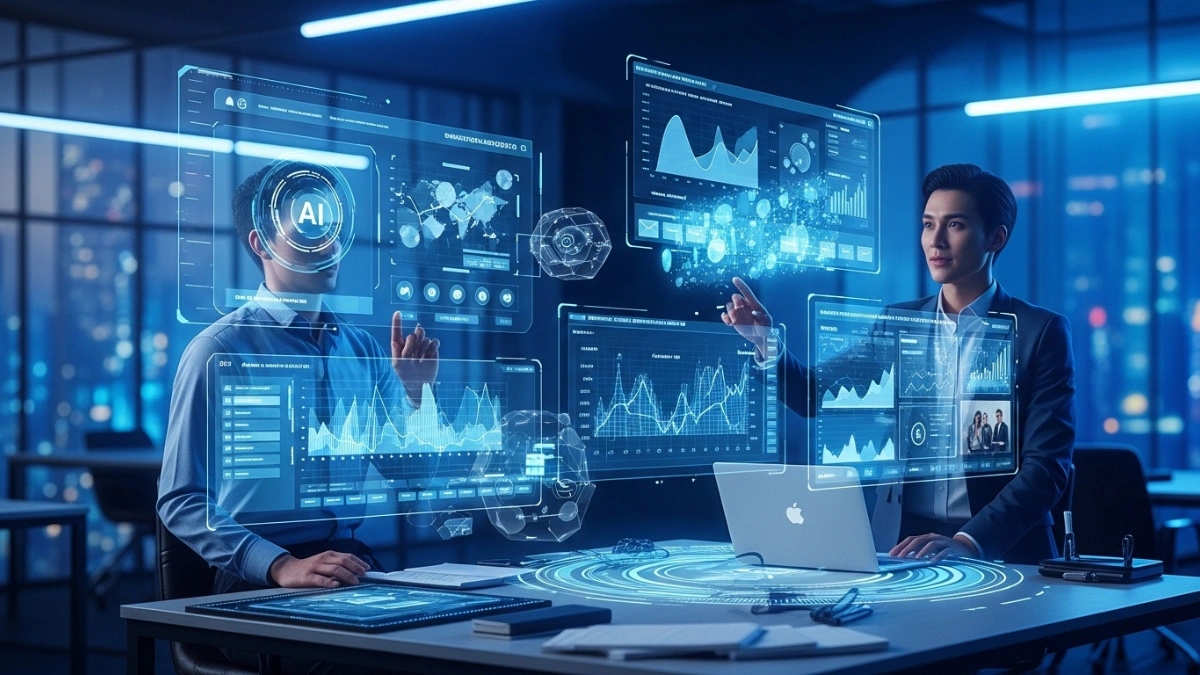
Marketing has entered a new era where artificial intelligence is no longer just a supporting technology to Marketer it is becoming an active partner in decision-making, creativity, customer engagement, and campaign execution. Across industries, AI-powered tools are transforming how marketers work by automating repetitive tasks, generating insights, personalizing customer experiences, and even creating content in real time.
In 2026, the phrase “AI is becoming every marketer’s copilot” perfectly describes the current state of digital marketing. Instead of replacing marketers, AI is helping them work smarter, faster, and more efficiently. Much like a copilot assists a pilot during a flight, AI supports marketers by handling complex data analysis, streamlining workflows, and offering intelligent recommendations while humans continue to guide strategy, creativity, and brand vision.
From small businesses to global enterprises, organizations are increasingly relying on AI-driven marketing platforms to remain competitive in an extremely fast-moving digital landscape. As customer expectations grow and marketing channels multiply, AI has become an essential companion for modern marketers.
What Does “AI Copilot” Mean in Marketing?
An AI copilot is an intelligent system that assists marketers throughout the marketing process. Rather than functioning as a simple automation tool, AI copilots actively analyze data, suggest improvements, predict outcomes, and optimize campaigns automatically.
These systems can:
- Generate marketing content
- Predict customer behavior
- Automate workflows
- Optimize advertising campaigns
- Personalize communication
- Analyze massive datasets
- Improve customer targeting
- Recommend strategic actions
AI copilots are integrated into:
- Email marketing platforms
- CRM systems
- Social media management tools
- Advertising platforms
- Customer support systems
- Content creation software
- Analytics dashboards
The goal is not to remove humans from marketing but to amplify human creativity and strategic thinking.
Why AI Is Rapidly Transforming Marketing
The modern digital environment produces enormous amounts of customer data every second. Human teams alone cannot efficiently process this information at scale. AI solves this challenge by analyzing data instantly and converting it into actionable insights.
Several factors are accelerating AI adoption in marketing:
1. Rising Customer Expectations
Customers now expect:
- Personalized experiences
- Instant responses
- Relevant recommendations
- Consistent communication across channels
AI helps businesses meet these expectations by analyzing customer behavior in real time and automatically adapting campaigns accordingly.
2. Increased Marketing Complexity
Today’s marketers manage:
- Multiple social platforms
- Paid advertising campaigns
- Email funnels
- Influencer collaborations
- SEO strategies
- Content production
- Customer journeys
AI simplifies these complex operations through automation and intelligent optimization.
3. The Need for Faster Decision-Making
Digital trends change rapidly. AI enables marketers to:
- Detect trends instantly
- Monitor campaign performance live
- Adjust strategies automatically
- React to customer behavior in real time
This speed gives businesses a major competitive advantage.
Major Ways AI Is Becoming a Marketing Copilot
1. AI-Powered Content Creation
Content creation is one of the biggest areas being transformed by AI.
Modern AI tools can generate:
- Blog outlines
- Email campaigns
- Social media captions
- Product descriptions
- Video scripts
- Ad copy
- Landing page text
Marketers can now create high-quality content faster while maintaining consistency across channels.
Benefits of AI Content Creation
- Faster production timelines
- Reduced creative burnout
- Scalable content generation
- Improved consistency
- Easier localization for global markets
However, human creativity remains essential for:
- Brand storytelling
- Emotional connection
- Strategic messaging
- Original ideas
AI assists the creative process rather than replacing it.
2. Hyper-Personalized Customer Experiences
Personalization has become one of the most powerful drivers of customer engagement. AI enables brands to deliver individualized experiences at scale.
AI analyzes:
- Browsing behavior
- Purchase history
- Search activity
- Engagement patterns
- Demographic data
- Device usage
Based on this data, AI can automatically personalize:
- Product recommendations
- Email subject lines
- Website content
- Advertising messages
- Promotions
- Customer support interactions
Example
An e-commerce company can show different homepage content to different users depending on:
- Their location
- Previous purchases
- Interests
- Shopping habits
This level of personalization significantly increases conversion rates and customer satisfaction.
3. Smarter Advertising Campaigns
AI is revolutionizing digital advertising by improving targeting and campaign optimization.
AI-powered advertising systems can:
- Identify ideal audiences
- Predict click-through rates
- Optimize bidding strategies
- Test multiple creatives automatically
- Allocate budgets dynamically
- Improve return on investment (ROI)
Platforms like Google Ads and Meta Ads already rely heavily on machine learning algorithms to automate campaign optimization.
Key Advantages
- Reduced manual management
- Better ad performance
- Lower customer acquisition costs
- Improved audience targeting
- Real-time optimization
4. Predictive Analytics and Customer Insights
AI helps marketers predict future customer behavior using predictive analytics.
These systems analyze historical and real-time data to forecast:
- Customer churn
- Purchase likelihood
- Product demand
- Campaign performance
- Customer lifetime value
How Predictive Analytics Helps Businesses
- Improves retention strategies
- Identifies high-value customers
- Increases sales opportunities
- Enhances marketing efficiency
- Supports strategic planning
Instead of reacting to customer behavior after it happens, marketers can proactively engage customers before problems arise.
5. AI Chatbots and Conversational Marketing
Customer communication is becoming increasingly automated through AI chatbots and virtual assistants.
Modern AI chatbots can:
- Answer customer questions instantly
- Recommend products
- Guide purchases
- Schedule appointments
- Resolve support issues
- Collect customer data
Benefits of Conversational AI
- 24/7 customer support
- Faster response times
- Lower support costs
- Improved customer satisfaction
- Higher lead conversion rates
As natural language processing improves, conversational AI is becoming more human-like and effective.
6. AI in Email Marketing
Email marketing remains one of the highest-performing digital marketing channels, and AI is making it even more powerful.
AI improves email marketing through:
- Personalized subject lines
- Send-time optimization
- Automated segmentation
- Predictive recommendations
- Dynamic content generation
AI Can Automatically:
- Determine the best time to send emails
- Identify inactive subscribers
- Recommend products based on behavior
- Adjust messaging for different audiences
This leads to:
- Higher open rates
- Better click-through rates
- Increased conversions
- Improved customer engagement
7. Social Media Marketing and AI
AI is also transforming social media management.
Modern AI tools help marketers:
- Schedule posts intelligently
- Generate captions
- Analyze engagement trends
- Monitor audience sentiment
- Identify trending topics
- Recommend optimal posting times
AI-Powered Social Listening
AI can analyze millions of social conversations to understand:
- Customer opinions
- Brand sentiment
- Market trends
- Competitor activity
This helps brands respond faster and make smarter marketing decisions.
The Role of Human Creativity in an AI-Driven World
Despite AI’s rapid growth, human marketers remain essential.
AI lacks:
- Emotional intelligence
- Human empathy
- Cultural understanding
- Original creativity
- Strategic intuition
Successful marketing still depends heavily on:
- Storytelling
- Brand identity
- Emotional resonance
- Ethical judgment
- Creative innovation
The future of marketing is not “AI versus humans.”
It is “AI plus humans.”
The most successful marketers will be those who learn how to collaborate effectively with AI tools.
Challenges and Concerns of AI Marketing
While AI offers major advantages, there are also important challenges.
1. Data Privacy Concerns
AI systems rely heavily on customer data. Businesses must ensure compliance with privacy regulations such as:
- GDPR
- CCPA
- Data protection laws
Transparency and ethical data usage are becoming increasingly important.
2. Risk of Over-Automation
Too much automation can make marketing feel robotic and impersonal.
Brands must maintain:
- Authentic communication
- Human connection
- Emotional storytelling
Customers still value genuine brand experiences.
3. Bias in AI Systems
AI systems can unintentionally reflect biases present in training data.
This can lead to:
- Unfair targeting
- Inaccurate recommendations
- Ethical concerns
Companies must carefully monitor AI systems to ensure fairness and inclusivity.
Future of AI as a Marketing Copilot
The future of AI in marketing looks incredibly powerful.
Emerging innovations include:
- Autonomous marketing agents
- Real-time emotional analysis
- Voice-based AI marketing
- AI-generated video campaigns
- Predictive customer journey mapping
- Fully automated personalization engines
In the coming years, AI copilots may handle:
- Entire campaign management
- Real-time content adaptation
- Customer interaction optimization
- Dynamic pricing strategies
- Advanced predictive engagement
However, human marketers will continue leading strategy, creativity, and brand identity.
Best Practices for Businesses Using AI Marketing
To maximize success with AI marketing, businesses should:
Focus on Human + AI Collaboration
Use AI to support creativity, not replace it.
Maintain Brand Authenticity
Ensure AI-generated content aligns with brand voice and values.
Prioritize Data Privacy
Build trust through ethical and transparent data practices.
Continuously Monitor AI Performance
AI systems require regular evaluation and improvement.
Invest in AI Skills and Training
Marketing teams must learn how to work effectively with AI technologies.
Conclusion
AI is rapidly becoming every marketer’s copilot by transforming how campaigns are created, optimized, and delivered. From content generation and predictive analytics to customer personalization and automated advertising, AI is helping marketers achieve greater efficiency, smarter decision-making, and stronger customer engagement.
Yet the true power of AI lies not in replacing human marketers, but in enhancing their abilities. Creativity, emotional intelligence, storytelling, and strategic thinking remain uniquely human strengths that AI cannot fully replicate.
The future of marketing belongs to organizations that successfully combine human creativity with AI-powered intelligence. Businesses that embrace this partnership will be better positioned to innovate, scale, and build deeper customer relationships in the digital era.
As AI technology continues to evolve, marketers who learn to work alongside intelligent systems will lead the next generation of marketing transformation.
For more Contact Us
Similar Posts

Marketing
4 Powerful Hyper-Personalization Strategies for Marketing Automation Success
The modern customer expects more than generic advertisements, mass emails, and one-size-fits-all marketing campaigns. In today’s digital-first business…
Marketing
B2B Brands Are Focusing More on Trust Infrastructure in 2026
Why Trust Has Become the Most Important Growth Asset in 2026 The B2B business environment has changed dramatically…