


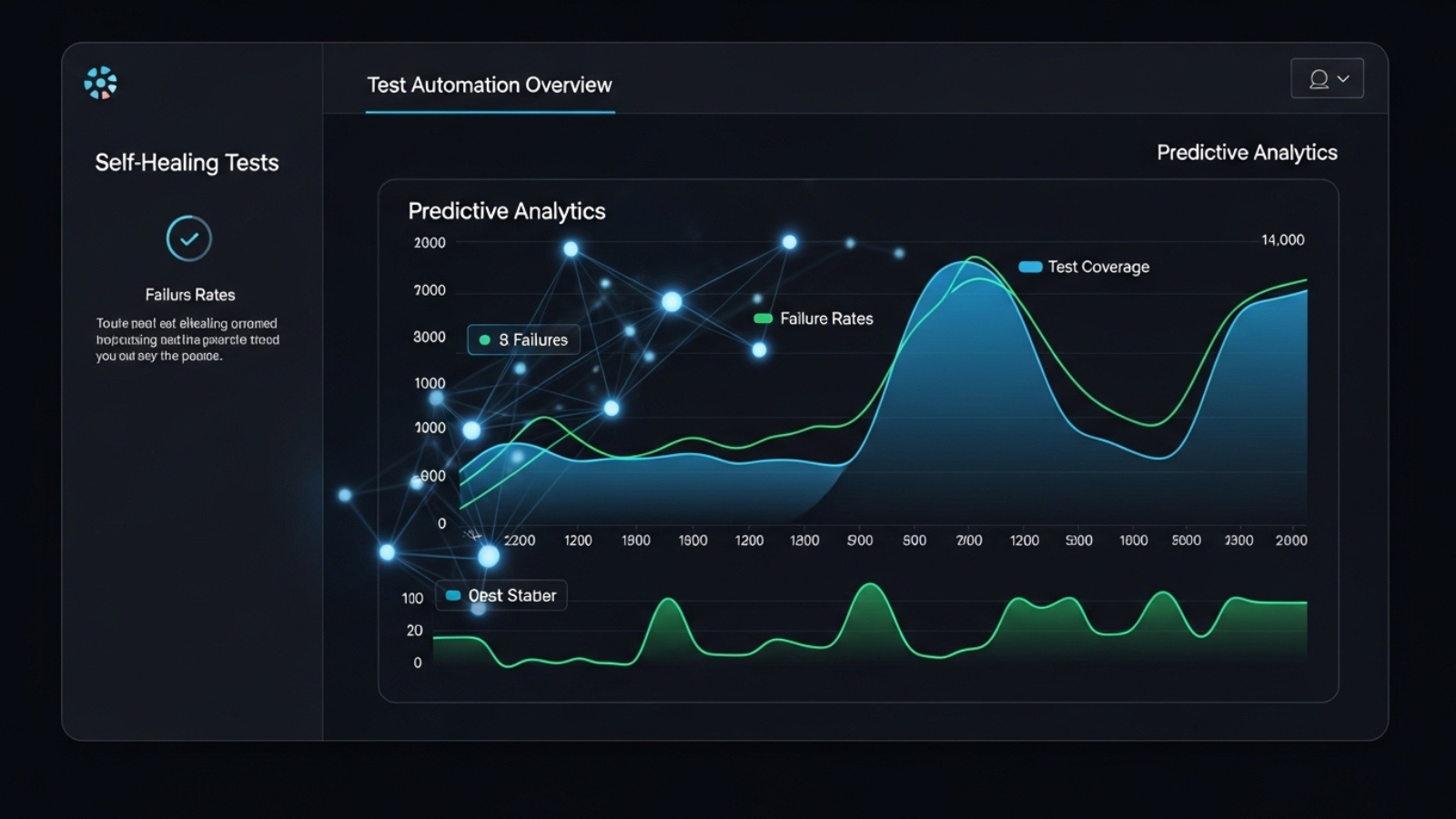
The transition isn’t theoretical anymore for Script-Based Testing. It’s already underway, and the gap between teams that adopt AI-driven testing and those that cling to script-heavy frameworks is widening fast.
For years, automation testing has been synonymous with writing scripts structured, repeatable, and painfully fragile. Frameworks like Selenium became the backbone of QA automation. Entire teams, processes, and even careers were built around maintaining these systems.
But here’s the uncomfortable truth:
Script-based testing doesn’t scale in a modern software environment.
And AI is exposing that weakness.
The Core Problem: Script-Based Testing Was Never Built for Speed
Script-based testing was designed in an era where:
- Release cycles were slower
- Applications were less dynamic
- UI changes were less frequent
That world doesn’t exist anymore.
Today’s systems are:
- Continuously deployed
- Built on microservices
- Rapidly evolving at the UI and API layers
Trying to test this environment with static scripts is like trying to manage cloud infrastructure with manual server configs. It’s outdated thinking.
Where Script-Based Testing Breaks Down
1. Maintenance Becomes the Primary Cost Center
Every change in the UI triggers a cascade of broken tests.
- XPath changes → test failure
- CSS class updates → test failure
- Minor layout shifts → test failure
Your team ends up spending:
60–80% of time fixing tests instead of validating product quality.
That’s not testing. That’s firefighting.
2. Flaky Tests Destroy Trust in Automation
Flaky tests are the silent killer of QA systems.
They:
- Pass sometimes
- Fail randomly
- Create false positives
Eventually, developers stop trusting test results.
And when that happens, your automation suite becomes irrelevant.
3. Slow Feedback Loops Kill Velocity
Script-heavy frameworks take time to execute and debug.
In a CI/CD pipeline:
- Slow tests = delayed feedback
- Delayed feedback = slower releases
In a competitive environment, that’s unacceptable.
4. Talent Dependency Is Too High
Maintaining script-based systems requires engineers who:
- Understand programming deeply
- Know testing frameworks inside out
- Can debug complex failures quickly
That’s expensive and hard to scale.
AI-Driven Testing: What’s Actually Changing
Modern platforms like Testim, Mabl, and Functionize are not just improving testing they’re redefining it.
They shift testing from:
“Write and maintain scripts”
to
“Train and guide intelligent systems”
Key Capabilities of AI Testing Systems
1. Self-Healing Test Execution
Traditional approach:
- Element changes → test breaks
AI approach:
- Model identifies similar elements
- Automatically adjusts selectors
- Test continues without manual fixes
This alone eliminates a massive chunk of maintenance overhead.
2. Intelligent Test Creation
Instead of manually writing test cases, AI can:
- Observe user sessions
- Map workflows
- Generate realistic test scenarios
This creates tests that reflect actual user behavior not assumptions.
3. Risk-Based Testing
Not all tests are equally important.
AI systems analyze:
- Code changes
- Historical failures
- User impact
Then prioritize tests accordingly.
This means faster pipelines without sacrificing quality.
4. Visual and Functional Validation
AI doesn’t just check if something “works.”
It can:
- Detect UI inconsistencies
- Identify layout shifts
- Compare visual states intelligently
This reduces the need for brittle visual assertion scripts.
5. Continuous Learning
The system improves over time by learning from:
- Failures
- Changes
- Usage patterns
Script-based systems degrade over time.
AI systems improve over time.
The Economics of AI vs Script-Based Testing
Let’s be blunt this shift is driven by economics.
Script-Based Testing:
- High upfront setup
- Continuous maintenance cost
- Increasing complexity over time
AI-Driven Testing:
- Higher tool cost initially
- Lower long-term maintenance
- Better scalability
If you’re running a business, the decision is obvious.
The Integration Layer: Where Most Teams Fail
Adopting AI tools without changing your workflow is a mistake.
AI testing must be embedded into your delivery pipeline using tools like:
- Jenkins
- GitHub Actions
Correct Integration Looks Like:
- Every commit triggers AI-based test execution
- Feedback loops are near real-time
- Failures are categorized intelligently
- Reports provide actionable insights
Incorrect Integration Looks Like:
- Running AI tests as a separate QA step
- Treating AI as a replacement for strategy
- Ignoring test data and environment control
That’s how teams waste money on “AI tools” without getting results.
The Cultural Shift: QA Teams Must Evolve
This is where most organizations struggle.
AI doesn’t just change tools it changes roles.
Old Role: Test Executor
- Writes scripts
- Runs tests
- Reports bugs
New Role: Quality Engineer
- Designs testing strategy
- Defines risk coverage
- Oversees AI systems
- Analyzes failure patterns
If your QA team doesn’t evolve, they become obsolete.
The Hard Truth Most Teams Ignore
AI testing is not optional anymore for high-growth teams.
But here’s the part nobody tells you:
Adopting AI without fixing your fundamentals will fail.
If your system has:
- Poor architecture
- Unstable environments
- No CI/CD discipline
- Undefined quality metrics
AI will amplify your chaos, not solve it.
Where Script-Based Testing Still Makes Sense
Let’s stay realistic.
Script-based testing is not completely dead.
It still works for:
- Highly controlled environments
- Simple applications
- Legacy systems where change is minimal
But for:
- SaaS platforms
- Scalable products
- Rapid-release environments
It’s a liability.
The Strategic Shift You Need to Make
If you want to stay competitive, your roadmap should look like this:
Phase 1: Audit Your Current Testing System
- Identify maintenance-heavy areas
- Measure flakiness
- Analyze execution time
Phase 2: Reduce UI Test Dependency
- Move logic testing to API layer
- Keep UI tests minimal and critical
Phase 3: Introduce AI Testing Tools
Start small:
- Pilot on high-impact workflows
- Measure improvement
Phase 4: Integrate Into CI/CD
Make AI testing part of your pipeline not an add-on.
Phase 5: Redefine QA Roles
Train your team to think like quality engineers, not script writers.
Final Reality Check
If your current setup looks like this:
- Heavy reliance on Selenium
- Large volumes of brittle UI tests
- Frequent test failures after minor updates
- QA operating as a separate function
You’re not just inefficient you’re exposed.
Bottom Line
AI is not “enhancing” automation testing.
It is replacing the core model of how script-based testing works.
The companies that understand this early will:
- Ship faster
- Reduce costs
- Build more reliable systems
The ones that don’t will:
- Spend more
- Move slower
- Lose competitive edge
The Only Question That Matters
Are you building a testing system that scales with your product…
or one that collapses as it grows?
For more Contact Us
Similar Posts

Software Testing & QA
7 Essential Cloud-Native Load Testing Strategies for Global Scale
As businesses continue their digital transformation journeys, cloud-native applications have become the backbone of modern software development. Organizations…

Software Testing & QA
AI Testing Is the Fastest-Growing Trend in 2026
The world of software testing is undergoing one of the biggest transformations in its history. For years, automation…