


Introduction
For decades, enterprises have invested in systems designed to streamline operations ERP platforms, CRM tools, workflow automation engines, and analytics dashboards. These technologies improved visibility and efficiency, but they still depended on human coordination to function effectively.
In 2026, a profound shift is underway.
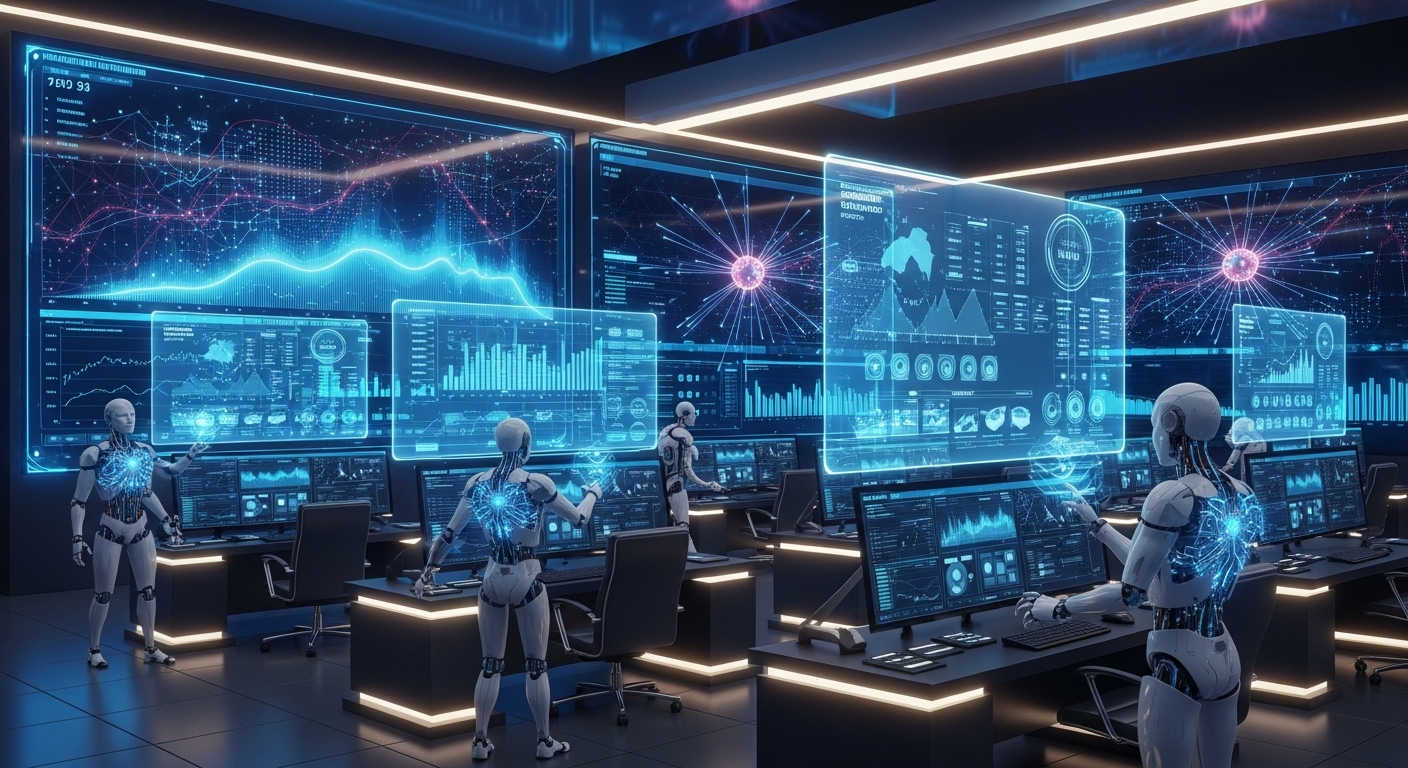
Enterprise AI agents are emerging as a new operational layer, capable of understanding business objectives, orchestrating workflows, and executing decisions across systems without constant human direction. This evolution marks the transition from digitally enabled businesses to autonomously operated enterprises.
The question is no longer how to automate tasks, but how to build systems that can run entire workflows independently.
The Evolution of Enterprise Workflows
To understand the significance of this shift, it’s important to examine how workflows have evolved:
Phase 1: Manual Execution
- Human-driven processes
- High latency and error rates
- Limited scalability
Phase 2: Rule-Based Automation
- Predefined workflows
- Increased efficiency
- Limited adaptability
Phase 3: Intelligent Assistance
- AI-driven insights and recommendations
- Human-in-the-loop decision-making
- Improved accuracy but still dependent on people
Phase 4: Autonomous Workflow Execution (Current Era)
- AI agents interpret goals and execute workflows
- Real-time decision-making
- Continuous optimization
- Minimal human intervention
This fourth phase introduces a self-operating enterprise model, where workflows are no longer static sequences but dynamic systems that evolve continuously.
From Automation to Autonomous Workflow Execution
Traditional automation focused on rule-based systems:
- Predefined workflows
- Limited flexibility
- Heavy reliance on human oversight
While effective for repetitive tasks, these systems lacked adaptability.
Today’s enterprise AI agents are fundamentally different:
- They understand context, not just rules
- They adapt in real time
- They execute multi-step workflows independently
- They learn continuously from outcomes
This shift transforms workflows from static processes into dynamic, intelligent systems.
What Are Enterprise AI Agents?
Enterprise AI agents are intelligent software entities that can:
- Interpret business objectives
- Interact with multiple systems and tools
- Execute tasks across departments
- Make decisions based on real-time data
- Coordinate with other agents to complete workflows
Unlike traditional bots, these agents are:
- Goal-driven rather than task-specific
- Collaborative across systems and teams
- Autonomous in execution
They act as a digital workforce layer embedded within the enterprise.
What Makes Enterprise AI Agents Different?
Enterprise AI agents are not just advanced bots—they represent a new class of intelligent systems with distinct capabilities:
1. Goal-Oriented Intelligence
Instead of following instructions, agents understand what needs to be achieved and determine how to achieve it.
2. Multi-System Interaction
They seamlessly integrate with:
- ERP platforms
- CRM systems
- Supply chain software
- Financial tools
- Internal APIs
3. Contextual Awareness
Agents consider:
- Business priorities
- Historical data
- Real-time conditions
4. Autonomous Execution
They complete workflows without waiting for manual approvals in most cases.
5. Collaborative Behavior
Multiple agents can coordinate to solve complex, cross-functional problems.
How AI Agents Run Business Workflows
Enterprise AI agents operate through a structured execution model:
1. Goal Interpretation
They understand high-level instructions such as “process payroll” or “optimize inventory levels.”
2. Task Decomposition
They break down goals into actionable steps across systems.
3. Cross-System Execution
They interact with:
- ERP systems
- CRM platforms
- Supply chain tools
- Internal databases
4. Decision-Making
They evaluate options and choose optimal actions in real time.
5. Continuous Optimization
They learn from outcomes to improve future workflows.
Key Use Cases of Enterprise AI Agents
1. Finance & Accounting Automation
AI agents handle:
- Invoice processing
- Expense approvals
- Financial reconciliations
They ensure accuracy while reducing manual effort.
2. Human Resource Operations
Agents manage:
- Employee onboarding
- Payroll processing
- Leave management
This enables seamless employee experiences with minimal administrative burden.
3. Supply Chain & Logistics
AI agents:
- Monitor inventory levels
- Predict demand fluctuations
- Automatically reorder stock
- Reroute shipments in real time
This creates highly responsive supply chain networks.
4. Customer Support & Service Operations
Agents:
- Resolve customer queries
- Escalate complex issues
- Personalize responses
- Manage service workflows
Moving beyond chatbots, they complete service processes end-to-end.
5. IT & DevOps
AI agents:
- Monitor system performance
- Detect anomalies
- Automatically fix issues
- Optimize infrastructure
This leads to self-healing systems and reduced downtime.
The Business Impact of AI-Driven Workflows
1. End-to-End Efficiency
Workflows are executed seamlessly without delays between steps.
2. Real-Time Decision-Making
AI agents respond instantly to changes in data and conditions.
3. Reduced Operational Costs
Automation of complex workflows reduces dependency on manual processes.
4. Increased Scalability
Organizations can scale operations without proportionally increasing workforce size.
5. Improved Accuracy
AI-driven execution minimizes human error and inconsistency.
The Shift to a Digital Workforce Model
One of the most transformative aspects of enterprise AI agents is the creation of a digital workforce.
Traditional Workforce Model:
- Humans perform tasks
- Tools support execution
Emerging Model:
- AI agents execute tasks
- Humans supervise, strategize, and innovate
This creates a new organizational structure:
| Role Type | Responsibility |
|---|---|
| Humans | Strategy, governance, creativity |
| AI Agents | Execution, optimization, monitoring |
This hybrid workforce dramatically increases productivity and scalability.
From Tools to Digital Workforce
One of the most important shifts is the emergence of AI as a digital workforce.
Instead of:
- Employees using tools to complete tasks
We now see:
- AI agents completing tasks independently
- Humans supervising and guiding systems
This creates a hybrid workforce model:
- Humans → Strategy & oversight
- AI agents → Execution & optimization
Challenges Enterprises Must Address
While the benefits are transformative, adoption comes with challenges:
Integration with Legacy Systems
Connecting AI agents with existing infrastructure can be complex.
Data Quality & Availability
Agents rely on accurate, real-time data for effective execution.
Governance & Control
Organizations must define boundaries for AI autonomy.
Security Risks
AI agents interacting across systems increase exposure to vulnerabilities.
Change Management
Employees must adapt to new roles and workflows.
Building an AI-Agent-Driven Enterprise: A Practical Approach
To successfully implement enterprise AI agents, organizations should follow a phased approach:
Step 1: Identify High-Impact Workflows
Focus on processes that are repetitive, data-driven, and cross-functional.
Step 2: Enable System Integration
Ensure seamless connectivity across enterprise platforms.
Step 3: Deploy AI in Assisted Mode
Start with AI supporting workflows before granting autonomy.
Step 4: Introduce Autonomous Execution
Allow AI agents to execute decisions with defined constraints.
Step 5: Scale Across Departments
Expand AI agent usage across multiple business functions.
The Future: Autonomous Enterprise Ecosystems
The next stage of enterprise evolution will involve:
- Multiple AI agents collaborating across workflows
- Real-time coordination between departments
- Fully autonomous operational ecosystems
Businesses will shift from managing processes to orchestrating intelligent systems.
Conclusion
Enterprise AI agents are redefining how work gets done. They are no longer just tools supporting employees they are active participants running business workflows autonomously.
This shift represents a new operational model where organizations can achieve:
- Faster execution
- Continuous optimization
- Scalable intelligence
Enterprises that embrace this transformation will lead the next wave of digital innovation, while those that hesitate risk falling behind in an increasingly autonomous world.
For more Contact US
Similar Posts

Product & Tools
The Powerful Rise of AI-Powered Tools Over Traditional Software in 2026
The global software industry is experiencing one of the most important technological transformations in decades. Businesses that once…

Product & Tools
Usage-Based Pricing Is Replacing Traditional SaaS Plans
The SaaS (Software-as-a-Service) industry is entering a completely new era. For more than two decades, subscription-based software pricing…