


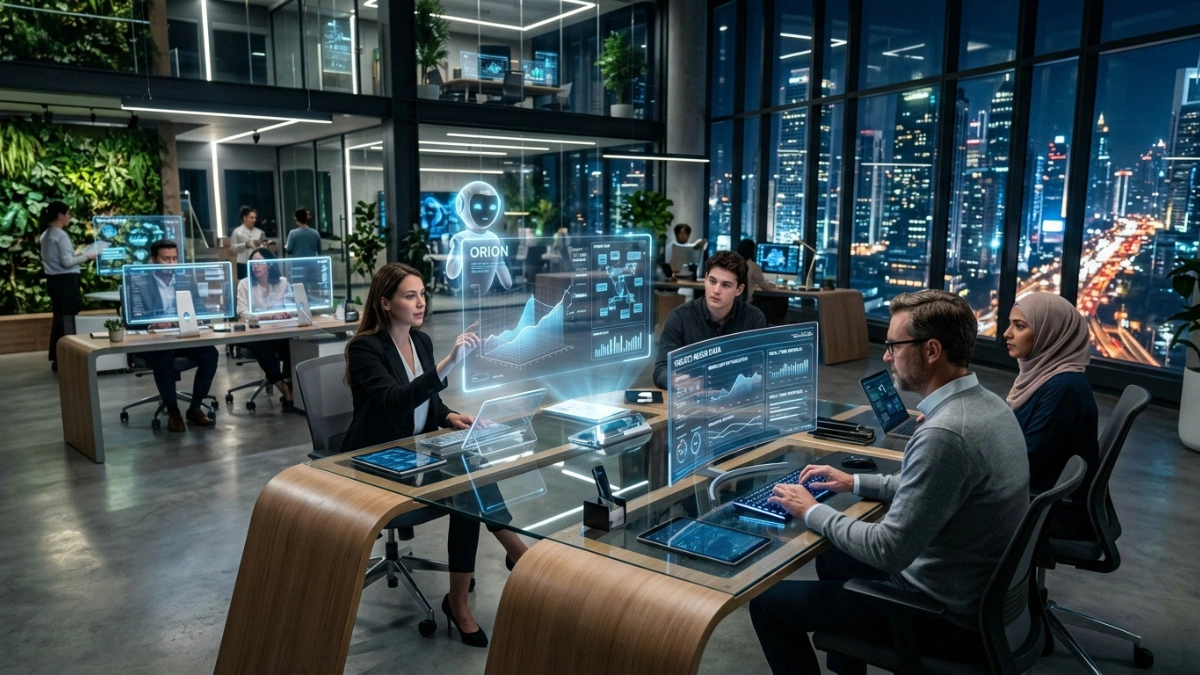
Artificial Intelligence has evolved from a futuristic concept into one of the most powerful forces shaping modern workplaces. Across industries, organizations are integrating AI into daily operations, transforming not only how employees work but also how businesses communicate, collaborate, hire, lead, and innovate.
In 2026, AI is no longer viewed as just a technological upgrade. It has become a cultural transformation.
The modern workplace is experiencing one of the biggest shifts since the rise of the internet. Businesses are moving away from traditional structures and entering an era where humans and intelligent systems work side by side. AI-powered tools now support everything from customer service and recruitment to project management, analytics, workflow automation, and decision-making.
As companies embrace AI-driven systems, workplace culture itself is changing rapidly. Employee expectations are evolving, leadership models are shifting, and organizations are redefining productivity, flexibility, creativity, and collaboration.
The future workplace is not simply becoming more digital. It is becoming more intelligent, automated, connected, and adaptive.
The Evolution of Workplace Culture
Workplace culture has always evolved alongside technological advancements.
In previous decades:
- Industrial machines transformed manufacturing.
- Computers revolutionized office work.
- The internet changed communication.
- Smartphones created always-connected workplaces.
- Cloud computing enabled remote collaboration.
Now, Artificial Intelligence is becoming the next major transformation.
Unlike previous technologies, AI does not only assist with tools or communication. It actively participates in workflows, generates insights, predicts patterns, automates decisions, and supports employees in real time.
This creates a completely different relationship between humans and technology.
Employees are no longer just using software.
They are increasingly collaborating with intelligent systems.
AI Is Becoming a Daily Workplace Companion
In modern organizations, AI is embedded into daily operations more deeply than many people realize.
Employees now interact with AI constantly through:
- Smart email systems
- AI chat assistants
- Workflow automation platforms
- Predictive analytics tools
- Virtual meeting assistants
- AI-powered CRMs
- Automated reporting systems
- Intelligent scheduling platforms
- Content generation tools
- HR automation software
Many businesses are now using AI to simplify repetitive tasks that once consumed hours of employee time.
For example:
- AI summarizes meetings automatically.
- AI organizes schedules and reminders.
- AI drafts emails and reports.
- AI predicts customer behavior.
- AI automates customer support.
- AI analyzes performance data instantly.
This shift is allowing employees to focus more on:
- Strategy
- Innovation
- Problem-solving
- Relationship building
- Creative work
AI is increasingly functioning as a workplace “copilot” rather than just a background tool.
The Shift From Manual Work to Intelligent Work
One of the biggest workplace culture transformations caused by AI is the movement from manual processes to intelligent workflows.
Traditional workplaces relied heavily on:
- Manual data entry
- Repetitive administrative tasks
- Time-consuming reporting
- Human-dependent scheduling
- Slow information retrieval
AI now automates much of this operational workload.
This has created:
- Faster decision-making
- Higher productivity
- Improved operational efficiency
- Reduced human error
- Better scalability
Employees are spending less time on repetitive tasks and more time on higher-value activities.
This transformation is especially visible in industries like:
- Finance
- Marketing
- Customer service
- Healthcare
- Software development
- Human resources
- Logistics
- Operations management
Companies that effectively integrate AI are gaining a major competitive advantage.
AI Is Changing Employee Expectations
Modern employees now expect workplaces to provide:
- Smart digital tools
- Efficient workflows
- Flexible work systems
- Personalized learning experiences
- Better communication platforms
- Faster access to information
Employees increasingly prefer organizations that embrace innovation.
Younger professionals especially expect:
- AI-assisted productivity tools
- Automation-driven efficiency
- Digital-first collaboration
- Flexible work environments
- Continuous learning opportunities
Companies using outdated systems may struggle to attract top talent.
AI adoption is therefore becoming part of employer branding and workplace identity.
AI and Hybrid Work Culture
The rise of hybrid and remote work accelerated AI adoption dramatically.
Distributed teams require:
- Better communication systems
- Automated coordination
- Digital collaboration platforms
- Intelligent workflow management
AI helps organizations manage remote operations efficiently through:
- Virtual collaboration assistants
- AI-generated meeting summaries
- Smart scheduling systems
- Productivity analytics
- Automated task tracking
- Real-time translation tools
For remote employees, AI reduces communication gaps and improves coordination across different time zones.
This has led to the rise of:
- Digital-first workplaces
- Async communication cultures
- Flexible productivity models
- Virtual collaboration ecosystems
The traditional office-centered workplace culture is rapidly evolving.
AI Is Reshaping Leadership
Leadership styles are also changing significantly because of AI.
In traditional workplaces, managers spent large amounts of time on:
- Administrative oversight
- Reporting
- Scheduling
- Monitoring productivity
- Organizing workflows
AI now automates many of these responsibilities.
As a result, modern leaders are shifting toward:
- Strategic planning
- Team development
- Emotional intelligence
- Innovation management
- Change leadership
- Employee engagement
The best leaders today are not simply operational managers.
They are becoming transformation guides.
Organizations increasingly value leaders who can:
- Understand technology
- Communicate effectively
- Build trust
- Lead digital transformation
- Support employee wellbeing
- Balance automation with humanity
AI-driven workplaces require more human-centered leadership than ever before.
Recruitment and Hiring Are Becoming AI-Driven
Recruitment is one of the areas most transformed by AI.
Companies now use AI for:
- Resume screening
- Candidate ranking
- Interview scheduling
- Skill analysis
- Behavioral prediction
- Employee onboarding
AI-powered systems help businesses process thousands of applications quickly and efficiently.
Benefits include:
- Faster hiring
- Reduced manual workload
- Better candidate matching
- Improved recruitment efficiency
However, AI-driven hiring also raises concerns about:
- Algorithmic bias
- Lack of transparency
- Diversity issues
- Over-automation
Many organizations are now combining AI screening with human review to maintain fairness and ethical hiring practices.
The recruitment culture itself is also changing toward:
- Skills-first hiring
- Portfolio-based evaluation
- Practical ability assessment
- Continuous learning potential
Degrees are becoming less important than adaptability and real-world capability.
AI Is Transforming Workplace Communication
Communication has become smarter and faster because of AI.
Modern AI communication tools can:
- Translate languages instantly
- Summarize conversations
- Draft responses
- Organize information
- Analyze tone and sentiment
- Prioritize tasks automatically
This improves:
- Team coordination
- Workflow efficiency
- Cross-border collaboration
- Remote communication
Global organizations especially benefit from AI-powered translation and communication support.
Employees can now collaborate across countries and languages more smoothly than ever before.
The Rise of Personalized Employee Experiences
AI is helping organizations create more personalized workplace experiences.
Companies now use AI to:
- Recommend learning programs
- Personalize onboarding
- Track employee development
- Analyze engagement
- Suggest productivity improvements
Instead of generic workplace systems, businesses are creating tailored employee journeys.
For example:
- AI recommends training based on employee performance.
- AI suggests career growth opportunities.
- AI identifies burnout risks.
- AI personalizes employee support systems.
This creates more adaptive and responsive workplace cultures.
AI and Employee Wellbeing
While AI improves efficiency, it also introduces new challenges related to mental health and wellbeing.
Employees increasingly worry about:
- Job security
- Performance monitoring
- Constant digital connectivity
- Productivity tracking
- Automation replacing roles
Some organizations use AI-driven monitoring tools that analyze:
- Keyboard activity
- Communication patterns
- Work hours
- Productivity metrics
If poorly managed, this can create:
- Stress
- Anxiety
- Burnout
- Lack of trust
Forward-thinking companies are now prioritizing ethical AI use and employee wellbeing.
Modern workplace culture increasingly includes:
- Mental health programs
- Flexible work arrangements
- Wellness initiatives
- Digital detox policies
- Burnout prevention strategies
Businesses are learning that sustainable productivity requires employee trust and psychological safety.
AI Ethics Is Becoming a Major Workplace Issue
As AI becomes more powerful, ethical concerns are becoming central to workplace culture.
Employees want transparency about:
- How AI systems work
- What data is collected
- How decisions are made
- Whether systems are fair
Organizations now face pressure to establish:
- Ethical AI policies
- Responsible data practices
- Transparency frameworks
- Human oversight systems
Without ethical safeguards, businesses risk:
- Reputation damage
- Employee distrust
- Legal complications
- Internal resistance
Responsible AI adoption is becoming a competitive advantage.
Continuous Learning Is Becoming Essential
AI is changing job requirements across nearly every industry.
Employees now need skills such as:
- AI literacy
- Digital collaboration
- Automation management
- Data interpretation
- Adaptability
- Critical thinking
As a result, businesses are heavily investing in:
- Upskilling programs
- Internal training
- AI workshops
- Continuous education systems
The concept of lifelong learning is becoming deeply integrated into workplace culture.
Organizations that support employee growth are more likely to retain talent during technological transformation.
Creativity and Innovation in the AI Era
One of the biggest misconceptions about AI is that it reduces human creativity.
In reality, AI often enhances creative processes.
Employees now use AI tools to:
- Brainstorm ideas
- Generate design concepts
- Draft content
- Analyze market trends
- Create prototypes
- Optimize campaigns
This reduces repetitive work and allows teams to focus more on:
- Innovation
- Strategic thinking
- Human insight
- Creative problem-solving
The future workforce will increasingly value:
- Original thinking
- Creativity
- Emotional intelligence
- Strategic leadership
- Human-centered innovation
These remain areas where humans outperform machines.
Challenges Companies Must Overcome
Despite its advantages, AI adoption also creates significant workplace challenges.
Common concerns include:
- Fear of job displacement
- Resistance to change
- Lack of AI understanding
- Ethical risks
- Overdependence on automation
- Privacy concerns
- Reduced human interaction
Organizations that ignore these issues may face:
- Low morale
- Employee disengagement
- Cultural instability
- Trust problems
Successful businesses must balance:
- Technology
- Human wellbeing
- Ethics
- Productivity
- Innovation
The Future Workplace Will Be Human + AI
The future workplace will not belong solely to humans or machines.
It will belong to organizations that successfully combine both.
Future workplace cultures will likely focus on:
- AI-assisted productivity
- Human creativity
- Flexible work systems
- Ethical leadership
- Continuous learning
- Personalized employee experiences
- Digital collaboration
- Innovation-driven operations
Businesses that use AI purely for cost-cutting may struggle with employee trust and retention.
But organizations that use AI to empower employees will likely build stronger, more adaptive workplace cultures.
Industries Experiencing the Biggest AI Culture Transformation
1. Finance
AI automates:
- Risk analysis
- Fraud detection
- Forecasting
- Customer support
Employees now focus more on strategic financial planning.
2. Healthcare
AI assists with:
- Diagnostics
- Patient data analysis
- Scheduling
- Administrative workflows
Healthcare workers gain more time for patient care.
3. Marketing
AI supports:
- Content generation
- Customer analytics
- Campaign optimization
- Personalization
Marketers now focus more on creativity and brand strategy.
4. Software Development
Developers increasingly use AI for:
- Code generation
- Bug detection
- Testing automation
- Documentation
This speeds up development cycles significantly.
5. Human Resources
HR teams use AI for:
- Recruitment
- Employee analytics
- Engagement tracking
- Learning recommendations
This transforms workforce management entirely.
Conclusion
Artificial Intelligence is reshaping workplace culture faster than any previous technological revolution. It is transforming how organizations operate, communicate, hire, lead, innovate, and support employees.
The future workplace is becoming:
- More automated
- More intelligent
- More flexible
- More data-driven
- More connected
However, technology alone does not create successful organizations.
The companies that will thrive in the AI era are those that balance:
- Innovation with ethics
- Automation with humanity
- Productivity with wellbeing
- Technology with trust
AI is not simply changing the workplace.
It is redefining what workplace culture means for the modern world.
And in the years ahead, the most successful organizations will not be the ones with the most advanced AI systems alone.
They will be the ones that use AI to help people work smarter, grow faster, collaborate better, and create more meaningful human experiences.
For more Contact Us
Similar Posts
Careers & Company Culture
Fractional & On-Demand Teams Are Dominating: The Future of Hiring and Business Growth
For years, businesses followed a predictable formula for growth: hire more people, build bigger teams, expand departments, and…
Careers & Company Culture
Skills-First Culture Is Replacing Role-Based Culture: The New Operating Model for Modern Organizations
Introduction For decades, organizations have been built around roles structured job titles that define responsibilities, reporting lines, and…