


Introduction
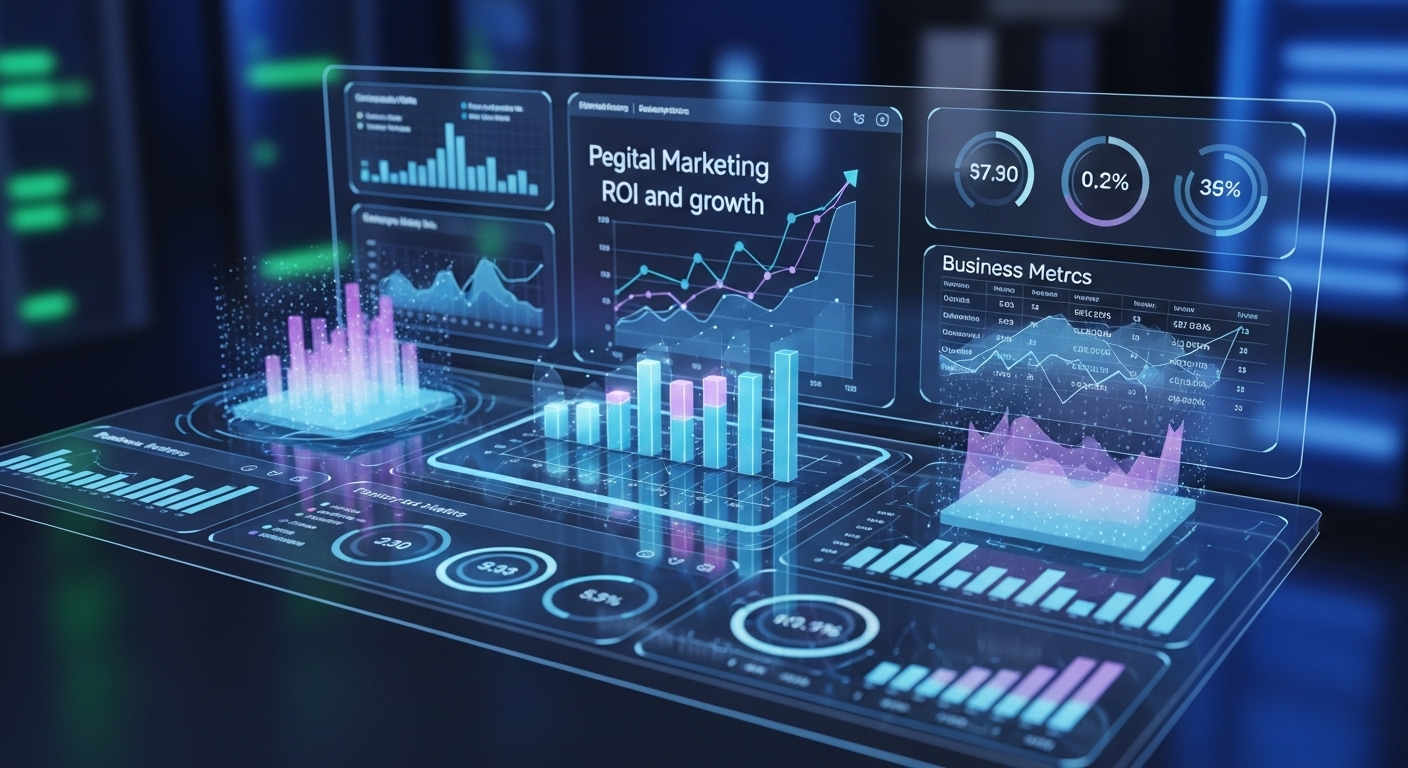
ROI and profitability are now the core focus of performance marketing, fundamentally reshaping how businesses measure success in 2026.
For years, performance marketing was driven by metrics like clicks, impressions, and short-term conversions. Campaign success was often judged by surface-level indicators such as ROAS (Return on Ad Spend), without fully considering long-term business impact.
But that model is no longer sustainable.
Rising acquisition costs, increased competition, privacy changes, and tighter budgets have forced organizations to rethink their approach. Today, marketing is no longer just about growth it’s about profitable growth.
The Shift: From Growth-at-All-Costs to Profit-Driven Marketing
The Old Model
- Focus on:
- Clicks
- Conversions
- ROAS
- Prioritized rapid scaling
- Ignored long-term profitability
The New Model
- Focus on:
- ROI (Return on Investment)
- Customer Lifetime Value (LTV)
- Profit margins
- Balanced growth with sustainability
- Prioritized efficiency and retention
The shift is clear:
From acquiring customers → to acquiring profitable customers
Why ROI & Profitability Have Become the Core Focus
1. Rising Customer Acquisition Costs (CAC)
Advertising costs have increased across platforms:
- Higher competition
- Auction-based ad systems
- Increased demand for attention
Result:
- Acquiring customers is more expensive than ever
Businesses must ensure:
Each acquisition is profitable
2. Privacy Changes Are Limiting Tracking
With:
- Cookie deprecation
- Data privacy regulations
Tracking user behavior has become more difficult.
Impact:
- Less accurate attribution
- Reduced targeting precision
This forces marketers to focus on:
Real business outcomes, not just tracked metrics
3. Investors and Leadership Demand Profitability
Companies are under pressure to:
- Show sustainable growth
- Improve margins
- Reduce wasteful spending
Marketing is now accountable for:
- Revenue contribution
- Profit generation
4. AI Has Increased Efficiency Expectations
With AI automating campaigns:
- Optimization happens faster
- Waste becomes more visible
Businesses now expect:
- Maximum return from every dollar spent
Understanding Key Profitability Metrics
To shift toward ROI-driven marketing, organizations must track:
Return on Investment (ROI)
Measures overall profitability of marketing efforts.
Customer Lifetime Value (LTV)
The total revenue generated from a customer over time.
Customer Acquisition Cost (CAC)
The cost required to acquire a new customer.
LTV:CAC Ratio
A key indicator of sustainable growth.
Ideal benchmark:
- LTV should be at least 3x CAC
Contribution Margin
Revenue minus variable costs.
Payback Period
Time required to recover acquisition cost.
From ROAS to True Profitability
ROAS alone is no longer sufficient.
Example:
- Campaign A:
- ROAS = 4x
- High operational costs
- Low profit
- Campaign B:
- ROAS = 2.5x
- Lower costs
- Higher profit
Which is better?
Campaign B because profitability matters more than ROAS
Full-Funnel Profit Optimization
Modern performance marketing optimizes across the entire funnel:
Awareness Stage
- Efficient reach
- Brand positioning
Consideration Stage
- Engagement
- Lead nurturing
Conversion Stage
- Optimized acquisition
Retention Stage
- Repeat purchases
- Upselling
- Customer loyalty
Profitability increases when:
Retention improves and CAC decreases
Role of Data in Profitability-Driven Marketing
First-Party Data
- Owned customer data
- CRM systems
- Behavioral insights
Enables:
- Better targeting
- Higher conversion rates
Predictive Analytics
AI helps predict:
- Customer value
- Churn probability
- Purchase behavior
Allows smarter budget allocation
The Role of AI in Profit Optimization
AI is transforming performance marketing into a profit optimization system.
AI Capabilities:
- Budget allocation based on profitability
- Predictive LTV modeling
- Dynamic bid optimization
- Real-time campaign adjustments
AI shifts marketing from:
- Manual decisions → data-driven intelligence
Creative Strategy and Profitability
Creative is now a key driver of ROI.
High-Performing Creative:
- Reduces CAC
- Improves conversion rates
- Enhances engagement
Better creative = better profitability
Real-World Use Cases
E-Commerce
- Focus on repeat purchases
- Optimize for LTV
- Reduce dependency on paid ads
SaaS
- Optimize subscription retention
- Reduce churn
- Increase customer lifetime value
Fintech
- Focus on high-value customers
- Optimize acquisition costs
- Improve long-term engagement
Challenges in Shifting to Profitability Focus
Data Fragmentation
Data spread across platforms makes analysis difficult.
Attribution Complexity
Hard to track full customer journey.
Organizational Alignment
Marketing, finance, and product teams must align.
Short-Term Pressure
Balancing immediate results with long-term profitability.
Best Practices for Profit-Driven Marketing
- Focus on LTV, not just conversions
- Optimize for long-term value
- Use AI for decision-making
- Improve customer retention
- Align marketing with business goals
The Future: Marketing as a Profit Engine
Performance marketing is evolving into:
A revenue and profit engine
Future trends include:
- AI-driven profit optimization
- Predictive marketing strategies
- Real-time financial dashboards
- Fully automated campaign management
Strategic Insight
Most companies still:
- Focus on clicks and conversions
- Optimize campaigns manually
- Ignore long-term profitability
Leading companies:
- Optimize for LTV and ROI
- Use AI-driven systems
- Build full-funnel strategies
This creates a major competitive advantage.
Conclusion
ROI and profitability are no longer optional metrics they are the foundation of modern performance marketing.
By focusing on profitability, organizations can:
- Achieve sustainable growth
- Optimize marketing spend
- Improve customer value
- Build long-term success
In 2026, the winning strategy is clear:
Not just growth but profitable growth
For more Contact US
Similar Posts
Marketing
B2B Brands Are Focusing More on Trust Infrastructure in 2026
Why Trust Has Become the Most Important Growth Asset in 2026 The B2B business environment has changed dramatically…

Marketing
Why Attribution & Measurement Are Becoming a Major Problem in Digital Marketing
In the early days of digital advertising, performance marketing felt simple. Businesses could launch a campaign, track clicks,…