

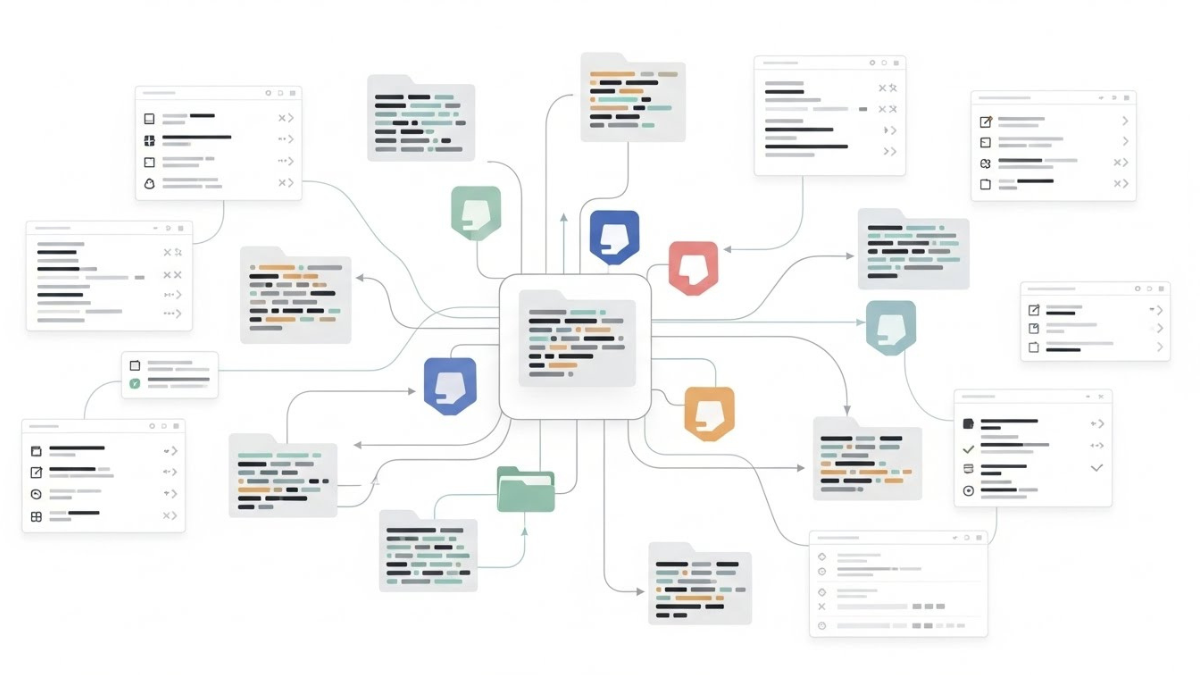
GitHub Reinvents Itself for the AI Era: 3 Game-Changing Moves Developers Must Know

Introduction: GitHub Is No Longer Just a Repository

For years, GitHub was the backbone of modern software development a place to store code, collaborate, and ship. But in the AI era, that’s no longer enough.

Under the direction of Microsoft, GitHub is transforming itself from a passive platform into an active AI-driven development environment.

This shift isn’t cosmetic. Github fundamentally changes how developers write, review, and maintain software.

Why GitHub Had to Change

The rise of AI-native coding tools exposed a weakness in traditional platforms:

  • Repositories store code
  • AI tools create code

If Tools didn’t adapt, it risked becoming irrelevant reduced to storage while intelligence moved elsewhere.

Competitors offering AI-first development environments forced tools to evolve or lose influence over the developer workflow.

GitHub’s New Role in the AI Stack

This tool is moving from: Code host → Intelligent development platform

Key changes include:

  • Deep AI integration across workflows
  • AI-assisted code generation and review
  • Smarter pull requests and issue handling
  • Context-aware development suggestions

This positions GitHub as the control plane for AI-assisted software engineering.

AI Becomes a First-Class Contributor

In the new GitHub model:

  • AI doesn’t just suggest code
  • It participates in reviews
  • It flags potential issues
  • It assists with refactoring

This changes the dynamics of teams. Developers now collaborate not just with humans, but with AI agents embedded in their tools.

The Rise of “Agentic” Development

GitHub’s direction aligns with a broader trend: agentic AI systems that can:

  • Understand tasks
  • Break them into steps
  • Execute across repositories

This Tool reduces manual overhead but introduces new risks:

  • Reduced code comprehension
  • Over-reliance on automation
  • Weaker architectural thinking

Without strong governance, teams risk building systems they no longer fully control.

What This Means for Developers

Developers must adapt in three critical ways:

1. From Coders to Reviewers

AI will write more code. Humans must:

  • Review behavior
  • Validate intent
  • Protect architecture

2. Stronger Fundamentals Matter More

AI amplifies skill gaps. Developers without solid foundations will struggle to catch errors AI introduces.

3. Tool Literacy Becomes a Core Skill

Understanding how AI tools work limits, biases, failure modes is now part of being a professional engineer.

What This Means for Organizations

For companies, This tool’s evolution brings opportunity and responsibility:

  • Faster delivery
  • Lower development friction
  • Higher risk if governance is weak

Organizations must define:

  • AI usage policies
  • Review standards
  • Security controls

AI-driven platforms reward discipline. Chaos will be punished.

The Future of GitHub

GitHub is positioning itself as:

  • The orchestrator of AI-assisted development
  • The source of truth for human AI collaboration
  • A platform where code, context, and intelligence converge

This makes tools more powerful and more dangerous depending on how it’s used.

Final Thoughts

GitHub’s reinvention signals a clear future: software development will be AI-accelerated, not AI-replaced. Developers who adapt will become more effective. Those who surrender judgment to automation will lose relevance.

Tools are changing. The responsibility is not.

If your organization needs help navigating AI-driven development platforms, governance, and scalable engineering practices, explore technology consulting at Contact Us
NVIDIA AI Technology 2026: 5 Game-Changing Ways It’s Reshaping Software Engineering & AI Ops

Introduction: Nvidia Didn’t Launch a Product, It Changed the Rules

At CES 2026, NVIDIA didn’t just announce hardware. It redefined how AI systems should be engineered from silicon to software.

1. Hardware and Software Are No Longer Separate Worlds

Nvidia’s new AI tech proves one thing:

Performance now comes from co-design, not brute force.

AI engineers must understand:

  • Chip capabilities
  • Memory pipelines
  • Inference optimization

This is no longer optional.

2. AI Ops Moves Closer to the Metal

Traditional AI Ops focused on:

  • Models
  • Pipelines
  • Monitoring

Nvidia’s approach pulls AI Ops downward into:

  • GPU scheduling
  • Inference acceleration
  • Energy optimization

This reduces latency, cost, and failure points.

3. Software Engineering Becomes Performance Engineering

With It’s stack:

  • Poor architecture is immediately exposed
  • Inefficient code becomes expensive
  • Optimization becomes a core skill

Software engineers now share responsibilities with infra teams.

4. What This Means for Enterprises

Enterprises adopting It’s AI tech gain:

  • Faster deployment cycles
  • Lower AI operational costs
  • Better scalability across cloud & edge

But only if teams are properly architected.

5. The New Skillset Engineers Need

2026 AI engineers must understand:

  • Hardware-accelerated AI
  • AI Ops tooling
  • System-level debugging
  • Production AI reliability

Anything else is surface-level AI.

Conclusion: Nvidia Is Forcing Maturity

Nvidia’s CES 2026 announcements mark the shift from experimental AI to industrial AI. Teams that adapt will dominate. Teams that don’t will outsource.

Need help designing AI systems that actually scale in production?
See how Nautics Technologies delivers enterprise AI & software solutions: Nauticsou.com

What CES 2026 Reveals About the AI Stack Developers Must Adopt in 2026

Introduction: CES 2026 Wasn’t About Gadgets, It Was About Infrastructure

CES 2026 exposed a hard truth: AI is no longer an experiment. It’s production-grade, enterprise-ready, and brutally competitive. Developers who still think “model = AI” are already behind.

1. AI Is Becoming a Full Stack, Not a Feature

CES showed AI moving from APIs into end-to-end systems:

  • Data ingestion
  • Model orchestration
  • Real-time inference
  • Monitoring & governance

Key takeaway: Developers now need system-level thinking, not just Python scripts.

2. Chips Matter Again: The Death of Hardware Ignorance

AI performance in 2026 depends on tight hardware–software alignment.

  • GPUs, NPUs, and AI accelerators dominated CES
  • Power efficiency + edge inference were major themes

Developers can no longer ignore what runs under their code.

3. Frameworks Are Shifting Toward Orchestration & AI Ops

Forget single-model workflows.
CES 2026 highlighted:

  • Multi-model pipelines
  • Real-time model switching
  • AI lifecycle automation

Frameworks are evolving to support AI Ops, not demos.

4. Enterprise Platforms Are Taking Control

Large organizations want:

  • Security
  • Compliance
  • Predictability

That’s why CES showed massive growth in enterprise AI platforms over DIY stacks. Expect more consolidation and fewer “random tools.”

5. What Developers Must Learn in 2026 (No Excuses)

If you’re serious, your stack should include:

  • AI deployment & monitoring
  • Scalable cloud + edge architectures
  • Secure data pipelines
  • Hardware-aware optimization

Anything less is hobby-level.

Conclusion: CES 2026 Drew the Line

CES 2026 made it clear:
AI developers are becoming AI engineers.
Those who adapt will build the future. Those who don’t will maintain legacy systems.

Looking to build or modernize an enterprise-ready AI stack?
Explore AI & software development services at Sales@nauticsou.com