

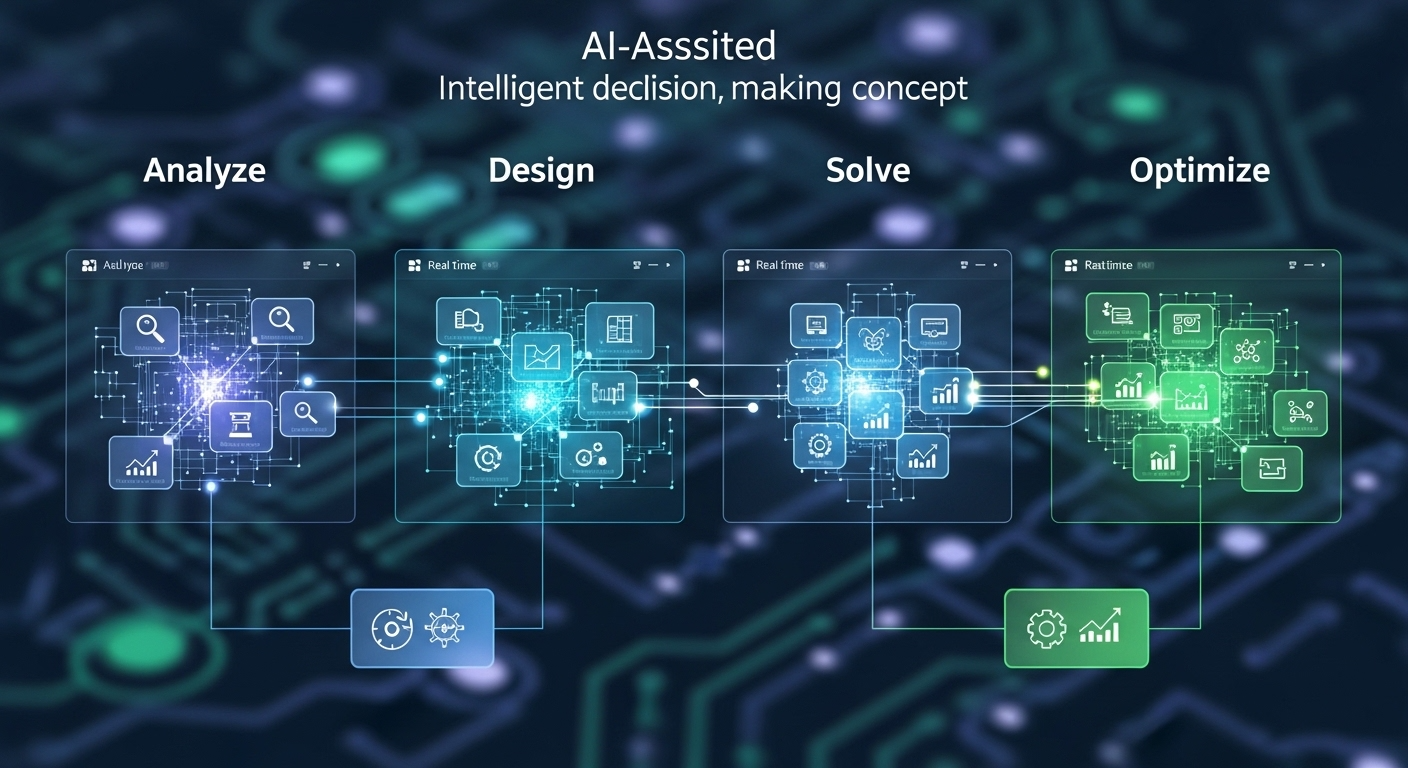
Problem-Solving Is Replacing Programming as the Core Skill

Introduction

Problem-Solving is becoming the most important skill in software development, replacing traditional programming as the core capability in 2026.

For decades, programming was considered the foundation of software development. Developers were evaluated based on how well they could write code, optimize algorithms, and master programming languages. Coding proficiency defined expertise.

But today, that definition is rapidly evolving.

With the rise of AI-powered code generation, automation platforms, and intelligent development tools, writing code is no longer the primary differentiator. Instead, the ability to understand problems, design effective solutions, and guide AI systems is becoming far more valuable.

In this new era, developers are no longer just coders they are problem-solvers driving intelligent systems.

The Evolution of Developer Value

To understand this shift, it’s important to look at how the value of developers has evolved:

Phase 1: Code Execution

  • Writing syntax-heavy code
  • Manual debugging
  • Focus on language mastery

Phase 2: Code Optimization

  • Improving performance
  • Writing cleaner, reusable code
  • Leveraging frameworks and libraries

Phase 3: Solution Design (Current Era)

  • Defining problems clearly
  • Designing scalable solutions
  • Leveraging AI for implementation

In this new phase, coding is no longer the bottleneck—thinking is.

Why Programming Alone Is No Longer Enough

1. AI Has Democratized Code Creation

AI tools can now:

  • Generate complete functions
  • Suggest optimized solutions
  • Automate repetitive coding tasks

This reduces the importance of:

  • Memorizing syntax
  • Writing boilerplate code

Coding is becoming a commodity, not a differentiator.

2. The Complexity of Systems Has Increased

Modern software systems are:

  • Distributed across cloud environments
  • Built on microservices and APIs
  • Integrated with AI and data pipelines

These systems require:

  • Systems thinking
  • Architectural understanding
  • Strategic planning

not just coding ability.

3. Business Problems Are Becoming More Complex

Organizations are no longer building simple applications they are solving:

  • Real-time decision-making challenges
  • Data-driven business problems
  • Global-scale operational issues

This requires developers who can:

  • Understand context
  • Align solutions with business goals
  • Make informed trade-offs

4. Speed of Development Has Increased

With CI/CD and AI-assisted tools:

  • Code can be written faster than ever
  • Releases happen continuously

The bottleneck is no longer development it’s:

  • Defining the right solution
  • Ensuring quality
  • Making correct decisions

What “Problem-Solving” Really Means in 2026

Problem-solving in modern software development is a multi-layered skill:

1. Problem Identification

  • Understanding user needs
  • Identifying root causes
  • Defining the real problem (not just symptoms)

2. Problem Structuring

  • Breaking down complex challenges
  • Defining components and dependencies
  • Mapping workflows and processes

3. Solution Design

  • Choosing the right architecture
  • Evaluating multiple approaches
  • Balancing trade-offs (cost, performance, scalability)

4. Execution Strategy

  • Deciding how to implement solutions
  • Leveraging AI tools effectively
  • Ensuring alignment with business goals

5. Continuous Improvement

  • Measuring outcomes
  • Iterating based on feedback
  • Optimizing solutions over time

The Rise of “Intent-Based Development”

One of the most important emerging concepts is:

Intent-based development

Instead of writing code manually, developers:

  • Define what they want to achieve
  • Describe requirements clearly
  • Let AI generate implementation

Example:

Old approach:

  • Write 100 lines of code to build a feature

New approach:

  • Describe the feature → AI generates the code

The real skill becomes:

  • Defining intent clearly
  • Validating AI output
  • Refining solutions

The New Developer Skill Stack

The modern developer skill set is evolving into a layered model:

Core Layer (Most Important)

  • Critical thinking
  • Problem-solving
  • Systems design
  • Decision-making

Technical Layer

  • Understanding of programming concepts
  • Knowledge of tools and frameworks
  • Ability to review and optimize code

AI Collaboration Layer

  • Prompting AI effectively
  • Evaluating AI-generated solutions
  • Managing AI workflows

Communication Layer

  • Explaining solutions
  • Collaborating with teams
  • Aligning with stakeholders

Real-World Scenarios

1. Building a SaaS Product

Developers:

  • Identify user pain points
  • Design scalable systems
  • Use AI to generate features

2. Data-Driven Decision Systems

Developers:

  • Analyze data patterns
  • Build predictive models
  • Solve business challenges

3. Enterprise Workflow Automation

Developers:

  • Optimize processes
  • Integrate systems
  • Automate operations using AI

Benefits of a Problem-Solving-Centric Approach

1. Higher Business Impact

Solutions are aligned with real-world needs.

2. Faster Innovation

Teams focus on ideas rather than implementation details.

3. Better Collaboration

Problem-solving requires cross-functional teamwork.

4. Future-Proof Skills

Problem-solving remains relevant regardless of technology changes.

5. Improved Decision-Making

Developers make smarter, more strategic choices.

The Role of AI: Amplifier, Not Replacement

AI is not replacing developers it is amplifying their capabilities.

AI Handles:

  • Code generation
  • Repetitive tasks
  • Pattern recognition

Humans Handle:

  • Problem definition
  • Strategy
  • Decision-making
  • Creativity

This creates a powerful combination:
Human intelligence + machine execution

Challenges in Adapting to This Shift

Mindset Transition

Moving from “coder” to “problem solver” requires a shift in thinking.

Skill Development

Developers must learn beyond programming systems, business, and strategy.

Over-Reliance on AI

Blind trust in AI can lead to poor outcomes without proper validation.

Evaluation Metrics

Organizations must redefine how they measure developer performance.

How Developers Can Prepare

1. Strengthen Fundamentals

Focus on logic, algorithms, and system design.

2. Practice Problem Decomposition

Break complex problems into manageable parts.

3. Learn System Thinking

Understand how different components interact.

4. Work with AI Tools

Use AI as a collaborator, not a crutch.

5. Develop Business Awareness

Understand how software impacts business outcomes.

The Future of Software Development

The future will be defined by:

  • AI-assisted development workflows
  • Autonomous systems
  • Real-time optimization
  • Intent-driven engineering

Developers will evolve into:

  • Problem solvers
  • System architects
  • AI orchestrators

Strategic Insight

Most developers today still focus on:

  • Learning programming languages
  • Practicing coding problems
  • Improving syntax-level skills

However, the most valuable developers are those who:

  • Solve complex problems
  • Design scalable systems
  • Think strategically

This gap will define career success in the coming years.

Conclusion

Programming is no longer the defining skill of software development problem-solving is.

As AI continues to automate coding tasks, the true value of a developer lies in their ability to:

  • Understand complex challenges
  • Design effective solutions
  • Guide intelligent systems

In a rapidly evolving technological landscape, problem-solving is the one skill that remains constant and the one that will define the future of software development.

For more Contact US
Why Software Fundamentals Matter in Modern Software Development

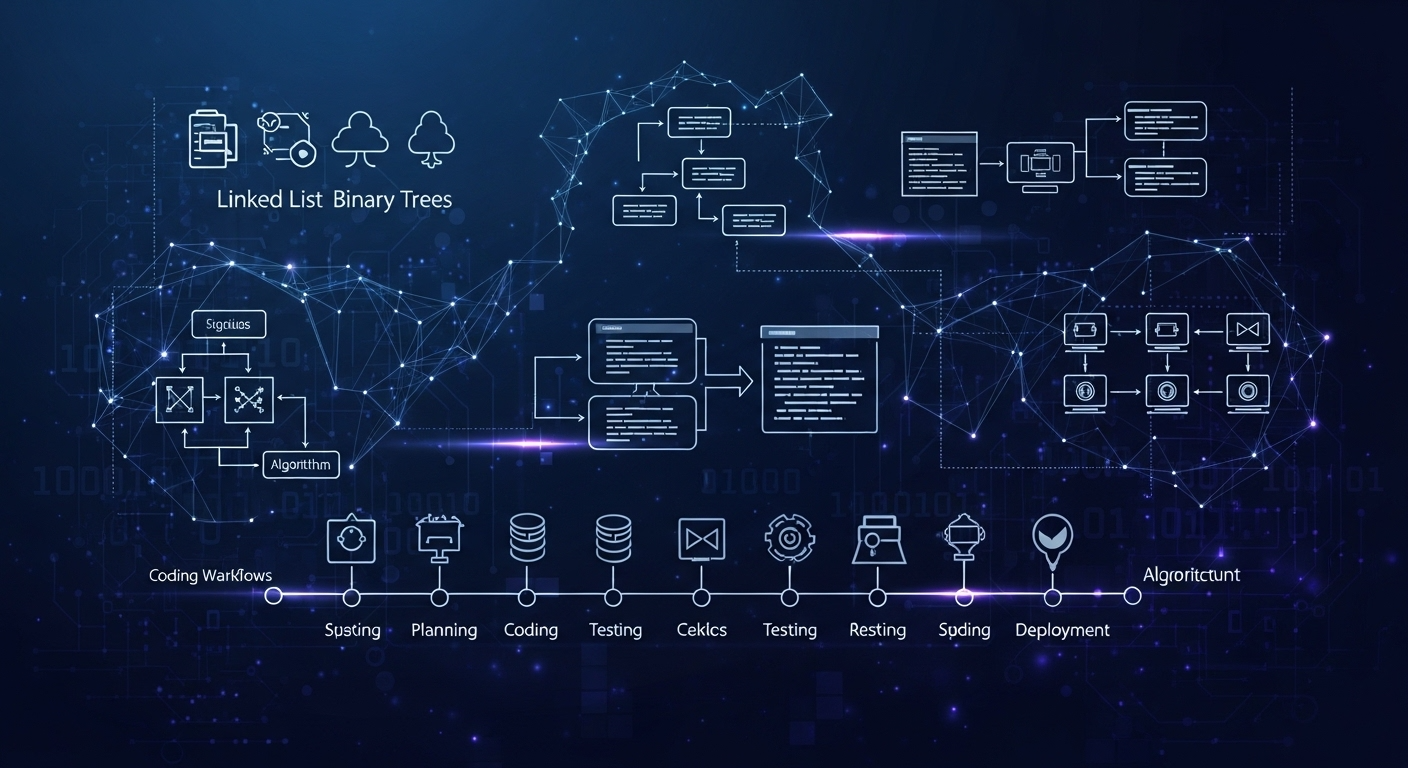
In recent years, software development has experienced an extraordinary wave of innovation. The rise of artificial intelligence tools, automated coding assistants, low-code platforms, and rapid development frameworks has dramatically accelerated how applications are built. Software fundamentals remain the foundation of reliable programming, helping developers understand how systems work beyond frameworks and automated tools.

These technologies have made software development faster and more accessible than ever before.

Yet, despite these advancements or perhaps because of them software fundamentals are gaining renewed attention across the development community. Organizations, engineering leaders, and educators are increasingly emphasizing the importance of foundational knowledge such as algorithms, data structures, system design, and core programming principles.

As development tools become more powerful, the need for strong technical understanding becomes even more critical.

The Acceleration of Modern Development

Modern development environments allow engineers to build complex applications quickly. Developers can now leverage powerful libraries, frameworks, and AI-assisted tools that automate many coding tasks.

Examples include:

  • AI-assisted code generation
  • automated testing frameworks
  • rapid prototyping tools
  • cloud-native development platforms
  • microservices architecture frameworks

These innovations enable teams to ship software faster than ever before. However, they also introduce new layers of complexity beneath the surface.

While tools can generate code, they cannot fully replace a developer’s understanding of how software systems function.

Why Software Fundamentals Matter More Than Ever

As the software ecosystem grows more sophisticated, developers are rediscovering the importance of foundational knowledge.

Understanding What Tools Generate

AI-powered development tools can produce large volumes of code, but that code must still be reviewed, validated, and maintained by human developers.

Without a strong grasp of programming fundamentals, developers may struggle to evaluate whether generated code is efficient, secure, or scalable.

Foundational knowledge enables developers to understand not only what the code does but why it works.

Managing System Complexity

Modern software systems often involve distributed architectures, cloud services, APIs, and interconnected microservices.

Developers must understand core principles such as:

  • computational complexity
  • memory management
  • concurrency and parallel processing
  • network communication
  • fault tolerance

These concepts form the backbone of reliable system design.

Without them, even well-written code may fail under real-world conditions.

Debugging and Problem Solving

Debugging remains one of the most critical skills in software engineering. When systems fail, developers must identify the root cause of problems quickly.

Strong understanding of fundamentals allows developers to reason through problems logically, rather than relying solely on automated tools.

This ability becomes especially valuable when diagnosing issues related to performance, scalability, or architecture.

Data Structures and Algorithms: The Core of Efficient Software

Data structures and algorithms remain central to effective software development.

Even when developers rely on high-level frameworks, the performance of software often depends on how data is stored and processed.

Key concepts include:

  • arrays and linked lists
  • stacks and queues
  • hash tables
  • trees and graphs
  • sorting and searching algorithms

Understanding these structures allows developers to design efficient solutions and avoid performance bottlenecks. Strong software fundamentals allow developers to choose the right algorithms and data structures when designing efficient systems.

As systems scale, small inefficiencies in algorithms can become significant problems.

System Design as a Fundamental Skill

Another area gaining renewed emphasis is system design.

Modern applications must support millions of users, process large volumes of data, and operate reliably across distributed environments.

Developers increasingly need to understand principles such as:

  • scalability and load balancing
  • distributed system architecture
  • database optimization
  • caching strategies
  • fault tolerance mechanisms

These concepts enable engineers to build systems that perform reliably at scale.

The Role of Computer Science Education

Educational institutions are also responding to this shift.

Computer science programs continue to emphasize foundational subjects, including:

  • operating systems
  • compiler design
  • networking
  • algorithm analysis
  • software architecture

While new technologies appear constantly, these foundational topics remain essential for understanding how software works at a deeper level.

Many technology leaders argue that developers who master these fundamentals can adapt more easily to new programming languages and frameworks.

Fundamentals and AI-Assisted Development

The growing popularity of AI-assisted coding tools highlights the importance of strong fundamentals.

AI tools can suggest code snippets, generate functions, and automate repetitive tasks. However, these tools are only as effective as the developers who guide and verify their output. In the era of AI-assisted coding, software fundamentals help engineers verify generated code and maintain long-term software quality.

Developers must still:

  • review generated code
  • identify potential errors
  • optimize performance
  • ensure security best practices
  • maintain long-term code quality

Without foundational knowledge, developers risk introducing subtle bugs or inefficiencies into production systems.

Maintainability and Long-Term Software Health

Software development is not only about writing code—it is about maintaining systems over time.

Codebases often evolve for years or even decades. Developers who understand software fundamentals are better equipped to write code that is:

  • readable
  • modular
  • scalable
  • maintainable

These qualities help organizations avoid technical debt and reduce long-term maintenance costs.

Strong fundamentals encourage developers to think about the broader architecture of software systems rather than focusing only on immediate functionality.

The Growing Importance of Engineering Discipline

As development tools become more powerful, engineering discipline becomes increasingly important.

Organizations are emphasizing practices such as:

  • code reviews
  • architectural documentation
  • design patterns
  • performance optimization
  • testing strategies

These practices rely heavily on developers’ understanding of core software principles.

Teams that invest in engineering discipline often produce more reliable and scalable software.

Industry Demand for Strong Fundamentals

Many technology companies are now prioritizing fundamental knowledge when evaluating engineering talent.

Technical interviews often include questions related to:

  • algorithm design
  • system architecture
  • data structure optimization
  • problem-solving strategies

Employers recognize that developers who understand fundamentals can adapt quickly to new technologies and contribute to complex projects.

The Balance Between Tools and Knowledge

Modern development tools are incredibly powerful. They reduce repetitive work, accelerate prototyping, and make complex systems more accessible.

However, tools should be viewed as amplifiers of developer capability, not replacements for foundational understanding.

Developers who combine strong fundamentals with modern tools can build software that is both efficient and innovative.

This balance is becoming the hallmark of highly effective engineering teams.

The Future of Software Development Fundamentals

Looking ahead, software fundamentals will continue to play a crucial role in the evolution of technology.

Emerging fields such as:

  • artificial intelligence
  • distributed computing
  • cybersecurity
  • quantum computing

all rely heavily on deep technical understanding.

Developers who invest in learning and maintaining strong foundational skills will be better prepared to work with these technologies as they mature.

Conclusion

Despite the rapid evolution of development tools and automation technologies, the importance of software fundamentals remains unchanged.

In fact, the growing complexity of modern systems is making these fundamentals more valuable than ever. Developers who master software fundamentals can adapt to new technologies more easily and build scalable systems with confidence.

Algorithms, data structures, system design principles, and core programming concepts provide the intellectual framework that allows developers to understand, build, and maintain sophisticated software systems.

As the industry continues to evolve, the most successful developers will not simply rely on tools—they will combine powerful tools with deep technical knowledge.

Software fundamentals are not fading into the past.
They are becoming the foundation for the next generation of innovation.

For more Contact Us

Reading Code Is Now More Important Than Writing It in 2026

Introduction: The Skill Developers Didn’t Prepare For

For decades, software engineering rewarded one visible skill above all others: writing code. The faster you could implement features, the more productive you appeared. Interviews focused on syntax, algorithms, and speed. Careers were built on output.

In 2026, that model is quietly breaking.

Developers are writing more code than ever but much of it is generated, assisted, or scaffolded by tools. What now separates strong engineers from average ones is not how quickly they can write code, but how well they can read, understand, evaluate, and reason about it.

Reading code has become the most important engineering skill and the least explicitly taught.

Why Writing Code Is No Longer the Bottleneck

AI-assisted development has fundamentally changed the economics of code creation.

Today:

  • Boilerplate is cheap
  • Syntax errors are rare
  • Code scaffolding is instant
  • Patterns are auto-suggested

The cost of writing code has dropped dramatically.

What hasn’t dropped is the cost of:

  • Understanding intent
  • Validating correctness
  • Assessing edge cases
  • Predicting downstream impact

As code volume increases, comprehension not creation becomes the limiting factor.

Most Developers Spend More Time Reading Than Writing

This has always been true but it’s now unavoidable.

A typical developer day includes:

  • Reviewing pull requests
  • Debugging unfamiliar code
  • Tracing production issues
  • Understanding legacy systems
  • Evaluating AI-generated suggestions

Writing new code often takes less time than understanding existing code well enough to change it safely.

In modern systems, progress depends on navigating complexity, not adding more of it.

AI Made Reading Skills Non-Optional

AI can generate plausible code extremely fast. What it cannot guarantee is:

  • Correct assumptions
  • Context awareness
  • Architectural consistency
  • Business rule accuracy

This shifts developer responsibility from author to editor, reviewer, and judge.

The new workflow looks like this:

  1. AI proposes code
  2. Human reads and validates
  3. Human decides what survives

Developers who can’t read code critically will ship bugs faster than ever.

Why Reading Code Is Harder Than It Sounds

1. Code Is Written for Machines, Not Humans

Many codebases optimize for execution, not clarity.

Common problems include:

  • Implicit behavior
  • Over-abstraction
  • Clever shortcuts
  • Framework magic

Reading such code requires patience, discipline, and systems thinking.

2. Context Is Rarely Local

In modern systems:

  • Logic is distributed
  • Behavior emerges from interactions
  • Changes ripple across services

Reading code now means reading across boundaries, not just files.

3. Legacy Code Isn’t Going Away

Most production code was written years ago, by people who are no longer there.

You cannot rewrite everything.
You must understand before you change.

Strong readers survive legacy systems. Weak readers break them.

Reading Code Is How Engineers Build Trust

Trust in software teams is built through predictability.

Predictability comes from:

  • Knowing what the code actually does
  • Understanding why it exists
  • Recognizing what might break

Engineers who read code well:

  • Review PRs effectively
  • Catch subtle bugs early
  • Reduce regressions
  • Improve team confidence

This is why senior engineers often write less code, but have more impact.

Code Reviews Are Now the Real Work

In many teams, code reviews have become the primary quality gate.

A good code review requires:

  • Understanding intent
  • Evaluating trade-offs
  • Spotting edge cases
  • Checking consistency with system design

These are reading skills, not writing skills.

Teams with poor readers rely on automated checks.
Teams with strong readers ship better software.

Debugging Is Advanced Code Reading

Debugging is not guessing. It’s forensic analysis.

It requires:

  • Tracing execution paths
  • Understanding state changes
  • Interpreting logs and metrics
  • Mapping symptoms to causes

None of this involves writing code until you understand what’s wrong.

The best debuggers are always the best readers.

Why Juniors Struggle and Seniors Don’t

Junior developers often:

  • Focus on making code “work”
  • Read only what they wrote
  • Avoid unfamiliar areas

Senior developers:

  • Read entire systems
  • Anticipate side effects
  • Spot design smells
  • Ask “what happens next?”

The gap is not intelligence it’s reading discipline and exposure.

Frameworks Made Reading More Important, Not Less

Modern frameworks abstract complexity but they don’t remove it.

They shift complexity into:

  • Configuration
  • Convention
  • Implicit behavior

Understanding a framework-heavy codebase requires reading:

  • Application code
  • Framework contracts
  • Configuration layers

Developers who only know “how to use” frameworks struggle to understand what’s actually happening.

What Strong Code Readers Do Differently

Strong readers:

  • Read code top-down and bottom-up
  • Follow data, not just control flow
  • Look for invariants and assumptions
  • Ask “why was this written this way?”
  • Slow down on critical sections

They treat code as a conversation, not a puzzle.

Why Simplicity Is the New Senior Skill

As reading becomes central, code quality is being redefined.

Readable code:

  • Uses boring patterns
  • Avoids clever tricks
  • Makes decisions explicit
  • Trades brevity for clarity

In AI-assisted development, clarity beats cleverness every time.

Engineers who write readable code are making a gift to future readers including themselves.

How Teams Can Adapt to This Shift

1. Teach Code Reading Explicitly

Most teams teach writing. Few teach reading.

Good practices include:

  • Walkthroughs of legacy systems
  • Shared debugging sessions
  • Reviewing “why” not just “what”

2. Reward Review Quality, Not Output Volume

Output metrics lie.

Recognize engineers who:

  • Improve clarity
  • Reduce complexity
  • Catch issues early
  • Raise the quality bar

3. Design for Readers First

When writing code, ask:

“Will someone understand this in six months?”

If the answer is no, rewrite it.

What This Means for Careers

In 2026, the most valuable engineers are not:

  • The fastest coders
  • The loudest contributors
  • The most framework-fluent

They are the ones who:

  • Understand systems deeply
  • Make fewer mistakes
  • Improve code they didn’t write
  • Reduce risk quietly

Reading code well is now a career accelerator.

Final Thoughts: Code Is Written Once, Read Forever

Writing code feels productive. Reading code feels slow.

But software systems don’t fail because code wasn’t written fast enough. They fail because code wasn’t understood well enough.

In an era of AI-assisted development, the skill that matters most is judgment and judgment is built through reading.

If writing code is how software is created,
reading code is how software survives.

The future belongs to developers who read carefully, think deeply, and change systems responsibly. For details Contact Us