
Skills-First Culture Is Replacing Role-Based Culture: The New Operating Model for Modern Organizations

Introduction

For decades, organizations have been built around roles structured job titles that define responsibilities, reporting lines, and career progression. This model created clarity and order, but it also introduced rigidity in a world that is anything but static.

Today, the pace of change driven by digital transformation, artificial intelligence, and global competition is forcing organizations to rethink how work is structured.

In 2026, a new paradigm is emerging: skills-first culture.

This approach shifts the focus from what your job title is to what you are capable of doing. It redefines how companies hire, develop, deploy, and retain talent transforming the workforce into a dynamic, adaptable system aligned with real-time business needs.

The Traditional Role-Based Model: Strengths and Limitations

Why It Worked

The role-based model was effective for decades because:

  • It provided clear responsibilities
  • Enabled hierarchical management
  • Simplified hiring and evaluation
  • Supported stable, predictable workflows

Where It Falls Short Today

However, in a rapidly evolving environment, this model creates challenges:

1. Lack of Flexibility

Roles are often too rigid to adapt to changing business demands.

2. Underutilized Talent

Employees may have skills that are not used within their defined roles.

3. Slow Innovation

Cross-functional collaboration becomes harder when people are confined to specific roles.

4. Skill Gaps

Organizations struggle to respond quickly to emerging skill requirements.

5. Inefficiency in Resource Allocation

Talent is not always deployed where it can create the most value.

What Is a Skills-First Culture?

A skills-first culture is an organizational model that prioritizes:

  • Skills over job titles
  • Capabilities over credentials
  • Potential over past experience
  • Learning over static expertise

In this model, work is structured around what needs to be done, not around predefined roles.

Employees are viewed as multi-dimensional contributors, capable of applying their skills across different contexts.

The Drivers Behind the Shift

Several powerful forces are accelerating the move toward skills-first culture:

1. Rapid Technological Evolution

New technologies continuously reshape the skills required to stay competitive.

2. Rise of AI and Automation

Routine tasks are increasingly handled by machines, increasing the importance of human skills such as creativity and critical thinking.

3. Project-Based Work

Organizations are moving toward project-driven models that require diverse skill sets.

4. Talent Shortages

Companies need to maximize existing talent rather than rely solely on external hiring.

5. Demand for Agility

Businesses must adapt quickly to market changes, requiring flexible workforce structures.

How Skills-First Culture Transforms Organizations

1. Work Becomes Fluid

Instead of fixed job descriptions:

  • Work is dynamically assigned based on skills
  • Teams are formed around specific needs

2. Career Paths Become Non-Linear

Employees can:

  • Move across functions
  • Take on diverse projects
  • Build multi-skill careers

3. Talent Becomes a Strategic Asset

Skills are tracked, analyzed, and optimized like any other business resource.

4. Decision-Making Becomes Data-Driven

Organizations use analytics to:

  • Identify skill gaps
  • Predict future needs
  • Allocate talent effectively

Building Blocks of a Skills-First Organization

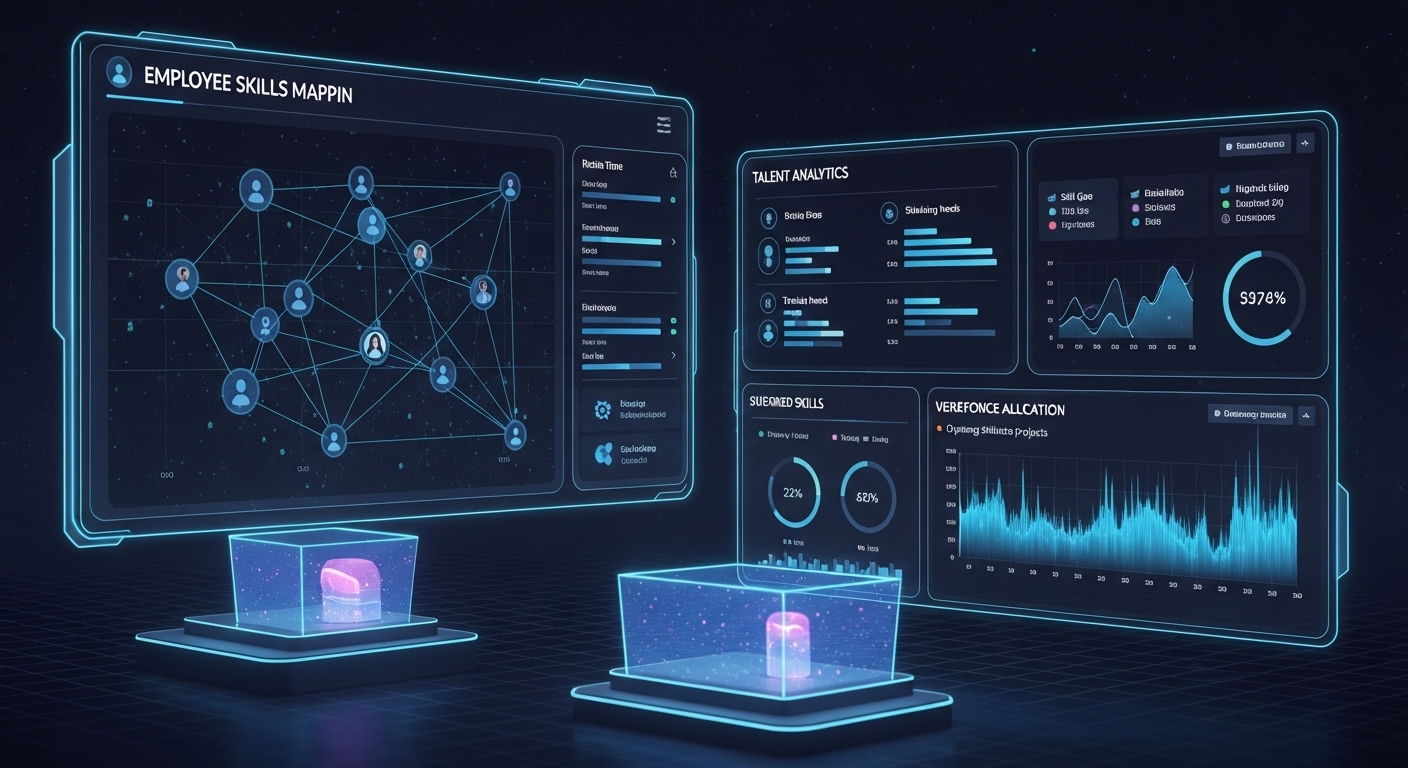
1. Skills Mapping and Taxonomy

Organizations create a structured view of skills across the workforce:

  • Technical skills
  • Soft skills
  • Domain expertise

This provides visibility into available capabilities.

2. Skills-Based Hiring

Recruitment focuses on:

  • What candidates can do
  • Demonstrated competencies
  • Practical assessments

This expands the talent pool beyond traditional qualifications.

3. Internal Talent Marketplaces

Employees can:

  • Discover opportunities within the organization
  • Apply their skills to new projects
  • Grow without leaving the company

4. Continuous Learning Ecosystems

Learning becomes part of daily work:

  • Microlearning
  • On-demand training
  • Personalized development paths

5. Skills-Based Performance Management

Performance is measured by:

  • Impact of skills
  • Contribution to outcomes
  • Ability to adapt and learn

Real-World Applications

Agile Product Development

Teams are formed based on required skills rather than department boundaries.

Digital Transformation Projects

Cross-functional teams collaborate to deliver complex initiatives.

Innovation Labs

Organizations leverage diverse skills to solve high-impact problems.

Global Workforce Optimization

Companies deploy talent across regions based on skill availability.

The Role of Technology

Technology is a key enabler of skills-first culture:

AI-Powered Talent Intelligence

AI analyzes employee skills and recommends:

  • Career paths
  • Learning opportunities
  • Project assignments

Workforce Analytics Platforms

Provide insights into:

  • Skill distribution
  • Performance trends
  • Future workforce needs

Learning Management Systems

Offer personalized and scalable training programs.

Benefits of a Skills-First Culture

1. Organizational Agility

Companies can adapt quickly to new challenges.

2. Better Talent Utilization

Employees contribute where they add the most value.

3. Increased Employee Engagement

Opportunities for growth improve satisfaction and retention.

4. Faster Innovation

Diverse skills drive creativity and problem-solving.

5. Future-Ready Workforce

Continuous learning ensures long-term adaptability.

Challenges to Overcome

Cultural Resistance

Employees and leaders may be attached to traditional roles.

Skill Visibility

Identifying and tracking skills across large organizations is complex.

Leadership Alignment

Leaders must support and drive the transformation.

Investment in Learning

Continuous development requires resources and commitment.

Change Management

Organizations must shift mindset, not just processes.

The Human + AI Collaboration Factor

The rise of skills-first culture is closely tied to AI.

AI’s Role:

  • Automates routine tasks
  • Provides insights and recommendations
  • Enhances productivity

Human Role:

  • Creativity
  • Critical thinking
  • Emotional intelligence
  • Strategic decision-making

This makes skills even more important, as employees must continuously evolve alongside technology.

A Practical Roadmap to Adoption

Step 1: Identify Strategic Skills

Determine the skills required for future business success.

Step 2: Map Current Capabilities

Assess existing workforce skills.

Step 3: Redesign Work Structures

Shift from role-based to skill-based work allocation.

Step 4: Enable Learning

Invest in training and development programs.

Step 5: Implement Technology

Use tools to track and manage skills.

Step 6: Foster Cultural Change

Encourage adaptability, collaboration, and continuous learning.

The Future: Skills-Based Organizations at Scale

In the coming years, organizations will:

  • Operate with fluid team structures
  • Use AI to match skills with opportunities
  • Continuously evolve workforce capabilities
  • Focus on outcomes rather than roles

This will create organizations that function as adaptive systems, capable of responding instantly to change.

Strategic Insight

Most organizations today:

  • Still rely on job titles
  • Follow rigid career paths
  • Evaluate employees based on roles

However, leading companies:

  • Prioritize skills over titles
  • Enable internal mobility
  • Build learning-driven cultures

This shift is becoming a key differentiator in attracting and retaining top talent.

Conclusion

The transition from role-based to skills-first culture is not just a trend it is a fundamental transformation in how organizations operate.

By focusing on skills, companies can:

  • Unlock greater flexibility
  • Improve workforce utilization
  • Foster innovation
  • Build a future-ready organization

In a world defined by constant change, the ability to adapt is the ultimate competitive advantage—and that begins with embracing a skills-first culture.

For more Contact US
Leadership Empathy Is Improving Modern Workplace Culture

For many years, empathy in leadership was considered a soft skill important but difficult to quantify. Organizations acknowledged that empathetic leaders could inspire trust, improve collaboration, and strengthen workplace relationships, but these qualities were rarely measured in structured ways.

That perception is rapidly changing.

In modern organizations, leadership empOrganizational Cultureathy is increasingly being measured through structured feedback systems, employee engagement metrics, and behavioral data. Companies are recognizing that empathy is not simply a personality trait; it is a measurable capability that directly influences productivity, retention, and organizational health.

As businesses continue to prioritize employee experience and workplace culture, leadership empathy is becoming a key performance indicator rather than an abstract leadership ideal.

The Evolution of Leadership Expectations

Leadership models have evolved significantly over the past few decades. Traditional leadership styles often emphasized authority, efficiency, and operational control. Leaders were expected to focus on performance metrics, financial outcomes, and strategic execution.

However, modern workplaces are fundamentally different. Today’s organizations are:

  • more collaborative
  • more diverse
  • more globally distributed
  • more focused on knowledge work
  • more sensitive to employee well-being

In this environment, leadership effectiveness depends heavily on emotional intelligence and the ability to understand and support team members.

What Leadership Empathy Means

Leadership empathy refers to a leader’s ability to understand and acknowledge the experiences, emotions, and perspectives of their team members.

Empathetic leaders typically demonstrate behaviors such as:

  • actively listening to employee concerns
  • recognizing personal challenges that affect performance
  • providing supportive feedback
  • adapting communication styles to individual needs
  • creating psychologically safe environments

These behaviors foster stronger relationships between leaders and employees, which directly affects team engagement and performance.

Why Companies Are Measuring Empathy

Several factors are driving organizations to measure leadership empathy more formally.

Employee Engagement and Retention

Employee surveys consistently show that relationships with direct managers are one of the strongest predictors of job satisfaction and retention.

Leaders who demonstrate empathy tend to build stronger trust within their teams, reducing turnover and improving morale.

Psychological Safety in Teams

Psychological safety refers to an environment where employees feel comfortable sharing ideas, admitting mistakes, and asking questions without fear of negative consequences.

Research shows that psychologically safe teams are more innovative and collaborative.

The Rise of Employee Experience Metrics

Companies increasingly measure employee experience in ways similar to how they measure customer experience.

Common metrics include:

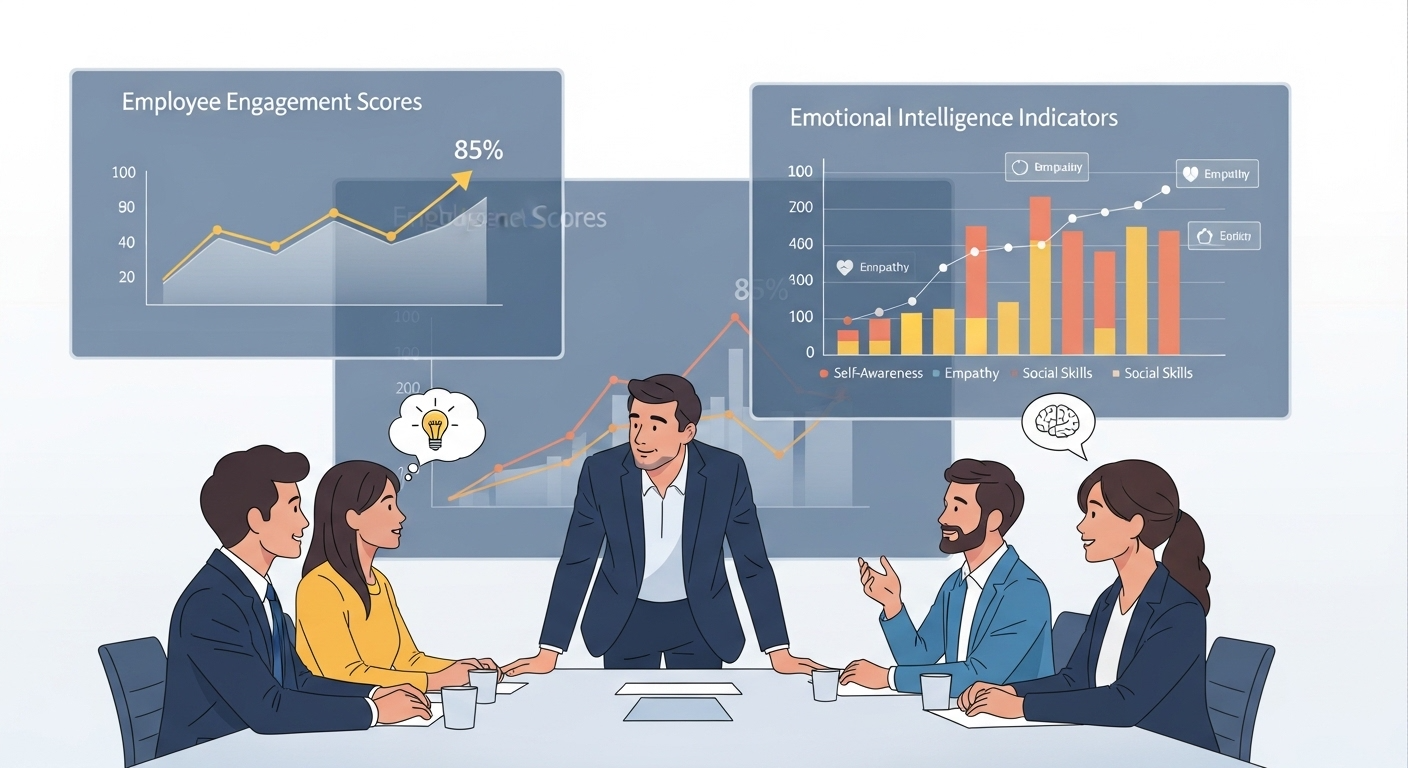
  • employee engagement scores
  • team sentiment analysis
  • internal feedback surveys
  • retention rates
  • internal mobility statistics

Tools Used to Measure Leadership Empathy

Organizations are implementing several methods to evaluate empathy within roles.

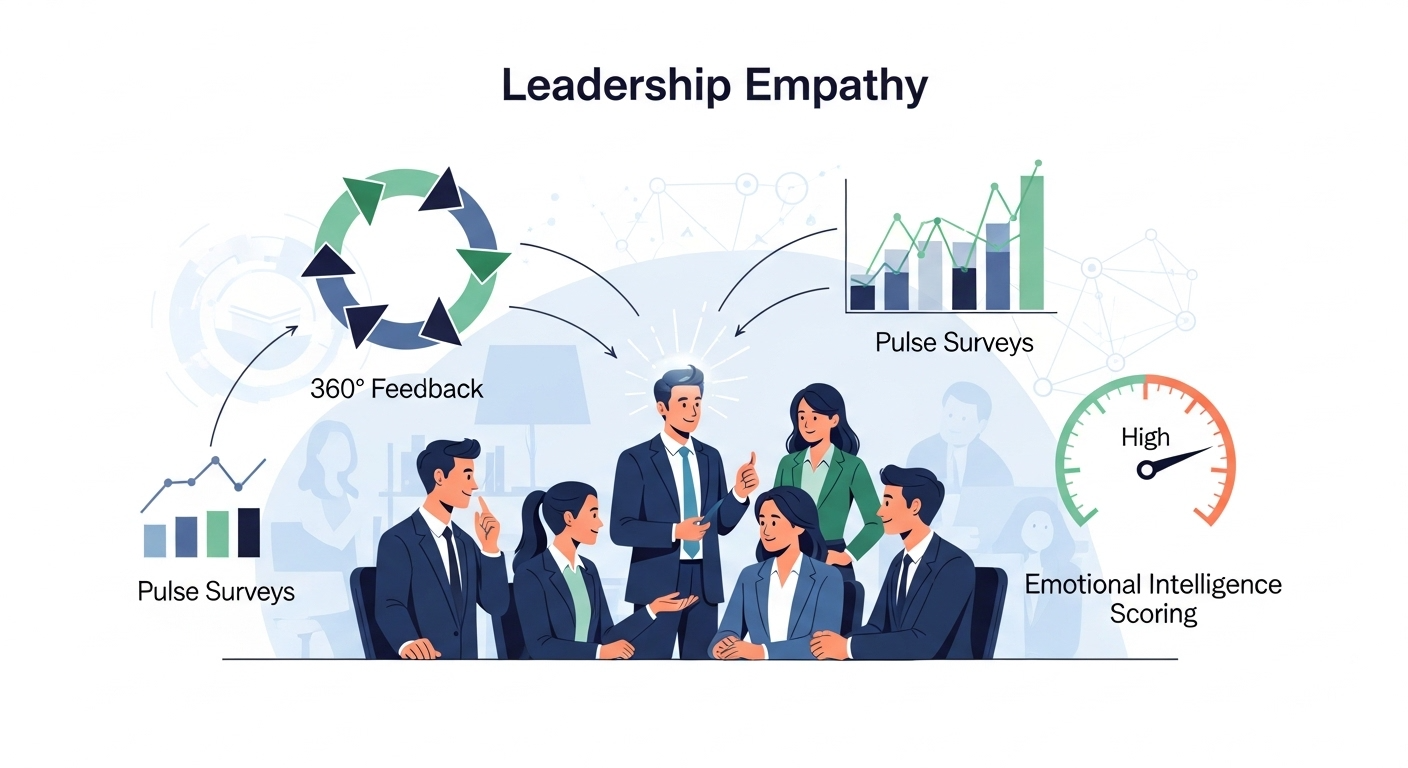
360-Degree Feedback

360-degree feedback systems collect input from multiple perspectives, including:

  • direct reports
  • peers
  • supervisors
  • cross-functional collaborators

This feedback often includes questions related to communication style, supportiveness, and responsiveness key indicators of empathy.

Employee Engagement Surveys

Regular engagement surveys help organizations track how employees perceive leadership behavior.

Questions often measure:

  • whether employees feel heard
  • whether leaders understand team challenges
  • whether communication feels transparent and supportive

Behavioral Analytics

Some companies are beginning to analyze behavioral signals that reflect , such as:

  • response times to employee concerns
  • frequency of one-on-one meetings
  • participation in team discussions
  • recognition of employee achievements

While these signals do not measure empathy directly, they provide useful behavioral proxies.

The Business Impact

Empathy is not only a cultural value; it has measurable business benefits.

Higher Employee Retention

Employees who feel understood and supported are more likely to remain with an organization. Lower turnover reduces recruitment costs and preserves institutional knowledge.

Improved Collaboration

Empathetic leaders create environments where employees feel comfortable sharing ideas and collaborating across teams.

This openness encourages innovation and problem-solving.

Increased Productivity

When employees feel psychologically safe and valued, they are more likely to stay engaged with their work and contribute fully to team goals.

Empathy helps remove emotional barriers to productivity.

Challenges in Measuring Empathy

Despite its growing importance, measuring empathy presents certain challenges.

Subjective Perception

Empathy is often perceived differently by different individuals. What one employee views as supportive, another may interpret as insufficient attention.

Organizations must combine multiple data sources to create balanced evaluations.

Cultural Differences

Global organizations must consider cultural differences when measuring empathetic behavior. Communication styles and leadership expectations vary across cultures.

Measurement frameworks must account for these differences.

Avoiding Over-Metricization

While measurement is valuable, organizations must avoid reducing empathy to simple numerical scores.

Empathy remains a human-centered capability that requires qualitative understanding alongside quantitative metrics.

The Future of Leadership Evaluation

Leadership evaluation is evolving toward a more holistic model that combines performance outcomes with cultural and behavioral indicators.

Future assessments will likely include:

  • emotional intelligence scoring
  • leadership empathy metrics
  • employee sentiment analysis
  • real-time engagement tracking
  • AI-assisted feedback systems

These tools will allow organizations to evaluate leadership impact more comprehensively.

Building Empathetic Leadership

Organizations that want to strengthen empathetic leadership must invest in development.

This includes:

  • emotional intelligence training
  • coaching and mentorship programs
  • communication skill development
  • active listening workshops

Empathy can be developed through intentional training and organizational support.

Conclusion

Leadership empathy is no longer an abstract concept reserved for theory. It is becoming a measurable and strategic component of modern organizational management.

As companies increasingly prioritize employee experience, collaboration, and innovation, empathetic plays a critical role in shaping workplace culture and performance.

By measuring and developing leadership empathy, organizations can create stronger teams, healthier workplaces, and more sustainable long-term success.

In the future of work, empathy will not simply be appreciated it will be expected and evaluated.

For more Contact US

Leadership Empathy Is Now Scored and Measured

For decades, leadership empathy was viewed as a soft, intangible quality admirable, but difficult to define and nearly impossible to measure. It appeared in leadership books, corporate values statements, and keynote speeches. Yet when it came to executive evaluations, compensation frameworks, and board-level reporting, empathy was largely absent.

That dynamic has changed.

In 2026, leadership empathy is being scored, benchmarked, and integrated into formal performance management systems. Organizations are no longer satisfied with anecdotal impressions of emotional intelligence. They are building structured systems to measure how leaders listen, respond, support, and guide their teams.

Empathy has shifted from a personality trait to a performance metric.

Why Leadership Empathy Has Become a Strategic Priority

Modern organizations operate in environments defined by uncertainty, digital acceleration, distributed teams, and generational workforce shifts. Employees are navigating constant change remote collaboration, automation, restructuring, market volatility, and heightened performance expectations.

In this context, leadership style directly impacts organizational stability.

Employees now expect leaders to:

  • Communicate transparently
  • Recognize emotional strain
  • Support work-life boundaries
  • Handle conflict constructively
  • Encourage diverse perspectives
  • Provide psychological safety

Research consistently demonstrates that empathetic leadership increases engagement, reduces burnout, and strengthens retention. However, organizations have recognized that informal encouragement is not enough. Measurement drives accountability and accountability drives consistency.

The Evolution From “Soft Skill” to Measurable Capability

The shift toward measuring empathy is rooted in a broader transformation in management philosophy. Historically, leadership performance was evaluated primarily on:

  • Revenue growth
  • Operational efficiency
  • Project delivery
  • Budget management

While these metrics remain important, they do not capture how leaders influence team morale, psychological safety, or long-term sustainability.

Modern leadership evaluation frameworks now incorporate behavioral indicators such as:

  • Listening responsiveness
  • Feedback receptiveness
  • Conflict resolution approach
  • Inclusivity in decision-making
  • Emotional awareness during crisis

Empathy is now seen as a multiplier it enhances the effectiveness of every other leadership skill.

How Organizations Are Measuring Leadership Empathy

1. 360-Degree Emotional Intelligence Assessments

Multi-source feedback systems have become standard practice. These assessments collect data from:

  • Direct reports
  • Peers
  • Supervisors
  • Cross-functional collaborators

Participants evaluate leaders on behavioral competencies such as:

  • Active listening
  • Fair treatment
  • Stress management
  • Approachability
  • Respect for differing opinions

Aggregated results provide structured insight into how leadership behavior is perceived across the organization.

2. Real-Time Pulse Surveys

Many organizations now deploy short, frequent surveys integrated into internal platforms. These tools track:

  • Team sentiment
  • Perceived managerial support
  • Communication clarity
  • Psychological safety levels

Unlike annual engagement surveys, real-time pulse tools provide ongoing feedback, allowing organizations to identify trends and intervene early.

3. Empathy Metrics Linked to Leadership KPIs

Forward-thinking organizations are tying empathy-related scores to:

  • Performance reviews
  • Bonus eligibility
  • Promotion readiness
  • Leadership development plans

This formal integration ensures empathy is treated as a core competency rather than an optional quality.

4. Behavioral Analytics in Digital Communication

With the rise of remote work, digital communication has become central to leadership visibility. Some organizations are exploring:

  • Sentiment analysis in team communications
  • Response time metrics
  • Feedback loop participation rates

While these tools require careful ethical consideration, they reflect the seriousness with which empathy is being operationalized.

The Link Between Empathy and Psychological Safety

Psychological safety the ability to express ideas and concerns without fear is increasingly recognized as a performance driver.

Empathetic leaders contribute to psychological safety by:

  • Responding constructively to mistakes
  • Encouraging dissenting opinions
  • Modeling vulnerability
  • Demonstrating emotional self-regulation

When psychological safety improves, teams are more likely to:

  • Share innovative ideas
  • Raise risks early
  • Collaborate effectively
  • Adapt to change

Empathy strengthens organizational resilience.

The Business Impact of Measured Empathy

Measuring leadership empathy is not symbolic. It produces tangible business outcomes.

Organizations with high empathy scores often experience:

  • Lower voluntary turnover
  • Reduced absenteeism
  • Higher productivity
  • Stronger collaboration across departments
  • Improved customer satisfaction

Trust, built through empathetic leadership, accelerates decision-making and reduces friction. Teams aligned through trust execute faster and more efficiently.

In competitive markets, speed and cohesion create strategic advantage.

Addressing Concerns About Measuring Empathy

While the move toward quantification is beneficial, it raises valid concerns.

1, Oversimplification

Leadership Empathy cannot be reduced to a single score. Organizations must combine quantitative metrics with qualitative insights.

2. Bias and Subjectivity

Feedback systems must account for unconscious bias and cultural variation.

3. Balancing Empathy With Accountability

Effective leaders balance empathy with decisiveness. Measurement frameworks should avoid rewarding passivity under the guise of empathy.

Successful organizations design empathy metrics that reinforce constructive leadership, not avoidance of difficult decisions.

Leadership Development in the Age of Empathy Metrics

As empathy becomes measurable, leadership development programs are evolving.

Training now focuses on Leadership Empathy :

  • Emotional intelligence coaching
  • Active listening exercises
  • Conflict navigation techniques
  • Bias awareness
  • Stress regulation strategies

Development pathways are informed by empathy assessment results, creating personalized growth plans for leaders.

This data-driven development approach ensures continuous improvement rather than one-time training events.

Generational Expectations and Empathy

Millennial and Gen Z professionals place high value on:

  • Transparent communication
  • Work-life integration
  • Inclusive environments
  • Authentic leadership

Organizations that ignore these expectations risk losing talent. Measuring empathy signals commitment to modern workforce priorities.

Empathy is no longer optional it is an expectation.

The Future of Empathy Measurement

Looking ahead, empathy measurement will likely evolve further.

Emerging trends include:

  • AI-assisted sentiment analytics
  • Continuous micro-feedback tools
  • Leadership dashboards integrating emotional intelligence data
  • Predictive analytics linking empathy scores to retention risk

Leadership evaluation will become increasingly holistic, combining operational performance with behavioral impact.

Empathy will remain central to that framework.

Conclusion

Leadership empathy has transitioned from an abstract ideal to a measurable, accountable leadership capability. By embedding empathy into evaluation systems, organizations transform culture from aspiration to structure.

Measuring empathy strengthens trust, supports psychological safety, improves retention, and enhances performance. It aligns leadership behavior with modern workforce expectations and long-term strategic goals.
In 2026 and beyond, leadership will not be judged solely by outcomes, but by the manner in which those outcomes are achieved.

Empathy is no longer invisible. It is part of the scorecard.

For more information Connect with us