

Mobile Security Is a Growing Concern in the Digital Era

In today’s hyperconnected world, smartphones and mobile devices have become central to both personal and professional life. From banking and shopping to remote work and cloud collaboration, mobile technology powers almost every aspect of modern communication. However, as mobile usage continues to rise, so do cybersecurity threats targeting these devices. Businesses, governments, and individuals are now realizing that mobile security is no longer optional it is a critical necessity.

Cybercriminals are increasingly focusing on smartphones, tablets, and mobile applications because these devices contain massive amounts of sensitive information. Mobile attacks have evolved beyond simple malware infections and now include sophisticated phishing campaigns, spyware, ransomware, identity theft, and AI-powered cyberattacks. As hybrid work and BYOD (Bring Your Own Device) culture expand globally, organizations must adopt stronger mobile security strategies to protect users and business data.

Why Mobile Security Matters More Than Ever

Mobile devices are now mini-computers that store:

  • Personal information
  • Banking credentials
  • Corporate emails
  • Business documents
  • Social media accounts
  • Payment applications
  • Cloud access credentials

Unlike traditional desktop systems, mobile devices are constantly connected to networks, public Wi-Fi, Bluetooth devices, and third-party applications. This creates multiple entry points for attackers.

The rise of mobile payments, digital wallets, and mobile banking has also increased financial risks. A single compromised smartphone can expose an entire organization’s network or lead to severe financial losses for individuals.

The Rise of Mobile Cyber Threats

Cybersecurity experts report that mobile attacks are growing faster than many traditional cyber threats. Attackers are using more advanced methods to exploit vulnerabilities in mobile operating systems and applications.

Common Mobile Security Threats

1. Phishing Attacks

Phishing remains one of the most dangerous mobile threats. Attackers send fake:

  • SMS messages (Smishing)
  • Emails
  • Social media links
  • Messaging app notifications

These messages trick users into revealing passwords, OTPs, or banking information.

Mobile screens are smaller, making it harder for users to detect suspicious URLs or fake websites, which increases phishing success rates.

2. Malware and Spyware

Malicious mobile applications can secretly:

  • Track user activity
  • Record conversations
  • Steal passwords
  • Access camera and microphone
  • Monitor banking transactions

Spyware attacks on mobile devices have become a major concern for enterprises and government organizations.

3. Public Wi-Fi Risks

Many users connect to free public Wi-Fi in:

  • Airports
  • Cafes
  • Hotels
  • Shopping malls

Unsecured public networks allow hackers to intercept data transmissions through “Man-in-the-Middle” attacks.

Without proper encryption, sensitive data can easily be stolen.

4. Ransomware on Mobile Devices

Mobile ransomware attacks are increasing rapidly. Attackers can:

  • Lock devices
  • Encrypt files
  • Demand payment
  • Threaten data leaks

As businesses rely more on mobile productivity, ransomware can disrupt operations significantly.

5. App-Based Vulnerabilities

Not all mobile applications follow secure coding standards. Some apps:

  • Collect excessive permissions
  • Store data insecurely
  • Use outdated libraries
  • Share user data with third parties

Downloading apps from unofficial sources further increases security risks.

How Remote Work Increased Mobile Security Risks

The global shift toward remote and hybrid work transformed mobile devices into essential business tools. Employees now access:

  • Corporate systems
  • Cloud platforms
  • Video conferencing tools
  • Project management software
  • Business communication apps

from personal smartphones and tablets.

This flexibility improves productivity but creates security challenges because many personal devices lack enterprise-level protection.

Organizations now face difficulties such as:

  • Unsecured home networks
  • Weak passwords
  • Unmanaged devices
  • Data leakage
  • Unauthorized access

As a result, mobile security has become a core part of enterprise cybersecurity strategies.

The Role of BYOD (Bring Your Own Device)

Many companies allow employees to use personal devices for work purposes. While BYOD policies reduce hardware costs and improve convenience, they also increase security exposure.

Challenges of BYOD Environments

  • Lack of device standardization
  • Difficulty enforcing security policies
  • Increased risk of lost or stolen devices
  • Mixing personal and business data
  • Inconsistent software updates

Without proper controls, a compromised personal device can become an entry point into corporate networks.

Essential Mobile Security Best Practices

To combat rising threats, organizations and individuals must implement strong mobile security measures.

1. Enable Multi-Factor Authentication (MFA)

Passwords alone are no longer enough. MFA adds an extra verification layer through:

  • OTPs
  • Biometrics
  • Authentication apps
  • Security keys

Even if passwords are stolen, MFA helps prevent unauthorized access.

2. Use Strong Device Encryption

Encryption protects sensitive data stored on mobile devices. If a device is lost or stolen, encrypted data becomes much harder for attackers to access.

Modern smartphones offer built-in encryption features that should always be enabled.

3. Keep Devices and Apps Updated

Software updates often include important security patches. Outdated operating systems and applications are common targets for attackers.

Users should:

  • Enable automatic updates
  • Remove unsupported apps
  • Regularly update operating systems

4. Avoid Public Wi-Fi Without VPN Protection

Using a Virtual Private Network (VPN) encrypts internet traffic and protects users from network interception attacks.

Organizations should encourage employees to use secure VPN connections when accessing business resources remotely.

5. Download Apps Only from Trusted Sources

Applications should only be installed from official app stores such as:

  • Google Play Store
  • Apple App Store

Users must also review:

  • Permissions requested
  • Developer reputation
  • User reviews
  • App update history

6. Implement Mobile Device Management (MDM)

Businesses increasingly use MDM solutions to:

  • Monitor devices
  • Enforce security policies
  • Remotely wipe lost devices
  • Control application access
  • Manage updates

MDM platforms help organizations secure large mobile workforces effectively.

7. Educate Users About Mobile Security

Human error remains one of the biggest security vulnerabilities.

Organizations should conduct regular training on:

  • Phishing awareness
  • Secure browsing
  • Password management
  • Safe app installation
  • Data protection practices

A well-informed workforce significantly reduces security risks.

Zero Trust and Mobile Security

Modern organizations are adopting Zero Trust security models for mobile environments.

The Zero Trust approach follows one core principle:

“Never Trust, Always Verify”

This means every user, device, and application must continuously authenticate before gaining access to systems or data.

For mobile security, Zero Trust includes:

  • Continuous identity verification
  • Device health checks
  • Conditional access policies
  • Least-privilege access control

This strategy minimizes the impact of compromised devices or accounts.

AI and Mobile Security

Artificial Intelligence is now playing a major role in mobile cybersecurity.

AI-powered security systems can:

  • Detect suspicious behavior
  • Identify malware patterns
  • Analyze login anomalies
  • Block phishing attempts
  • Automate threat response

At the same time, cybercriminals are also using AI to create more advanced attacks, making the cybersecurity battle increasingly sophisticated.

The future of mobile security will heavily depend on AI-driven defense systems.

The Future of Mobile Security

As technology evolves, mobile security challenges will continue to grow alongside innovations like:

  • 5G networks
  • IoT integration
  • Mobile banking
  • Digital identity systems
  • Smart devices
  • AI-powered applications

Cybersecurity experts predict that mobile devices will become one of the primary targets for future cyberattacks.

Organizations that fail to strengthen mobile security may face:

  • Financial losses
  • Data breaches
  • Regulatory penalties
  • Reputation damage
  • Operational disruption

Conclusion

Mobile security is no longer just an IT concern it is a business and personal necessity. Smartphones and mobile devices hold enormous amounts of sensitive information, making them attractive targets for cybercriminals.

With the rise of remote work, cloud computing, and digital transactions, securing mobile environments has become one of the top cybersecurity priorities worldwide. Businesses must adopt proactive security measures such as MFA, encryption, VPNs, MDM solutions, and employee awareness training to stay protected.

As cyber threats become more intelligent and sophisticated, organizations and individuals alike must treat mobile security as an ongoing responsibility rather than a one-time setup. The future of digital safety will depend heavily on how effectively we secure the devices we carry every day.

For more Contact Us

The Future of Risk & Vulnerability Testing in 2026

Introduction: Why Risk & Vulnerability Testing Is Evolving Rapidly

In today’s hyperconnected digital landscape, cybersecurity is no longer just an IT concern it is a core business priority. Organizations across industries are facing an unprecedented surge in cyber threats, fueled by rapid cloud adoption, AI-driven attacks, and increasingly sophisticated threat actors. As a result, traditional approaches to risk & vulnerability testing are becoming obsolete.

Historically, Risk & Vulnerability testing was periodic conducted quarterly or annually through penetration tests or static scans. However, this reactive model is failing to keep up with the speed of modern development and deployment cycles. In 2026, the paradigm has shifted toward continuous, intelligent, and context-aware testing that aligns closely with real-world risk exposure.

This blog explores the latest developments, emerging trends, and strategic transformations shaping the future of risk & vulnerability testing.

The Shift from Periodic Testing to Continuous Security

One of the most significant transformations in cybersecurity is the move from point-in-time assessments to continuous testing. Traditional risk & vulnerability testing scans provided snapshots of security posture, but modern systems are dynamic constantly changing with every code deployment, configuration update, or infrastructure scaling event.

Continuous testing ensures that vulnerabilities are identified and addressed in real time. This approach integrates directly into development pipelines and production environments, enabling organizations to detect risks as they emerge rather than after damage has been done.

This evolution is largely driven by the need for speed. With DevOps and agile methodologies accelerating release cycles, security must operate at the same pace. Continuous testing bridges this gap by embedding security into every stage of the software lifecycle.

AI-Powered Vulnerability Detection: A Double-Edged Sword

Artificial Intelligence has become a cornerstone of modern cybersecurity. AI-driven tools are now capable of scanning vast attack surfaces, identifying complex vulnerabilities, and even predicting potential exploit paths. These systems analyze patterns, behaviors, and anomalies at a scale that would be impossible for human analysts.

However, this advancement is not without its challenges. Cybercriminals are also leveraging AI to automate attacks, discover zero-day vulnerabilities, and craft highly targeted exploits. This has created a technological arms race where defenders and attackers are both using advanced algorithms to outmaneuver each other.

Despite the risks, AI remains a powerful ally. Organizations that effectively integrate AI into their risk & vulnerability testing strategies gain a significant advantage in identifying and mitigating threats before they are exploited.

Continuous Threat Exposure Management (CTEM): A Strategic Framework

A major concept gaining traction in 2026 is Continuous Threat Exposure Management (CTEM), introduced by Gartner. CTEM represents a shift from traditional vulnerability management to a more holistic, risk-based approach.

Rather than simply identifying vulnerabilities, CTEM focuses on understanding how those vulnerabilities contribute to real-world exposure. It involves a continuous cycle of:

  • Discovering assets and attack surfaces
  • Identifying potential exposures
  • Prioritizing risks based on exploitability
  • Validating threats through simulation

This approach ensures that organizations are not overwhelmed by thousands of low-risk vulnerabilities but instead focus on the issues that truly matter. CTEM aligns security efforts with business impact, making it a critical strategy for modern enterprises.

The Growing Importance of Cloud and API Security

As organizations migrate to cloud-native architectures, the attack surface has expanded dramatically. APIs, microservices, and distributed systems have introduced new vulnerabilities that traditional testing methods often fail to detect.

APIs, in particular, have become a primary target for attackers. They act as gateways to sensitive data and services, and any weakness can be exploited to gain unauthorized access. Similarly, misconfigured cloud environments such as exposed storage buckets or overly permissive access controls continue to be a leading cause of data breaches.

Modern risk & vulnerability testing must therefore include specialized tools and methodologies for cloud and API environments. This includes dynamic testing, runtime monitoring, and configuration analysis to ensure comprehensive coverage.

DevSecOps and the Integration of Security into Development

The rise of DevSecOps has fundamentally changed how organizations approach security. Instead of treating security as a final checkpoint, it is now integrated throughout the development lifecycle.

This approach includes:

  • Static Application Security Testing (SAST) during coding
  • Dynamic Application Security Testing (DAST) during staging
  • Runtime Application Self-Protection (RASP) in production

By embedding security into CI/CD pipelines, organizations can identify vulnerabilities early, reduce remediation costs, and accelerate secure deployments.

This “shift-left” and “shift-right” strategy ensures that security is not only proactive but also continuously validated in real-world conditions.

Prioritizing Exploitability Over Severity

In the past, vulnerability management relied heavily on severity scores such as CVSS. While useful, these scores often fail to reflect real-world risk. A high-severity vulnerability may pose little threat if it is not exploitable, while a medium-severity issue could be critical if actively targeted by attackers.

In 2026, organizations are shifting toward risk-based prioritization. This involves evaluating vulnerabilities based on:

  • Exploit availability
  • Exposure to external networks
  • Business impact
  • Threat intelligence insights

This approach reduces noise and enables security teams to focus on what truly matters. It also improves efficiency by ensuring that resources are allocated to the most critical risks.

Breach and Attack Simulation (BAS): Testing Real-World Defenses

Breach and Attack Simulation (BAS) tools are becoming an essential component of modern security strategies. Unlike traditional testing methods, BAS continuously simulates real-world attack scenarios to evaluate the effectiveness of security controls.

These simulations mimic the tactics, techniques, and procedures used by actual attackers. This allows organizations to identify gaps in their defenses and validate whether their security measures are working as intended.

BAS is often combined with red teaming exercises, creating a proactive and offensive approach to security testing. This shift from passive detection to active validation represents a significant advancement in cybersecurity practices.

Regulatory and Compliance Pressures Driving Change

Governments and regulatory bodies worldwide are introducing stricter cybersecurity requirements. Regulations such as the EU’s NIS2 Directive and evolving data protection laws are forcing organizations to adopt more rigorous testing practices.

Compliance now requires:

  • Regular vulnerability assessments
  • Continuous monitoring
  • Detailed documentation of risk management processes

Failure to meet these requirements can result in significant financial penalties and reputational damage. As a result, risk & vulnerability testing is no longer optional it is a legal and business necessity.

The Human Factor: Skills, Culture, and Collaboration

While technology plays a crucial role, human expertise remains essential. Cybersecurity professionals must adapt to new tools, methodologies, and threat landscapes.

Organizations are investing in:

  • Security training and awareness programs
  • Cross-functional collaboration between development and security teams
  • Building a culture of shared responsibility for security

The integration of human intelligence with advanced technologies creates a more resilient and adaptive security posture.

Challenges and Limitations in Modern Risk & Vulnerability Testing

Despite significant advancements, several challenges persist:

  • Managing the complexity of large attack surfaces
  • Integrating multiple security tools and platforms
  • Addressing false positives and alert fatigue
  • Keeping pace with rapidly evolving threats

Organizations must adopt a strategic approach, combining automation with human oversight to overcome these challenges.

The Future Outlook: Toward Autonomous Security

Looking ahead, the future of risk & vulnerability testing lies in automation and autonomy. AI-driven systems will increasingly handle detection, prioritization, and even remediation of vulnerabilities.

Key trends to watch include:

  • Self-healing systems that automatically fix vulnerabilities
  • Predictive analytics for proactive risk management
  • Integration of security into business decision-making processes

As these technologies mature, organizations will move closer to achieving true cyber resilience.

Conclusion: Redefining Security in a Digital-First World

Risk & vulnerability testing in 2026 is no longer about finding flaws it is about understanding and managing exposure in a dynamic and complex environment. The shift toward continuous, AI-driven, and risk-based approaches is transforming how organizations defend themselves against cyber threats.

By embracing frameworks like CTEM, integrating security into development, and prioritizing real-world risk, businesses can stay ahead of attackers and build a strong, resilient security posture.

The future of cybersecurity belongs to those who can adapt, innovate, and continuously evolve their strategies in response to an ever-changing threat landscape.

For more Contact Us

GDPR Enforcement Is Getting Aggressive And Most Businesses Aren’t Ready

The Reality: This Isn’t “Compliance Theater” Anymore

If you still think GDPR enforcement is slow, inconsistent, or something you can “fix later,” you’re operating on outdated assumptions and that’s dangerous.

Regulators across the EU are no longer issuing warnings and guidance as their primary approach. They are actively investigating, penalizing, and setting precedents. The shift is clear: enforcement is now systematic, coordinated, and aggressive.

The European Data Protection Board has tightened cross-border cooperation, which means you can’t hide behind jurisdictional gaps anymore.

The Shift: From Slow Compliance to Aggressive Enforcement

Then (2018–2020)

  • Warning letters
  • Awareness campaigns
  • Soft enforcement
  • Companies “figuring it out”

Now (2022–2026)

  • Coordinated investigations across EU states
  • Record-breaking fines
  • Industry-wide crackdowns
  • Zero tolerance for lazy compliance

The European Data Protection Board has significantly improved cross-border enforcement. That means if you operate in multiple EU markets, regulators talk to each other and act together.

There is no “weak jurisdiction” anymore.

Why Enforcement Is Increasing (And It Won’t Slow Down)

1. GDPR Has Proven It Generates Revenue (Yes, Revenue)

Let’s not pretend this is purely about ethics.

Fines from companies like Meta and Amazon have shown that enforcement:

  • Works
  • Scales
  • Funds regulatory bodies

Once governments realize enforcement generates billions, they don’t reduce it they optimize it.

2. Public Awareness Has Exploded

Users now understand:

  • What cookies are
  • How their data is used
  • Their rights under GDPR

This leads to:

  • More complaints
  • More scrutiny
  • More pressure on regulators

3. Big Tech Forced Everyone Into the Spotlight

Cases involving:

  • Google
  • Apple

…have pushed privacy into mainstream conversation.

But here’s where most businesses are delusional:

You think enforcement is only for big tech.

It’s not.

Big tech created the precedent. Now regulators are applying it to everyone.

Where Businesses Are Getting Destroyed

1. Cookie Consent The Most Visible Failure

Most websites still fail basic consent rules.

Common violations:

  • “Accept All” highlighted, reject hidden
  • Tracking scripts firing before consent
  • No real granular control
  • No audit trail of consent

Regulators love this category because:

  • It’s easy to test
  • It’s easy to prove
  • It affects millions of users

If your banner is even slightly manipulative, you’re exposed.

2. Data Mapping Or Lack of It

Ask yourself honestly:

Do you know exactly what personal data you collect, where it goes, and who processes it?

If not, you fail one of GDPR’s core principles: accountability.

Most companies:

  • Use 10–25 SaaS tools
  • Have zero documentation of data flow
  • Never audited third-party processors

That’s not a minor gap it’s systemic non-compliance.

3. International Data Transfers The Hidden Risk

The Schrems II ruling killed blind trust in international data transfers.

If you’re:

  • Using US-based tools
  • Storing data in non-EU servers
  • Running ads or analytics

Then you must prove equivalent protection standards.

Most companies don’t even know what that means let alone implement it.

4. Analytics and Tracking A Silent Liability

Tools like Google Analytics are widely used and widely misconfigured.

Typical mistakes:

  • No IP anonymization
  • No consent gating
  • No legal basis defined
  • No Data Processing Agreement (DPA) review

Some EU regulators have already ruled certain configurations illegal.

Yet companies keep using them blindly.

5. “We’re Too Small” The Most Expensive Assumption

Let’s kill this myth completely.

SMEs are actually ideal targets because:

  • They lack legal teams
  • They make obvious errors
  • They settle faster

Regulators don’t need headlines every time they need consistent enforcement volume.

And SMEs provide that.

What Regulators Actually Expect (Not What You Think)

This is where most businesses fail conceptually.

GDPR is not about:

  • Writing documents
  • Checking boxes
  • Installing plugins

It’s about operational accountability.

You must be able to demonstrate:

  • How consent is obtained and stored
  • Why you collect each data point
  • Where data is processed and transferred
  • Who has access to it
  • How long it is retained
  • What happens in case of a breach

If you can’t prove it, you don’t comply.

The New Enforcement Model: Systematic and Scalable

Regulators are no longer working case-by-case manually.

They now use:

  • Automated website scans
  • Industry-wide audits
  • Complaint clustering
  • Cross-border enforcement pipelines

Which means:

You are not being evaluated individually you are being evaluated as part of a system.

If your setup matches known violation patterns, you get flagged.

What Smart Companies Are Doing (That Others Ignore)

1. Treating GDPR as Infrastructure, Not Legal Overhead

Instead of:

“Let’s fix this when needed”

They operate like:

“This is core to our system architecture”

2. Building a Real Data Inventory

They know:

  • Every tool
  • Every data point
  • Every processor
  • Every risk

No guessing.

3. Fixing Consent Properly (Not Superficially)

  • Equal “Accept” and “Reject” visibility
  • No tracking before consent
  • Clear categories (analytics, marketing, etc.)
  • Logged consent records

4. Reducing Data Exposure

They ask:

“Do we actually need this data?”

Less data = lower risk = easier compliance.

5. Vetting Vendors Aggressively

Every SaaS tool is reviewed for:

  • Data processing agreements
  • Hosting locations
  • Compliance posture

Most companies skip this entirely.

The Financial Impact: Ignore This at Your Own Risk

Let’s quantify it.

Worst-case scenario under GDPR:

  • €20 million fine
  • OR 4% of global turnover

But here’s what people ignore:

The real cost includes:

  • Legal fees
  • Operational disruption
  • Reputation damage
  • Loss of customer trust
  • Forced system changes

A single violation can cost more than your entire marketing budget for years.

The Competitive Angle (Most People Miss This)

Everyone sees GDPR as a burden.

That’s lazy thinking.

Privacy is becoming a buying decision factor.

Companies that:

  • Are transparent
  • Respect user data
  • Demonstrate compliance

…build trust faster and convert better.

Especially in EU markets.

Final Reality Check

Let’s strip the fluff.

If:

  • Your cookie banner is generic
  • Your data flow is undocumented
  • Your tools are unchecked
  • Your compliance hasn’t been reviewed recently

Then:

You are not “partially compliant” you are exposed.

And in the current enforcement climate, exposure turns into consequences quickly.

For more Contact Us

GDPR Enforcement Is Getting Aggressive: What Businesses Must Understand in 2026

The era of “basic GDPR compliance” is over.

What began as a regulatory framework under the General Data Protection Regulation has now evolved into a full-scale enforcement mechanism. Regulators across Europe are no longer educating businesses they are penalizing them.

And here’s the uncomfortable truth:
Most businesses still operate under a false sense of compliance.

They have a privacy policy, a cookie banner, and maybe a checkbox for consent. But in 2026, that’s not compliance that’s exposure.

The Shift: From Passive Regulation to Active Enforcement

In the early years of GDPR, enforcement was relatively slow and selective. Authorities focused on high-profile cases to set precedents.

That phase is over.

Today, enforcement has become:

  • Frequent — More investigations are being launched across industries
  • Systematic — Regulators are conducting structured audits
  • Unforgiving — Fines are larger and less negotiable

Authorities such as France’s CNIL, Ireland’s Data Protection Commission, and Germany’s regional regulators are no longer waiting for complaints. They are proactively identifying non-compliant businesses.

This changes the game entirely.

You are no longer safe just because no one has reported you.

GDPR Is No Longer About Policies It’s About Proof

One of the most critical shifts in enforcement is the emphasis on demonstrable compliance.

It’s no longer enough to say:

  • “We follow GDPR”
  • “We respect user privacy”

You must prove it with documentation.

What regulators now expect:

  • Detailed Records of Processing Activities (ROPA)
  • Logged and time-stamped user consent records
  • Clear data flow mapping (what data, where, why, and who accesses it)
  • Documented risk assessments

If you cannot produce these on demand, regulators assume non-compliance.

This is where most businesses collapse.

They invest in front-facing elements (policies, banners) but ignore backend systems entirely.

Cross-Border Data Transfers: The Silent Risk

One of the most aggressively enforced areas is international data transfer.

If your business:

  • Uses Google Analytics
  • Runs Meta Ads
  • Stores data on cloud platforms outside the EU

Then you are already in a high-risk category.

Regulators are focusing on:

  • Lack of Standard Contractual Clauses (SCCs)
  • Weak or missing transfer impact assessments
  • Blind reliance on third-party platforms

Even frameworks like the EU–US Data Privacy Framework are under continuous legal scrutiny, meaning businesses cannot rely on them blindly.

Key implication:
If you don’t know exactly where your data is going, you are non-compliant by default.

Cookie Compliance: Still One of the Biggest Failure Points

It’s almost embarrassing how many companies still get this wrong.

Despite years of warnings, websites continue to:

  • Use pre-ticked consent boxes
  • Offer “Accept All” without equal rejection options
  • Fail to provide granular consent categories
  • Not store or log user consent

Regulators love this category because:

  • It’s easy to audit
  • Violations are obvious
  • Enforcement is scalable

Authorities like CNIL have already issued multiple fines specifically targeting cookie mismanagement.

Reality check:
If your cookie banner was implemented without legal validation, it is likely non-compliant.

Data Breaches: Speed and Transparency Are Non-Negotiable

Under GDPR, businesses must report data breaches within 72 hours.

But enforcement has evolved beyond just reporting deadlines.

Regulators now evaluate:

  • How quickly you detected the breach
  • Whether you had an incident response plan
  • How effectively you communicated with affected users
  • What preventive measures were already in place

A slow or disorganized response can increase penalties even if the breach itself was minor.

Translation:
It’s not just about whether you get breached it’s about how prepared you are when it happens.

Third-Party Tools: Your Biggest Blind Spot

Modern businesses rely on dozens of tools:

  • CRMs
  • Marketing platforms
  • Analytics software
  • Automation systems

Here’s the problem:

Every single one of these tools is a compliance risk.

Under GDPR:

  • You are responsible for your vendors
  • You must have Data Processing Agreements (DPAs) in place
  • You must assess their data handling practices

Most businesses do none of this.

They install tools, connect APIs, and move data across systems without any documentation or legal safeguards.

That’s not just negligence it’s liability.

Regulators Are Now Proactive Not Reactive

Previously, enforcement was largely complaint-driven.

Now, regulators are:

  • Conducting industry-wide audits
  • Scanning websites for compliance issues
  • Investigating sectors like SaaS, e-commerce, and digital marketing

You don’t need to “get caught” anymore.

If your business is visible online, you are already within reach.

The Compliance Illusion: Where Businesses Get It Wrong

Let’s be blunt.

Most companies believe they are compliant because they have:

  • A privacy policy
  • A cookie banner
  • Basic terms and conditions

This is not compliance. This is surface-level optics.

What’s usually missing:

  • No structured data mapping
  • No consent logging system
  • No vendor compliance review
  • No breach response protocol
  • No internal accountability

This gap between perception and reality is exactly where enforcement hits hardest.

What Real GDPR Compliance Looks Like in 2026

If you want to survive the current enforcement environment, your approach must evolve.

1. Build a Data Inventory

Understand:

  • What data you collect
  • Why you collect it
  • Where it is stored
  • Who has access

Without this, nothing else matters.

2. Implement a Consent Management System

Not just a banner a system that:

  • Captures granular consent
  • Logs user actions
  • Allows easy withdrawal
  • Stores proof for audits

3. Audit Every Tool You Use

Create a full list of vendors and:

  • Sign DPAs
  • Evaluate their compliance standards
  • Document data sharing processes

4. Establish Legal and Operational Documentation

You need:

  • SCCs for international transfers
  • Internal compliance records
  • Risk assessments

This is your defense layer.

5. Prepare for the Worst (Because It Will Happen)

Have a documented:

  • Incident response plan
  • Breach notification workflow
  • Internal escalation structure

If you’re reacting in real time, you’re already too late.

Final Thought: Compliance Is Now a Competitive Advantage

Here’s what most businesses still don’t understand:

GDPR is not just a legal burden it’s a strategic differentiator.

Companies that:

  • Handle data transparently
  • Build trust with users
  • Implement strong compliance systems

will outperform those that treat privacy as an afterthought.

Meanwhile, regulators will continue tightening enforcement, increasing penalties, and expanding their reach.

GDPR enforcement is no longer symbolic it is operational, aggressive, and unavoidable.

You have two options:

  • Continue pretending you are compliant and wait for enforcement
  • Or build a system that actually protects your business

Because in 2026, ignorance is not a defense and compliance theater will not save you.

For more Contact Us

Powerful Insights on Stricter Global Data Privacy Regulations in 2026

In today’s hyper-connected digital economy, data is one of the most valuable assets a business can possess. But with great data comes even greater responsibility. Governments worldwide are tightening regulations to protect individuals from misuse, breaches, and unethical data practices.

Frameworks like the GDPR and India’s Digital Personal Data Protection Act, 2023 are not just legal requirements they are reshaping how organizations build products, design systems, and interact with customers.

The message is clear: Data privacy is now a business-critical function, not just a compliance task.

The Global Shift Toward Stronger Data Protection

Over the last decade, the volume of data generated has grown exponentially. From mobile apps to AI-driven platforms, companies collect vast amounts of personal information daily.

This rapid growth has triggered a global response:

  • Governments are introducing comprehensive data protection laws
  • Regulators are enforcing stricter penalties
  • Consumers are demanding greater transparency and control

Countries across Europe, Asia, and the Americas are aligning around similar principles, making data privacy a global standard rather than a localized obligation.

Key Regulations Leading the Privacy Revolution

🇪🇺 GDPR (Europe)

The GDPR continues to set the benchmark for global privacy standards:

  • Applies to any company handling EU citizens’ data
  • Requires clear consent and lawful processing
  • Mandates breach reporting within 72 hours
  • Imposes penalties up to 4% of annual global turnover

GDPR has influenced dozens of other privacy laws worldwide.

Emerging Global Regulations

Other regions are rapidly strengthening their laws:

  • United States: State-level laws like CCPA/CPRA
  • Brazil: LGPD (Lei Geral de Proteção de Dados)
  • Middle East & Asia: New frameworks focused on localization and sovereignty

Result: Businesses must now navigate a complex, multi-regulatory environment

Why Regulations Are Becoming More Stringent

1. Rising Data Breaches

High-profile cyberattacks exposing millions of users have made data protection a global concern. Regulators are responding with tighter enforcement and higher penalties.

2. Explosion of AI and Big Data

AI systems rely heavily on personal data, raising concerns about:

  • Data misuse
  • Algorithmic bias
  • Lack of transparency

This has pushed governments to integrate AI governance into privacy laws.

3. Increasing Consumer Awareness

Modern users are more informed than ever. They expect:

  • Transparency
  • Control over their data
  • Quick responses to data requests

4. Cross-Border Data Challenges

As data flows across borders, governments are enforcing stricter rules to ensure Data Privacy:

  • National data sovereignty
  • Secure international transfers

Core Principles of Modern Data Privacy Laws

Despite regional differences, most regulations share foundational principles:

  • Lawfulness, Fairness, Transparency
  • Purpose Limitation
  • Data Minimization
  • Accuracy
  • Storage Limitation
  • Integrity & Confidentiality
  • Accountability

These principles form the backbone of global compliance strategies.

Impact on Businesses Across Industries

Operational Changes

Companies must redesign how they:

  • Collect data
  • Store information
  • Process user interactions

Technology Transformation

Organizations are investing in:

  • Privacy management platforms
  • Data mapping tools
  • Automated compliance systems

Marketing & Advertising Shift

  • Third-party cookies are declining
  • First-party data strategies are rising
  • Consent-driven marketing is becoming standard

Financial & Legal Risks

Non-compliance can lead to:

  • Multi-million-dollar fines
  • Lawsuits and legal action
  • Loss of customer trust

Practical Steps to Achieve Compliance

1. Adopt Privacy-by-Design

Embed privacy into every stage of product development.

2. Build a Strong Data Governance Framework

  • Identify where data is stored
  • Classify sensitive information
  • Define access permissions

3. Implement Consent Management Systems

Provide users with:

  • Clear opt-in/opt-out options
  • Easy data access and deletion tools

4. Conduct Data Protection Impact Assessments (DPIAs)

Evaluate risks before launching new systems or features.

5. Strengthen Security Infrastructure

  • Encryption and anonymization
  • Zero-trust architecture
  • Continuous monitoring

6. Train Employees

Human error is a major risk. Regular training ensures:

  • Awareness of policies
  • Secure data handling practices

Privacy-by-Design: The New Competitive Advantage

Organizations that proactively prioritize privacy gain:

  • Customer Trust
  • Brand Reputation
  • Better Data Management
  • Market Differentiation

Privacy is no longer a cost center it’s a growth enabler

Real-World Example of Compliance Impact

Consider a global SaaS company operating in multiple regions:

  • Must comply with GDPR for EU users
  • Follow India’s Digital Personal Data Protection Act, 2023
  • Align with US state laws

To succeed, the company must:

  • Implement unified data governance
  • Maintain region-specific compliance controls
  • Continuously monitor regulatory updates

Future Trends in Data Privacy & Compliance

Looking ahead to 2026 and beyond:

AI Regulation Will Expand

Governments will introduce stricter rules around:

  • AI training data
  • Automated decision-making
  • Algorithm transparency

Global Harmonization (Slow but Steady)

Efforts will increase to align privacy laws across regions.

Real-Time Compliance Monitoring

Manual audits will be replaced by:

  • Automated compliance systems
  • Continuous risk assessment

Stronger Enforcement

Regulators will impose:

  • Higher fines
  • Faster penalties
  • Public accountability measures

Strategic Takeaways for Businesses

  • Treat data privacy as a core business strategy
  • Invest in technology + legal alignment
  • Focus on user trust and transparency
  • Stay agile with evolving global regulations

Conclusion

Stricter global data privacy regulations are redefining the rules of the digital economy. Laws like the GDPR and Digital Personal Data Protection Act, 2023 highlight a clear direction: users must be in control of their data, and businesses must be accountable.

Organizations that embrace this shift will not only avoid penalties but also unlock new opportunities through trust, transparency, and innovation.

For more Contact US

Runtime Security Is Overtaking Static-Only Approaches

For more than a decade, application security programs were built primarily around static analysis. Security teams scanned code before deployment, generated vulnerability reports, and sent findings back to developers for remediation. This “scan → fix → release” cycle became standard practice across enterprises.

But in 2026, that model alone is no longer sufficient.

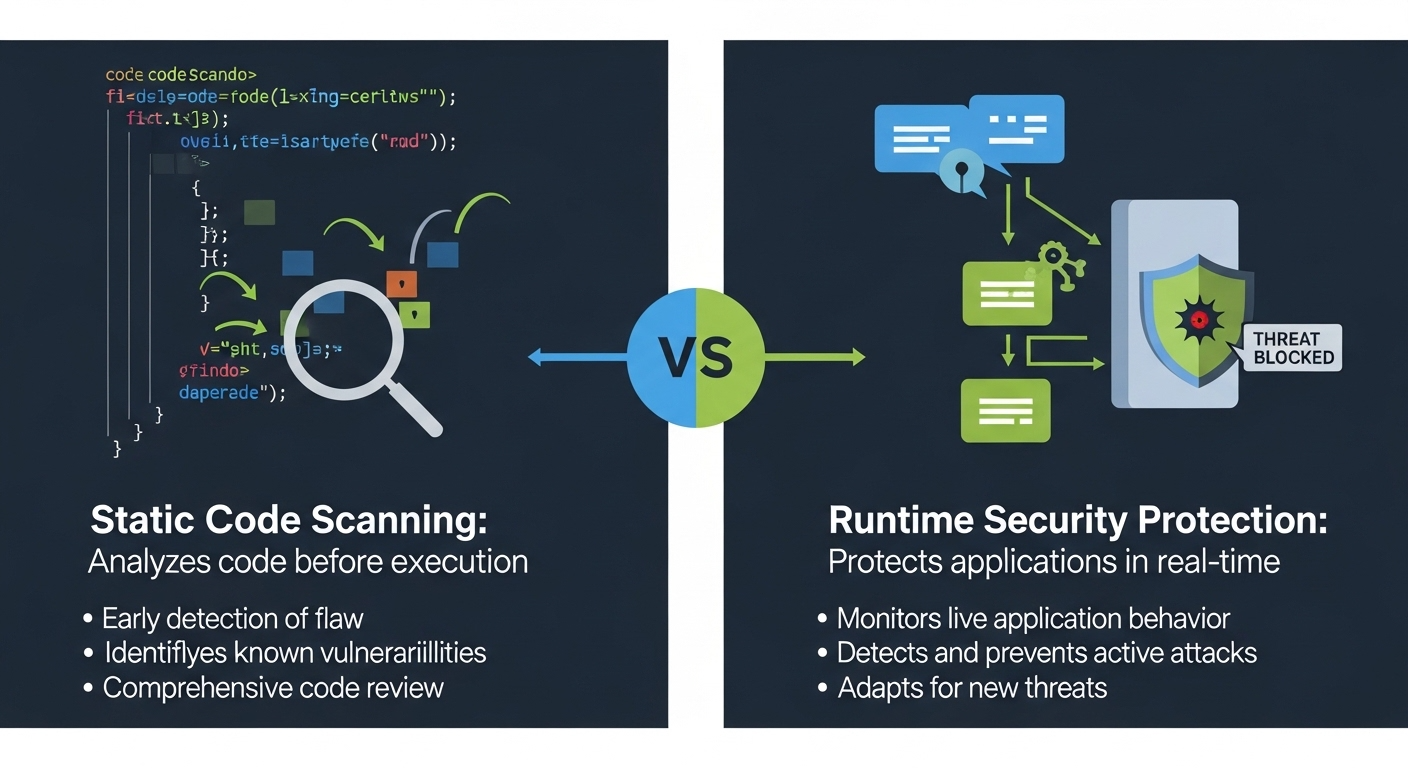
Modern applications are dynamic, distributed, API-driven, and continuously deployed. Static testing still plays an important role but it cannot keep up with real-time threats, cloud-native complexity, and evolving attack techniques.

As a result, runtime security is overtaking static-only approaches as the dominant strategy in modern application security.

Security is shifting from prediction to protection.

The Traditional Static Security Model

Static Application Security Testing (SAST) analyzes source code without executing it. It identifies patterns that may represent vulnerabilities, such as:

  • SQL injection risks
  • Cross-site scripting flaws
  • Hard-coded credentials
  • Unsafe memory handling
  • Known vulnerable dependencies

The strength of static testing lies in early detection. By scanning code before release, teams can reduce risk before deployment.

However, static analysis has inherent limitations.

The Structural Limitations of Static-Only Security

1. Lack of Runtime Context

Static tools analyze code in isolation. They cannot see:

  • How services interact at runtime
  • Whether vulnerable code paths are actually reachable
  • Which APIs are publicly exposed
  • How user roles affect access control

Without runtime context, risk assessment becomes theoretical.

2. High False Positive Rates

Security teams often spend significant time triaging findings that may not be exploitable in practice. This creates:

  • Alert fatigue
  • Remediation delays
  • Developer frustration
  • Reduced trust in security tools

When everything looks critical, nothing feels urgent.

3. Inability to Detect Business Logic Abuse

Many modern attacks do not exploit coding flaws they exploit flawed workflows.

For example:

  • Manipulating pricing logic
  • Bypassing rate limits
  • Abusing API sequencing
  • Circumventing authentication flows

Static analysis cannot simulate or detect these runtime abuses.

4. Cloud-Native and Microservices Complexity

Modern systems include:

  • Containers
  • Serverless functions
  • Dynamic infrastructure
  • Third-party APIs
  • Continuous deployments

Static scans performed before deployment cannot account for configuration drift, environment variables, or evolving infrastructure states.

Why Runtime Security Is Gaining Dominance

Runtime security shifts the focus from code inspection to live behavioral monitoring.

Instead of asking:

“Could this code be vulnerable?”

Runtime security asks:

“Is this vulnerability being exploited right now?”

This shift offers several advantages.

Real-Time Threat Detection

Runtime systems monitor live traffic and execution patterns. They can detect:

  • Injection attempts
  • API abuse
  • Token manipulation
  • Privilege escalation
  • Suspicious request patterns
  • Exploit payload signatures

This allows organizations to block threats instantly rather than discovering them after damage occurs.

Context-Aware Risk Evaluation

Runtime protection evaluates:

  • User identity and permissions
  • Network exposure
  • Deployment environment
  • Data sensitivity
  • Active exploit behavior

This contextual intelligence allows security teams to prioritize genuine threats over theoretical risks.

Runtime Application Self-Protection (RASP)

RASP solutions embed directly into the application runtime environment. They:

  • Monitor execution
  • Detect malicious behavior
  • Block exploit attempts in real time

Unlike perimeter defenses, RASP protects applications internally even if attackers bypass external controls.

Interactive Application Security Testing (IAST)

IAST operates during testing phases but leverages runtime instrumentation. It provides deeper insight into:

  • Code coverage during tests
  • Real execution paths
  • Confirmed vulnerabilities

IAST bridges the gap between static and dynamic testing.

Runtime Protection and DevSecOps

As organizations adopt DevSecOps and continuous deployment, security must operate at the same speed as development.

Runtime protection supports:

  • Rapid release cycles
  • Frequent feature updates
  • Continuous validation
  • Immediate feedback loops

Security becomes an always-on layer rather than a pre-release checkpoint.

Business Impact of Runtime Security

The shift toward runtime security is not purely technical it is strategic.

Revenue Protection

Production attacks directly affect transactions, subscription renewals, and user trust. Runtime blocking mechanisms reduce financial loss.

Reduced Incident Response Time

By detecting and blocking attacks instantly, runtime security lowers:

  • Mean Time to Detect (MTTD)
  • Mean Time to Respond (MTTR)

Faster containment reduces operational disruption.

Compliance and Regulatory Alignment

Modern compliance frameworks increasingly require:

  • Continuous monitoring
  • Active incident detection
  • Real-time reporting capabilities

Runtime security supports these mandates.

Runtime vs Static: A Layered Strategy

It is important to emphasize that runtime security does not eliminate the need for static analysis.

A mature strategy includes:

  • SAST for early code review
  • DAST for simulated attack testing
  • IAST for execution-aware scanning
  • RASP for production protection
  • Dependency scanning for supply chain security

The key difference in 2026 is prioritization. Static-only strategies are no longer enough.

Runtime validation is becoming central.

Emerging Trends in Runtime Security

AI-Driven Behavioral Detection

Machine learning models now analyze traffic anomalies and detect patterns that traditional rule-based systems miss.

Zero-Trust Runtime Policies

Applications enforce strict access controls internally, verifying every request based on identity and context.

Runtime Security Observability

Security metrics are increasingly integrated into observability dashboards alongside performance and reliability metrics.

This unifies security, operations, and engineering teams.

Challenges to Adoption

Runtime protection introduces considerations:

  • Performance overhead concerns
  • Integration complexity
  • Need for skilled interpretation of alerts
  • Balancing automation with human oversight

However, as tooling matures, these barriers are decreasing.

The Future of Application Security

The future of application security is:

  • Continuous
  • Context-aware
  • Runtime-driven
  • Business-aligned

Security will increasingly operate inside the application itself, monitoring execution behavior rather than relying solely on pre-deployment predictions.

Applications will defend themselves dynamically.

Conclusion

Static analysis established the foundation of secure development practices. But in today’s fast-moving, cloud-native environments, it cannot stand alone.

Runtime security provides real-time visibility, contextual intelligence, and active protection against modern threats.

The organizations that succeed in 2026 and beyond will adopt layered strategies but they will prioritize runtime defense as a core capability.

Static testing identifies potential weaknesses.
Runtime security stops real attacks.

The shift is not optional. It is evolutionary.

For more Contact US

7 Critical AI-Powered Cyberattacks Trends Transforming Cybersecurity in 2026

AI-Powered Cyberattacks are no longer theoretical risks. These AI-Powered Cyberattacks are actively reshaping how modern breaches occur across cloud, API, and enterprise environments. AI-powered cyberattacks are accelerating, reshaping the global threat landscape and forcing organizations to rethink how they approach application security.

Cybercriminals are no longer relying solely on manual exploitation techniques. Instead, they are deploying AI systems capable of automating reconnaissance, crafting hyper-personalized phishing attacks, generating malware variants, and moving laterally across enterprise networks in minutes.

This is not just an evolution of cybercrime it is a scale shift.

The Speed Problem: Attacks Are Moving Faster Than Ever

Recent threat intelligence reports from firms like CrowdStrike highlight a disturbing trend: attackers are now moving within compromised environments in under 30 minutes.

Traditionally, breaches followed a slower pattern:

  1. Initial compromise
  2. Manual reconnaissance
  3. Privilege escalation
  4. Data exfiltration

With AI, this lifecycle is compressed dramatically. Automation allows attackers to:

  • Identify weak endpoints instantly
  • Scan internal systems for misconfigurations
  • Escalate privileges using known patterns
  • Deploy ransomware without delay

The reduced dwell time leaves security teams with a shrinking response window.

How AI Is Supercharging Cybercrime

AI enhances nearly every phase of the attack lifecycle.

1. AI-Driven Reconnaissance

AI-Powered Cyberattacks attackers use machine learning tools to scrape public data, analyze employee profiles on social media, and map digital infrastructure footprints. AI can process vast datasets quickly, identifying exploitable entry points more efficiently than manual attackers.

2. Hyper-Personalized Phishing

Generative AI models can mimic corporate tone, executive communication styles, and industry terminology. Phishing emails now:

  • Contain fewer grammatical errors
  • Reference specific projects or colleagues
  • Use contextual data from breached datasets

This significantly increases click-through and credential theft rates.

3. Automated Malware Development

AI can:

  • Modify malware signatures dynamically
  • Generate polymorphic code
  • Test exploit payloads against detection systems

Instead of manually coding malicious software, attackers can instruct AI tools to create variants that evade signature-based detection.

4. Lateral Movement at Machine Speed

Once inside a system, AI-driven scripts analyze network architecture, identify privilege escalation opportunities, and pivot across endpoints quickly. Automation reduces human error and increases precision.

This explains why modern breaches escalate so rapidly

Why Application Security Is Especially at Risk

Application security teams are under increasing pressure because modern software environments are complex:

  • Cloud-native architectures
  • Microservices and APIs
  • Rapid DevOps release cycles
  • Open-source dependencies
  • AI-assisted coding tools

Each component introduces potential vulnerabilities. Attackers use automated scanners to test thousands of endpoints simultaneously.

Unpatched APIs, misconfigured cloud storage, and exposed credentials become easy targets.

Organizations relying on reactive patch management are especially vulnerable.

The AI Arms Race in Cybersecurity

The cybersecurity ecosystem is now engaged in an AI arms race.

While attackers use AI offensively, defenders are deploying AI defensively.

Security vendors like Palo Alto Networks, Microsoft, and CrowdStrike are integrating machine learning into:

  • Behavioral anomaly detection
  • Endpoint threat monitoring
  • Automated threat hunting
  • Predictive risk modeling
  • Security information and event management (SIEM) systems

AI-powered defense systems can detect suspicious behavior patterns rather than relying solely on known attack signatures.

However, automation benefits both sides and attackers often experiment faster.

Business Impact: Beyond IT Departments

AI-powered cyberattacks have enterprise-wide consequences.

Financial Risk

  • Ransomware payouts
  • Operational downtime
  • Incident response costs
  • Regulatory fines

Reputational Damage

Customers lose trust when data breaches expose personal information.

Legal Exposure

Data privacy regulations increase liability for compromised user data.

Competitive Loss

Intellectual property theft can undermine years of research and development.

Small and mid-sized businesses face heightened risk because they often lack advanced monitoring infrastructure.

Emerging AI-Driven Threat Trends

Looking ahead, we can expect:

1. Autonomous Attack Bots

Self-learning attack systems capable of adapting in real time.

2. AI Deepfake Social Engineering

Voice and video impersonation targeting executives and finance teams.

3. Continuous Vulnerability Discovery

AI scanning open-source repositories and public assets for zero-day opportunities.

4. Credential Harvesting at Scale

AI analyzing breached datasets to identify password reuse patterns.

The sophistication of attacks will increase alongside accessibility of AI tools.

How Organizations Must Respond

To counter AI-powered threats, companies must evolve beyond traditional security practices.

1. Adopt AI-Driven Security Solutions

Behavior-based detection can identify unusual system activity before damage escalates.

2. Implement Zero Trust Architecture

Restrict access permissions and verify identity continuously.

3. Strengthen Secure Development Practices

Integrate automated code scanning into CI/CD pipelines.

4. Reduce Attack Surface

Audit APIs, cloud storage, and third-party integrations regularly.

5. Prioritize Incident Response Readiness

Automated containment tools can isolate compromised systems immediately.

6. Invest in Employee Awareness

AI-enhanced phishing attacks demand heightened human vigilance.

The Future of Application Security

Cybersecurity strategies must transition from reactive to predictive.

Instead of waiting for alerts, AI-powered defense systems will:

  • Anticipate vulnerabilities
  • Model attack simulations
  • Recommend remediation actions
  • Continuously adapt to emerging threat patterns

Application security will become deeply integrated into DevSecOps processes, ensuring vulnerabilities are addressed before deployment.

Conclusion

AI-powered cyberattacks are accelerating at an unprecedented rate, transforming the digital threat landscape. Automation, machine learning, and generative AI are empowering attackers with tools that increase speed, precision, and scale.

But the solution is not to resist AI it is to harness it responsibly.

Organizations that adopt intelligent security frameworks, invest in AI-driven defenses, and embed security into every layer of application development will be best positioned to thrive in this new era.

In 2026 and beyond, cybersecurity will not be defined by who builds the strongest walls but by who deploys the smartest systems. AI-Powered Cyberattacks represent one of the most critical cybersecurity challenges of 2026.

For more Contact US

Why False Positives Are the Biggest Risk in Modern Security

Introduction: The Security Problem No One Wants to Admit

For years, security success was measured by volume: more scans, more alerts, more findings. A noisy dashboard was treated as a sign of diligence. If everything was flagged, surely nothing was missed.

In 2026, that belief is collapsing.

Organizations are realizing that false positives are no longer just an inconvenience they are one of the biggest contributors to real security failures. Not because vulnerabilities don’t exist, but because signal is being drowned in noise.

Modern security doesn’t fail from lack of data.
It fails from lack of clarity.

What False Positives Really Cost

A false positive isn’t just a wasted alert. At scale, it causes systemic damage.

False positives:

  • Slow down remediation of real threats
  • Condition teams to ignore alerts
  • Erode trust in security tooling
  • Burn engineering goodwill
  • Create decision paralysis

Over time, they turn security programs into background noise always present, rarely acted on.

The most dangerous vulnerabilities today are often not the most severe ones but the ones hidden among hundreds of irrelevant alerts.

Why False Positives Are Exploding Now

1. Attack Surfaces Have Grown Faster Than Tooling

Modern environments include:

  • Microservices
  • APIs
  • Cloud resources
  • Ephemeral infrastructure
  • Third-party integrations

Security tools scan broadly but lack context. They detect patterns, not exposure.

The result:

  • Findings that are technically valid
  • But practically unreachable or irrelevant

Security teams are left sorting signal from static.

2. CVSS Scores Are Being Misused by False Positives

CVSS was designed to describe severity not risk.

Yet many organizations still prioritize remediation purely by:

  • Critical
  • High
  • Medium

Without considering:

  • Exploitability
  • Exposure
  • Business impact
  • Compensating controls

This leads teams to spend weeks fixing “critical” issues that pose no real threat while exploitable paths remain open.

3. Automation Increased Volume Without Improving Judgment

Automation made scanning faster. It didn’t make it smarter.

Modern pipelines can generate:

  • Thousands of findings per week
  • Repeated alerts for the same issue
  • Findings on unused or deprecated assets

Without intelligent filtering, automation amplifies noise faster than teams can respond.

Alert Fatigue Is Now a Security Vulnerability

Security fatigue isn’t hypothetical it’s measurable.

When teams experience:

  • Constant false alarms
  • No clear prioritization
  • Repetitive findings

They begin to:

  • Delay response
  • Deprioritize security tickets
  • Accept risk by default

This isn’t negligence it’s human adaptation.

At a certain point, false positives don’t just waste time.
They lower the probability of responding correctly when it actually matters.

Why Engineers Stop Trusting Security Tools

Engineering teams want to ship software. When security tools:

  • Block builds unnecessarily
  • Flag irrelevant issues
  • Lack clear remediation guidance

Security becomes friction not protection.

Over time:

  • Engineers bypass controls
  • Exceptions become the norm
  • Security loses influence

False positives don’t just waste engineering time they undermine security culture.

Context Is the Missing Layer

Modern security failures are rarely about unknown vulnerabilities. They’re about misjudged risk.

Context answers questions scanners can’t:

  • Is the asset exposed?
  • Is it reachable externally?
  • Is the vulnerable path actually executable?
  • Does this affect critical business flows?

Without context, every alert looks urgent.
With context, most alerts disappear.

How Leading Teams Are Reducing False-Positive Risk

1. Moving From Vulnerability Counts to Risk Scenarios

Instead of asking:

“How many vulnerabilities do we have?”

Teams ask:

“Which attack paths actually matter?”

This shifts focus from individual findings to real exploit chains.

2. Prioritizing Exposure Over Severity

High-severity vulnerabilities in non-exposed systems are often ignored correctly.

Teams now prioritize:

  • Internet-facing assets
  • Privileged services
  • Authentication and authorization flaws
  • Business logic weaknesses

This dramatically reduces remediation backlog while increasing real security.

3. Tuning Tools Aggressively

Modern security teams treat tooling like code:

  • Alerts are tuned
  • Rules are refined
  • Noisy checks are disabled

The goal is not coverage it’s confidence.

4. Embedding Security Into CI/CD With Guardrails

Instead of blocking everything, teams:

  • Gate only high-confidence issues
  • Surface others as advisory
  • Require justification for accepted risk

This preserves velocity while protecting critical paths.

Why Fewer Alerts Lead to Better Security

Counterintuitive but true:
Less alerting often means better outcomes.

When teams trust alerts:

  • Response is faster
  • Fix quality improves
  • Accountability increases

Security becomes actionable instead of theoretical.

Risk Acceptance Is Becoming a Leadership Decision

Another major shift: accepted risk is no longer buried in tickets.

Executives and product leaders are now:

  • Reviewing risk tradeoffs
  • Approving exceptions
  • Owning exposure decisions

False positives force leadership to engage in noise.
Reducing them allows leadership to focus on real threats.

The Dangerous Middle Ground

The riskiest posture today is not weak security. It’s over-alerting with low trust.

These organizations:

  • Scan constantly
  • Fix little
  • Assume coverage equals safety

When breaches happen, the question isn’t “Why didn’t we scan?”
It’s “Why didn’t we see this coming?”

The answer is almost always buried in ignored alerts.

What Modern Security Programs Optimize For

The most effective teams in 2026 optimize for:

  • Signal quality
  • Response speed
  • Contextual risk reduction
  • Organizational trust

They understand that security is a decision system, not a detection system.For details Contact Us

How AI Adoption Is Transforming Data Privacy Playbooks in 2026

Introduction: AI Broke the Old Privacy Model

For years, data privacy programs were built around relatively stable systems: databases, applications, user inputs, and clearly defined processing purposes. Compliance focused on documentation, access control, and breach response.

AI changed that.

In 2026, It is no longer a standalone experiment. It is embedded across marketing, customer support, product development, analytics, HR, and decision-making systems. As a result, traditional privacy frameworks are no longer sufficient.

It doesn’t just process data differently it changes what data is used, how it is interpreted, and how long its influence persists. That reality is forcing organizations to rethink privacy from the ground up.

Why Traditional Privacy Frameworks Are Failing

1. AI Uses Data Indirectly, Not Just Explicitly

Classic privacy models assumed a direct relationship:

  • Data collected → Data processed → Outcome delivered

Artificial Intelligence break this chain.

Artificial Intelligence:

  • Learns patterns from historical data
  • Infers new information not explicitly provided
  • Makes probabilistic decisions
  • Applies learning across future interactions

This means organizations may impact users without actively processing their data again a scenario many existing privacy policies never anticipated.

2. Training Data Creates Long-Term Risk

In traditional systems, deleting data often ended the risk.

With AI, that’s no longer true.

Once personal or sensitive data influences:

  • Model weights
  • Behavioral patterns
  • Decision logic

The impact can persist long after the original data is deleted.

This raises hard questions regulators are now asking:

  • Can models “forget” data?
  • How do you honor deletion requests?
  • What constitutes ongoing processing?

Old answers no longer work.

3. Artificial Intelligence Blurs the Line Between Data Use and Profiling

Many systems perform advanced profiling by default:

  • Behavioral prediction
  • Risk scoring
  • Personalization
  • Automated recommendations

Under modern regulations, this often triggers:

  • Higher consent thresholds
  • Transparency obligations
  • User rights around automated decision-making

Organizations using tools even third-party ones are increasingly responsible for explaining how decisions are made, not just that data is processed.

Regulators Are Shifting Focus Because of Artificial Intelligence

The regulatory response to it is not just new laws it’s how existing privacy laws are enforced.

In 2026, regulators are prioritizing:

  • Real-world data usage
  • Operational safeguards
  • Evidence of privacy-by-design
  • Accountability at leadership level

Artificial Intelligence has exposed the weakness of “paper compliance” policies that look good but don’t reflect reality.

Key Privacy Pressure Points Introduced by Artificial Intelligence

1. Data Minimization Is Now Critical

This systems often tempt teams to collect “as much data as possible” to improve performance.

That approach is now dangerous.

Regulators are asking:

  • Why is each data point necessary?
  • Could the system function with less data?
  • Is historical data still justified?

In AI-driven environments, data hoarding increases risk without guaranteed benefit.

2. Consent Becomes Harder to Justify

Obtaining valid consent for Artificial Intelligence use is more complex because:

  • Future uses may not be fully known
  • Models evolve over time
  • Secondary use is common

Vague or blanket consent no longer holds up.

Organizations must now:

  • Be precise about Artificial Intelligence purposes
  • Re-evaluate consent as systems evolve
  • Avoid bundling unrelated data uses

Artificial Intelligence forces consent to become dynamic, not one-time.

3. Third-Party Artificial Intelligence Tools Expand Your Risk Surface

Many companies don’t build Artificial Intelligence they integrate it.

That doesn’t reduce responsibility.

Using Artificial Intelligence platforms, APIs, or copilots introduces questions around:

  • Data sharing
  • Model training on customer data
  • Sub-processing chains
  • Cross-border transfers

In 2026, “the vendor handles it” is no longer a defensible privacy position.

Privacy-by-Design Is No Longer Optional

Artificial Intelligence’s adoption has accelerated the shift from reactive compliance to privacy-by-design.

This means:

  • Assessing privacy impact before Artificial Intelligence deployment
  • Limiting training data by default
  • Applying anonymization and pseudonymization
  • Designing models with explainability in mind

Privacy must be embedded at:

  • Architecture level
  • Model selection stage
  • Data pipeline design

Retrofitting controls after deployment is too late and increasingly penalized.

The New Data Privacy Playbook for Artificial Intelligence

1. Treat Artificial Intelligence Systems as Ongoing Processing Activities

Privacy assessments should no longer be “set and forget.”

Artificial Intelligence’s systems require:

  • Continuous monitoring
  • Periodic reassessment
  • Clear ownership

If the model evolves, the privacy assessment must evolve with it.

2. Separate Model Training from User Interaction Data

Where possible:

  • Avoid training on live customer data
  • Use synthetic or anonymized datasets
  • Strictly control feedback loops

This reduces long-term exposure and simplifies compliance obligations.

3. Strengthen Transparency Without Over-Promising

Organizations must explain Artificial Intelligence usage honestly:

  • What data is used
  • What decisions are automated
  • What safeguards exist

Over-simplification is risky. So is technical obfuscation.

Clear, accurate communication builds trust and reduces enforcement risk.

4. Assign Clear Accountability

Artificial Intelligence privacy failures are increasingly treated as governance failures.

Best-practice organizations:

  • Assign Artificial Intelligence oversight roles
  • Involve legal, security, and product teams early
  • Ensure leadership visibility

Artificial Intelligence privacy is no longer just a DPO concern. It’s an executive one.

What This Means for Businesses in 2026

Artificial Intelligence adoption is accelerating but so is scrutiny.

Organizations that:

  • Deploy Artificial Intelligence without privacy strategy
  • Rely on outdated consent models
  • Ignore training data implications

are accumulating regulatory and reputational risk.

Those that adapt their privacy playbook gain:

  • Faster Artificial Intelligence adoption with fewer blockers
  • Stronger user trust
  • Lower enforcement exposure
  • Better long-term scalability

Privacy maturity is becoming a competitive advantage.

Final Thoughts: Artificial Intelligence Forces Honesty in Privacy

Artificial Intelligence has removed the illusion that privacy can be managed through paperwork alone.

In 2026, data privacy is about:

  • How systems actually behave
  • How decisions are made
  • How long data influence persists
  • Who is accountable when things go wrong

Artificial Intelligence didn’t make privacy harder it made weak privacy strategies visible.

Organizations that respond with discipline, transparency, and design-level controls will thrive. Those that don’t will spend years reacting to audits, fines, and trust erosion.

The new data privacy playbook isn’t optional.
It’s the cost of doing Artificial Intelligence responsibly.

For more details Contact Us

UK Cyber Action Plan: A Critical Guide for Private Sector Teams in 2026

Introduction: The UK Cyber Action Plan Just Admitted the Risk Is “Critically High”

When a government publicly states that its cyber risk is critically high, it’s not posturing it’s a warning.

In early 2026, the UK Government announced a £210 million National Cyber Action Plan, acknowledging that despite years of investment, cyber threats are accelerating faster than defenses. The plan is designed to strengthen national resilience, modernize public sector systems, and enforce stronger security controls.

But here’s the uncomfortable truth: private sector organizations are not insulated from this plan they are directly affected by it.

If you operate in or with the UK market, this initiative should immediately change how you think about security, compliance, and operational risk.

What Is the UK Cyber Action Plan?

The Cyber Action Plan is a government-wide initiative aimed at:

  • Strengthening national cyber defenses
  • Reducing systemic vulnerabilities
  • Improving response coordination
  • Enforcing consistent security standards across public bodies

Key elements include:

  • Creation of a centralized Government Cyber Unit
  • Mandatory baseline security controls
  • Increased funding for incident response and monitoring
  • Accelerated modernization of legacy systems

This is not just a public sector cleanup. It sets expectations that will ripple into the private sector.

Why the Private Sector Should Pay Attention

Government cyber policy doesn’t stay confined to government networks. It almost always becomes:

  • Procurement requirements
  • Regulatory expectations
  • Contractual obligations

Private companies that provide:

  • IT services
  • Cloud infrastructure
  • Software platforms
  • Data processing
  • Managed services

will increasingly be expected to match government-grade security standards.

Ignoring this shift now will cost you later either in lost contracts or emergency compliance spending.

The Real Message Behind the Plan

Strip away the headlines, and the message is clear:

Reactive cybersecurity is no longer acceptable.

The UK government is moving toward:

  • Continuous risk assessment
  • Proactive threat management
  • Enforced accountability

Private organizations still relying on annual audits and static policies are already behind.

Key Areas That Will Impact Private Organizations

1. Mandatory Baseline Security Controls

The Cyber Action plan emphasizes standardized controls across systems. This typically translates into:

  • Stronger identity and access management
  • Mandatory multi-factor authentication
  • Asset visibility and inventory
  • Patch and vulnerability management

Private sector teams should expect these controls to appear in:

  • Supplier security questionnaires
  • Vendor audits
  • Contract clauses

If your controls aren’t documented and enforced, you’ll fail before technical discussions even start.

2. Supply Chain Security Comes Under Scrutiny

One of the biggest drivers behind the plan is supply chain risk.

Government systems are only as secure as the weakest vendor connected to them. Expect:

  • More rigorous third-party risk assessments
  • Evidence-based security validation
  • Continuous monitoring expectations

Private companies can no longer rely on self-attestations. Proof is becoming mandatory.

3. Incident Response Expectations Will Rise

The Cyber Action Plan prioritizes faster detection and coordinated response.

For private organizations, this means:

  • Clearly defined incident response plans
  • Tested response procedures
  • Breach notification readiness
  • Cross-team coordination (IT, legal, leadership)

“Having a plan” is not enough. It must be tested, documented, and executable.

4. Legacy Systems Are Now a Liability

A major admission in the Cyber Action plan is that outdated systems are a primary risk factor.

Private sector takeaway:

  • Legacy platforms increase compliance risk
  • Unsupported software weakens trust
  • Security exceptions will be harder to justify

Modernization is no longer a roadmap item it’s a risk mitigation requirement.

The Compliance Shift: From Paper to Proof

One of the most important implications of the Cyber Action Plan is how compliance is evolving.

Traditional compliance focused on:

  • Policies
  • Annual audits
  • Checkbox frameworks

The new direction demands:

  • Continuous evidence
  • Operational security metrics
  • Real-time visibility

Private organizations should prepare for compliance that looks more like ongoing security operations than documentation exercises.

What Private Sector Teams Should Do Now

1. Assess Your Current Security Posture

Ask hard questions:

  • Can we prove our controls are active?
  • Do we know our asset inventory?
  • Can we detect incidents quickly?

If the answer is unclear, that’s your starting point.

2. Align Security With Business Risk

Security teams must connect controls to:

  • Business continuity
  • Customer trust
  • Contract eligibility

This alignment is essential as boards and regulators demand clearer justification for security investments.

3. Prepare for Increased Vendor Scrutiny

If you sell into regulated markets:

  • Document your controls
  • Standardize security reporting
  • Prepare evidence, not statements

Security maturity is becoming a competitive differentiator.

4. Invest in Continuous Security Practices

This includes:

  • Continuous monitoring
  • Threat exposure management
  • Regular testing and validation

Static security models will not survive this regulatory direction.

What This Means Long Term

The UK Cyber Action Plan is not a one-off initiative. It’s part of a broader global trend:

  • Governments raising security expectations
  • Regulators demanding operational proof
  • Markets rewarding resilient organizations

Private companies that adapt early will:

  • Reduce breach impact
  • Win trust faster
  • Qualify for high-value contracts

Those who delay will pay in rushed remediation, reputational damage, and lost opportunities.

Final Thoughts

The UK government’s cyber admission should be taken seriously. Cybersecurity is no longer framed as a technical problem it’s a national risk issue.

For private sector teams, the message is simple:

Get proactive, get visible, or get left behind.

Security maturity is no longer optional. It’s becoming the cost of doing business.

If your organization needs help aligning security, compliance, and operational resilience with modern regulatory expectations, explore security and technology consulting at Contact Us