

7 Powerful Reasons Profitability Consulting Is Replacing Growth-Only Advisory

For more than a decade, startup consulting was heavily centered around one objective: growth. Advisors helped founders optimize acquisition funnels, increase user signups, accelerate funding rounds, and expand market presence as quickly as possible.

Revenue growth was the primary metric. Profitability could wait.

In 2026, that mindset has shifted dramatically.

Profitability consulting is replacing growth-only advisory as investors, founders, and boards demand sustainable financial models instead of aggressive expansion at all costs. The new era of startup consulting prioritizes disciplined scaling, unit economics, and capital efficiency over vanity metrics.

Growth is still important but it must now be profitable growth.

The End of “Growth at Any Cost”

In the low-interest-rate era, startups were incentivized to prioritize market capture over margin discipline. Venture capital flowed aggressively, rewarding:

  • User growth
  • Market share
  • Brand visibility
  • Revenue multiples
  • Expansion speed

Startups often operated at heavy losses while justifying burn rates with projected future dominance.

That environment has changed.

Capital has become more selective. Investors now scrutinize:

  • Cash runway
  • Burn multiple
  • Gross margin stability
  • Customer acquisition efficiency
  • Contribution margin

Consulting models must adapt accordingly.

Why Profitability Consulting Is Rising

1. Investor Expectations Have Evolved

Investors now require startups to demonstrate:

  • Clear break-even timelines
  • Sustainable cost structures
  • Realistic valuation narratives
  • Financial resilience under downturn scenarios

Consultants are increasingly tasked with preparing startups for this scrutiny.

2. Market Conditions Demand Discipline

Economic volatility and increased competition mean startups cannot rely solely on external capital for survival.

Profitability consulting focuses on:

  • Expense rationalization
  • Operational efficiency
  • Pricing optimization
  • Margin forecasting

This creates businesses that can sustain growth without constant funding injections.

3. Valuation Multiples Are Compressing

In today’s environment, revenue growth alone does not justify high valuations. Investors now reward:

  • EBITDA visibility
  • Path-to-profitability clarity
  • Strong unit economics

Advisors who can structure profitability narratives enhance startup credibility.

What Profitability Consulting Includes

Modern startup consulting now emphasizes measurable financial frameworks.

Unit Economics Optimization

Consultants analyze:

  • Customer Acquisition Cost (CAC)
  • Lifetime Value (LTV)
  • Contribution margin
  • Churn impact
  • Retention cohorts

Improving these metrics directly impacts sustainable growth.

Pricing Strategy Refinement

Pricing is often under-optimized in early-stage companies. Profitability consultants:

  • Test pricing tiers
  • Introduce value-based pricing
  • Optimize subscription models
  • Reduce discount dependency

Small pricing adjustments can dramatically increase margins.

Burn Rate & Runway Planning

Startups must understand:

  • Monthly burn rate
  • Cash runway under multiple scenarios
  • Sensitivity analysis
  • Cost structure flexibility

Consultants help model best-case and worst-case forecasts to reduce financial surprises.

Margin Engineering

Rather than simply increasing revenue, profitability consulting focuses on:

  • Gross margin improvement
  • Vendor cost negotiation
  • Infrastructure cost optimization
  • Automation-driven cost reduction

Margin expansion often produces greater impact than pure revenue growth.

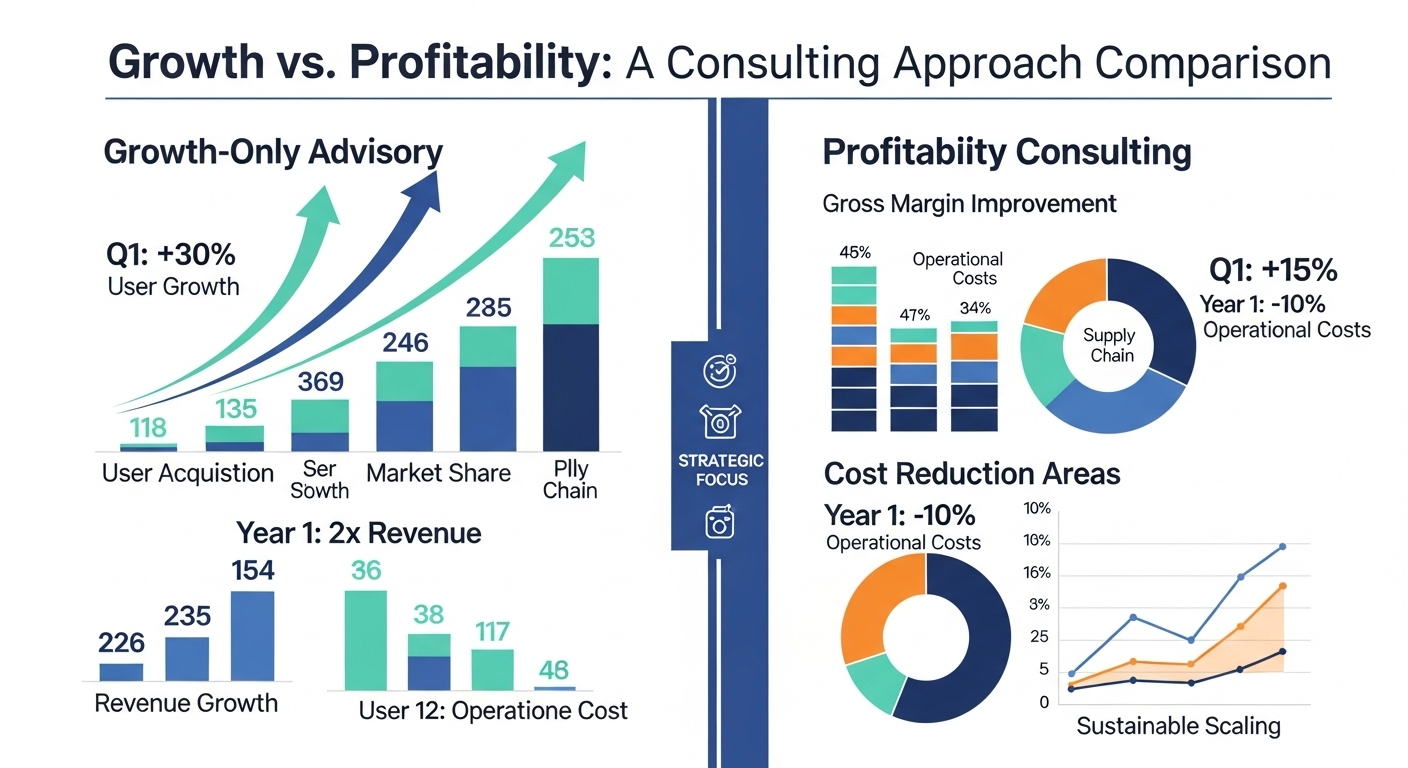
Growth vs Profitable Growth

Growth-only advisory focuses on scale.

Profitability consulting focuses on sustainable scale.

The difference lies in:

Growth-Only AdvisoryProfitability Consulting
Prioritizes acquisitionPrioritizes retention efficiency
Encourages rapid expansionEncourages measured scaling
Accepts high burn ratesControls burn strategically
Focuses on top-line metricsFocuses on bottom-line health
Valuation-driven narrativeSustainability-driven narrative

This does not eliminate growth ambition it refines it.

The Strategic Role of Data in Profitability Consulting

Profitability consulting is inherently data-driven. Advisors now rely on:

  • Cohort analysis
  • Conversion rate diagnostics
  • Cost-to-serve modeling
  • Customer profitability segmentation
  • Scenario-based forecasting

Modern consulting is no longer theoretical it is analytical.

Fractional CFO & Embedded Advisory Models

The rise of profitability consulting has accelerated demand for:

  • Fractional CFO services
  • Financial modeling advisors
  • Embedded operational consultants

Rather than producing slide decks, consultants integrate into execution frameworks.

They:

  • Review monthly financial dashboards
  • Guide pricing experiments
  • Support investor reporting
  • Validate capital allocation decisions

Advisory becomes operational.

Benefits for Founders

Startups that embrace profitability consulting gain:

  • Greater investor confidence
  • Improved fundraising positioning
  • Longer runway
  • Reduced financial stress
  • Sustainable scaling foundation

Financial clarity improves strategic clarity.

Challenges in Transitioning from Growth to Profitability

Shifting mindset is not always easy.

1. Cultural Resistance

Teams accustomed to aggressive expansion may resist cost discipline.

2. Short-Term Revenue Pressure

Some profitability measures may initially slow growth momentum.

3. Organizational Realignment

Pricing changes and cost optimization require cross-functional coordination.

However, long-term stability outweighs short-term discomfort.

The Future of Startup Consulting

Startup consulting is becoming:

  • Financially rigorous
  • Operationally embedded
  • Data-driven
  • Capital-efficient
  • Risk-aware

Advisors who continue focusing solely on growth metrics risk becoming outdated.

The next generation of startup consulting integrates strategy with financial sustainability.

Conclusion

Profitability consulting is replacing growth-only advisory because the startup ecosystem has matured. Investors, founders, and markets now demand disciplined execution, efficient scaling, and sustainable financial models.

Growth without profitability is fragile.
Profitability without growth is stagnant.

The future belongs to startups that balance both.

Consultants who help founders engineer profitable growth not just rapid expansion will define the next era of startup success.
For more Contact Us

How Startup Funding Is Unlocking New Opportunities Across Europe

For more than a decade, European tech funding has been dominated by a handful of major hubs cities like London, Berlin, Paris, and Stockholm. These ecosystems became magnets for investors, policymakers, founders, and talent. But something significant is happening in 2026: startup funding is decentralizing across Europe.

Today’s trend reflects a deeper shift in how capital flows, how ecosystems mature, and how founders think about growth. It’s not just about where you raise money it’s about where your business can scale sustainably.

This change has profound implications for founders, investors, and consultants alike.

The Traditional European Funding Landscape

Historically, European startups faced a clear reality:

  • Capital was concentrated in a few major tech hubs
  • Early-stage funding was harder outside metro centers
  • Investors preferred familiar ecosystems
  • Talent gravitated toward big-city networks

Startup Funding model worked while Europe’s startup infrastructure was emerging. Concentration created flywheel effects communities, accelerators, angels, and later-stage funds clustered in predictable places.

But as the continent’s digital economy matured, so did the limitations of this model.

Why Decentralization Is Happening Now

Several forces are driving this shift:

1. Regional Governments Are Actively Funding Startups

Across Europe, cities and regions are launching their own investment funds, innovation grants, and co-investment programs. For example:

  • Spain and Portugal are offering competitive tech grants
  • Nordic countries are co-investing with private funds
  • CEE countries are creating early-stage matching programs

Public capital is seeding ecosystems that were previously overlooked.

This reduces dependency on traditional VC hubs and empowers local entrepreneurs.

2. Remote Work Has Permanently Changed Geography

The pandemic demonstrated that tech work does not require physical proximity. Today:

  • Founders can build teams distributed across countries
  • Investors participate in remote pitches
  • Global acceleration programs can scout regional startups

This means startups can raise capital without relocating, and investors are scouting talent beyond traditional centers.

3. Sophisticated Angel Networks Are Emerging Outside Big Cities

Previously, seed capital was dominated by Angel groups in London or Berlin.

Now we see:

  • Cross-border angel syndicates
  • Regional business angel networks
  • Founders angel investing locally
  • Micro-VCs emerging in smaller European markets

Startup Funding gives regional startups earlier access to capital and mentorship.

4. EU Policy and Funds Encourage Distributed Growth

The European Union has shifted funding programs to reward inclusivity and regional scaling.

Initiatives such as:

  • EU Innovation Funds
  • Horizon grants
  • Regional digital transformation funds

These programs focus on spreading capital across member states not just traditional hubs.

This trend will only grow in the next decade.

What Decentralization Means for Founders

1. You’re No Longer Forced to Relocate

A decade ago, relocating to a major city was often a prerequisite for serious funding. Today:

  • Investors meet founders virtually
  • Regional accelerators have funding partnerships
  • Ecosystem maturity is being built outside capitals

This democratizes opportunity and reduces the cost and disruption of relocation.

2. You Can Build Local Advantage

Startups outside big cities now have unique strengths:

  • Proximity to local industries
  • Lower operating costs
  • Access to regional talent
  • Less competition for attention

These advantages can become differentiators for investor interest.

3. Localization Attracts Specialized Investors

Investors are increasingly specializing by sector and region because:

  • Industry clusters drive strategic value
  • Regional partners reduce regulatory friction
  • Local capital is patient capital

This means startups with strong product-market fit in niche regional markets can secure better-aligned Startup Funding.

What This Means for Investors

The decentralization trend isn’t just good for founders it’s strategic for investors too.

1. Early Mover Advantage in New Ecosystems

Investors who engage early in smaller, rising ecosystems get access to:

  • Less competition for deals
  • Higher ownership concentration
  • First rights to future growth companies

Startups with strong regional traction often scale globally.

2. Better Valuation Discipline

Decentralized markets often offer more disciplined valuation environments than overheated hubs.

This leads to:

  • More sustainable investment returns
  • Higher capital efficiency
  • Portfolio resilience

Investors can optimize deployment strategies by combining urban and regional deals.

3. Collaboration With Regional Funds

Major VCs are increasingly partnering with regional funds accelerating scout networks and deal flow.

Examples include:

  • Co-investment agreements
  • Regional syndicate partnerships
  • Shared due diligence frameworks

This expands investment coverage across Europe efficiently.

Why This Trend Aligns With Startup Consulting

Consultants advising founders now need to incorporate geographic strategy into fundraising planning.

Advisory practices are evolving to include:

1. Cross-Border Funding Strategies

Guidance on:

  • Regional grants versus VC capital
  • EU funding eligibility
  • Investor networks outside major hubs
  • Pitch adaptation for different investor types

This is no longer niche consulting. it’s core advice.

2. Ecosystem Mapping & Growth Planning

Startup consultants now help founders:

  • Evaluate regional ecosystem strengths
  • Build networks early with local angels and funds
  • Leverage government-backed programs
  • Access cross-border acceleration platforms

This contextual consulting adds measurable value.

3. Hybrid Fundraising Support

Consultants now:

  • Prepare funding decks optimized for multiple markets
  • Coach teams on diverse investor expectations
  • Create stage-based fundraising roadmaps
  • Support remote investor relations

This hybrid model reflects the decentralization trend.

Challenges That Still Remain

Despite the positive trend, decentralization is not without challenges:

1. Uneven Ecosystem Maturity

Regional ecosystems vary in:

  • Mentorship availability
  • Later-stage fund availability
  • Market access

Some regions are still maturing.

2. Talent Shortages

Smaller markets may lack deep engineering or domain-specific talent, requiring strategic hiring plans or remote teams.

3. Investor Confidence Gaps

Investors still show bias toward known ecosystems; overcoming perception barriers is ongoing work.

The Future of European Startup Funding

As we move deeper into the decade:

  • Multinational accelerators will establish remote-first scouting
  • Cross-border syndicates will standardize co-investment
  • EU-funded programs will reward decentralization
  • Regional innovation clusters will crystallize into global players

What used to be emerging is now strategic.

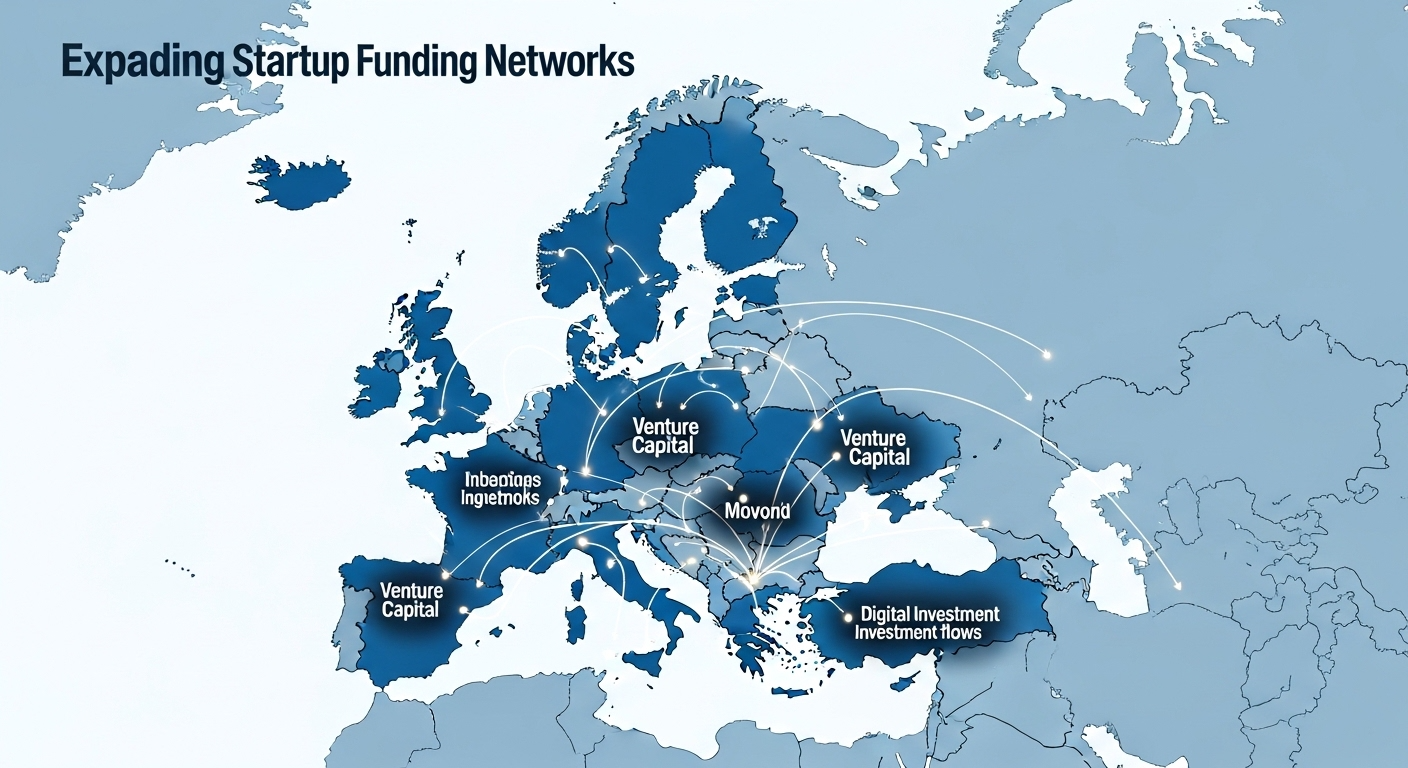
Europe’s startup funding map is expanding and founders should treat geography as a strategic advantage, not a limitation.

Conclusion

The decentralization of European startup funding is real, measurable, and accelerating. Capital is flowing into smaller ecosystems, governments are incentivizing regional growth, remote work has removed physical constraints, and investors are adapting their models.

For founders, this means:

  • More capital accessibility
  • More funding options
  • Geographical freedom
  • Strategic alignment with local markets

For advisors and consultants, it means:

  • Evolving funding frameworks
  • Broader investor networks
  • More nuanced growth strategies

European startup funding is no longer confined to a few metro hubs. The next wave of innovation will come from everywhere.

And the startups and advisors who see opportunity beyond the obvious will be the ones that lead Europe’s next generation of tech success stories.

For more information Connect with us

Why a Clear Digital Strategy Is the Foundation of Sustainable Business Growth

In today’s competitive environment, technology decisions influence nearly every aspect of business performance from operational efficiency and customer experience to revenue growth and market expansion. Organizations are investing heavily in cloud infrastructure, automation platforms, data analytics, cybersecurity frameworks, and custom software development.

Yet many of these investments fail to deliver expected returns. The issue is the absence of a clearly defined digital strategy.

Without structured direction, digital initiatives become fragmented, reactive, and disconnected from business objectives. A well-designed digital strategy transforms technology from a cost center into a long-term growth accelerator.

Digital Strategy Is More Than Technology Planning

A digital strategy is not simply an IT upgrade plan. It is a business growth framework powered by technology.

It defines:

  • How digital capabilities will create competitive advantage
  • How systems will scale as the company grows
  • How operational processes will be optimized through automation
  • How data will drive smarter decisions
  • How risk and compliance will be proactively managed

In short, digital strategy aligns business ambition with technical execution.

Why Digital Initiatives Fail Without Strategic Alignment

Many companies begin transformation efforts by implementing tools before defining outcomes. This often results in:

  • Technology silos across departments
  • Integration challenges between platforms
  • Redundant investments
  • Budget overruns
  • Low adoption among internal teams

When systems are implemented without a unified roadmap, complexity increases instead of efficiency.

Digital maturity requires structured governance, prioritized implementation phases, and executive-level oversight.

The Strategic Role of Leadership in Digital Direction

One of the most overlooked components of digital strategy is executive alignment.

Successful organizations ensure that:

  • C-level leadership defines measurable digital objectives
  • IT leaders translate business priorities into architecture plans
  • Department heads align operational workflows with system capabilities
  • KPIs are monitored continuously

It cannot be delegated solely to technical teams. It requires cross-functional leadership to ensure technology investments deliver real business value.

A Phased Approach to Digital Strategy Development

An effective digital strategy typically follows a structured progression:

Phase 1: Current State Assessment

Evaluate infrastructure, software ecosystem, data capabilities, security posture, and process inefficiencies.

Phase 2: Gap Analysis

Identify disconnects between current digital capability and future business goals.

Phase 3: Architecture Blueprint

Design scalable systems, integration models, security frameworks, and cloud environments.

Phase 4: Prioritized Roadmap

Develop a step-by-step execution plan based on business impact and technical feasibility.

Phase 5: Continuous Optimization

Monitor performance, measure ROI, and refine systems as the organization evolves.

Digital strategy is not static. It adapts as markets, technologies, and business models change.

The Financial Impact of a Strong Digital Strategy

A well-implemented digital strategy delivers measurable results, including:

  • Reduced operational costs through automation
  • Faster product or service delivery cycles
  • Increased customer retention through improved user experience
  • Stronger cybersecurity posture
  • Higher revenue through scalable infrastructure

Most importantly, it reduces uncertainty. Organizations with structured digital direction make confident decisions about investments, hiring, and expansion.

Digital Strategy in a Rapidly Evolving Technology Landscape

The pace of innovation continues to accelerate. Artificial intelligence, cloud-native applications, advanced analytics, and automation are reshaping industries at unprecedented speed.

Without strategic planning, companies risk:

  • Falling behind competitors
  • Over-investing in trends without clear ROI
  • Building systems that quickly become obsolete

A modern digital strategy anticipates change rather than reacting to it. It emphasizes flexibility, modular architecture, and long-term scalability.

How Nautics Technologies Supports Digital Strategy Execution

At Nautics Technologies OU, digital strategy consulting combines business analysis with technical execution expertise. The approach focuses on:

  • Translating executive vision into practical IT roadmaps
  • Designing scalable enterprise architectures
  • Integrating automation and data-driven processes
  • Strengthening cybersecurity foundations
  • Supporting implementation with full-stack engineering capabilities

The goal is not to create theoretical documents, but to build systems that perform under real-world conditions.

The Competitive Advantage of Clarity

In markets defined by disruption and digital acceleration, clarity becomes a strategic asset.

Organizations with a defined digital strategy:

  • Move faster with less risk
  • Scale operations efficiently
  • Adapt to technological change
  • Outperform competitors who operate reactively

Digital success is not determined by how many tools a company adopts.
It is determined by how intentionally those tools are integrated into a unified growth framework. For details Contact Us

Why Digital Transformation Is About Execution, Not Vision in 2026

Introduction: The Vision Era Is Over

For years, digital transformation was sold as a vision problem. Companies hired consultants to define a “future state,” design roadmaps, and align leadership around bold ambitions. Slide decks flourished. Execution lagged.

In 2026, patience has run out.

Boards, CFOs, and CEOs are no longer impressed by transformation narratives. They want working systems, measurable outcomes, and operational change. Vision still matters but without execution, it’s meaningless.

Digital transformation has crossed a line. It’s no longer about where you want to go. It’s about what you actually deliver.

How Digital Transformation Lost Credibility

The term “digital transformation” didn’t fail because the idea was wrong. It failed because execution didn’t follow intent.

Common failure patterns included:

  • Multi-year roadmaps with no short-term wins
  • Tool-first initiatives without process redesign
  • Strategy decks disconnected from operational reality
  • Transformation offices producing reports instead of results

Organizations invested heavily in planning but underinvested in doing. Over time, transformation became synonymous with delay, disruption, and sunk cost.

That reputation change is why execution now dominates the conversation.

The Reality Check in 2026: Outcomes or Nothing

Today’s digital transformation buyers ask different questions:

  • What will change in the next 90 days?
  • Which process becomes faster or cheaper?
  • Where does revenue increase or cost reduce?
  • Who owns delivery not just direction?

If these questions can’t be answered clearly, funding doesn’t get approved.

Digital transformation is now judged by outcomes, not intent.

Why Vision Alone No Longer Moves the Needle

1. Vision Doesn’t Fix Broken Processes

Many organizations discovered that their biggest blockers weren’t technology they were:

  • Fragmented workflows
  • Manual handoffs
  • Poor data quality
  • Undefined ownership

A compelling vision doesn’t fix these issues. Only execution does.

Digital Transformation now starts with:

  • Process mapping
  • Bottleneck removal
  • Automation where it actually matters

Vision without operational change is noise.

2. Tools Don’t Transform Businesses Implementation Does

For years, transformation was equated with tool adoption:

  • New CRM
  • New ERP
  • New analytics platform

But installing software without changing how people work produces little value.

In 2026, leaders understand:

Buying technology is easy. Making it work is hard.

Execution means:

  • Configuring systems to real workflows
  • Integrating data properly
  • Training teams for adoption
  • Measuring real usage and impact

Without this, transformation stalls no matter how modern the stack looks.

3. AI Accelerated the Need for Execution

AI changed expectations dramatically.

AI can:

  • Automate tasks quickly
  • Deliver value fast
  • Expose inefficiencies immediately

This leaves no room for abstract planning cycles.

When AI initiatives fail, it’s rarely because the vision was unclear. It’s because:

  • Data wasn’t ready
  • Processes weren’t defined
  • Governance wasn’t in place
  • Teams weren’t enabled

AI makes execution gaps visible fast.

Transformation Is Becoming Finance-Led

Another major shift: CFOs are now deeply involved in transformation decisions.

Why?

  • Budgets are tighter
  • ROI expectations are clearer
  • Transformation is seen as an investment, not an experiment

This changes the conversation from:

“What could we become?”
to
“What will this deliver, and when?”

Execution-focused transformations:

  • Release funding in stages
  • Tie progress to metrics
  • Shut down initiatives that don’t perform

This discipline forces realism and rewards teams that deliver.

What Execution-First Transformation Looks Like

1. Small, Measurable Wins

Instead of grand launches, execution-led programs focus on:

  • Narrow use cases
  • Clear success criteria
  • Fast delivery cycles

These wins build momentum and credibility.

2. Cross-Functional Ownership

Execution fails when transformation is owned by a single department.

Successful programs involve:

  • IT and operations
  • Business and finance
  • Legal and compliance
  • Frontline users

Transformation happens where work actually happens, not in steering committees.

3. Embedded Change Management

Execution-first transformations assume resistance.

They plan for:

  • Training
  • Adoption tracking
  • Feedback loops
  • Iterative improvement

People don’t resist change they resist poorly executed change.

4. Real Accountability

In 2026, transformation leaders are expected to:

  • Own delivery timelines
  • Report on outcomes, not activities
  • Take responsibility when things don’t work

Execution demands accountability. Vision often avoids it.

Why Consulting Is Being Redefined

This shift is radically changing consulting expectations.

Clients no longer want:

  • High-level recommendations only
  • Generic frameworks
  • Slide-heavy engagements

They want partners who can:

  • Design and build
  • Integrate systems
  • Automate workflows
  • Stay accountable for outcomes

Consultants who can’t execute are being sidelined regardless of brand.

Legacy Modernization Proves the Point

Nothing highlights the execution gap more than legacy systems.

Most organizations already know:

  • What systems need to change
  • Why modernization matters

What they struggle with is doing it without disrupting operations.

Execution-first transformation:

  • Prioritizes stability
  • Phases change intelligently
  • Modernizes incrementally

Vision identified the problem. Execution solves it.

What This Means for Leaders

If you’re leading a transformation in 2026, the playbook is clear:

  • Start with execution constraints, not ambition
  • Tie initiatives to measurable outcomes
  • Demand working solutions not just plans
  • Invest in adoption, not just technology
  • Choose partners who deliver, not just advise

Transformation success now depends on operational discipline.

Final Thoughts: Vision Still Matters But Only After Execution

Vision isn’t dead. It’s just no longer the headline act.

In 2026, digital transformation succeeds when:

  • Vision sets direction
  • Execution creates value

Organizations that understand this distinction move faster, waste less, and build trust internally and externally.

Those that don’t will continue to talk about transformation while competitors quietly deliver it.

Digital transformation isn’t about imagining the future anymore.
It’s about building it one executed decision at a time. For more details Contact Us

Spain’s AI Powerhouse: 5 Powerful Reasons Founders Can’t Miss EU-Startups Summit 2026

Introduction: An Event That Reflects a Bigger Shift

The EU-Startups Summit 2026 isn’t just another networking event. It’s a signal.

When Europe’s most influential startup summit takes place in Spain, it confirms what many founders and investors already know: Spain is no longer an emerging ecosystem it’s a leading one. Over the past five years, Spain has quietly transformed into one of Europe’s most attractive destinations for AI startups, scaleups, and international founders.

This article connects the dots between the EU-Startups Summit 2026 and the deeper reason it matters: Spain’s rise as a core innovation hub in Europe.

What Is the EU-Startups Summit and Why It Matters

The EU-Startups Summit is one of Europe’s most respected startup-focused conferences, bringing together:

  • High-growth startups and scaleups
  • Venture capital firms and angel investors
  • Corporate innovation leaders
  • Accelerators, policymakers, and ecosystem builders

Unlike generic tech expos, this summit is built around funding, scaling, and cross-border growth. The focus is not hype it’s execution.

By 2026, the summit has evolved into a barometer of where European innovation is heading.

Why Founders Should Attend or Closely Watch EU-Startups Summit 2026

1. Investor Access Without the Noise

One of the summit’s biggest strengths is signal quality. Investors attending are:

  • Actively deploying capital
  • Focused on EU-based growth
  • Interested in AI, SaaS, climate tech, fintech, and deep tech

For founders, this means fewer vanity meetings and more real conversations about traction, scalability, and funding readiness.

2. Europe-First, Global-Ready Perspective

Unlike US-centric conferences, EU-Startups Summit focuses on:

  • European regulation realities
  • Cross-border scaling challenges
  • Multi-market go-to-market strategies

This is critical for founders building in Europe but aiming globally.

3. AI and Deep Tech Are No Longer Side Tracks

By 2026, AI is no longer treated as a niche. It’s embedded across:

  • SaaS products
  • Marketing platforms
  • Health and finance
  • GovTech and smart infrastructure

The summit reflects this shift, positioning AI as foundational infrastructure, not a buzzword.

4. Policy Meets Practice

A unique strength of the summit is the presence of:

  • EU innovation programs
  • Public-private funding initiatives
  • Regulatory stakeholders

For founders navigating grants, compliance, or scaleup funding, this context is invaluable.

Why Spain Is the Right Place for This Summit

The bigger story isn’t the event. It’s why Spain makes sense as its host.

By 2025, This country had firmly established itself as one of Europe’s most dynamic startup ecosystems especially in AI, digital services, and platform-based businesses.

How Spain Became a Top European AI & Startup Hub by 2025

1. Strong Public Funding and EU Alignment

Spain has been highly effective in channeling:

  • EU innovation funds
  • Digital transformation grants
  • AI and deep-tech initiatives

Rather than spreading funds thin, Spain focused on:

  • Scalable startups
  • Research-to-market pathways
  • AI-driven innovation

This created a fertile environment for serious founders not grant chasers.

2. Cities That Specialize, Not Compete

Spain’s ecosystem strength comes from distributed specialization, not one dominant city.

  • Barcelona: Deep tech, AI, health tech, design-led SaaS
  • Madrid: Fintech, enterprise SaaS, corporate innovation
  • Málaga: Emerging AI, cybersecurity, and international hubs

This creates multiple entry points for founders, investors, and talent.

3. International Founder Magnet

Spain offers something rare in Europe:

  • Competitive cost of living
  • High quality of life
  • Access to EU markets
  • Strong talent pipelines

As a result, Spain attracted:

  • Remote-first founders
  • International startup teams
  • Scaleups relocating operations

This diversity accelerated ecosystem maturity.

4. AI Adoption Beyond Research

Spain didn’t stop at AI research it pushed AI adoption into real businesses:

  • Marketing automation
  • Smart cities
  • E-commerce personalization
  • Financial risk analysis

This practical focus created demand for AI-first startups that solve real problems.

5. A Growing Scaleup Culture

By 2025, Spain moved past early-stage obsession. The ecosystem matured to support:

  • Series A–C funding rounds
  • International expansion
  • Operational scaling

This is exactly why the EU-Startups Summit fits so well it targets companies ready to grow, not just ideate.

What This Means for Founders in 2026

The convergence of:

  • EU-Startups Summit 2026
  • Spain’s mature startup ecosystem
  • AI as a core business driver

creates a powerful opportunity.

Founders who engage with this ecosystem gain:

  • Better funding access
  • Stronger cross-border networks
  • Exposure to EU-aligned growth strategies

Whether you attend in person or track insights remotely, this summit is a strategic checkpoint.

Why Startup Consultants and Investors Should Pay Attention

For consultants, accelerators, and investors, Spain’s rise signals:

  • Where talent is concentrating
  • Where capital is flowing
  • Where policy and innovation align

Ignoring Spain in 2026 means missing one of Europe’s most balanced startup environments.

Final Thoughts: Event as Evidence, Not Exception

The EU-Startups Summit 2026 isn’t making Spain a startup hub it’s confirming it.

Spain’s ecosystem strength, AI adoption, and scaleup maturity made it a natural host. For founders, this is a reminder that Europe’s innovation map has evolved.

The smart move isn’t just to attend events it’s to understand why they’re happening where they are.

If you’re a founder, investor, or organization looking to enter or scale within the European startup ecosystem—especially in Spain—explore startup consulting and technology advisory services at Contact Us