

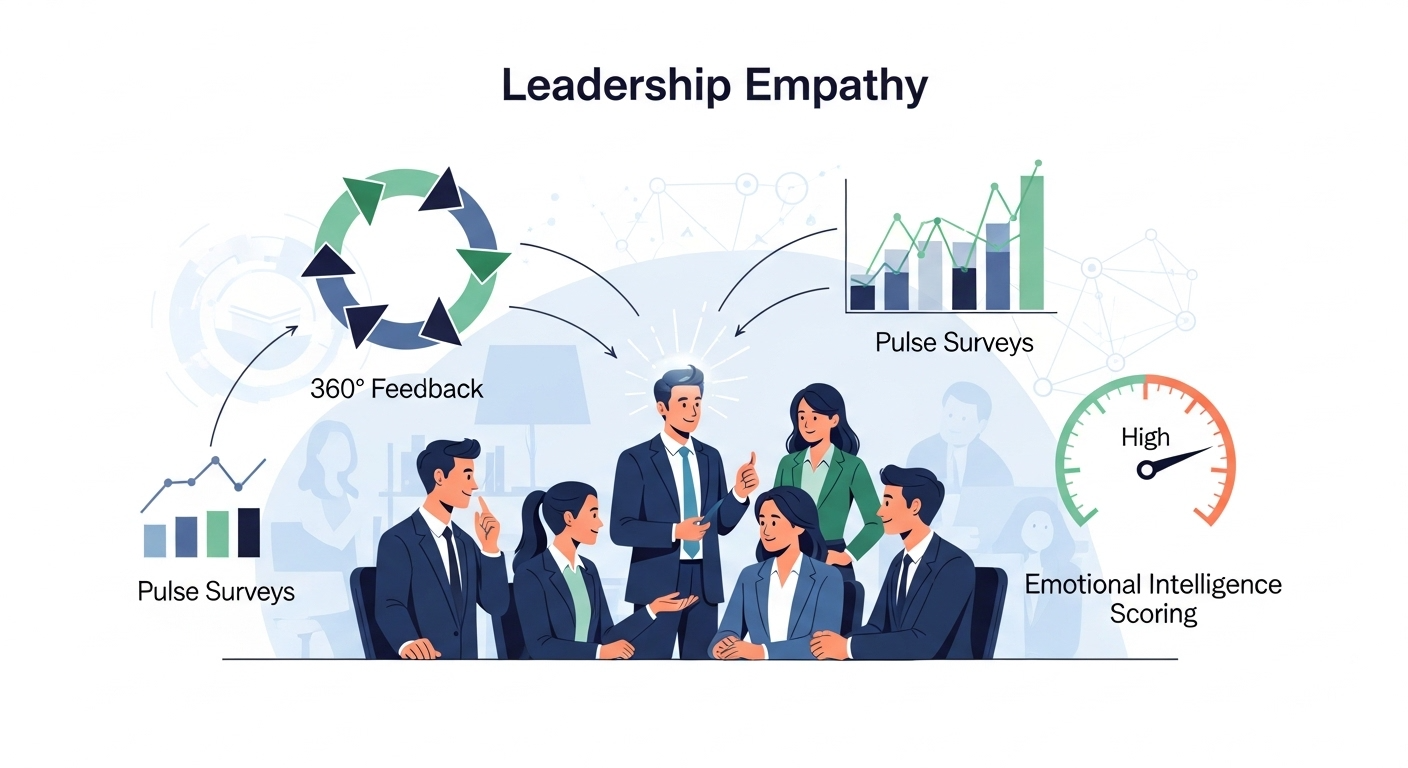
Leadership Empathy Is Now Scored and Measured

For decades, leadership empathy was viewed as a soft, intangible quality admirable, but difficult to define and nearly impossible to measure. It appeared in leadership books, corporate values statements, and keynote speeches. Yet when it came to executive evaluations, compensation frameworks, and board-level reporting, empathy was largely absent.

That dynamic has changed.

In 2026, leadership empathy is being scored, benchmarked, and integrated into formal performance management systems. Organizations are no longer satisfied with anecdotal impressions of emotional intelligence. They are building structured systems to measure how leaders listen, respond, support, and guide their teams.

Empathy has shifted from a personality trait to a performance metric.

Why Leadership Empathy Has Become a Strategic Priority

Modern organizations operate in environments defined by uncertainty, digital acceleration, distributed teams, and generational workforce shifts. Employees are navigating constant change remote collaboration, automation, restructuring, market volatility, and heightened performance expectations.

In this context, leadership style directly impacts organizational stability.

Employees now expect leaders to:

  • Communicate transparently
  • Recognize emotional strain
  • Support work-life boundaries
  • Handle conflict constructively
  • Encourage diverse perspectives
  • Provide psychological safety

Research consistently demonstrates that empathetic leadership increases engagement, reduces burnout, and strengthens retention. However, organizations have recognized that informal encouragement is not enough. Measurement drives accountability and accountability drives consistency.

The Evolution From “Soft Skill” to Measurable Capability

The shift toward measuring empathy is rooted in a broader transformation in management philosophy. Historically, leadership performance was evaluated primarily on:

  • Revenue growth
  • Operational efficiency
  • Project delivery
  • Budget management

While these metrics remain important, they do not capture how leaders influence team morale, psychological safety, or long-term sustainability.

Modern leadership evaluation frameworks now incorporate behavioral indicators such as:

  • Listening responsiveness
  • Feedback receptiveness
  • Conflict resolution approach
  • Inclusivity in decision-making
  • Emotional awareness during crisis

Empathy is now seen as a multiplier it enhances the effectiveness of every other leadership skill.

How Organizations Are Measuring Leadership Empathy

1. 360-Degree Emotional Intelligence Assessments

Multi-source feedback systems have become standard practice. These assessments collect data from:

  • Direct reports
  • Peers
  • Supervisors
  • Cross-functional collaborators

Participants evaluate leaders on behavioral competencies such as:

  • Active listening
  • Fair treatment
  • Stress management
  • Approachability
  • Respect for differing opinions

Aggregated results provide structured insight into how leadership behavior is perceived across the organization.

2. Real-Time Pulse Surveys

Many organizations now deploy short, frequent surveys integrated into internal platforms. These tools track:

  • Team sentiment
  • Perceived managerial support
  • Communication clarity
  • Psychological safety levels

Unlike annual engagement surveys, real-time pulse tools provide ongoing feedback, allowing organizations to identify trends and intervene early.

3. Empathy Metrics Linked to Leadership KPIs

Forward-thinking organizations are tying empathy-related scores to:

  • Performance reviews
  • Bonus eligibility
  • Promotion readiness
  • Leadership development plans

This formal integration ensures empathy is treated as a core competency rather than an optional quality.

4. Behavioral Analytics in Digital Communication

With the rise of remote work, digital communication has become central to leadership visibility. Some organizations are exploring:

  • Sentiment analysis in team communications
  • Response time metrics
  • Feedback loop participation rates

While these tools require careful ethical consideration, they reflect the seriousness with which empathy is being operationalized.

The Link Between Empathy and Psychological Safety

Psychological safety the ability to express ideas and concerns without fear is increasingly recognized as a performance driver.

Empathetic leaders contribute to psychological safety by:

  • Responding constructively to mistakes
  • Encouraging dissenting opinions
  • Modeling vulnerability
  • Demonstrating emotional self-regulation

When psychological safety improves, teams are more likely to:

  • Share innovative ideas
  • Raise risks early
  • Collaborate effectively
  • Adapt to change

Empathy strengthens organizational resilience.

The Business Impact of Measured Empathy

Measuring leadership empathy is not symbolic. It produces tangible business outcomes.

Organizations with high empathy scores often experience:

  • Lower voluntary turnover
  • Reduced absenteeism
  • Higher productivity
  • Stronger collaboration across departments
  • Improved customer satisfaction

Trust, built through empathetic leadership, accelerates decision-making and reduces friction. Teams aligned through trust execute faster and more efficiently.

In competitive markets, speed and cohesion create strategic advantage.

Addressing Concerns About Measuring Empathy

While the move toward quantification is beneficial, it raises valid concerns.

1, Oversimplification

Leadership Empathy cannot be reduced to a single score. Organizations must combine quantitative metrics with qualitative insights.

2. Bias and Subjectivity

Feedback systems must account for unconscious bias and cultural variation.

3. Balancing Empathy With Accountability

Effective leaders balance empathy with decisiveness. Measurement frameworks should avoid rewarding passivity under the guise of empathy.

Successful organizations design empathy metrics that reinforce constructive leadership, not avoidance of difficult decisions.

Leadership Development in the Age of Empathy Metrics

As empathy becomes measurable, leadership development programs are evolving.

Training now focuses on Leadership Empathy :

  • Emotional intelligence coaching
  • Active listening exercises
  • Conflict navigation techniques
  • Bias awareness
  • Stress regulation strategies

Development pathways are informed by empathy assessment results, creating personalized growth plans for leaders.

This data-driven development approach ensures continuous improvement rather than one-time training events.

Generational Expectations and Empathy

Millennial and Gen Z professionals place high value on:

  • Transparent communication
  • Work-life integration
  • Inclusive environments
  • Authentic leadership

Organizations that ignore these expectations risk losing talent. Measuring empathy signals commitment to modern workforce priorities.

Empathy is no longer optional it is an expectation.

The Future of Empathy Measurement

Looking ahead, empathy measurement will likely evolve further.

Emerging trends include:

  • AI-assisted sentiment analytics
  • Continuous micro-feedback tools
  • Leadership dashboards integrating emotional intelligence data
  • Predictive analytics linking empathy scores to retention risk

Leadership evaluation will become increasingly holistic, combining operational performance with behavioral impact.

Empathy will remain central to that framework.

Conclusion

Leadership empathy has transitioned from an abstract ideal to a measurable, accountable leadership capability. By embedding empathy into evaluation systems, organizations transform culture from aspiration to structure.

Measuring empathy strengthens trust, supports psychological safety, improves retention, and enhances performance. It aligns leadership behavior with modern workforce expectations and long-term strategic goals.
In 2026 and beyond, leadership will not be judged solely by outcomes, but by the manner in which those outcomes are achieved.

Empathy is no longer invisible. It is part of the scorecard.

For more information Connect with us
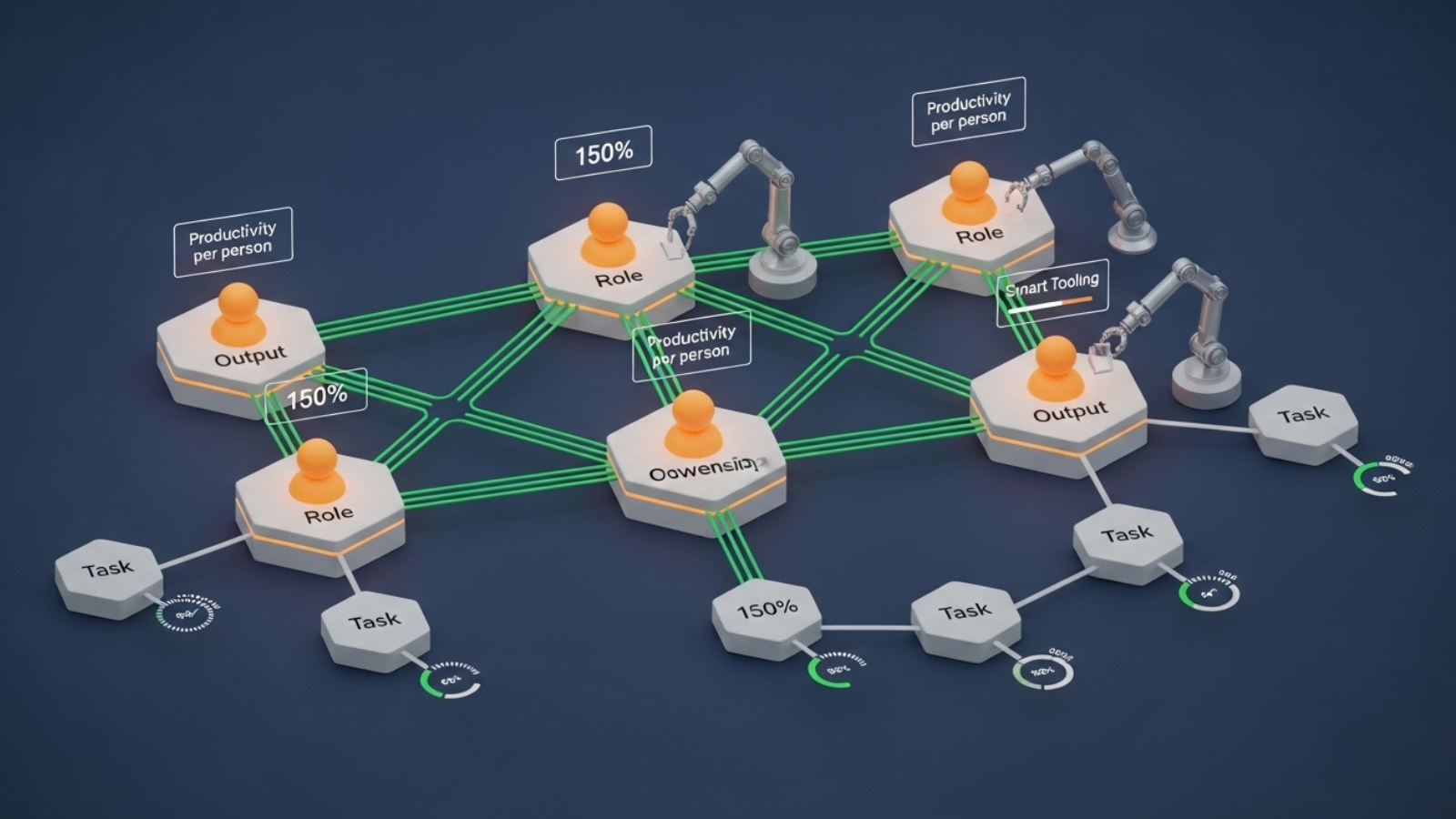
10 Critical Reasons Smart Companies Are Hiring for Execution, Not Headcount

Introduction: The Hiring Mindset Has Fundamentally Changed

For years, hiring was treated as a growth signal. More people meant more momentum, more credibility, and more capacity. Headcount became a proxy for success.

In 2026, that mindset is gone.

Companies are still hiring but in a very different way. The focus has shifted from how many people we employ to what actually gets executed. Roles are approved not because teams are stretched, but because specific outcomes cannot be delivered without them.

This is not a temporary slowdown. It’s a structural change in how organizations grow.

The End of Headcount Driven Growth

The Traditional model was linear:

  • Work increases → hire more people
  • Complexity increases → add managers
  • Coordination slows → add processes

Over time, this led to:

  • Bloated teams
  • Rising costs without proportional output
  • Slower decision-making
  • Accountability dilution

Leadership teams have learned often the hard way that headcount growth does not guarantee execution capacity.

In fact, it often reduces it.

Execution Is Now the Scarce Resource

In 2026, most organizations don’t lack ideas, roadmaps, or strategies. They lack execution bandwidth.

Execution means:

  • Shipping working systems
  • Closing deals
  • Automating processes
  • Reducing operational friction
  • Delivering measurable outcomes

Hiring is now justified only when it clearly improves one of these.

If a role cannot be tied to execution, it doesn’t get approved.

AI Accelerated This Shift

AI didn’t eliminate jobs but it redefined leverage.

Tasks that once required entire teams can now be handled by:

  • Smaller, AI-augmented groups
  • Automated workflows
  • Integrated systems

This has changed the hiring question from:

“Do we need more people?”
to
“Can we execute this better with fewer, higher-impact people and better tools?”

The answer is increasingly yes.

As a result, companies are hiring fewer people but expecting more ownership per role.

From Role Coverage to Outcome Ownership

Traditional model focused on role coverage:

  • Someone to manage
  • Someone to coordinate
  • Someone to support

Execution-driven hiring focuses on outcome ownership.

Modern job approvals answer:

  • What result will this person own?
  • What breaks if we don’t hire them?
  • How will success be measured in 90 days?

Roles without clear outcomes are quietly disappearing.

Why Generalist Roles Are Shrinking

Generalist roles thrived in growth-at-all-costs environments. In execution-focused organizations, they struggle.

Why?

  • Execution requires depth
  • Specialists unblock delivery faster
  • Clear ownership reduces handoffs

Companies now prefer:

  • Engineers who own systems
  • QAOps engineers who own quality pipelines
  • Marketers who own revenue outcomes
  • Consultants who own implementation

This doesn’t mean versatility is irrelevant but impact must be visible.

Hiring Is Now Tied Directly to ROI

In 2026, every hire competes with:

  • Automation
  • Process redesign
  • Internal upskilling

Leaders ask:

  • Is hiring the fastest path to impact?
  • Is it the most cost-effective option?
  • Can we upskill someone internally instead?

This financial discipline has made hiring deliberate and slower but far more effective.

Upskilling Is Replacing External Hiring

Many companies are executing more by transforming existing talent.

Examples include:

  • QA engineers becoming QAOps specialists
  • Developers learning AI-assisted workflows
  • Analysts moving into automation roles
  • Managers becoming hands-on operators

Upskilling:

  • Reduces ramp-up time
  • Lowers cultural risk
  • Preserves institutional knowledge

Execution improves without expanding headcount.

Why Managers Are Also Being Hired Differently

The shift to execution impacts leadership roles as well.

Companies are no longer hiring managers whose primary function is coordination. They want leaders who:

  • Can make decisions
  • Can remove blockers
  • Can deliver outcomes directly

In leaner organizations, managers are closer to the work. Execution-first hiring favors doers who can lead, not overseers who delegate.

Employer Branding Has Become an Execution Signal

In a selective hiring market, candidates evaluate companies as carefully as companies evaluate them.

High-impact candidates look for:

  • Clear expectations
  • Real ownership
  • Evidence of execution
  • Technical and operational maturity

Organizations that over-promise and under-deliver struggle to hire execution-oriented talent.

Employer branding now reflects how work actually gets done, not just culture slogans.

The New Hiring Questions Companies Ask

Execution-focused organizations consistently ask:

  • What business problem does this role solve?
  • How will we measure impact quickly?
  • What decisions will this person own?
  • How does this role scale with tools and automation?

If answers are vague, hiring stops.

What This Means for Candidates

For professionals, this shift raises the bar but also increases opportunity.

Execution-focused hiring rewards people who:

  • Own outcomes
  • Work independently
  • Leverage tools effectively
  • Communicate impact clearly

Job titles matter less than proof of execution.

Those who can show results move faster even in cautious markets.

What This Means for Leaders

If you’re leading a company in 2026, execution-based hiring requires:

  • Clear priorities
  • Honest assessment of bottlenecks
  • Willingness to say no to low-impact roles
  • Investment in tools and upskilling

The goal is not to be understaffed.
It’s to be over-leveraged.

Why This Model Is More Resilient

Execution-focused organizations:

  • Scale without bloat
  • Adapt faster to market shifts
  • Control costs more effectively
  • Maintain accountability

When conditions change, smaller, execution-oriented teams adjust faster than large, loosely aligned ones.

Final Thoughts: Execution Is the New Hiring Currency

Companies haven’t stopped hiring. They’ve stopped hiring by habit.

In 2026, hiring is no longer about:

  • Team size
  • Organizational optics
  • Future potential alone

It’s about what gets delivered.

Organizations that hire for execution build momentum with fewer people, less friction, and clearer accountability. Those that don’t will continue to grow teams without growing results.

The market has spoken:
Execution beats headcount. Every time. To Discuss more Contact Us

Why Companies Are Hiring Smarter or Growth in 2026

Introduction: Growth No Longer Means More People

For years, growth followed a predictable pattern: revenue increased, teams expanded, and headcount became a visible symbol of success. Bigger teams meant bigger companies.

In 2026, that logic is officially dead.

Across industries especially in tech, consulting, and digital services companies are deliberately slowing hiring while still pursuing growth. This is not a reactionary hiring freeze or a temporary slowdown. It’s a strategic shift toward smarter hiring models focused on efficiency, output, and adaptability.

Companies aren’t shrinking ambitions. They’re shrinking unnecessary complexity.

The End of Headcount-Driven Growth

The old model of growth was simple but flawed:

  • Hire more people to do more work
  • Add layers of management as teams grow
  • Increase tools, processes, and meetings to coordinate

Over time, this created bloated organizations where:

  • Productivity per employee declined
  • Decision-making slowed
  • Costs rose faster than revenue

By 2026, leadership teams have learned a hard lesson: more people does not equal more progress.

AI Changed the Economics of Hiring

One of the biggest reasons companies are hiring smarter is AI.

AI has fundamentally altered:

  • How work is executed
  • How fast tasks can be completed
  • How many people are needed to deliver results

Roles that once required entire teams data analysis, reporting, content creation, testing, support, even parts of development can now be handled by smaller, AI-augmented teams.

This doesn’t eliminate jobs. It raises the bar for each role.

Companies now ask:

Can this outcome be achieved with fewer, better-equipped people?

In most cases, the answer is yes.

From Generalists to High-Impact Specialists

In 2026, hiring favors depth over breadth.

Instead of adding large numbers of generalists, companies prioritize:

  • Specialists who own outcomes
  • Professionals who can operate autonomously
  • People who combine technical skill with business understanding

A smaller team of high-impact contributors often outperforms a larger team of loosely defined roles.

This shift reduces:

  • Handoffs
  • Miscommunication
  • Dependency chains

And it increases accountability.

Skills Matter More Than Titles or Degrees

Another major change: skills-based hiring is replacing credential-based hiring.

Degrees, job titles, and years of experience still matter but far less than:

  • Proven ability to deliver
  • Hands-on experience with modern tools
  • Adaptability and learning speed

Companies are using:

  • Practical assessments
  • Portfolio reviews
  • Trial projects

to evaluate candidates.

This allows organizations to hire fewer people with higher certainty, rather than over-hiring to hedge against bad fits.

Hiring Is Now Tied Directly to ROI

In 2026, every new hire is expected to justify their existence in business terms.

Leadership teams ask:

  • How does this role improve revenue, margin, or efficiency?
  • What outcomes will change because of this hire?
  • Can this impact be achieved through automation or upskilling instead?

This mindset has eliminated many “nice-to-have” roles and replaced them with impact-driven positions.

Hiring is no longer about filling seats.
It’s about solving problems.

Upskilling Is Beating External Hiring

Instead of constantly recruiting, many companies are choosing to:

  • Reskill existing employees
  • Promote internally
  • Invest in training and certifications

Why?

  • Faster than hiring externally
  • Lower cultural risk
  • Higher retention
  • Better institutional knowledge

In many cases, transforming a QA engineer into a QAOps specialist or a developer into an AI-augmented engineer is more effective than hiring someone new.

Growth now comes from capability expansion, not team expansion.

Smaller Teams Move Faster and Think Clearer

Large teams introduce:

  • Coordination overhead
  • Process-heavy decision-making
  • Risk-averse behavior

Smaller teams, when structured correctly:

  • Ship faster
  • Iterate quicker
  • Take ownership seriously

This is especially critical in competitive markets where speed and adaptability decide winners.

By hiring smarter, companies protect agility.

The Role of Managers Is Changing Too

Smart hiring also reshapes management.

In leaner organizations:

  • Managers oversee fewer people
  • Leadership becomes more hands-on
  • Performance is easier to measure

This reduces bureaucracy and improves alignment between strategy and execution.

In 2026, companies value leaders who can build small, effective teams, not empires.

Employer Branding Supports Smarter Hiring

When companies hire selectively, employer branding becomes more important—not less.

Candidates now evaluate:

  • Growth opportunities
  • Learning culture
  • Clarity of expectations
  • Technical maturity

Companies that clearly communicate how they work attract better candidates and avoid over-hiring mismatches.

Smarter hiring starts before the interview.

What This Means for Employees

For professionals, this shift brings both opportunity and pressure.

What’s expected in 2026:

  • Continuous learning
  • Comfort with AI tools
  • Ownership over outcomes
  • Ability to work across disciplines

The upside?
Skilled professionals gain:

  • More responsibility
  • Higher leverage
  • Faster career growth

The era of hiding in large teams is over.

What This Means for Founders and Leaders

If you’re leading a company in 2026, the playbook is clear:

  • Hire only when impact is undeniable
  • Prefer capability growth over headcount growth
  • Build teams that scale with tools, not bodies
  • Measure success by outcomes, not size

Companies that follow this approach grow leaner, faster, and more resilient.

Those that don’t will struggle with costs, complexity, and inertia.

Final Thoughts: Smarter Is the New Bigger

The companies winning in 2026 aren’t the ones with the biggest teams. They’re the ones with:

  • The right people
  • The right tools
  • The right structure

Hiring smarter is not about cutting ambition.
It’s about amplifying impact.

Growth still matters but now it’s measured in results, not headcount.

If your organization is rethinking its hiring, workforce strategy, or growth model for the modern era, explore consulting and technology advisory services at Contact Us