

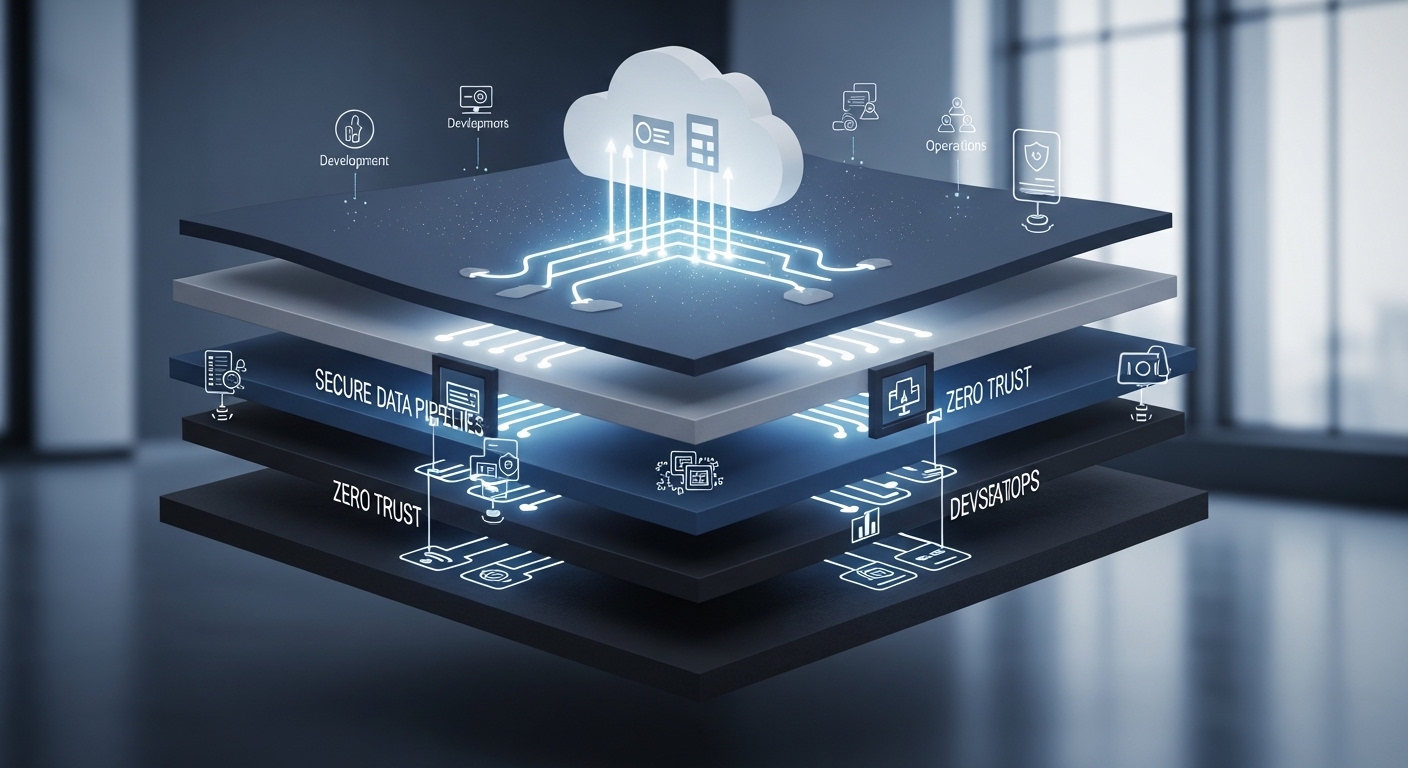
Cybersecurity Strategies That Protect Your Business from Serious Threats

Cybersecurity is no longer a secondary consideration in digital transformation. It is a foundational requirement. As enterprises accelerate cloud adoption, API integration, automation, and data exchange, the traditional “bolt-on” security model has become obsolete.

In the past, organizations would design systems, deploy applications, and then involve security teams for final testing. That approach worked when IT environments were static and perimeter-based. Today’s digital ecosystems are dynamic, distributed, and continuously evolving. Security must evolve accordingly.

Modern cybersecurity is designed into architecture from the very beginning.

The Shift From Reactive to Proactive Cybersecurity

Historically, It is focused on perimeter defense firewalls, antivirus software, and network gateways. The idea was to protect the boundary and assume internal systems were safe.

However, with cloud infrastructure, remote work, SaaS applications, and API-driven platforms, the perimeter has disappeared. Attack surfaces are constantly changing. Cyber threats are more sophisticated, automated, and financially motivated.

This shift has forced organizations to move from reactive security responses to proactive, built-in cybersecurity strategies. Instead of responding to incidents, companies now focus on preventing vulnerabilities during development and deployment.

Why Bolt-On Cybersecurity Fails in Modern IT Environments

Bolt-on cybersecurity introduces risk because:

  • Security gaps are discovered too late in development
  • Infrastructure misconfigurations go unnoticed until exposed
  • Vulnerabilities are patched instead of prevented
  • Compliance requirements become last-minute obstacles
  • Security teams operate separately from engineering teams

This reactive model increases operational friction and creates unnecessary exposure.

In contrast, built-in cybersecurity embeds security controls directly into architecture, workflows, and governance processes.

Security by Design: The New Enterprise Standard

Security by design means its principles are integrated throughout the software development lifecycle and infrastructure planning stages.

This includes:

  • Secure coding practices from the first line of code
  • Automated vulnerability scanning in CI/CD pipelines
  • Dependency monitoring for third-party libraries
  • Identity-based access controls
  • Encryption at rest and in transit
  • Continuous compliance validation

Cybersecurity becomes an ongoing process rather than a one-time review.

DevSecOps: Integrating Cybersecurity Into Delivery

One of the most significant evolutions in cybersecurity is the rise of DevSecOps the integration of development, security, and operations.

Under DevSecOps:

  • Security testing runs automatically with every code commit
  • Infrastructure-as-code configurations are validated before deployment
  • Secrets management is automated
  • Policy enforcement is embedded into pipelines

It is shifts left in the development lifecycle, identifying risks before systems reach production.

This approach reduces breach probability and improves release confidence.

Zero Trust Architecture and Continuous Verification

Another major cybersecurity advancement is the adoption of zero trust architecture.

Zero trust operates on a simple principle: never trust, always verify.

Every user, device, API call, and system interaction must be authenticated and authorized continuously. This includes:

  • Multi-factor authentication
  • Least-privilege access policies
  • Micro-segmentation of networks
  • Continuous monitoring of behavioral anomalies

It becomes identity-driven rather than perimeter-based.

Cybersecurity in Cloud-Native Environments

Cloud adoption has redefined cybersecurity responsibilities. Shared responsibility models require organizations to secure:

  • Application layers
  • Access permissions
  • Data storage configurations
  • API gateways
  • Container environments

That is integrates tools such as:

  • Cloud security posture management (CSPM)
  • Real-time threat detection
  • Automated compliance audits
  • Infrastructure configuration monitoring

This proactive approach prevents misconfigurations that often lead to breaches.

The Business Case for Built-In Cybersecurity

It is not only a technical necessity it is a business imperative.

Data breaches result in:

  • Financial penalties
  • Regulatory fines
  • Legal exposure
  • Reputational damage
  • Customer attrition

The cost of remediation significantly exceeds the cost of prevention.

Organizations that build cybersecurity into their systems experience:

  • Reduced downtime
  • Improved regulatory compliance
  • Stronger stakeholder trust
  • Faster incident response
  • Greater operational resilience

It’s directly impacts long-term business stability.

Governance, Compliance, and Executive Responsibility

Modern cybersecurity requires executive oversight. Boards and C-level leadership must now:

  • Define acceptable risk levels
  • Allocate budgets
  • Align security metrics with business KPIs
  • Review incident response readiness
  • Promote company-wide security awareness

That strategy is now inseparable from digital strategy.

Without executive alignment, built-in cybersecurity initiatives lose effectiveness.

The Future of Cybersecurity Architecture

This will continue evolving toward automation and intelligence.

Emerging developments include:

  • AI-driven threat detection
  • Automated response playbooks
  • Behavioral anomaly monitoring
  • Compliance-as-code frameworks
  • Integrated security analytics dashboards

Security will increasingly operate as a self-adjusting layer within enterprise systems.

The goal is not visible security it is resilient architecture.

Conclusion

Cybersecurity is no longer an optional enhancement or final-stage audit. In a world of continuous deployment, cloud-native systems, distributed APIs, and evolving threat landscapes, security must be embedded into the DNA of digital systems.

Organizations that treat it as infrastructure not an accessory build stronger, more resilient digital ecosystems. Those that rely on bolt-on defenses increase exposure with every integration and every deployment.

In today’s digital economy, It is not a feature. It is the foundation of sustainable transformation.

For more Details let’s connect on Contact Us

AI Is No Longer Innovation, It’s Infrastructure

Introduction: The AI Conversation is Fundamentally Transforming

For the last decade, artificial intelligence lived in the “innovation” bucket. It was explored through pilots, labs, proofs of concept, and experimental teams. Success was measured in demos, not durability.

That era is over.

In 2026, AI is no longer treated as a differentiator you experiment with. It is treated as infrastructure something organizations depend on daily, much like cloud computing, networking, or databases. Companies are no longer asking “Should we use AI?” They are asking:

“How do we run the business without it?”

This shift changes everything: investment models, governance, architecture, talent, and leadership accountability.

What It Means When AI Becomes Infrastructure

Infrastructure has a very specific meaning in business:

  • It must be reliable
  • It must scale
  • It must be secure
  • It must be governed
  • It must work quietly in the background

Once AI crosses into this category, experimentation gives way to operational discipline.

AI infrastructure supports:

  • Decision-making systems
  • Customer interactions
  • Risk assessment
  • Automation at scale
  • Revenue and cost efficiency

Failure is no longer an inconvenience it’s a business risk.

Why the Innovation Framing No Longer Works

1. AI Is Embedded Across Core Operations

AI is no longer isolated to R&D teams.

In most organizations today, AI already influences:

  • Marketing performance and personalization
  • Customer support and service automation
  • Fraud detection and risk scoring
  • Demand forecasting and pricing
  • Software development and testing

When AI touches core workflows, it stops being optional. Innovation budgets are discretionary. Infrastructure budgets are not.

2. Business Dependence Changes the Risk Profile

When AI systems fail, consequences are immediate:

  • Incorrect decisions
  • Operational disruption
  • Customer trust erosion
  • Regulatory exposure

This forces organizations to treat AI like any other critical system with redundancy, monitoring, and controls.

Innovation tolerates failure. Infrastructure cannot.

3. AI Delivers Ongoing Value, Not One-Time Breakthroughs

Innovation is often about breakthroughs. Infrastructure is about continuous utility.

AI delivers value incrementally:

  • Faster processes
  • Better decisions
  • Lower costs
  • Higher consistency

This aligns AI spend with operational budgets, not experimental funding.

The Market Shift: From Pilots to Production

Across industries, a clear pattern has emerged:

  • Fewer AI pilots
  • Fewer innovation showcases
  • More production-grade systems

Organizations are standardizing:

  • AI platforms
  • Data pipelines
  • Model lifecycle management
  • Governance frameworks

This industrialization of AI is the strongest signal that it has become infrastructure.

AI Infrastructure Requires Different Leadership Thinking

From “Championing Innovation” to “Owning Outcomes”

When AI was experimental, leadership roles focused on:

  • Sponsorship
  • Vision
  • Advocacy

Now, leadership is expected to:

  • Ensure uptime
  • Manage risk
  • Prove ROI
  • Guarantee compliance

This shifts accountability from innovation teams to core business leadership.

From Speed to Stability

Early AI adoption rewarded speed. Infrastructure rewards stability.

Organizations are prioritizing:

  • Explainability over novelty
  • Predictability over maximum accuracy
  • Governed deployment over rapid experimentation

The fastest AI is no longer the best AI. The most reliable AI is.

Data Becomes a Supply Chain, Not an Asset

Once AI becomes infrastructure, data stops being “fuel” and starts being a supply chain.

This introduces new priorities:

  • Data quality over data volume
  • Lineage and traceability
  • Consent and lawful use
  • Controlled access

Weak data foundations cripple AI infrastructure just as faulty power grids cripple cities.

Governance Is No Longer Optional

Infrastructure is regulated by nature.

As AI becomes foundational, regulators and boards expect:

  • Clear accountability
  • Auditable decision logic
  • Risk controls
  • Human oversight

Governance is no longer about slowing AI down it’s about making it safe to depend on.

Organizations that ignore this reality face:

  • Regulatory intervention
  • Forced shutdowns
  • Reputational damage

The Economic Signal: AI Spend Is Moving to Core Budgets

One of the clearest market indicators is financial.

In 2026:

  • AI spend is moving from innovation budgets to operational expenditure
  • CFOs are involved in AI prioritization
  • ROI expectations mirror other infrastructure investments

This reframes AI from “growth option” to business necessity.

Infrastructure Thinking Changes Architecture

Platform Over Point Solutions

Infrastructure demands standardization.

Organizations are consolidating:

  • AI tooling
  • Model platforms
  • Data environments

This reduces fragmentation and increases reliability.

Integration Over Isolation

AI infrastructure must integrate with:

  • Existing systems
  • Business workflows
  • Security and compliance frameworks

Isolated AI solutions create fragility. Integrated systems create resilience.

Talent Expectations Are Changing

When AI was innovation, organizations hired:

  • Researchers
  • Specialists
  • Experimenters

As infrastructure, they need:

  • Engineers
  • Platform architects
  • Risk and governance experts
  • Operators

The talent mix shifts from discovery to delivery and maintenance.

Why Some Organizations Are Struggling

Companies that still treat AI as innovation often face:

  • Pilot fatigue
  • Fragmented solutions
  • Inconsistent value
  • Regulatory surprises

They invest heavily but fail to scale because infrastructure thinking was never applied.

What Treating AI as Infrastructure Enables

Organizations that make the shift gain:

  • Predictable performance
  • Faster enterprise-wide adoption
  • Lower long-term costs
  • Easier compliance
  • Stronger trust with customers and regulators

AI stops being a conversation starter and becomes a business enabler.

What Leaders Must Do Differently in 2026

To treat AI as infrastructure, leaders must:

  1. Anchor AI to business-critical processes
  2. Fund AI as a long-term capability
  3. Invest in data and governance early
  4. Demand reliability, not demos
  5. Hold teams accountable for outcomes

This is not less ambitious it’s more serious.

Final Thoughts: Infrastructure Is the Highest Form of Maturity

Calling AI “infrastructure” is not a downgrade. It’s a recognition of success.

Infrastructure is what businesses rely on when they cannot afford failure. AI has reached that point.

In 2026, the most competitive organizations are not those experimenting the most—but those operationalizing AI responsibly, reliably, and at scale.

AI is no longer innovation.
It’s the backbone of modern business.

And like all infrastructure, it rewards discipline far more than excitement. lets’ Discuss at Contact Us

Why Enterprises Are Killing Tool Sprawl in 2026

Introduction: More Tools Didn’t Make Enterprises Safer or Faster

For over a decade, enterprises responded to every new problem by buying another tool. A new security risk? Add a security product. A new analytics need? Add a dashboard. A productivity issue? Add a SaaS subscription.

By 2026, the result is clear: tool sprawl has become a liability.

Organizations now manage dozens sometimes hundreds of overlapping tools across IT, security, development, marketing, and operations. Instead of increasing efficiency, this sprawl has driven up costs, increased risk, slowed decision-making, and burned out teams. Enterprises are finally doing what should have happened years ago: cutting back aggressively.

What Tool Sprawl Really Looks Like Inside Enterprises

Tool sprawl isn’t just “too many apps.” It’s systemic fragmentation.

Typical symptoms include:

  • Multiple tools solving the same problem in slightly different ways
  • Data scattered across disconnected platforms
  • Conflicting dashboards and reports
  • Security blind spots caused by poor integration
  • Rising SaaS costs with unclear ROI

In many organizations, no one can answer a simple question like:
Which tools are mission-critical, and which are just noise?

That uncertainty is now unacceptable.

The Cost Problem Enterprises Can No Longer Ignore

In 2026, enterprise CFOs are scrutinizing software spend harder than ever. Tool sprawl hides massive waste:

  • Licenses paid for unused features
  • Duplicate subscriptions across departments
  • Expensive platforms used by a handful of users

When budgets tighten, the first question becomes:

Why are we paying for five tools that all claim to do the same thing?

The answer is rarely good.

Tool consolidation is no longer a technical decision it’s a financial mandate.

Security and Compliance Are Breaking Under Tool Sprawl

One of the biggest drivers behind tool reduction is security risk.

Every additional tool introduces:

  • Another attack surface
  • Another integration point
  • Another place data can leak
  • Another vendor risk assessment

Security teams are overwhelmed managing alerts from dozens of platforms that don’t talk to each other. Compliance teams struggle to prove consistent controls across fragmented systems.

In regulated environments, tool sprawl directly undermines:

  • Audit readiness
  • Incident response
  • Governance and accountability

In 2026, enterprises are choosing fewer, better-integrated tools over sprawling stacks that look impressive but fail under scrutiny.

AI Changed the Economics of Software Tools

AI has quietly accelerated the death of tool sprawl.

Why? Because AI can replace entire layers of functionality that previously required separate tools:

  • Reporting and analysis
  • Workflow automation
  • Monitoring and alerting
  • Content and data processing

Instead of buying another niche platform, enterprises can:

  • Centralize workflows
  • Use AI to orchestrate tasks
  • Reduce manual handoffs between systems

This shifts the question from:

Which tool should we add?
to
Which tools can we eliminate?

Integration Fatigue Is Real

IT teams are exhausted not from lack of tools, but from too many of them.

Every new product requires:

  • Integration work
  • API maintenance
  • User training
  • Ongoing support

As tool counts grow, integration becomes the real bottleneck. Systems become fragile. Changes ripple unpredictably. Innovation slows.

In 2026, enterprises are prioritizing platforms that reduce integration complexity, not add to it.

Executives Want Outcomes, Not Dashboards

Another reason tool sprawl is dying: leadership is done with vanity metrics.

Executives don’t want:

  • Ten dashboards saying different things
  • Weekly reports generated manually
  • Conflicting versions of the truth

They want:

  • Clear outcomes
  • Measurable impact
  • Real-time visibility

Tool sprawl obscures insight. Consolidation clarifies it.

The New Enterprise IT Strategy: Fewer Tools, Deeper Capability

Enterprises aren’t anti-tools they’re anti-chaos.

The winning strategy in 2026 looks like this:

  • Fewer core platforms
  • Strong native integrations
  • Centralized data and identity
  • AI-driven orchestration
  • Clear ownership and governance

Instead of assembling fragile stacks of point solutions, organizations are investing in cohesive ecosystems.

What Gets Cut First and Why

When enterprises rationalize their stacks, the same types of tools are usually first to go:

  • Overlapping analytics tools
  • Redundant monitoring platforms
  • Standalone productivity SaaS
  • Niche tools used by single teams

Tools survive only if they deliver unique, provable value that cannot be replicated or absorbed elsewhere.

What This Means for Vendors and Consultants

For software vendors, the message is brutal but clear:

If your product doesn’t integrate deeply or deliver unique value, it’s on the chopping block.

For consultants and IT partners, the opportunity is massive:

  • Tool rationalization assessments
  • Stack consolidation roadmaps
  • Integration and automation strategy
  • AI-driven platform design

Enterprises need guidance to simplify without breaking critical workflows.

How Enterprises Should Approach Tool Reduction

Successful tool reduction isn’t about ripping systems out blindly. It requires:

  1. A full inventory of tools and usage
  2. Clear mapping to business outcomes
  3. Identification of redundancy and risk
  4. A phased consolidation plan
  5. Strong change management

When done right, consolidation improves:

  • Security posture
  • Cost efficiency
  • Operational speed
  • Team morale

Final Thoughts: Tool Sprawl Is a Symptom, Not the Disease

Tool sprawl happened because enterprises optimized locally instead of strategically. Each team solved its own problem, and no one owned the whole system.

In 2026, that mindset is over.

The most successful enterprises are not those with the most tools but those with the clearest, simplest, and most controlled technology foundations.

Killing tool sprawl isn’t about austerity.
It’s about focus, resilience, and scale.

If your organization is looking to rationalize its IT stack, reduce tool sprawl, and design a future-ready platform strategy, explore technology consulting at Contact Us