

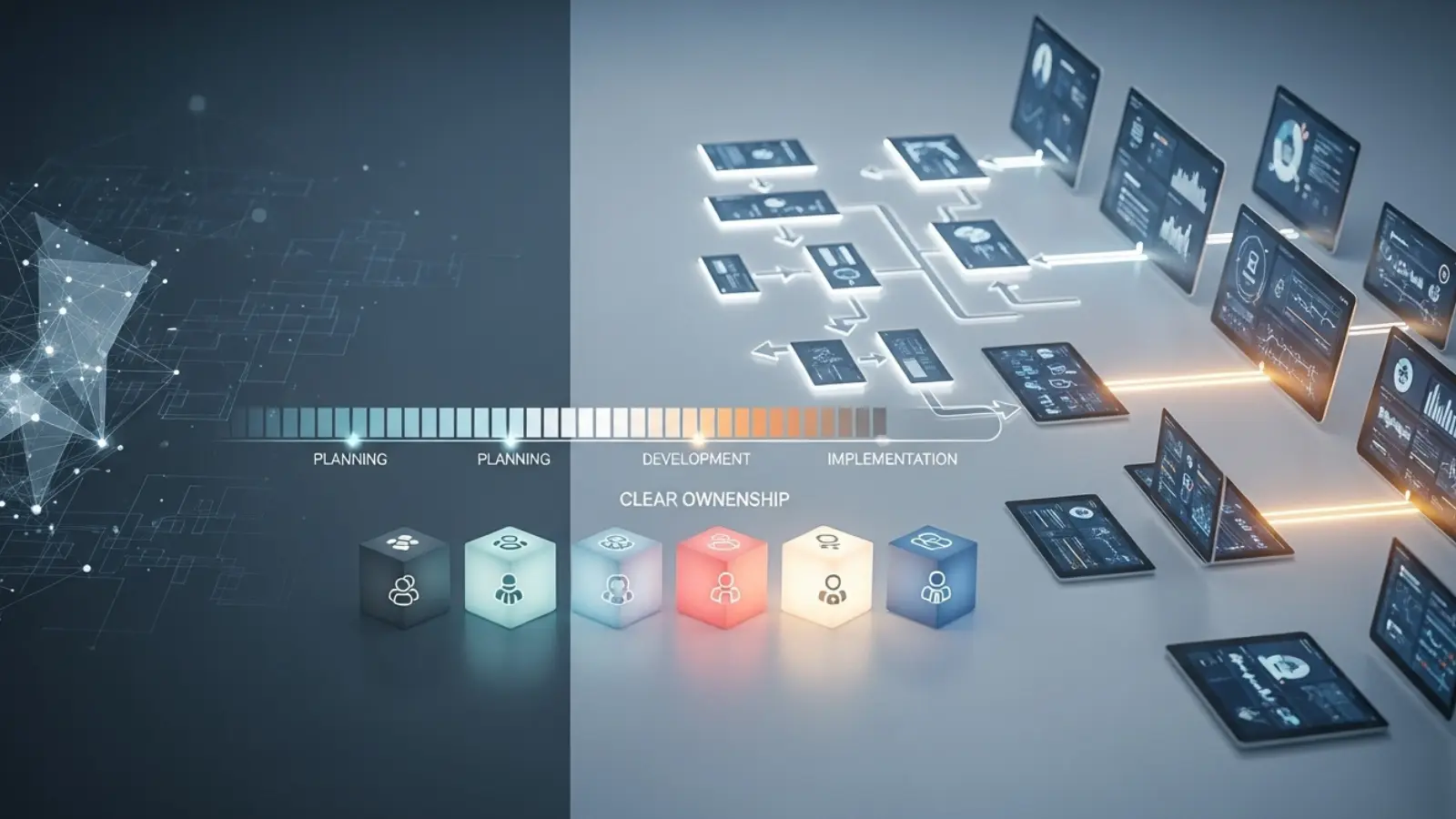
Introduction: The Vision Era Is Over
For years, digital transformation was sold as a vision problem. Companies hired consultants to define a “future state,” design roadmaps, and align leadership around bold ambitions. Slide decks flourished. Execution lagged.
In 2026, patience has run out.
Boards, CFOs, and CEOs are no longer impressed by transformation narratives. They want working systems, measurable outcomes, and operational change. Vision still matters but without execution, it’s meaningless.
Digital transformation has crossed a line. It’s no longer about where you want to go. It’s about what you actually deliver.
How Digital Transformation Lost Credibility
The term “digital transformation” didn’t fail because the idea was wrong. It failed because execution didn’t follow intent.
Common failure patterns included:
- Multi-year roadmaps with no short-term wins
- Tool-first initiatives without process redesign
- Strategy decks disconnected from operational reality
- Transformation offices producing reports instead of results
Organizations invested heavily in planning but underinvested in doing. Over time, transformation became synonymous with delay, disruption, and sunk cost.
That reputation change is why execution now dominates the conversation.
The Reality Check in 2026: Outcomes or Nothing
Today’s digital transformation buyers ask different questions:
- What will change in the next 90 days?
- Which process becomes faster or cheaper?
- Where does revenue increase or cost reduce?
- Who owns delivery not just direction?
If these questions can’t be answered clearly, funding doesn’t get approved.
Digital transformation is now judged by outcomes, not intent.
Why Vision Alone No Longer Moves the Needle
1. Vision Doesn’t Fix Broken Processes
Many organizations discovered that their biggest blockers weren’t technology they were:
- Fragmented workflows
- Manual handoffs
- Poor data quality
- Undefined ownership
A compelling vision doesn’t fix these issues. Only execution does.
Digital Transformation now starts with:
- Process mapping
- Bottleneck removal
- Automation where it actually matters
Vision without operational change is noise.
2. Tools Don’t Transform Businesses Implementation Does
For years, transformation was equated with tool adoption:
- New CRM
- New ERP
- New analytics platform
But installing software without changing how people work produces little value.
In 2026, leaders understand:
Buying technology is easy. Making it work is hard.
Execution means:
- Configuring systems to real workflows
- Integrating data properly
- Training teams for adoption
- Measuring real usage and impact
Without this, transformation stalls no matter how modern the stack looks.
3. AI Accelerated the Need for Execution
AI changed expectations dramatically.
AI can:
- Automate tasks quickly
- Deliver value fast
- Expose inefficiencies immediately
This leaves no room for abstract planning cycles.
When AI initiatives fail, it’s rarely because the vision was unclear. It’s because:
- Data wasn’t ready
- Processes weren’t defined
- Governance wasn’t in place
- Teams weren’t enabled
AI makes execution gaps visible fast.
Transformation Is Becoming Finance-Led
Another major shift: CFOs are now deeply involved in transformation decisions.
Why?
- Budgets are tighter
- ROI expectations are clearer
- Transformation is seen as an investment, not an experiment
This changes the conversation from:
“What could we become?”
to
“What will this deliver, and when?”
Execution-focused transformations:
- Release funding in stages
- Tie progress to metrics
- Shut down initiatives that don’t perform
This discipline forces realism and rewards teams that deliver.
What Execution-First Transformation Looks Like
1. Small, Measurable Wins
Instead of grand launches, execution-led programs focus on:
- Narrow use cases
- Clear success criteria
- Fast delivery cycles
These wins build momentum and credibility.
2. Cross-Functional Ownership
Execution fails when transformation is owned by a single department.
Successful programs involve:
- IT and operations
- Business and finance
- Legal and compliance
- Frontline users
Transformation happens where work actually happens, not in steering committees.
3. Embedded Change Management
Execution-first transformations assume resistance.
They plan for:
- Training
- Adoption tracking
- Feedback loops
- Iterative improvement
People don’t resist change they resist poorly executed change.
4. Real Accountability
In 2026, transformation leaders are expected to:
- Own delivery timelines
- Report on outcomes, not activities
- Take responsibility when things don’t work
Execution demands accountability. Vision often avoids it.
Why Consulting Is Being Redefined
This shift is radically changing consulting expectations.
Clients no longer want:
- High-level recommendations only
- Generic frameworks
- Slide-heavy engagements
They want partners who can:
- Design and build
- Integrate systems
- Automate workflows
- Stay accountable for outcomes
Consultants who can’t execute are being sidelined regardless of brand.
Legacy Modernization Proves the Point
Nothing highlights the execution gap more than legacy systems.
Most organizations already know:
- What systems need to change
- Why modernization matters
What they struggle with is doing it without disrupting operations.
Execution-first transformation:
- Prioritizes stability
- Phases change intelligently
- Modernizes incrementally
Vision identified the problem. Execution solves it.
What This Means for Leaders
If you’re leading a transformation in 2026, the playbook is clear:
- Start with execution constraints, not ambition
- Tie initiatives to measurable outcomes
- Demand working solutions not just plans
- Invest in adoption, not just technology
- Choose partners who deliver, not just advise
Transformation success now depends on operational discipline.
Final Thoughts: Vision Still Matters But Only After Execution
Vision isn’t dead. It’s just no longer the headline act.
In 2026, digital transformation succeeds when:
- Vision sets direction
- Execution creates value
Organizations that understand this distinction move faster, waste less, and build trust internally and externally.
Those that don’t will continue to talk about transformation while competitors quietly deliver it.
Digital transformation isn’t about imagining the future anymore.
It’s about building it one executed decision at a time. For more details Contact Us