

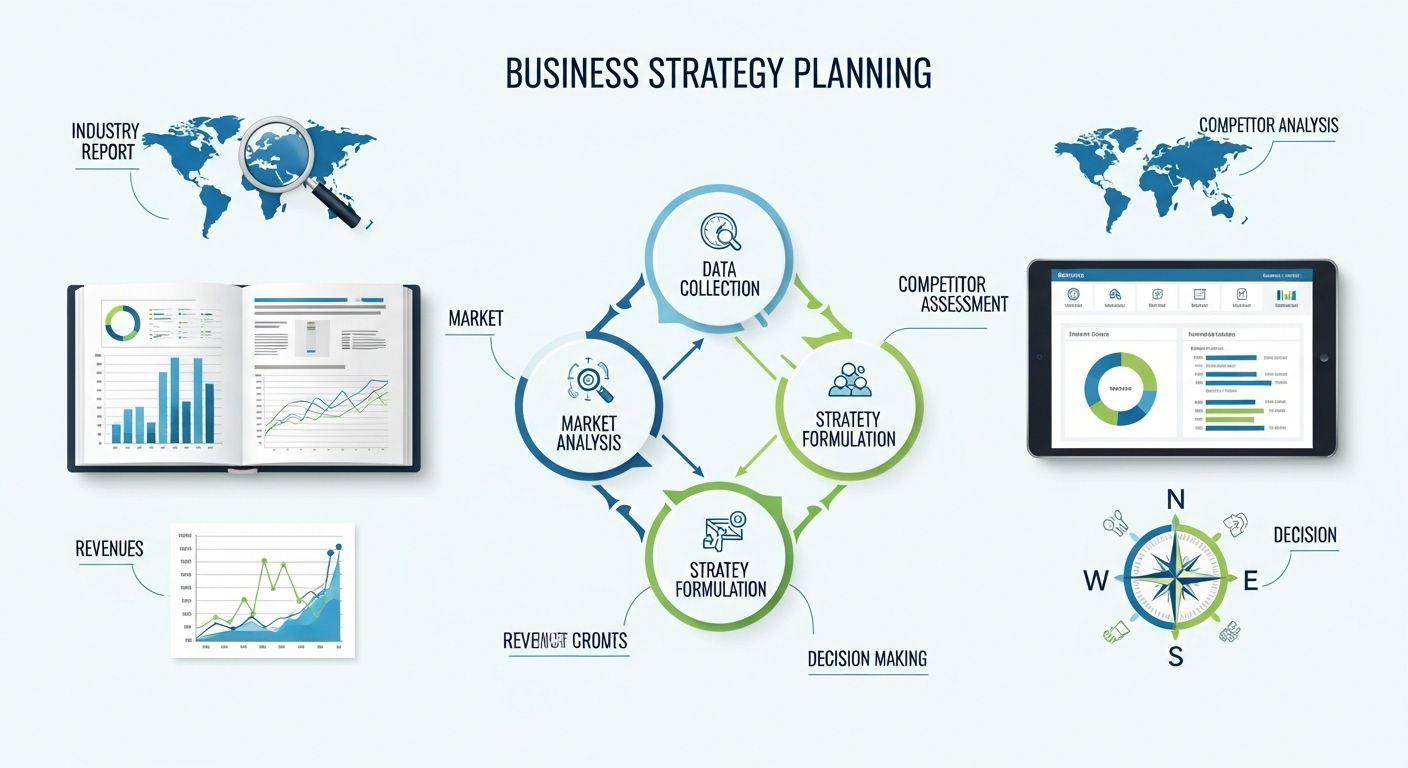
For decades, industry reports were primarily viewed as research documents used by analysts, consultants, and corporate strategists to understand market trends. They were often produced annually, stored as lengthy PDFs, and used mainly for background information rather than direct decision-making.
That role is changing rapidly.
In today’s fast-moving digital economy, industry reports are evolving into strategic decision tools that influence product development, investment strategies, competitive positioning, and long-term business planning. Organizations are no longer treating reports as passive reading material they are integrating industry insights directly into operational and strategic workflows.
Industry intelligence has moved from reference material to real-time decision infrastructure.
The Evolution of Industry Reports
Traditionally, industry reports were produced by market research firms, consulting companies, or financial institutions. These reports focused on broad analyses such as:
- Market size and growth forecasts
- Competitive landscapes
- Emerging technology trends
- Consumer behavior patterns
- Regulatory changes
While these reports were useful, they often suffered from one key limitation: they were static.
By the time a report was published, parts of the market landscape might already have changed. This meant companies often relied on outdated insights when making critical decisions.
Today’s business environment demands faster intelligence.
Why Industry Reports Are Becoming Strategic Assets
Several major shifts are transforming how organizations use industry research.
1. Faster Market Changes Require Faster Insights
Markets now evolve much more quickly than they did even a decade ago. Technology innovation, digital transformation, and global competition accelerate change across industries.
Companies must constantly monitor:
- competitor movements
- emerging technologies
- shifting customer expectations
- regulatory updates
- macroeconomic trends
Modern industry reports increasingly provide continuous insights rather than periodic summaries, enabling businesses to react faster.
2. Data-Driven Decision-Making Is Now Essential
Organizations today rely heavily on data-driven strategies. Executives expect decisions to be supported by:
- market evidence
- competitive intelligence
- financial projections
- trend analysis
Industry reports provide the external context necessary to interpret internal business data.
For example, a company experiencing declining product adoption might use industry reports to determine whether the issue reflects internal execution problems or broader market shifts.
3. Competitive Intelligence Has Become Critical
Companies now face competition not only from traditional rivals but also from startups, technology disruptors, and cross-industry entrants.
Industry reports help businesses analyze:
- competitor product strategies
- investment patterns
- pricing models
- innovation trends
This competitive intelligence helps organizations anticipate market shifts before they occur
4. Investors Depend on Industry Insights
Venture capital firms, private equity investors, and institutional funds rely heavily on industry reports to evaluate opportunities.
Before funding a company, investors analyze:
- market growth potential
- sector risk factors
- regulatory environments
- technological disruption potential
Industry research therefore plays a central role in investment decisions.
Industry Reports and Strategic Planning
One of the most important ways industry reports influence organizations is through strategic planning.
Executives use industry research to support decisions such as:
Market Entry Strategies
When companies consider entering new markets or launching new products, they rely on industry reports to understand:
- demand forecasts
- regional competition
- regulatory requirements
- potential barriers to entry
This reduces risk and improves planning accuracy.
Product Development Decisions
Industry insights help companies determine which technologies and features customers are likely to value in the future.
For example, reports highlighting growth in AI adoption or cybersecurity threats can influence product roadmaps.
Organizations increasingly align their innovation strategies with emerging trends identified in industry research.
Risk Management
Industry reports also help companies identify external risks.
These risks may include:
- regulatory changes
- supply chain disruptions
- economic downturns
- technological disruption
By identifying these risks early, organizations can develop mitigation strategies before problems arise.
The Rise of Interactive and Real-Time Industry Intelligence
Modern industry reports are becoming more dynamic.
Instead of static documents, many research platforms now offer:
- real-time market dashboards
- interactive data visualizations
- customizable datasets
- predictive trend analysis
This allows decision-makers to explore data in ways that were previously impossible with traditional reports.
Executives can now filter insights by geography, market segment, or time period to identify relevant trends quickly.
AI and the Future of Industry Research
Artificial intelligence is also transforming how industry reports are created and used.
AI-powered analytics tools can process enormous volumes of data from sources such as:
- financial filings
- news publications
- social media signals
- economic indicators
- technology adoption patterns
These systems can identify trends and patterns far faster than manual analysis.
As a result, industry reports are becoming more predictive and forward-looking rather than purely descriptive.
Benefits of Using Industry Reports as Strategic Tools
Organizations that integrate industry intelligence into decision-making gain several advantages:
Better Strategic Alignment
Companies can align internal strategies with external market trends.
Faster Decision-Making
Real-time insights enable executives to respond quickly to emerging opportunities or risks.
Reduced Uncertainty
Market research provides evidence-based guidance, reducing reliance on assumptions.
Stronger Competitive Positioning
Companies can anticipate competitor strategies and prepare accordingly.
Challenges in Using Industry Reports Effectively
Despite their value, industry reports must be used carefully.
Common challenges include:
- overreliance on outdated reports
- misinterpretation of data trends
- analysis paralysis from excessive information
- reliance on generalized insights that may not apply to specific businesses
Organizations must combine industry intelligence with internal expertise and operational data
The Future Role of Industry Reports
Looking ahead, industry reports will likely become even more integrated into corporate decision systems.
Future developments may include:
- AI-generated industry forecasts
- automated competitive intelligence monitoring
- integrated market intelligence dashboards
- predictive strategic planning tools
Rather than standalone documents, industry insights will increasingly function as continuous intelligence streams embedded within business platforms.
Conclusion
Industry reports are no longer just informational resources. They are becoming powerful strategic tools that shape how organizations understand markets, compete with rivals, and plan for the future.
In an era defined by rapid change and intense competition, companies that leverage industry intelligence effectively gain a critical advantage.
Strategic decisions supported by reliable market insights are more resilient, more informed, and more likely to succeed.
Industry reports are evolving from research documents into essential components of modern business strategy.
For more Contact US