

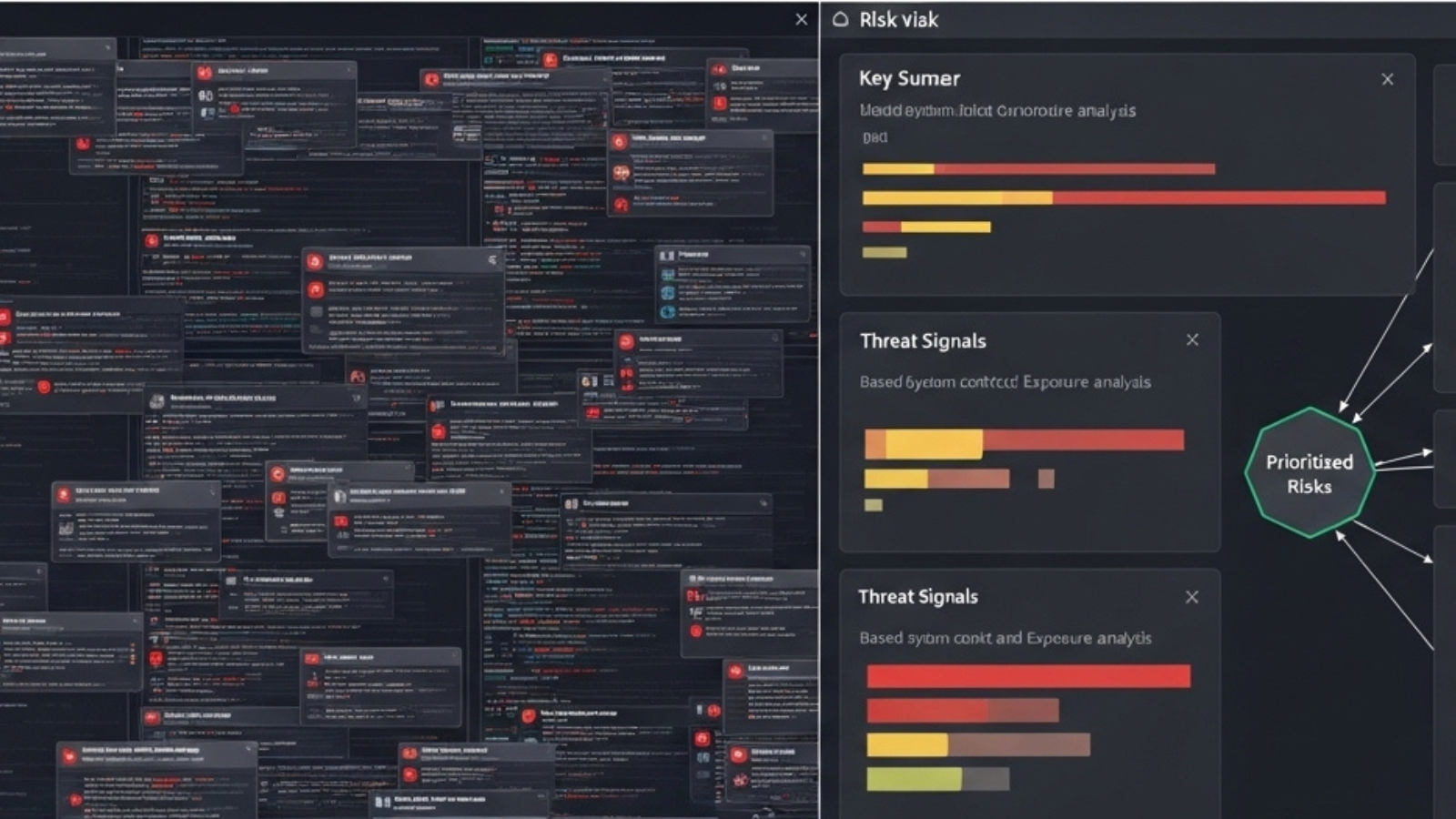
Why False Positives Are the Biggest Risk in Modern Security

Introduction: The Security Problem No One Wants to Admit

For years, security success was measured by volume: more scans, more alerts, more findings. A noisy dashboard was treated as a sign of diligence. If everything was flagged, surely nothing was missed.

In 2026, that belief is collapsing.

Organizations are realizing that false positives are no longer just an inconvenience they are one of the biggest contributors to real security failures. Not because vulnerabilities don’t exist, but because signal is being drowned in noise.

Modern security doesn’t fail from lack of data.
It fails from lack of clarity.

What False Positives Really Cost

A false positive isn’t just a wasted alert. At scale, it causes systemic damage.

False positives:

  • Slow down remediation of real threats
  • Condition teams to ignore alerts
  • Erode trust in security tooling
  • Burn engineering goodwill
  • Create decision paralysis

Over time, they turn security programs into background noise always present, rarely acted on.

The most dangerous vulnerabilities today are often not the most severe ones but the ones hidden among hundreds of irrelevant alerts.

Why False Positives Are Exploding Now

1. Attack Surfaces Have Grown Faster Than Tooling

Modern environments include:

  • Microservices
  • APIs
  • Cloud resources
  • Ephemeral infrastructure
  • Third-party integrations

Security tools scan broadly but lack context. They detect patterns, not exposure.

The result:

  • Findings that are technically valid
  • But practically unreachable or irrelevant

Security teams are left sorting signal from static.

2. CVSS Scores Are Being Misused by False Positives

CVSS was designed to describe severity not risk.

Yet many organizations still prioritize remediation purely by:

  • Critical
  • High
  • Medium

Without considering:

  • Exploitability
  • Exposure
  • Business impact
  • Compensating controls

This leads teams to spend weeks fixing “critical” issues that pose no real threat while exploitable paths remain open.

3. Automation Increased Volume Without Improving Judgment

Automation made scanning faster. It didn’t make it smarter.

Modern pipelines can generate:

  • Thousands of findings per week
  • Repeated alerts for the same issue
  • Findings on unused or deprecated assets

Without intelligent filtering, automation amplifies noise faster than teams can respond.

Alert Fatigue Is Now a Security Vulnerability

Security fatigue isn’t hypothetical it’s measurable.

When teams experience:

  • Constant false alarms
  • No clear prioritization
  • Repetitive findings

They begin to:

  • Delay response
  • Deprioritize security tickets
  • Accept risk by default

This isn’t negligence it’s human adaptation.

At a certain point, false positives don’t just waste time.
They lower the probability of responding correctly when it actually matters.

Why Engineers Stop Trusting Security Tools

Engineering teams want to ship software. When security tools:

  • Block builds unnecessarily
  • Flag irrelevant issues
  • Lack clear remediation guidance

Security becomes friction not protection.

Over time:

  • Engineers bypass controls
  • Exceptions become the norm
  • Security loses influence

False positives don’t just waste engineering time they undermine security culture.

Context Is the Missing Layer

Modern security failures are rarely about unknown vulnerabilities. They’re about misjudged risk.

Context answers questions scanners can’t:

  • Is the asset exposed?
  • Is it reachable externally?
  • Is the vulnerable path actually executable?
  • Does this affect critical business flows?

Without context, every alert looks urgent.
With context, most alerts disappear.

How Leading Teams Are Reducing False-Positive Risk

1. Moving From Vulnerability Counts to Risk Scenarios

Instead of asking:

“How many vulnerabilities do we have?”

Teams ask:

“Which attack paths actually matter?”

This shifts focus from individual findings to real exploit chains.

2. Prioritizing Exposure Over Severity

High-severity vulnerabilities in non-exposed systems are often ignored correctly.

Teams now prioritize:

  • Internet-facing assets
  • Privileged services
  • Authentication and authorization flaws
  • Business logic weaknesses

This dramatically reduces remediation backlog while increasing real security.

3. Tuning Tools Aggressively

Modern security teams treat tooling like code:

  • Alerts are tuned
  • Rules are refined
  • Noisy checks are disabled

The goal is not coverage it’s confidence.

4. Embedding Security Into CI/CD With Guardrails

Instead of blocking everything, teams:

  • Gate only high-confidence issues
  • Surface others as advisory
  • Require justification for accepted risk

This preserves velocity while protecting critical paths.

Why Fewer Alerts Lead to Better Security

Counterintuitive but true:
Less alerting often means better outcomes.

When teams trust alerts:

  • Response is faster
  • Fix quality improves
  • Accountability increases

Security becomes actionable instead of theoretical.

Risk Acceptance Is Becoming a Leadership Decision

Another major shift: accepted risk is no longer buried in tickets.

Executives and product leaders are now:

  • Reviewing risk tradeoffs
  • Approving exceptions
  • Owning exposure decisions

False positives force leadership to engage in noise.
Reducing them allows leadership to focus on real threats.

The Dangerous Middle Ground

The riskiest posture today is not weak security. It’s over-alerting with low trust.

These organizations:

  • Scan constantly
  • Fix little
  • Assume coverage equals safety

When breaches happen, the question isn’t “Why didn’t we scan?”
It’s “Why didn’t we see this coming?”

The answer is almost always buried in ignored alerts.

What Modern Security Programs Optimize For

The most effective teams in 2026 optimize for:

  • Signal quality
  • Response speed
  • Contextual risk reduction
  • Organizational trust

They understand that security is a decision system, not a detection system.For details Contact Us

How AI Adoption Is Transforming Data Privacy Playbooks in 2026

Introduction: AI Broke the Old Privacy Model

For years, data privacy programs were built around relatively stable systems: databases, applications, user inputs, and clearly defined processing purposes. Compliance focused on documentation, access control, and breach response.

AI changed that.

In 2026, It is no longer a standalone experiment. It is embedded across marketing, customer support, product development, analytics, HR, and decision-making systems. As a result, traditional privacy frameworks are no longer sufficient.

It doesn’t just process data differently it changes what data is used, how it is interpreted, and how long its influence persists. That reality is forcing organizations to rethink privacy from the ground up.

Why Traditional Privacy Frameworks Are Failing

1. AI Uses Data Indirectly, Not Just Explicitly

Classic privacy models assumed a direct relationship:

  • Data collected → Data processed → Outcome delivered

Artificial Intelligence break this chain.

Artificial Intelligence:

  • Learns patterns from historical data
  • Infers new information not explicitly provided
  • Makes probabilistic decisions
  • Applies learning across future interactions

This means organizations may impact users without actively processing their data again a scenario many existing privacy policies never anticipated.

2. Training Data Creates Long-Term Risk

In traditional systems, deleting data often ended the risk.

With AI, that’s no longer true.

Once personal or sensitive data influences:

  • Model weights
  • Behavioral patterns
  • Decision logic

The impact can persist long after the original data is deleted.

This raises hard questions regulators are now asking:

  • Can models “forget” data?
  • How do you honor deletion requests?
  • What constitutes ongoing processing?

Old answers no longer work.

3. Artificial Intelligence Blurs the Line Between Data Use and Profiling

Many systems perform advanced profiling by default:

  • Behavioral prediction
  • Risk scoring
  • Personalization
  • Automated recommendations

Under modern regulations, this often triggers:

  • Higher consent thresholds
  • Transparency obligations
  • User rights around automated decision-making

Organizations using tools even third-party ones are increasingly responsible for explaining how decisions are made, not just that data is processed.

Regulators Are Shifting Focus Because of Artificial Intelligence

The regulatory response to it is not just new laws it’s how existing privacy laws are enforced.

In 2026, regulators are prioritizing:

  • Real-world data usage
  • Operational safeguards
  • Evidence of privacy-by-design
  • Accountability at leadership level

Artificial Intelligence has exposed the weakness of “paper compliance” policies that look good but don’t reflect reality.

Key Privacy Pressure Points Introduced by Artificial Intelligence

1. Data Minimization Is Now Critical

This systems often tempt teams to collect “as much data as possible” to improve performance.

That approach is now dangerous.

Regulators are asking:

  • Why is each data point necessary?
  • Could the system function with less data?
  • Is historical data still justified?

In AI-driven environments, data hoarding increases risk without guaranteed benefit.

2. Consent Becomes Harder to Justify

Obtaining valid consent for Artificial Intelligence use is more complex because:

  • Future uses may not be fully known
  • Models evolve over time
  • Secondary use is common

Vague or blanket consent no longer holds up.

Organizations must now:

  • Be precise about Artificial Intelligence purposes
  • Re-evaluate consent as systems evolve
  • Avoid bundling unrelated data uses

Artificial Intelligence forces consent to become dynamic, not one-time.

3. Third-Party Artificial Intelligence Tools Expand Your Risk Surface

Many companies don’t build Artificial Intelligence they integrate it.

That doesn’t reduce responsibility.

Using Artificial Intelligence platforms, APIs, or copilots introduces questions around:

  • Data sharing
  • Model training on customer data
  • Sub-processing chains
  • Cross-border transfers

In 2026, “the vendor handles it” is no longer a defensible privacy position.

Privacy-by-Design Is No Longer Optional

Artificial Intelligence’s adoption has accelerated the shift from reactive compliance to privacy-by-design.

This means:

  • Assessing privacy impact before Artificial Intelligence deployment
  • Limiting training data by default
  • Applying anonymization and pseudonymization
  • Designing models with explainability in mind

Privacy must be embedded at:

  • Architecture level
  • Model selection stage
  • Data pipeline design

Retrofitting controls after deployment is too late and increasingly penalized.

The New Data Privacy Playbook for Artificial Intelligence

1. Treat Artificial Intelligence Systems as Ongoing Processing Activities

Privacy assessments should no longer be “set and forget.”

Artificial Intelligence’s systems require:

  • Continuous monitoring
  • Periodic reassessment
  • Clear ownership

If the model evolves, the privacy assessment must evolve with it.

2. Separate Model Training from User Interaction Data

Where possible:

  • Avoid training on live customer data
  • Use synthetic or anonymized datasets
  • Strictly control feedback loops

This reduces long-term exposure and simplifies compliance obligations.

3. Strengthen Transparency Without Over-Promising

Organizations must explain Artificial Intelligence usage honestly:

  • What data is used
  • What decisions are automated
  • What safeguards exist

Over-simplification is risky. So is technical obfuscation.

Clear, accurate communication builds trust and reduces enforcement risk.

4. Assign Clear Accountability

Artificial Intelligence privacy failures are increasingly treated as governance failures.

Best-practice organizations:

  • Assign Artificial Intelligence oversight roles
  • Involve legal, security, and product teams early
  • Ensure leadership visibility

Artificial Intelligence privacy is no longer just a DPO concern. It’s an executive one.

What This Means for Businesses in 2026

Artificial Intelligence adoption is accelerating but so is scrutiny.

Organizations that:

  • Deploy Artificial Intelligence without privacy strategy
  • Rely on outdated consent models
  • Ignore training data implications

are accumulating regulatory and reputational risk.

Those that adapt their privacy playbook gain:

  • Faster Artificial Intelligence adoption with fewer blockers
  • Stronger user trust
  • Lower enforcement exposure
  • Better long-term scalability

Privacy maturity is becoming a competitive advantage.

Final Thoughts: Artificial Intelligence Forces Honesty in Privacy

Artificial Intelligence has removed the illusion that privacy can be managed through paperwork alone.

In 2026, data privacy is about:

  • How systems actually behave
  • How decisions are made
  • How long data influence persists
  • Who is accountable when things go wrong

Artificial Intelligence didn’t make privacy harder it made weak privacy strategies visible.

Organizations that respond with discipline, transparency, and design-level controls will thrive. Those that don’t will spend years reacting to audits, fines, and trust erosion.

The new data privacy playbook isn’t optional.
It’s the cost of doing Artificial Intelligence responsibly.

For more details Contact Us

UK Cyber Action Plan: A Critical Guide for Private Sector Teams in 2026

Introduction: The UK Cyber Action Plan Just Admitted the Risk Is “Critically High”

When a government publicly states that its cyber risk is critically high, it’s not posturing it’s a warning.

In early 2026, the UK Government announced a £210 million National Cyber Action Plan, acknowledging that despite years of investment, cyber threats are accelerating faster than defenses. The plan is designed to strengthen national resilience, modernize public sector systems, and enforce stronger security controls.

But here’s the uncomfortable truth: private sector organizations are not insulated from this plan they are directly affected by it.

If you operate in or with the UK market, this initiative should immediately change how you think about security, compliance, and operational risk.

What Is the UK Cyber Action Plan?

The Cyber Action Plan is a government-wide initiative aimed at:

  • Strengthening national cyber defenses
  • Reducing systemic vulnerabilities
  • Improving response coordination
  • Enforcing consistent security standards across public bodies

Key elements include:

  • Creation of a centralized Government Cyber Unit
  • Mandatory baseline security controls
  • Increased funding for incident response and monitoring
  • Accelerated modernization of legacy systems

This is not just a public sector cleanup. It sets expectations that will ripple into the private sector.

Why the Private Sector Should Pay Attention

Government cyber policy doesn’t stay confined to government networks. It almost always becomes:

  • Procurement requirements
  • Regulatory expectations
  • Contractual obligations

Private companies that provide:

  • IT services
  • Cloud infrastructure
  • Software platforms
  • Data processing
  • Managed services

will increasingly be expected to match government-grade security standards.

Ignoring this shift now will cost you later either in lost contracts or emergency compliance spending.

The Real Message Behind the Plan

Strip away the headlines, and the message is clear:

Reactive cybersecurity is no longer acceptable.

The UK government is moving toward:

  • Continuous risk assessment
  • Proactive threat management
  • Enforced accountability

Private organizations still relying on annual audits and static policies are already behind.

Key Areas That Will Impact Private Organizations

1. Mandatory Baseline Security Controls

The Cyber Action plan emphasizes standardized controls across systems. This typically translates into:

  • Stronger identity and access management
  • Mandatory multi-factor authentication
  • Asset visibility and inventory
  • Patch and vulnerability management

Private sector teams should expect these controls to appear in:

  • Supplier security questionnaires
  • Vendor audits
  • Contract clauses

If your controls aren’t documented and enforced, you’ll fail before technical discussions even start.

2. Supply Chain Security Comes Under Scrutiny

One of the biggest drivers behind the plan is supply chain risk.

Government systems are only as secure as the weakest vendor connected to them. Expect:

  • More rigorous third-party risk assessments
  • Evidence-based security validation
  • Continuous monitoring expectations

Private companies can no longer rely on self-attestations. Proof is becoming mandatory.

3. Incident Response Expectations Will Rise

The Cyber Action Plan prioritizes faster detection and coordinated response.

For private organizations, this means:

  • Clearly defined incident response plans
  • Tested response procedures
  • Breach notification readiness
  • Cross-team coordination (IT, legal, leadership)

“Having a plan” is not enough. It must be tested, documented, and executable.

4. Legacy Systems Are Now a Liability

A major admission in the Cyber Action plan is that outdated systems are a primary risk factor.

Private sector takeaway:

  • Legacy platforms increase compliance risk
  • Unsupported software weakens trust
  • Security exceptions will be harder to justify

Modernization is no longer a roadmap item it’s a risk mitigation requirement.

The Compliance Shift: From Paper to Proof

One of the most important implications of the Cyber Action Plan is how compliance is evolving.

Traditional compliance focused on:

  • Policies
  • Annual audits
  • Checkbox frameworks

The new direction demands:

  • Continuous evidence
  • Operational security metrics
  • Real-time visibility

Private organizations should prepare for compliance that looks more like ongoing security operations than documentation exercises.

What Private Sector Teams Should Do Now

1. Assess Your Current Security Posture

Ask hard questions:

  • Can we prove our controls are active?
  • Do we know our asset inventory?
  • Can we detect incidents quickly?

If the answer is unclear, that’s your starting point.

2. Align Security With Business Risk

Security teams must connect controls to:

  • Business continuity
  • Customer trust
  • Contract eligibility

This alignment is essential as boards and regulators demand clearer justification for security investments.

3. Prepare for Increased Vendor Scrutiny

If you sell into regulated markets:

  • Document your controls
  • Standardize security reporting
  • Prepare evidence, not statements

Security maturity is becoming a competitive differentiator.

4. Invest in Continuous Security Practices

This includes:

  • Continuous monitoring
  • Threat exposure management
  • Regular testing and validation

Static security models will not survive this regulatory direction.

What This Means Long Term

The UK Cyber Action Plan is not a one-off initiative. It’s part of a broader global trend:

  • Governments raising security expectations
  • Regulators demanding operational proof
  • Markets rewarding resilient organizations

Private companies that adapt early will:

  • Reduce breach impact
  • Win trust faster
  • Qualify for high-value contracts

Those who delay will pay in rushed remediation, reputational damage, and lost opportunities.

Final Thoughts

The UK government’s cyber admission should be taken seriously. Cybersecurity is no longer framed as a technical problem it’s a national risk issue.

For private sector teams, the message is simple:

Get proactive, get visible, or get left behind.

Security maturity is no longer optional. It’s becoming the cost of doing business.

If your organization needs help aligning security, compliance, and operational resilience with modern regulatory expectations, explore security and technology consulting at Contact Us