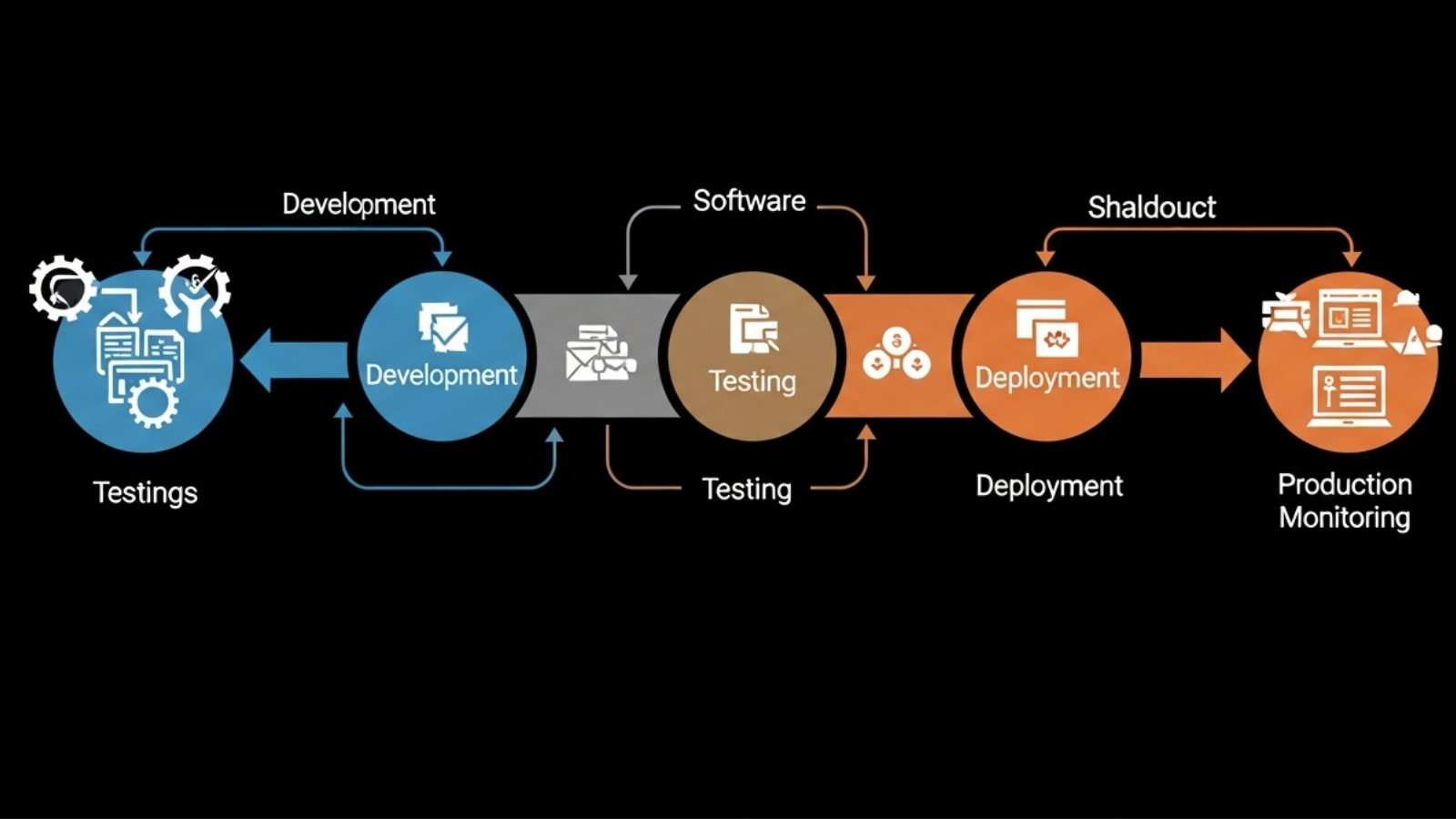


Why Attribution Accuracy Is Broken in 2026 and What Works Better

Introduction: The End of the Attribution Obsession

For more than a decade, performance marketing revolved around a single pursuit: perfect attribution. Marketers chased ever-more-precise models to answer one question which channel caused the conversion?

In 2026, that question is no longer the right one.

Privacy regulations, platform data silos, signal loss, and AI-driven campaign automation have fundamentally changed what is measurable and what is meaningful. The industry is coming to terms with a hard truth: attribution accuracy is increasingly unattainable and no longer the most valuable objective.

The smartest performance teams are shifting focus from precision to decision quality.

Why Traditional Attribution Models Are Breaking Down

1. Signal Loss Is Structural, Not Temporary

The loss of third-party cookies, device identifiers, and cross-app tracking is not a phase it’s a permanent reset.

Even with server-side tracking and consent frameworks:

  • User journeys are fragmented
  • Cross-device behavior is partially invisible
  • Platform-reported data is increasingly modeled

This makes deterministic, user-level attribution mathematically unreliable at scale.

Trying to “fix” attribution with more tools no longer solves the underlying problem.

2. Platform Walled Gardens Limit Transparency

Major ad platforms optimize campaigns internally using their own data and algorithms. Marketers see outputs but not the full decision logic.

As a result:

  • Reported conversions differ across platforms
  • Attribution windows vary
  • Modeled conversions blur causality

Attribution Accuracy models built on top of incomplete or biased data give a false sense of control.

3. AI-Driven Campaigns Reduce Tactical Visibility

In 2026, most performance campaigns are goal-based, not tactic-based.

AI systems decide:

  • Bidding
  • Audience expansion
  • Creative rotation
  • Budget allocation

While outcomes often improve, marketers lose visibility into why a specific impression converted.

Attribution becomes less about tracing clicks and more about evaluating systems.

The Real Cost of Chasing Perfect Attribution

Persisting with attribution accuracy as the primary goal creates several problems:

  • False confidence: Clean dashboards mask uncertainty
  • Misallocated budgets: Over-optimizing noisy signals
  • Slow decisions: Waiting for “perfect” data
  • Internal conflict: Teams arguing over whose channel gets credit

In many organizations, attribution debates consume more time than actual optimization.

That’s not performance marketing it’s distraction.

What’s Replacing Attribution Accuracy in 2026

1. Incrementality Over Attribution

The central question has changed from:

Which channel got the conversion?
to
Would this conversion have happened without this activity?

Incrementality testing via:

  • Geo holdouts
  • Time-based experiments
  • Conversion lift studies

focuses on causal impact, not credit assignment.

It’s less granular but far more honest.

2. Blended Measurement Models

Rather than forcing precision at the user level, teams are adopting blended measurement approaches that combine:

  • Platform-reported performance
  • First-party data trends
  • Media mix modeling (MMM)
  • Business KPIs (revenue, margin, LTV)

This accepts uncertainty while still enabling confident decisions.

Accuracy is replaced by directional reliability.

3. Outcome-Based KPIs

Instead of optimizing for attributed conversions, teams are aligning on:

  • Revenue contribution
  • Customer quality
  • Retention and lifetime value
  • Incremental profit

These metrics are harder to fake and easier to align with leadership.

In 2026, attribution exists to support business outcomes not define them.

Creative and Strategy Matter More Than Models

As targeting and tracking lose precision, creative effectiveness and strategic clarity have become the dominant performance levers.

High-performing teams focus on:

  • Rapid creative iteration
  • Clear value propositions
  • Platform-native storytelling
  • Consistent brand signals

Attribution models can’t compensate for weak messaging.
Strong creative often performs despite imperfect measurement.

The Role of First-Party Data Has Changed

First-party data hasn’t replaced attribution but it has reframed it.

Instead of tracking every touchpoint, first-party data is used to:

  • Understand customer cohorts
  • Measure downstream value
  • Improve segmentation and personalization
  • Validate performance trends

It supports strategic insight, not forensic attribution.

What CFOs and Leadership Actually Want

In 2026, senior leadership rarely asks:

Which ad got the click?

They ask:

  • Are we growing profitably?
  • Is marketing spend scalable?
  • Which channels deserve more investment?
  • What happens if we increase or cut spend?

Attribution accuracy does not answer these questions.
Incremental impact does.

This shift is why performance marketing is becoming more finance-aligned.

The New Performance Marketing Mindset

From Precision → Practicality

Accept that:

  • Some data will always be modeled
  • Some journeys will be invisible
  • Perfect attribution is unattainable

Build systems that still enable smart decisions.

From Credit → Causality

Stop arguing over credit.
Start measuring cause and effect.

From Tools → Thinking

More tools won’t solve measurement complexity.
Clear hypotheses and disciplined testing will.

What Performance Teams Should Do Now

  1. Reset expectations internally
    Educate stakeholders that attribution is directional, not definitive.
  2. Invest in incrementality testing
    Even simple experiments outperform complex attribution models.
  3. Align on business-level KPIs
    Tie performance marketing to revenue quality, not platform metrics.
  4. Strengthen creative and messaging
    Measurement cannot save weak propositions.
  5. Simplify reporting
    Fewer metrics, clearer decisions.

Final Thoughts: Accuracy Was the Wrong Goal

Attribution accuracy was always a proxy for confidence. In 2026, confidence comes from robust decision frameworks, not perfect data.

The best performance marketers are not those with the cleanest dashboards but those who:

  • Understand uncertainty
  • Design smart experiments
  • Align marketing with business impact

Attribution still matters but only as one input among many.

The goal is no longer to be precisely wrong.
It’s to be directionally right and commercially effective. For more details Contact Us

Generative AI Tools Is Revolutionizing Web & App Development in 2026

Introduction: Development Has Crossed a Structural Line

Web and app development has always evolved new frameworks, better tooling, faster runtimes. But in 2026, the change is not incremental. It is structural.

Generative AI tools are no longer experimental assistants or novelty code generators. They are actively reshaping how applications are designed, built, tested, deployed, and maintained. The developer’s role is shifting from writing every line of code to orchestrating systems, validating outputs, and designing outcomes.

This is not about replacing developers. It’s about redefining what development work actually means.

What “Generative AI Tools” Mean in 2026

In earlier years, generative AI in development mostly meant:

  • Code autocomplete
  • Basic snippet generation
  • Simple bug explanations

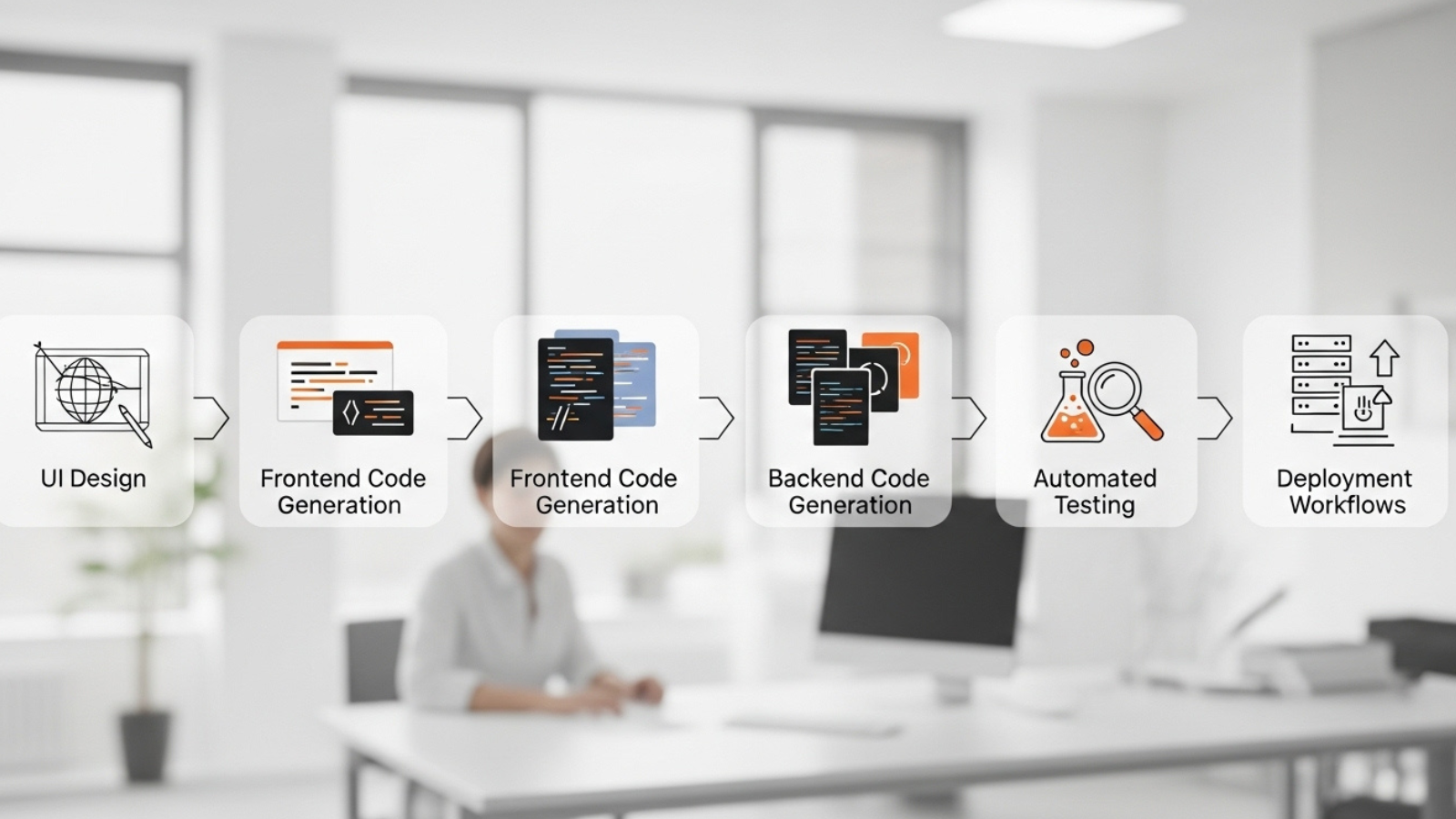
In 2026, generative AI tools operate across the entire development lifecycle, including:

  • UI and UX generation
  • Frontend and backend scaffolding
  • API design and documentation
  • Automated testing and test data generation
  • Performance tuning and refactoring
  • Deployment configuration and monitoring

These tools don’t just assist they actively participate in building software. Telegram

Faster Prototyping and Shorter Build Cycles

One of the most visible changes is speed.

Generative AI enables teams to:

  • Convert product ideas into working prototypes in hours
  • Generate production-ready UI components from design prompts
  • Scaffold full applications with consistent architecture

This dramatically reduces the time between concept and validation. Product teams can test ideas faster, discard weak concepts earlier, and iterate with real user feedback.

In 2026, speed is no longer a competitive advantage it’s the baseline expectation.

Frontend Development Is Becoming Intent-Driven

Frontend work has traditionally been labor-intensive:

  • Styling
  • Responsive layouts
  • Accessibility fixes
  • Cross-browser issues

Generative AI tools now generate:

  • Semantic HTML
  • Responsive CSS layouts
  • Component libraries aligned with design systems
  • Accessibility-aware UI structures

Developers increasingly describe what they want rather than building it piece by piece. The role shifts from construction to review, refinement, and integration.

This doesn’t reduce frontend complexity it changes where expertise is applied.

Backend Development Is Becoming More Declarative

Backend development is also being reshaped.

Generative AI can:

  • Design REST or GraphQL APIs
  • Generate database schemas
  • Produce validation logic and error handling
  • Draft authentication and authorization flows

Developers still define rules, constraints, and architecture but much of the boilerplate work is automated.

As a result, backend engineers spend more time on:

  • Data modeling decisions
  • Performance considerations
  • Security and compliance
  • System scalability

The work becomes higher leverage, not simpler.

Testing and QA Are Being Transformed

Testing has historically lagged behind development speed. Generative AI is changing that balance.

Modern AI tools can:

  • Generate unit, integration, and API tests
  • Create realistic test data
  • Identify edge cases developers overlook
  • Update tests automatically when code changes

This supports continuous testing models and aligns perfectly with QAOps and CI/CD pipelines.

However, human oversight remains critical. AI-generated tests still require:

  • Validation of test relevance
  • Risk-based prioritization
  • Business logic understanding

Quality is improving but only where teams use AI responsibly.

Design and Development Are Converging

Generative AI is narrowing the gap between design and development.

Design artifacts wireframes, mockups, design systems can now be translated directly into code. This reduces:

  • Misinterpretation
  • Rework
  • Design-to-dev handoff delays

Developers collaborate earlier with designers, focusing on behavior and usability rather than pixel replication.

In 2026, the most effective teams treat design and development as a single, continuous workflow.

The Rise of the “AI-Augmented Developer”

The developer role itself is evolving.

Successful developers in 2026:

  • Understand how to prompt and guide AI tools
  • Know when to trust output and when not to
  • Focus on system thinking, not syntax
  • Take responsibility for correctness, security, and maintainability

Coding skills still matter but they are no longer sufficient on their own.

The new competitive edge is judgment.

Risks and New Responsibilities

Generative AI introduces new risks that teams must manage carefully.

Verification Debt

Blindly trusting AI-generated code can lead to:

  • Hidden bugs
  • Security vulnerabilities
  • Performance issues

Teams must establish strong review and validation processes.

Security and Compliance Concerns

AI-generated code may:

  • Introduce insecure patterns
  • Violate internal standards
  • Miss regulatory requirements

Security reviews cannot be automated away.

Over-Reliance on Tooling

When teams stop understanding their own systems, long-term maintainability suffers.

The smartest organizations treat AI as:

An accelerator not a replacement for engineering discipline

Architecture and Governance Matter More Than Ever

As generative AI accelerates development, architecture decisions become more critical, not less.

Without strong:

  • Coding standards
  • Design patterns
  • Review processes
  • Governance frameworks

AI simply helps teams build bad systems faster.

In 2026, mature organizations pair generative AI with:

  • Clear architectural principles
  • Automated quality gates
  • Strong DevOps and QAOps practices

Business Impact: Faster Delivery, Leaner Teams

From a business perspective, the impact is clear:

  • Faster time to market
  • Smaller but more capable teams
  • Reduced development costs per feature
  • Greater ability to experiment and pivot

Companies that adopt generative AI responsibly gain compounding advantages.

Those that resist fall behind quickly.

What Web & App Teams Should Do Now

To adapt effectively, teams should:

  1. Introduce generative AI gradually not everywhere at once
  2. Define clear quality and security standards
  3. Train developers in AI-assisted workflows
  4. Maintain strong human review practices
  5. Focus on outcomes, not lines of code

Generative AI is powerful but only when paired with intent and discipline.

Final Thoughts: Development Is Becoming More Strategic

Generative AI tools are not making development less important. They are making it more strategic.

In 2026, the value of developers lies not in how fast they type but in:

  • How well they design systems
  • How clearly they define intent
  • How responsibly they manage risk
  • How effectively they deliver outcomes

Web and app development isn’t being automated away.
It’s being elevated.

If your organization is navigating AI-driven changes in web or app development and wants to modernize delivery without sacrificing quality, a clear development and AI strategy is now essential. For more Details please contact Contact Us

Edge AI: 5 Critical Benefits of Running ML Where Data Lives

Introduction: Why Machine Learning Is Leaving the Cloud

For years, machine learning followed a simple pattern: collect data, send it to the cloud, run models, return predictions. That approach worked until scale, latency, cost, and privacy got in the way.

In 2026, a growing number of ML systems are breaking this pattern. Instead of sending data to distant servers, models are moving closer to where data is generated on devices, sensors, gateways, and embedded systems. This shift is known as Edge AI, and it’s changing how machine learning is built, deployed, and scaled.

Edge AI isn’t a replacement for cloud ML. It’s a response to real constraints that cloud-first architectures can’t always solve.

What Is Edge AI?

Edge AI refers to running machine learning models at or near the source of data, rather than in centralized cloud environments.

That “edge” can be:

  • Smartphones and tablets
  • IoT sensors and cameras
  • Industrial machines
  • Vehicles and robots
  • Retail devices and kiosks
  • On-premise gateways

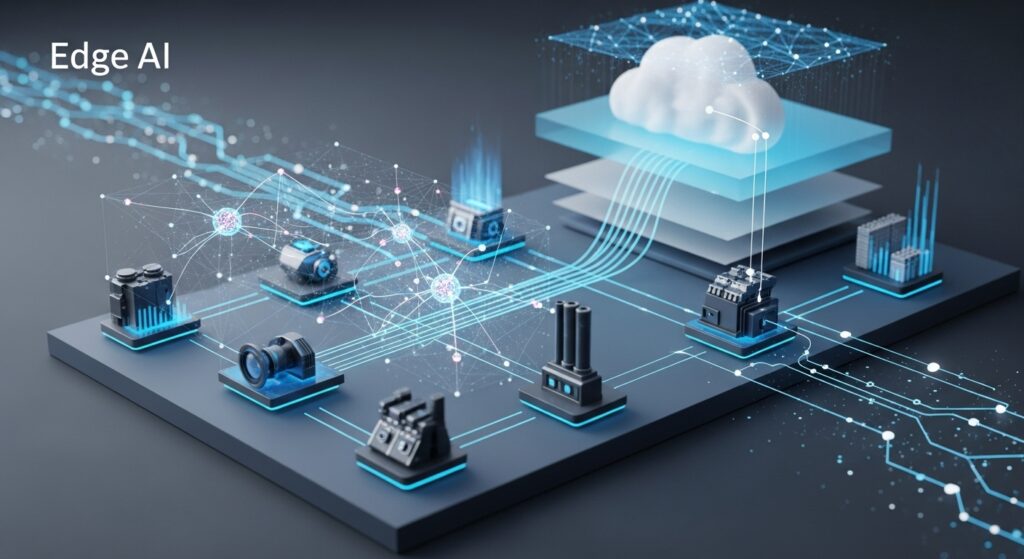
In Edge AI, data is processed locally. The model runs on the device (or nearby), and only essential information if any is sent to the cloud.

Why Edge AI Exists: The Core Drivers

1. Latency Matters

Some decisions must happen instantly. Sending data to the cloud and waiting for a response introduces delay that’s unacceptable for:

  • Autonomous vehicles
  • Robotics
  • Industrial safety systems
  • Real-time fraud detection
  • Smart manufacturing

Edge AI enables millisecond-level decisions without round trips to the cloud.

2. Bandwidth and Cost Constraints

Streaming raw data especially video, audio, or sensor data is expensive.

Edge AI:

  • Reduces data transfer
  • Lowers cloud processing costs
  • Scales better for high-volume data sources

Instead of uploading everything, devices process data locally and send only what matters.

3. Privacy and Compliance

In many industries, data cannot freely leave its environment.

It helps with:

  • Data sovereignty
  • Privacy-by-design
  • Regulatory compliance (healthcare, finance, public sector)

By keeping sensitive data on-device, organizations reduce exposure and risk.

4. Reliability and Offline Operation

Cloud connectivity isn’t guaranteed.

It allows systems to:

  • Operate offline
  • Continue functioning during outages
  • Maintain safety and reliability

This is critical in remote locations, factories, and transportation systems.

How Edge AI Works (At a Basic Level)

From a machine learning fundamentals perspective, It still relies on the same core concepts:

  • Data
  • Models
  • Training
  • Inference

The difference lies in where inference happens.

Typical workflow:

  1. Model is trained centrally (often in the cloud)
  2. Model is optimized and compressed
  3. Model is deployed to edge devices
  4. Inference runs locally
  5. Optional feedback or updates are sent back

Training usually remains centralized. Inference moves to the edge.

Key Machine Learning Basics Behind Edge AI

Model Optimization

Edge devices have limited:

  • Memory
  • Compute power
  • Energy

To run efficiently, models must be:

  • Smaller
  • Faster
  • Less power-hungry

Common techniques include:

  • Quantization
  • Pruning
  • Knowledge distillation

These techniques are core ML skills becoming increasingly important.

Feature Engineering at the Edge

It often relies on simpler, well-defined features rather than massive raw datasets.

This pushes ML practitioners to:

  • Understand data deeply
  • Design efficient feature pipelines
  • Balance accuracy with performance

It’s ML fundamentals applied under real constraints.

Continuous Learning (Carefully Applied)

Some edge systems support:

  • Periodic model updates
  • Federated learning
  • Feedback loops

But continuous learning must be tightly controlled to avoid drift, instability, or security issues.

Real-World Use Cases of Edge AI

Smart Cameras and Vision Systems

Instead of streaming video to the cloud, cameras:

  • Detect objects locally
  • Trigger alerts
  • Store only relevant clips

This reduces bandwidth and improves response time.

Industrial IoT and Manufacturing

It monitors:

  • Equipment health
  • Anomalies
  • Safety conditions

Decisions happen on-site, preventing downtime and accidents.

Healthcare Devices

Medical devices use it to:

  • Analyze signals locally
  • Protect patient data
  • Provide instant feedback

This supports privacy and reliability in critical environments.

Retail and Customer Experience

It powers:

  • In-store analytics
  • Dynamic pricing displays
  • Inventory tracking

All without constant cloud dependency.

Edge AI vs Cloud AI: Not a Competition

A common mistake is framing Edge AI as “better than” cloud AI.

In reality:

  • Cloud AI excels at training, aggregation, and global intelligence
  • Edge AI excels at speed, privacy, and local decision-making

Modern ML architectures are hybrid by design.

The future belongs to systems that intelligently split work between edge and cloud.

Challenges of Edge AI (That Beginners Should Understand)

Deployment Complexity

Managing models across thousands of devices is hard:

  • Versioning
  • Updates
  • Monitoring

This introduces operational challenges beyond pure ML.

Limited Observability

Debugging models at the edge is more difficult than in centralized systems.

Teams must invest in:

  • Logging strategies
  • Monitoring pipelines
  • Robust testing

Security Risks

Edge devices can be:

  • Physically accessed
  • Tampered with
  • Targeted by attacks

Security must be designed in from the start.

Why Edge AI Matters for ML Learners

For anyone learning machine learning today, Edge AI reinforces a critical lesson:

ML is not just about accuracy it’s about deployment reality.

Understanding Edge AI helps learners:

  • Appreciate constraints
  • Design efficient models
  • Think system-wide, not model-only

It bridges the gap between theory and production.

The Bigger Trend: ML Moving Closer to Reality

Edge AI represents a broader shift in machine learning:

  • From experimentation → execution
  • From centralized → distributed systems
  • From unlimited resources → constrained environments

This shift forces better engineering discipline and better ML fundamentals.

Final Thoughts: Edge AI Is ML Growing Up

Edge AI exists because the real world is messy, fast, and constrained. Running models where data lives is not a shortcut it’s a necessity.

For organizations, Edge AI unlocks:

  • Faster decisions
  • Lower costs
  • Better privacy
  • Greater resilience

For learners and practitioners, it’s a reminder that great machine learning works within reality, not above it.

Edge AI isn’t the future because it’s trendy.
It’s the future because it solves problems the cloud alone cannot.

If your organization or team is exploring machine learning deployment strategies including Edge AI and hybrid architectures technology consulting and ML advisory can help you design systems that scale in the real world. For more details Contact Us

Why Companies Are Hiring Smarter or Growth in 2026

Introduction: Growth No Longer Means More People

For years, growth followed a predictable pattern: revenue increased, teams expanded, and headcount became a visible symbol of success. Bigger teams meant bigger companies.

In 2026, that logic is officially dead.

Across industries especially in tech, consulting, and digital services companies are deliberately slowing hiring while still pursuing growth. This is not a reactionary hiring freeze or a temporary slowdown. It’s a strategic shift toward smarter hiring models focused on efficiency, output, and adaptability.

Companies aren’t shrinking ambitions. They’re shrinking unnecessary complexity.

The End of Headcount-Driven Growth

The old model of growth was simple but flawed:

  • Hire more people to do more work
  • Add layers of management as teams grow
  • Increase tools, processes, and meetings to coordinate

Over time, this created bloated organizations where:

  • Productivity per employee declined
  • Decision-making slowed
  • Costs rose faster than revenue

By 2026, leadership teams have learned a hard lesson: more people does not equal more progress.

AI Changed the Economics of Hiring

One of the biggest reasons companies are hiring smarter is AI.

AI has fundamentally altered:

  • How work is executed
  • How fast tasks can be completed
  • How many people are needed to deliver results

Roles that once required entire teams data analysis, reporting, content creation, testing, support, even parts of development can now be handled by smaller, AI-augmented teams.

This doesn’t eliminate jobs. It raises the bar for each role.

Companies now ask:

Can this outcome be achieved with fewer, better-equipped people?

In most cases, the answer is yes.

From Generalists to High-Impact Specialists

In 2026, hiring favors depth over breadth.

Instead of adding large numbers of generalists, companies prioritize:

  • Specialists who own outcomes
  • Professionals who can operate autonomously
  • People who combine technical skill with business understanding

A smaller team of high-impact contributors often outperforms a larger team of loosely defined roles.

This shift reduces:

  • Handoffs
  • Miscommunication
  • Dependency chains

And it increases accountability.

Skills Matter More Than Titles or Degrees

Another major change: skills-based hiring is replacing credential-based hiring.

Degrees, job titles, and years of experience still matter but far less than:

  • Proven ability to deliver
  • Hands-on experience with modern tools
  • Adaptability and learning speed

Companies are using:

  • Practical assessments
  • Portfolio reviews
  • Trial projects

to evaluate candidates.

This allows organizations to hire fewer people with higher certainty, rather than over-hiring to hedge against bad fits.

Hiring Is Now Tied Directly to ROI

In 2026, every new hire is expected to justify their existence in business terms.

Leadership teams ask:

  • How does this role improve revenue, margin, or efficiency?
  • What outcomes will change because of this hire?
  • Can this impact be achieved through automation or upskilling instead?

This mindset has eliminated many “nice-to-have” roles and replaced them with impact-driven positions.

Hiring is no longer about filling seats.
It’s about solving problems.

Upskilling Is Beating External Hiring

Instead of constantly recruiting, many companies are choosing to:

  • Reskill existing employees
  • Promote internally
  • Invest in training and certifications

Why?

  • Faster than hiring externally
  • Lower cultural risk
  • Higher retention
  • Better institutional knowledge

In many cases, transforming a QA engineer into a QAOps specialist or a developer into an AI-augmented engineer is more effective than hiring someone new.

Growth now comes from capability expansion, not team expansion.

Smaller Teams Move Faster and Think Clearer

Large teams introduce:

  • Coordination overhead
  • Process-heavy decision-making
  • Risk-averse behavior

Smaller teams, when structured correctly:

  • Ship faster
  • Iterate quicker
  • Take ownership seriously

This is especially critical in competitive markets where speed and adaptability decide winners.

By hiring smarter, companies protect agility.

The Role of Managers Is Changing Too

Smart hiring also reshapes management.

In leaner organizations:

  • Managers oversee fewer people
  • Leadership becomes more hands-on
  • Performance is easier to measure

This reduces bureaucracy and improves alignment between strategy and execution.

In 2026, companies value leaders who can build small, effective teams, not empires.

Employer Branding Supports Smarter Hiring

When companies hire selectively, employer branding becomes more important—not less.

Candidates now evaluate:

  • Growth opportunities
  • Learning culture
  • Clarity of expectations
  • Technical maturity

Companies that clearly communicate how they work attract better candidates and avoid over-hiring mismatches.

Smarter hiring starts before the interview.

What This Means for Employees

For professionals, this shift brings both opportunity and pressure.

What’s expected in 2026:

  • Continuous learning
  • Comfort with AI tools
  • Ownership over outcomes
  • Ability to work across disciplines

The upside?
Skilled professionals gain:

  • More responsibility
  • Higher leverage
  • Faster career growth

The era of hiding in large teams is over.

What This Means for Founders and Leaders

If you’re leading a company in 2026, the playbook is clear:

  • Hire only when impact is undeniable
  • Prefer capability growth over headcount growth
  • Build teams that scale with tools, not bodies
  • Measure success by outcomes, not size

Companies that follow this approach grow leaner, faster, and more resilient.

Those that don’t will struggle with costs, complexity, and inertia.

Final Thoughts: Smarter Is the New Bigger

The companies winning in 2026 aren’t the ones with the biggest teams. They’re the ones with:

  • The right people
  • The right tools
  • The right structure

Hiring smarter is not about cutting ambition.
It’s about amplifying impact.

Growth still matters but now it’s measured in results, not headcount.

If your organization is rethinking its hiring, workforce strategy, or growth model for the modern era, explore consulting and technology advisory services at Contact Us

QAOps: How Continuous Testing Is Rewriting Quality Assurance in 2026

Introduction: Quality Assurance Is No Longer a Phase It’s a System

For years, Quality Assurance lived at the end of the software lifecycle. Code was written, features were “done,” and then QA stepped in to validate what already existed. That model is officially broken.

In 2026, speed is non-negotiable. Releases happen daily, sometimes hourly. In this environment, traditional Quality Assurance simply cannot keep up. The result is a fundamental shift: QAOps the integration of quality assurance directly into DevOps pipelines through continuous testing, automation, and real-time feedback.

QAOps isn’t a trend. It’s a survival mechanism.

What Is QAOps Really?

QAOps is not just “more automation” or “testing earlier.” It’s a systemic change in how quality is owned, measured, and delivered.

At its core, QAOps means:

  • Testing is continuous, not scheduled
  • Quality is everyone’s responsibility, not just QA’s
  • Feedback loops are automated and immediate
  • Testing lives inside CI/CD pipelines
  • Production behavior informs future tests

In short, QAOps treats quality as an operational capability, not a checkpoint.

Why Traditional QA Failed at Scale

1. Testing Happens Too Late

When Quality Assurance is a final gate, defects are discovered after:

  • Architectural decisions are locked
  • Timelines are compressed
  • Fixes are expensive

Late testing increases risk instead of reducing it.

2. Manual Bottlenecks Don’t Scale

Manual regression cycles can’t keep pace with:

  • Microservices architectures
  • Frequent releases
  • Multi-platform applications

Teams either skip testing or accept lower confidence.

3. QA Is Isolated From Delivery

When Quality Assurance works separately from DevOps:

  • Test environments drift
  • Failures lack context
  • Feedback arrives too late

This isolation turns Quality Assurance into a blocker instead of an enabler.

QAOps exists because this model no longer works.

Continuous Testing: The Backbone of QAOps

Continuous testing is the engine that powers QAOps. It ensures that every change is validated automatically, across the lifecycle.

Continuous testing includes:

  • Unit tests triggered on every commit
  • API and integration tests in pipelines
  • UI tests on critical paths
  • Performance and security checks
  • Monitoring and validation in production

The goal isn’t “100% automation.”
The goal is continuous confidence.

Shift-Left + Shift-Right: QAOps in Practice

QAOps combines two powerful approaches:

Shift-Left Testing

Testing moves earlier into:

  • Requirements
  • Design
  • Development

This reduces defect cost and improves clarity.

Shift-Right Testing

Quality doesn’t stop at release. QAOps validates:

  • Real user behavior
  • Performance under load
  • Error rates and anomalies

Production becomes a quality signal, not a blind spot.

Together, these approaches close the feedback loop.

The Role of Automation in QAOps

Automation is necessary but not sufficient.

In QAOps, automation must be:

  • Stable: Self-healing where possible
  • Relevant: Focused on business-critical paths
  • Fast: Optimized for pipeline execution
  • Observable: Failures provide actionable insight

Bad automation creates noise.
Good automation creates trust.

QAOps teams invest more in maintaining test value than in increasing test count.

AI Is Accelerating QAOps Adoption

AI is a major catalyst for QAOps in 2026.

Used correctly, AI helps with:

  • Test case generation
  • Test maintenance and self-healing
  • Risk-based test prioritization
  • Failure analysis and root cause detection

But here’s the hard truth:
AI doesn’t replace QA thinking. It amplifies it.

Teams that rely blindly on AI-generated tests accumulate verification debt. QAOps requires human oversight plus intelligent automation.

QAOps Changes Team Structure and Culture

QAOps is as much cultural as it is technical.

Successful teams:

  • Embed Quality Assurance engineers into product squads
  • Involve Quality Assurance in sprint planning and design
  • Share ownership of test failures
  • Treat broken pipelines as production incidents

In QAOps, quality failures are team failures, not QA failures.

Metrics That Matter in QAOps

Traditional Quality Assurance metrics (number of test cases, defects found) are insufficient.

QAOps focuses on:

  • Deployment frequency
  • Change failure rate
  • Mean time to detect (MTTD)
  • Mean time to recover (MTTR)
  • Escaped defects

These metrics tie quality directly to business impact.

Common Mistakes When Adopting QAOps

Many organizations struggle with QAOps because they:

  • Automate bad tests
  • Overload pipelines with slow UI tests
  • Ignore test data management
  • Treat QAOps as a tooling problem
  • Skip change management

QAOps fails when it’s implemented mechanically instead of strategically.

How to Start with QAOps (Practically)

If you’re transitioning toward QAOps, start here:

  1. Stabilize your CI/CD pipeline
  2. Automate critical paths first
  3. Integrate Quality Assurance early into delivery planning
  4. Introduce observability and production feedback
  5. Measure outcomes, not activity

QAOps is built incrementally not overnight.

What QAOps Means for the Future of QA

Quality Assurance is not disappearing. It’s becoming more powerful.

In 2026, top QA professionals are:

  • Quality strategists
  • Automation architects
  • Risk analysts
  • Delivery enablers

QAOps elevates QA from execution to engineering leadership.

Final Thoughts: QAOps Is the New Default

Continuous delivery demands continuous quality. QAOps provides the structure to make that possible without slowing teams down.

Organizations that adopt QAOps:

  • Release faster
  • Fail safer
  • Recover quicker
  • Build trust with users

Those that don’t will continue firefighting defects they could have prevented.

Quality hasn’t lost importance.
It has finally gained operational relevance.

If your organization is modernizing its QA strategy and moving toward QAOps and continuous testing, explore software testing and quality consulting at Contact Us

Why Enterprises Are Killing Tool Sprawl in 2026

Introduction: More Tools Didn’t Make Enterprises Safer or Faster

For over a decade, enterprises responded to every new problem by buying another tool. A new security risk? Add a security product. A new analytics need? Add a dashboard. A productivity issue? Add a SaaS subscription.

By 2026, the result is clear: tool sprawl has become a liability.

Organizations now manage dozens sometimes hundreds of overlapping tools across IT, security, development, marketing, and operations. Instead of increasing efficiency, this sprawl has driven up costs, increased risk, slowed decision-making, and burned out teams. Enterprises are finally doing what should have happened years ago: cutting back aggressively.

What Tool Sprawl Really Looks Like Inside Enterprises

Tool sprawl isn’t just “too many apps.” It’s systemic fragmentation.

Typical symptoms include:

  • Multiple tools solving the same problem in slightly different ways
  • Data scattered across disconnected platforms
  • Conflicting dashboards and reports
  • Security blind spots caused by poor integration
  • Rising SaaS costs with unclear ROI

In many organizations, no one can answer a simple question like:
Which tools are mission-critical, and which are just noise?

That uncertainty is now unacceptable.

The Cost Problem Enterprises Can No Longer Ignore

In 2026, enterprise CFOs are scrutinizing software spend harder than ever. Tool sprawl hides massive waste:

  • Licenses paid for unused features
  • Duplicate subscriptions across departments
  • Expensive platforms used by a handful of users

When budgets tighten, the first question becomes:

Why are we paying for five tools that all claim to do the same thing?

The answer is rarely good.

Tool consolidation is no longer a technical decision it’s a financial mandate.

Security and Compliance Are Breaking Under Tool Sprawl

One of the biggest drivers behind tool reduction is security risk.

Every additional tool introduces:

  • Another attack surface
  • Another integration point
  • Another place data can leak
  • Another vendor risk assessment

Security teams are overwhelmed managing alerts from dozens of platforms that don’t talk to each other. Compliance teams struggle to prove consistent controls across fragmented systems.

In regulated environments, tool sprawl directly undermines:

  • Audit readiness
  • Incident response
  • Governance and accountability

In 2026, enterprises are choosing fewer, better-integrated tools over sprawling stacks that look impressive but fail under scrutiny.

AI Changed the Economics of Software Tools

AI has quietly accelerated the death of tool sprawl.

Why? Because AI can replace entire layers of functionality that previously required separate tools:

  • Reporting and analysis
  • Workflow automation
  • Monitoring and alerting
  • Content and data processing

Instead of buying another niche platform, enterprises can:

  • Centralize workflows
  • Use AI to orchestrate tasks
  • Reduce manual handoffs between systems

This shifts the question from:

Which tool should we add?
to
Which tools can we eliminate?

Integration Fatigue Is Real

IT teams are exhausted not from lack of tools, but from too many of them.

Every new product requires:

  • Integration work
  • API maintenance
  • User training
  • Ongoing support

As tool counts grow, integration becomes the real bottleneck. Systems become fragile. Changes ripple unpredictably. Innovation slows.

In 2026, enterprises are prioritizing platforms that reduce integration complexity, not add to it.

Executives Want Outcomes, Not Dashboards

Another reason tool sprawl is dying: leadership is done with vanity metrics.

Executives don’t want:

  • Ten dashboards saying different things
  • Weekly reports generated manually
  • Conflicting versions of the truth

They want:

  • Clear outcomes
  • Measurable impact
  • Real-time visibility

Tool sprawl obscures insight. Consolidation clarifies it.

The New Enterprise IT Strategy: Fewer Tools, Deeper Capability

Enterprises aren’t anti-tools they’re anti-chaos.

The winning strategy in 2026 looks like this:

  • Fewer core platforms
  • Strong native integrations
  • Centralized data and identity
  • AI-driven orchestration
  • Clear ownership and governance

Instead of assembling fragile stacks of point solutions, organizations are investing in cohesive ecosystems.

What Gets Cut First and Why

When enterprises rationalize their stacks, the same types of tools are usually first to go:

  • Overlapping analytics tools
  • Redundant monitoring platforms
  • Standalone productivity SaaS
  • Niche tools used by single teams

Tools survive only if they deliver unique, provable value that cannot be replicated or absorbed elsewhere.

What This Means for Vendors and Consultants

For software vendors, the message is brutal but clear:

If your product doesn’t integrate deeply or deliver unique value, it’s on the chopping block.

For consultants and IT partners, the opportunity is massive:

  • Tool rationalization assessments
  • Stack consolidation roadmaps
  • Integration and automation strategy
  • AI-driven platform design

Enterprises need guidance to simplify without breaking critical workflows.

How Enterprises Should Approach Tool Reduction

Successful tool reduction isn’t about ripping systems out blindly. It requires:

  1. A full inventory of tools and usage
  2. Clear mapping to business outcomes
  3. Identification of redundancy and risk
  4. A phased consolidation plan
  5. Strong change management

When done right, consolidation improves:

  • Security posture
  • Cost efficiency
  • Operational speed
  • Team morale

Final Thoughts: Tool Sprawl Is a Symptom, Not the Disease

Tool sprawl happened because enterprises optimized locally instead of strategically. Each team solved its own problem, and no one owned the whole system.

In 2026, that mindset is over.

The most successful enterprises are not those with the most tools but those with the clearest, simplest, and most controlled technology foundations.

Killing tool sprawl isn’t about austerity.
It’s about focus, resilience, and scale.

If your organization is looking to rationalize its IT stack, reduce tool sprawl, and design a future-ready platform strategy, explore technology consulting at Contact Us

Anthropic’s 3 Major AI Challenges Forcing a Software Rethink

Introduction: This Isn’t Just Another AI Product Launch

For years, software tools evolved in predictable ways: better UX, incremental features, tighter integrations. That model is now breaking.

With its latest wave of AI product releases, Anthropic isn’t just adding features it’s challenging the foundations of how software tools are built, priced, and differentiated. The implications go far beyond AI assistants or productivity boosts. This shift forces every SaaS and enterprise software provider to ask an uncomfortable question:

What happens when AI can replicate core product value faster than roadmaps can keep up?

What Anthropic Actually Launched and Why It Matters

Anthropic’s recent product moves center around agentic AI tools systems that don’t just respond to prompts but actively perform tasks, collaborate with users, and operate across files, workflows, and applications.

Key characteristics of these tools include:

  • Persistent context across tasks
  • File and system interaction
  • Multi-step execution without constant user input
  • Rapid development cycles some tools reportedly built largely by AI itself

This isn’t AI bolted onto software. This is AI acting like software.

The Real Disruption: Features Are Becoming Commodities

Traditionally, SaaS differentiation came from:

  • Feature depth
  • Workflow optimization
  • Proprietary interfaces

Anthropic’s approach threatens that model. When AI agents can:

  • Draft documents
  • Analyze data
  • Manage workflows
  • Generate code
  • Coordinate tasks

then entire product categories risk being flattened.

A CRM feature, a project management workflow, or a reporting dashboard is no longer defensible if an AI agent can replicate 80% of its value on demand.

From Tools to Capabilities: A Strategic Shift

The old question for product teams was:

What features should we build next?

The new question is:

What capabilities must we own that AI cannot easily abstract away?

This marks a shift from feature-based competition to capability-based strategy.

Winning tools in this new era will focus on:

  • Deep domain specialization
  • Trusted data ownership
  • Workflow authority
  • Compliance, governance, and security
  • Ecosystem integration

AI can generate outputs but it cannot easily replace contextual authority.

Why Traditional SaaS Roadmaps Are at Risk

Anthropic’s rapid iteration exposes a structural weakness in traditional product development:

  • Human-built roadmaps move slowly
  • AI-generated capabilities move fast
  • Feature parity can be reached in weeks, not years

This creates a dangerous gap. By the time a SaaS company ships a planned feature, an AI agent may already be doing it without requiring users to adopt a new tool.

The result? Feature velocity no longer guarantees relevance.

The Pricing Model Problem

AI-driven tools also challenge SaaS pricing assumptions.

If AI can:

  • Replace multiple tools
  • Collapse workflows
  • Reduce user effort

then per-seat, per-feature pricing starts to feel outdated.

Anthropic’s trajectory suggests a future where:

  • Value is tied to outcomes, not licenses
  • Pricing aligns with usage or results
  • Bundled AI capabilities replace fragmented subscriptions

SaaS companies that fail to rethink pricing risk being undercut by AI-native alternatives.

Security, Compliance, and Trust Become Differentiators

One area where AI tools face real friction is trust.

As AI agents gain more autonomy, enterprises worry about:

  • Data exposure
  • Unintended actions
  • Compliance violations
  • Auditability

This creates opportunity for established tools that can offer:

  • Strong governance
  • Clear access controls
  • Transparent audit trails
  • Regulatory alignment

In this sense, Anthropic’s disruption doesn’t eliminate traditional software it raises the bar for trust and accountability.

What Product Leaders Should Be Doing Right Now

1. Audit Your Product’s Defensibility

Ask honestly:

  • Which features could an AI agent replicate?
  • What value depends on proprietary data or domain expertise?
  • Where do customers trust us beyond convenience?

If the answers are unclear, that’s a warning sign.

2. Shift From “AI Features” to “AI Strategy”

Adding AI buttons isn’t enough.

Product teams need to define:

  • How AI reshapes workflows
  • Where human oversight remains essential
  • How AI enhances not replaces core value

This requires cross-functional alignment between product, engineering, legal, and security.

3. Redesign the User Relationship

As AI agents take over tasks, users interact less with interfaces and more with outcomes.

This means:

  • Fewer clicks
  • More automation
  • Higher expectations

Products must evolve from tools users operate to systems users trust.

The Competitive Landscape Is Shifting

Anthropic’s moves highlight a broader industry reality: competition is no longer limited to direct rivals.

A SaaS product now competes with:

  • AI platforms
  • Agentic workflows
  • Custom AI setups
  • User-built automations

This makes strategic positioning more important than ever. Survival depends on clarity of purpose, not feature breadth.

Final Thoughts: This Is a Strategy Reset, Not a Trend

Anthropic’s new AI products are not just impressive they’re destabilizing. They force a rethink of:

  • What software is
  • How value is delivered
  • Why users choose tools

For software companies, the takeaway is clear:

AI will not replace all tools but it will expose weak ones.

The winners will be those who understand where AI fits—and where it doesn’t—inside their product strategy.

If your organization is reassessing its software, product, or AI strategy in this new landscape, explore technology and product consulting at Contact Us

Spain’s AI Powerhouse: 5 Powerful Reasons Founders Can’t Miss EU-Startups Summit 2026

Introduction: An Event That Reflects a Bigger Shift

The EU-Startups Summit 2026 isn’t just another networking event. It’s a signal.

When Europe’s most influential startup summit takes place in Spain, it confirms what many founders and investors already know: Spain is no longer an emerging ecosystem it’s a leading one. Over the past five years, Spain has quietly transformed into one of Europe’s most attractive destinations for AI startups, scaleups, and international founders.

This article connects the dots between the EU-Startups Summit 2026 and the deeper reason it matters: Spain’s rise as a core innovation hub in Europe.

What Is the EU-Startups Summit and Why It Matters

The EU-Startups Summit is one of Europe’s most respected startup-focused conferences, bringing together:

  • High-growth startups and scaleups
  • Venture capital firms and angel investors
  • Corporate innovation leaders
  • Accelerators, policymakers, and ecosystem builders

Unlike generic tech expos, this summit is built around funding, scaling, and cross-border growth. The focus is not hype it’s execution.

By 2026, the summit has evolved into a barometer of where European innovation is heading.

Why Founders Should Attend or Closely Watch EU-Startups Summit 2026

1. Investor Access Without the Noise

One of the summit’s biggest strengths is signal quality. Investors attending are:

  • Actively deploying capital
  • Focused on EU-based growth
  • Interested in AI, SaaS, climate tech, fintech, and deep tech

For founders, this means fewer vanity meetings and more real conversations about traction, scalability, and funding readiness.

2. Europe-First, Global-Ready Perspective

Unlike US-centric conferences, EU-Startups Summit focuses on:

  • European regulation realities
  • Cross-border scaling challenges
  • Multi-market go-to-market strategies

This is critical for founders building in Europe but aiming globally.

3. AI and Deep Tech Are No Longer Side Tracks

By 2026, AI is no longer treated as a niche. It’s embedded across:

  • SaaS products
  • Marketing platforms
  • Health and finance
  • GovTech and smart infrastructure

The summit reflects this shift, positioning AI as foundational infrastructure, not a buzzword.

4. Policy Meets Practice

A unique strength of the summit is the presence of:

  • EU innovation programs
  • Public-private funding initiatives
  • Regulatory stakeholders

For founders navigating grants, compliance, or scaleup funding, this context is invaluable.

Why Spain Is the Right Place for This Summit

The bigger story isn’t the event. It’s why Spain makes sense as its host.

By 2025, This country had firmly established itself as one of Europe’s most dynamic startup ecosystems especially in AI, digital services, and platform-based businesses.

How Spain Became a Top European AI & Startup Hub by 2025

1. Strong Public Funding and EU Alignment

Spain has been highly effective in channeling:

  • EU innovation funds
  • Digital transformation grants
  • AI and deep-tech initiatives

Rather than spreading funds thin, Spain focused on:

  • Scalable startups
  • Research-to-market pathways
  • AI-driven innovation

This created a fertile environment for serious founders not grant chasers.

2. Cities That Specialize, Not Compete

Spain’s ecosystem strength comes from distributed specialization, not one dominant city.

  • Barcelona: Deep tech, AI, health tech, design-led SaaS
  • Madrid: Fintech, enterprise SaaS, corporate innovation
  • Málaga: Emerging AI, cybersecurity, and international hubs

This creates multiple entry points for founders, investors, and talent.

3. International Founder Magnet

Spain offers something rare in Europe:

  • Competitive cost of living
  • High quality of life
  • Access to EU markets
  • Strong talent pipelines

As a result, Spain attracted:

  • Remote-first founders
  • International startup teams
  • Scaleups relocating operations

This diversity accelerated ecosystem maturity.

4. AI Adoption Beyond Research

Spain didn’t stop at AI research it pushed AI adoption into real businesses:

  • Marketing automation
  • Smart cities
  • E-commerce personalization
  • Financial risk analysis

This practical focus created demand for AI-first startups that solve real problems.

5. A Growing Scaleup Culture

By 2025, Spain moved past early-stage obsession. The ecosystem matured to support:

  • Series A–C funding rounds
  • International expansion
  • Operational scaling

This is exactly why the EU-Startups Summit fits so well it targets companies ready to grow, not just ideate.

What This Means for Founders in 2026

The convergence of:

  • EU-Startups Summit 2026
  • Spain’s mature startup ecosystem
  • AI as a core business driver

creates a powerful opportunity.

Founders who engage with this ecosystem gain:

  • Better funding access
  • Stronger cross-border networks
  • Exposure to EU-aligned growth strategies

Whether you attend in person or track insights remotely, this summit is a strategic checkpoint.

Why Startup Consultants and Investors Should Pay Attention

For consultants, accelerators, and investors, Spain’s rise signals:

  • Where talent is concentrating
  • Where capital is flowing
  • Where policy and innovation align

Ignoring Spain in 2026 means missing one of Europe’s most balanced startup environments.

Final Thoughts: Event as Evidence, Not Exception

The EU-Startups Summit 2026 isn’t making Spain a startup hub it’s confirming it.

Spain’s ecosystem strength, AI adoption, and scaleup maturity made it a natural host. For founders, this is a reminder that Europe’s innovation map has evolved.

The smart move isn’t just to attend events it’s to understand why they’re happening where they are.

If you’re a founder, investor, or organization looking to enter or scale within the European startup ecosystem—especially in Spain—explore startup consulting and technology advisory services at Contact Us

UK Cyber Action Plan: A Critical Guide for Private Sector Teams in 2026

Introduction: The UK Cyber Action Plan Just Admitted the Risk Is “Critically High”

When a government publicly states that its cyber risk is critically high, it’s not posturing it’s a warning.

In early 2026, the UK Government announced a £210 million National Cyber Action Plan, acknowledging that despite years of investment, cyber threats are accelerating faster than defenses. The plan is designed to strengthen national resilience, modernize public sector systems, and enforce stronger security controls.

But here’s the uncomfortable truth: private sector organizations are not insulated from this plan they are directly affected by it.

If you operate in or with the UK market, this initiative should immediately change how you think about security, compliance, and operational risk.

What Is the UK Cyber Action Plan?

The Cyber Action Plan is a government-wide initiative aimed at:

  • Strengthening national cyber defenses
  • Reducing systemic vulnerabilities
  • Improving response coordination
  • Enforcing consistent security standards across public bodies

Key elements include:

  • Creation of a centralized Government Cyber Unit
  • Mandatory baseline security controls
  • Increased funding for incident response and monitoring
  • Accelerated modernization of legacy systems

This is not just a public sector cleanup. It sets expectations that will ripple into the private sector.

Why the Private Sector Should Pay Attention

Government cyber policy doesn’t stay confined to government networks. It almost always becomes:

  • Procurement requirements
  • Regulatory expectations
  • Contractual obligations

Private companies that provide:

  • IT services
  • Cloud infrastructure
  • Software platforms
  • Data processing
  • Managed services

will increasingly be expected to match government-grade security standards.

Ignoring this shift now will cost you later either in lost contracts or emergency compliance spending.

The Real Message Behind the Plan

Strip away the headlines, and the message is clear:

Reactive cybersecurity is no longer acceptable.

The UK government is moving toward:

  • Continuous risk assessment
  • Proactive threat management
  • Enforced accountability

Private organizations still relying on annual audits and static policies are already behind.

Key Areas That Will Impact Private Organizations

1. Mandatory Baseline Security Controls

The Cyber Action plan emphasizes standardized controls across systems. This typically translates into:

  • Stronger identity and access management
  • Mandatory multi-factor authentication
  • Asset visibility and inventory
  • Patch and vulnerability management

Private sector teams should expect these controls to appear in:

  • Supplier security questionnaires
  • Vendor audits
  • Contract clauses

If your controls aren’t documented and enforced, you’ll fail before technical discussions even start.

2. Supply Chain Security Comes Under Scrutiny

One of the biggest drivers behind the plan is supply chain risk.

Government systems are only as secure as the weakest vendor connected to them. Expect:

  • More rigorous third-party risk assessments
  • Evidence-based security validation
  • Continuous monitoring expectations

Private companies can no longer rely on self-attestations. Proof is becoming mandatory.

3. Incident Response Expectations Will Rise

The Cyber Action Plan prioritizes faster detection and coordinated response.

For private organizations, this means:

  • Clearly defined incident response plans
  • Tested response procedures
  • Breach notification readiness
  • Cross-team coordination (IT, legal, leadership)

“Having a plan” is not enough. It must be tested, documented, and executable.

4. Legacy Systems Are Now a Liability

A major admission in the Cyber Action plan is that outdated systems are a primary risk factor.

Private sector takeaway:

  • Legacy platforms increase compliance risk
  • Unsupported software weakens trust
  • Security exceptions will be harder to justify

Modernization is no longer a roadmap item it’s a risk mitigation requirement.

The Compliance Shift: From Paper to Proof

One of the most important implications of the Cyber Action Plan is how compliance is evolving.

Traditional compliance focused on:

  • Policies
  • Annual audits
  • Checkbox frameworks

The new direction demands:

  • Continuous evidence
  • Operational security metrics
  • Real-time visibility

Private organizations should prepare for compliance that looks more like ongoing security operations than documentation exercises.

What Private Sector Teams Should Do Now

1. Assess Your Current Security Posture

Ask hard questions:

  • Can we prove our controls are active?
  • Do we know our asset inventory?
  • Can we detect incidents quickly?

If the answer is unclear, that’s your starting point.

2. Align Security With Business Risk

Security teams must connect controls to:

  • Business continuity
  • Customer trust
  • Contract eligibility

This alignment is essential as boards and regulators demand clearer justification for security investments.

3. Prepare for Increased Vendor Scrutiny

If you sell into regulated markets:

  • Document your controls
  • Standardize security reporting
  • Prepare evidence, not statements

Security maturity is becoming a competitive differentiator.

4. Invest in Continuous Security Practices

This includes:

  • Continuous monitoring
  • Threat exposure management
  • Regular testing and validation

Static security models will not survive this regulatory direction.

What This Means Long Term

The UK Cyber Action Plan is not a one-off initiative. It’s part of a broader global trend:

  • Governments raising security expectations
  • Regulators demanding operational proof
  • Markets rewarding resilient organizations

Private companies that adapt early will:

  • Reduce breach impact
  • Win trust faster
  • Qualify for high-value contracts

Those who delay will pay in rushed remediation, reputational damage, and lost opportunities.

Final Thoughts

The UK government’s cyber admission should be taken seriously. Cybersecurity is no longer framed as a technical problem it’s a national risk issue.

For private sector teams, the message is simple:

Get proactive, get visible, or get left behind.

Security maturity is no longer optional. It’s becoming the cost of doing business.

If your organization needs help aligning security, compliance, and operational resilience with modern regulatory expectations, explore security and technology consulting at Contact Us

Machine Learning 2026: Powerful Real-Time ML Tooling for Production-Ready Systems That Scale

Introduction: Why Traditional Machine Learning Batch Processing Is No Longer Enough

For years, machine learning lived comfortably in batch pipelines. Predictions were generated overnight. Models were updated weekly. Latency didn’t matter.

That world is gone.

In 2026, ML systems are expected to respond in milliseconds, adapt continuously, and operate reliably at scale. This demand has triggered a major evolution in real-time Machine Learning tooling and it’s reshaping how systems are designed.

Why Real-Time ML Is So Hard

Real-time ML isn’t just “faster batch processing.” It introduces entirely new challenges:

  • Low-latency inference
  • Streaming data ingestion
  • Model drift detection
  • Continuous monitoring
  • High availability under load

Most early ML stacks were never designed for this.

What’s New in Real-Time ML Tooling

Recent tooling advances focus on end-to-end real-time Machine Learning systems, not isolated components.

1. Streaming-First Data Pipelines

Modern ML platforms now support:

  • Native event streams
  • Online feature stores
  • Low-latency feature computation

This allows models to react to live user behavior instead of stale snapshots.

2. Real-Time Inference Engines

Inference tooling has improved dramatically:

  • Sub-10ms response times
  • Auto-scaling under burst traffic
  • Hardware-aware optimization

This makes ML viable for use cases like fraud detection, recommendations, pricing, and personalization.

3. ML Observability and Monitoring

One of the biggest breakthroughs is ML observability:

  • Drift detection
  • Feature distribution monitoring
  • Prediction confidence tracking
  • Performance regression alerts

Teams can now see when models degrade before customers notice.

4. Continuous Deployment for Models

Real-time ML tooling supports:

  • Safe model rollouts
  • Shadow deployments
  • Canary testing
  • Automated rollback

This brings DevOps discipline into ML workflows often called MLOps 2.0.

Why This Matters for Revenue

Real-time ML directly impacts business outcomes:

  • Fraud prevention reduces losses instantly
  • Recommendations increase conversion rates
  • Dynamic pricing improves margins
  • Personalization boosts retention

Latency is no longer technical it’s financial.

Architecture Shift: From Pipelines to Systems

Successful real-time ML requires a mindset shift:

  • From training pipelines → always-on systems
  • From offline evaluation → continuous validation
  • From static models → adaptive services

This demands closer collaboration between ML, backend, and infrastructure teams.

Common Mistakes Teams Still Make

Despite better tooling, many teams fail because they:

  • Ignore data freshness
  • Underinvest in monitoring
  • Treat models as static assets
  • Optimize accuracy while ignoring latency

Real-time ML punishes shortcuts.

What Teams Should Do in 2026

To succeed with real-time ML:

  1. Design for observability first
  2. Invest in feature stores and streaming data
  3. Treat models as production services
  4. Align ML and engineering teams

The tools exist. The discipline must follow.

Final Thoughts

Real-time ML is no longer a competitive advantage it’s becoming a baseline expectation. Organizations that master it will deliver smarter, faster, and more responsive products. Those that don’t will feel slow, irrelevant, and expensive.

If you’re building real-time systems and need help with architecture, tooling, or deployment, explore machine learning consulting at Contact Us