

Why False Positives Are the Biggest Risk in Modern Security

Introduction: The Security Problem No One Wants to Admit

For years, security success was measured by volume: more scans, more alerts, more findings. A noisy dashboard was treated as a sign of diligence. If everything was flagged, surely nothing was missed.

In 2026, that belief is collapsing.

Organizations are realizing that false positives are no longer just an inconvenience they are one of the biggest contributors to real security failures. Not because vulnerabilities don’t exist, but because signal is being drowned in noise.

Modern security doesn’t fail from lack of data.
It fails from lack of clarity.

What False Positives Really Cost

A false positive isn’t just a wasted alert. At scale, it causes systemic damage.

False positives:

  • Slow down remediation of real threats
  • Condition teams to ignore alerts
  • Erode trust in security tooling
  • Burn engineering goodwill
  • Create decision paralysis

Over time, they turn security programs into background noise always present, rarely acted on.

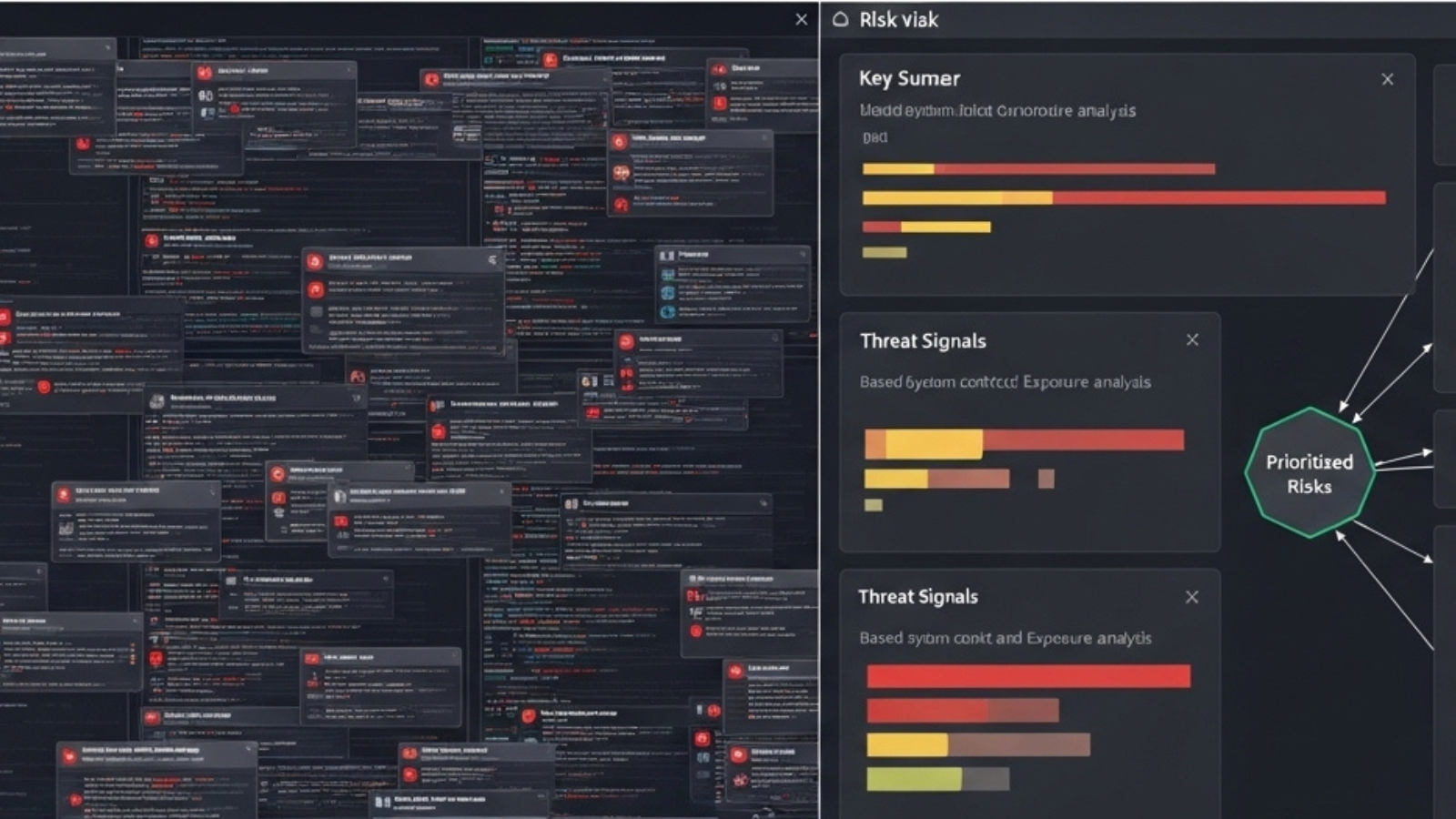
The most dangerous vulnerabilities today are often not the most severe ones but the ones hidden among hundreds of irrelevant alerts.

Why False Positives Are Exploding Now

1. Attack Surfaces Have Grown Faster Than Tooling

Modern environments include:

  • Microservices
  • APIs
  • Cloud resources
  • Ephemeral infrastructure
  • Third-party integrations

Security tools scan broadly but lack context. They detect patterns, not exposure.

The result:

  • Findings that are technically valid
  • But practically unreachable or irrelevant

Security teams are left sorting signal from static.

2. CVSS Scores Are Being Misused by False Positives

CVSS was designed to describe severity not risk.

Yet many organizations still prioritize remediation purely by:

  • Critical
  • High
  • Medium

Without considering:

  • Exploitability
  • Exposure
  • Business impact
  • Compensating controls

This leads teams to spend weeks fixing “critical” issues that pose no real threat while exploitable paths remain open.

3. Automation Increased Volume Without Improving Judgment

Automation made scanning faster. It didn’t make it smarter.

Modern pipelines can generate:

  • Thousands of findings per week
  • Repeated alerts for the same issue
  • Findings on unused or deprecated assets

Without intelligent filtering, automation amplifies noise faster than teams can respond.

Alert Fatigue Is Now a Security Vulnerability

Security fatigue isn’t hypothetical it’s measurable.

When teams experience:

  • Constant false alarms
  • No clear prioritization
  • Repetitive findings

They begin to:

  • Delay response
  • Deprioritize security tickets
  • Accept risk by default

This isn’t negligence it’s human adaptation.

At a certain point, false positives don’t just waste time.
They lower the probability of responding correctly when it actually matters.

Why Engineers Stop Trusting Security Tools

Engineering teams want to ship software. When security tools:

  • Block builds unnecessarily
  • Flag irrelevant issues
  • Lack clear remediation guidance

Security becomes friction not protection.

Over time:

  • Engineers bypass controls
  • Exceptions become the norm
  • Security loses influence

False positives don’t just waste engineering time they undermine security culture.

Context Is the Missing Layer

Modern security failures are rarely about unknown vulnerabilities. They’re about misjudged risk.

Context answers questions scanners can’t:

  • Is the asset exposed?
  • Is it reachable externally?
  • Is the vulnerable path actually executable?
  • Does this affect critical business flows?

Without context, every alert looks urgent.
With context, most alerts disappear.

How Leading Teams Are Reducing False-Positive Risk

1. Moving From Vulnerability Counts to Risk Scenarios

Instead of asking:

“How many vulnerabilities do we have?”

Teams ask:

“Which attack paths actually matter?”

This shifts focus from individual findings to real exploit chains.

2. Prioritizing Exposure Over Severity

High-severity vulnerabilities in non-exposed systems are often ignored correctly.

Teams now prioritize:

  • Internet-facing assets
  • Privileged services
  • Authentication and authorization flaws
  • Business logic weaknesses

This dramatically reduces remediation backlog while increasing real security.

3. Tuning Tools Aggressively

Modern security teams treat tooling like code:

  • Alerts are tuned
  • Rules are refined
  • Noisy checks are disabled

The goal is not coverage it’s confidence.

4. Embedding Security Into CI/CD With Guardrails

Instead of blocking everything, teams:

  • Gate only high-confidence issues
  • Surface others as advisory
  • Require justification for accepted risk

This preserves velocity while protecting critical paths.

Why Fewer Alerts Lead to Better Security

Counterintuitive but true:
Less alerting often means better outcomes.

When teams trust alerts:

  • Response is faster
  • Fix quality improves
  • Accountability increases

Security becomes actionable instead of theoretical.

Risk Acceptance Is Becoming a Leadership Decision

Another major shift: accepted risk is no longer buried in tickets.

Executives and product leaders are now:

  • Reviewing risk tradeoffs
  • Approving exceptions
  • Owning exposure decisions

False positives force leadership to engage in noise.
Reducing them allows leadership to focus on real threats.

The Dangerous Middle Ground

The riskiest posture today is not weak security. It’s over-alerting with low trust.

These organizations:

  • Scan constantly
  • Fix little
  • Assume coverage equals safety

When breaches happen, the question isn’t “Why didn’t we scan?”
It’s “Why didn’t we see this coming?”

The answer is almost always buried in ignored alerts.

What Modern Security Programs Optimize For

The most effective teams in 2026 optimize for:

  • Signal quality
  • Response speed
  • Contextual risk reduction
  • Organizational trust

They understand that security is a decision system, not a detection system.For details Contact Us

Why Performance Marketing Alone Can’t Build Growth Anymore

Introduction: The Performance Marketing Illusion

For over a decade, performance marketing was treated as the growth engine. If you could track clicks, attribute conversions, and optimize bids, growth felt predictable. Spend more, get more. Scale followed spreadsheets.

That model is breaking.

In 2026, performance marketing still matters but on its own, it no longer builds durable growth. Many companies are spending aggressively, optimizing endlessly, and still stalling. CAC rises, attribution weakens, and returns flatten.

The issue isn’t execution.
It’s overreliance.

Performance marketing has become a powerful amplifier but an increasingly poor foundation.

Why Performance Marketing Stopped Being Enough

1. Attribution Is No Longer Reliable

The promise of performance marketing was precision. That promise is gone.

Today’s reality:

  • Cookie loss and privacy restrictions
  • Modeled and delayed conversions
  • Platform-reported metrics that can’t be audited
  • Fragmented customer journeys

Teams still optimize but they optimize imperfect signals. Decisions feel data-driven, yet outcomes drift.

When attribution weakens, performance marketing loses its ability to guide strategy.

2. Performance Optimizes Demand It Doesn’t Create It

Performance marketing captures existing intent. It doesn’t generate trust, preference, or memory.

This leads to a ceiling effect:

  • Early gains are strong
  • Scaling becomes expensive
  • Incremental spend produces diminishing returns

Once you’ve exhausted high-intent demand, performance marketing starts competing for the same audiences at higher cost.

Growth stalls not because ads stopped working but because brand stopped compounding.

3. CAC Inflation Is Structural, Not Tactical

Rising acquisition costs aren’t caused by bad campaigns.

They’re caused by:

  • Platform competition
  • Audience saturation
  • Algorithmic bidding wars
  • Short-term optimization loops

Even well-run performance programs now face structural CAC pressure.

This means:

You can optimize performance but you can’t optimize your way out of economics.

What Performance Marketing Does Well and What It Doesn’t

Performance marketing is excellent at:

  • Capturing demand
  • Testing offers
  • Scaling proven messages
  • Driving short-term revenue

It struggles with:

  • Building trust
  • Creating differentiation
  • Increasing pricing power
  • Improving retention
  • Reducing long-term acquisition cost

Growth requires all of these.

Performance alone delivers none of them sustainably.

The Shift: Growth Is Becoming Brand-Led Again

This doesn’t mean returning to vague brand campaigns or awareness for awareness’ sake.

Modern brand-led growth looks different:

  • Clear positioning
  • Consistent narrative
  • Product-aligned messaging
  • Thought leadership
  • Trust built across touchpoints

Brand is no longer a “top-of-funnel expense.”
It’s a conversion multiplier.

Brands with strong memory and trust:

  • Convert better
  • Retain longer
  • Pay less for traffic
  • Close faster

Performance marketing works better when brand does its job.

Retention Is Overtaking Acquisition as the Growth Lever

One of the biggest shifts in 2026 is where growth comes from.

More companies are realizing:

  • Fixing churn beats scaling spend
  • Improving onboarding beats more leads
  • Lifecycle optimization beats funnel expansion

Performance marketing is optimized for acquisition.
Growth today is increasingly post-conversion.

Without strong retention, performance marketing becomes a leaky bucket.

Why Product and Brand Are Now Growth Channels

In high-performing companies:

  • Product experience reinforces brand promise
  • Onboarding teaches value quickly
  • Messaging matches reality
  • Support becomes part of positioning

This alignment creates:

  • Word-of-mouth
  • Organic inbound
  • Lower paid dependency

Performance marketing cannot compensate for weak product-brand alignment.

The Rise of Thought Leadership and Credibility-Driven Growth

In B2B and services markets especially, growth is being driven by:

  • Expertise visibility
  • Founder-led content
  • Credible opinions
  • Clear POVs

Buyers trust brands that teach them something, not just retarget them.

Performance ads increasingly act as reinforcement not discovery.

Performance Marketing Without Brand Creates Fragile Growth

Companies built purely on Marketing often share the same symptoms:

  • Constant budget pressure
  • Inconsistent demand
  • Heavy discounting
  • Weak loyalty
  • High churn

Growth depends on constant spend.

The moment budgets tighten, growth collapses.

That’s not growth. That’s dependency.

What Balanced Growth Looks Like in 2026

High-performing organizations now structure growth like this:

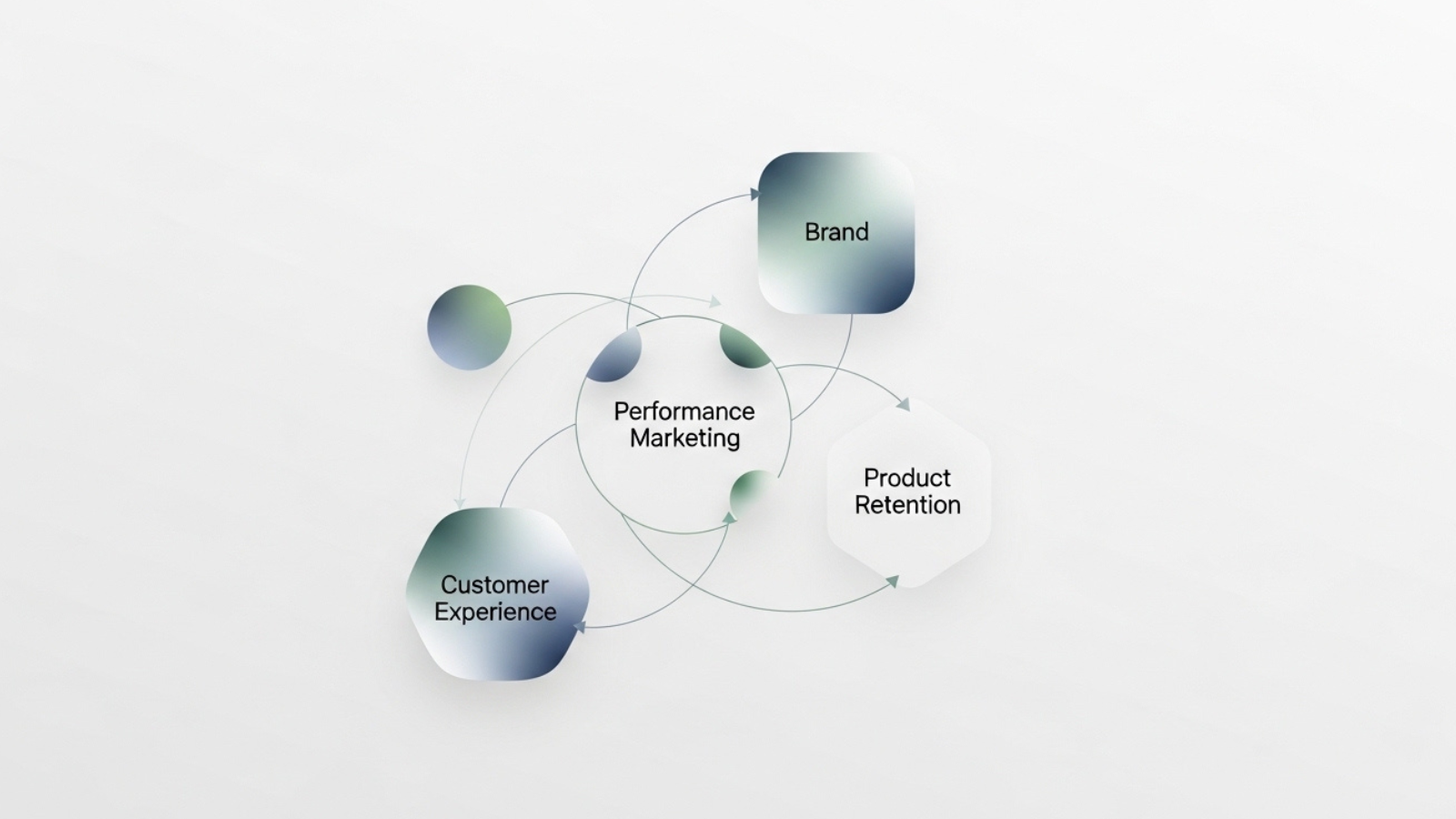
  • Brand creates trust, memory, and differentiation
  • Product delivers on the promise
  • Content & thought leadership build authority
  • Retention systems compound value
  • Performance marketing captures and scales demand

Marketing becomes a lever, not the engine.

How Leaders Should Rethink Growth Strategy

If you’re leading growth today, the questions have changed:

  • What do we stand for clearly?
  • Why should buyers remember us?
  • Where does trust come from in our funnel?
  • How much of our growth depends on paid spend?
  • What happens if ad costs double?

If the answers are uncomfortable, marketing is doing too much work.

The Hard Truth: Performance Marketing Is Easy to Start and Hard to Sustain

This thrives in early stages:

  • Clear ICP
  • Untapped demand
  • Cheap attention

As markets mature, growth shifts from efficiency to leverage.

Brand, retention, and trust create leverage.
Performance alone does not.

Final Thoughts: Performance Marketing Isn’t Dead It’s Just Not Enough

This still matters. It always will.

But in 2026, it is no longer a growth strategy on its own.

Growth today comes from:

  • Being remembered
  • Being trusted
  • Being clear
  • Being consistent

This works best when it amplifies these not when it replaces them.

The companies growing now aren’t spending the most.
They’re building brands that make every dollar work harder.

Performance marketing can scale growth.
Only brand can sustain it. For info Lets connect atContact Us

Reading Code Is Now More Important Than Writing It in 2026

Introduction: The Skill Developers Didn’t Prepare For

For decades, software engineering rewarded one visible skill above all others: writing code. The faster you could implement features, the more productive you appeared. Interviews focused on syntax, algorithms, and speed. Careers were built on output.

In 2026, that model is quietly breaking.

Developers are writing more code than ever but much of it is generated, assisted, or scaffolded by tools. What now separates strong engineers from average ones is not how quickly they can write code, but how well they can read, understand, evaluate, and reason about it.

Reading code has become the most important engineering skill and the least explicitly taught.

Why Writing Code Is No Longer the Bottleneck

AI-assisted development has fundamentally changed the economics of code creation.

Today:

  • Boilerplate is cheap
  • Syntax errors are rare
  • Code scaffolding is instant
  • Patterns are auto-suggested

The cost of writing code has dropped dramatically.

What hasn’t dropped is the cost of:

  • Understanding intent
  • Validating correctness
  • Assessing edge cases
  • Predicting downstream impact

As code volume increases, comprehension not creation becomes the limiting factor.

Most Developers Spend More Time Reading Than Writing

This has always been true but it’s now unavoidable.

A typical developer day includes:

  • Reviewing pull requests
  • Debugging unfamiliar code
  • Tracing production issues
  • Understanding legacy systems
  • Evaluating AI-generated suggestions

Writing new code often takes less time than understanding existing code well enough to change it safely.

In modern systems, progress depends on navigating complexity, not adding more of it.

AI Made Reading Skills Non-Optional

AI can generate plausible code extremely fast. What it cannot guarantee is:

  • Correct assumptions
  • Context awareness
  • Architectural consistency
  • Business rule accuracy

This shifts developer responsibility from author to editor, reviewer, and judge.

The new workflow looks like this:

  1. AI proposes code
  2. Human reads and validates
  3. Human decides what survives

Developers who can’t read code critically will ship bugs faster than ever.

Why Reading Code Is Harder Than It Sounds

1. Code Is Written for Machines, Not Humans

Many codebases optimize for execution, not clarity.

Common problems include:

  • Implicit behavior
  • Over-abstraction
  • Clever shortcuts
  • Framework magic

Reading such code requires patience, discipline, and systems thinking.

2. Context Is Rarely Local

In modern systems:

  • Logic is distributed
  • Behavior emerges from interactions
  • Changes ripple across services

Reading code now means reading across boundaries, not just files.

3. Legacy Code Isn’t Going Away

Most production code was written years ago, by people who are no longer there.

You cannot rewrite everything.
You must understand before you change.

Strong readers survive legacy systems. Weak readers break them.

Reading Code Is How Engineers Build Trust

Trust in software teams is built through predictability.

Predictability comes from:

  • Knowing what the code actually does
  • Understanding why it exists
  • Recognizing what might break

Engineers who read code well:

  • Review PRs effectively
  • Catch subtle bugs early
  • Reduce regressions
  • Improve team confidence

This is why senior engineers often write less code, but have more impact.

Code Reviews Are Now the Real Work

In many teams, code reviews have become the primary quality gate.

A good code review requires:

  • Understanding intent
  • Evaluating trade-offs
  • Spotting edge cases
  • Checking consistency with system design

These are reading skills, not writing skills.

Teams with poor readers rely on automated checks.
Teams with strong readers ship better software.

Debugging Is Advanced Code Reading

Debugging is not guessing. It’s forensic analysis.

It requires:

  • Tracing execution paths
  • Understanding state changes
  • Interpreting logs and metrics
  • Mapping symptoms to causes

None of this involves writing code until you understand what’s wrong.

The best debuggers are always the best readers.

Why Juniors Struggle and Seniors Don’t

Junior developers often:

  • Focus on making code “work”
  • Read only what they wrote
  • Avoid unfamiliar areas

Senior developers:

  • Read entire systems
  • Anticipate side effects
  • Spot design smells
  • Ask “what happens next?”

The gap is not intelligence it’s reading discipline and exposure.

Frameworks Made Reading More Important, Not Less

Modern frameworks abstract complexity but they don’t remove it.

They shift complexity into:

  • Configuration
  • Convention
  • Implicit behavior

Understanding a framework-heavy codebase requires reading:

  • Application code
  • Framework contracts
  • Configuration layers

Developers who only know “how to use” frameworks struggle to understand what’s actually happening.

What Strong Code Readers Do Differently

Strong readers:

  • Read code top-down and bottom-up
  • Follow data, not just control flow
  • Look for invariants and assumptions
  • Ask “why was this written this way?”
  • Slow down on critical sections

They treat code as a conversation, not a puzzle.

Why Simplicity Is the New Senior Skill

As reading becomes central, code quality is being redefined.

Readable code:

  • Uses boring patterns
  • Avoids clever tricks
  • Makes decisions explicit
  • Trades brevity for clarity

In AI-assisted development, clarity beats cleverness every time.

Engineers who write readable code are making a gift to future readers including themselves.

How Teams Can Adapt to This Shift

1. Teach Code Reading Explicitly

Most teams teach writing. Few teach reading.

Good practices include:

  • Walkthroughs of legacy systems
  • Shared debugging sessions
  • Reviewing “why” not just “what”

2. Reward Review Quality, Not Output Volume

Output metrics lie.

Recognize engineers who:

  • Improve clarity
  • Reduce complexity
  • Catch issues early
  • Raise the quality bar

3. Design for Readers First

When writing code, ask:

“Will someone understand this in six months?”

If the answer is no, rewrite it.

What This Means for Careers

In 2026, the most valuable engineers are not:

  • The fastest coders
  • The loudest contributors
  • The most framework-fluent

They are the ones who:

  • Understand systems deeply
  • Make fewer mistakes
  • Improve code they didn’t write
  • Reduce risk quietly

Reading code well is now a career accelerator.

Final Thoughts: Code Is Written Once, Read Forever

Writing code feels productive. Reading code feels slow.

But software systems don’t fail because code wasn’t written fast enough. They fail because code wasn’t understood well enough.

In an era of AI-assisted development, the skill that matters most is judgment and judgment is built through reading.

If writing code is how software is created,
reading code is how software survives.

The future belongs to developers who read carefully, think deeply, and change systems responsibly. For details Contact Us

Self-Healing Tests vs Root-Cause Intelligence: What Actually Improves Test Reliability

Introduction: Stability Isn’t the Same as Confidence

Over the last few years, self-healing tests have been marketed as the answer to flaky automation. Broken locators? Healed. Timing issues? Retried. UI changes? Adapted automatically.

At first, the results looked impressive. Pipelines got greener. Test failures dropped. Teams felt relief.

Then something uncomfortable happened: production bugs still escaped.

In 2026, many engineering teams are realizing a hard truth self-healing tests improve test stability, but they do not improve system understanding. And without understanding why failures happen, quality remains fragile.

This is where root-cause intelligence enters the picture.

What Self-Healing Tests Actually Do (and Don’t)

Self-healing tests are designed to adapt when something changes unexpectedly. They typically:

  • Auto-update UI locators
  • Retry failed steps
  • Adjust waits and timeouts
  • Mask transient failures

Their purpose is clear: reduce noise in automation pipelines.

And they succeed at that.

What they don’t do:

  • Explain why a test failed
  • Identify system instability
  • Detect architectural regressions
  • Surface hidden risk

Self-healing is reactive. It fixes symptoms, not causes.

Why Self-Healing Became Popular

The rise of self-healing tests wasn’t accidental.

They addressed real pain:

  • UI tests breaking on minor changes
  • Flaky pipelines blocking releases
  • High maintenance costs
  • QA teams overwhelmed by false failures

In fast-moving environments, self-healing felt like progress and in some ways, it was.

But over time, teams began confusing silence with reliability.

The Hidden Risk: Quietly Broken Signals

The biggest danger of self-healing tests is not what they break it’s what they hide.

When tests auto-heal:

  • Instability is masked
  • Regression signals are weakened
  • Failure patterns disappear
  • Engineers lose feedback loops

The pipeline stays green, but confidence erodes.

This creates what many teams now call “silent flakiness” systems that are unstable, but no longer visible through tests.

Root-Cause Intelligence: A Different Philosophy

Root-cause intelligence focuses on understanding, not suppression.

Instead of asking:

“How do we stop this test from failing?”

It asks:

“Why did this failure happen, and what does it tell us about the system?”

Root-cause intelligence uses:

  • Failure pattern analysis
  • Correlation across services
  • Change-impact detection
  • Signal classification (infra vs app vs test)

Its goal is not greener pipelines it’s better decisions.

Why Root-Cause Intelligence Matters More in 2026

Modern systems are:

  • Distributed
  • API-driven
  • Highly integrated
  • Continuously deployed

Failures rarely come from a single UI element. They come from:

  • Contract changes
  • Data inconsistencies
  • Environment drift
  • Dependency latency
  • Race conditions

Self-healing tests struggle in these environments because they operate too close to the surface.

Root-cause intelligence operates at the system level.

Self-Healing vs Root-Cause Intelligence: The Core Differences

Self-Healing Tests

  • Reactive
  • UI-focused
  • Symptom-oriented
  • Optimized for pipeline stability
  • Reduces visible failures

Root-Cause Intelligence

  • Proactive
  • System-focused
  • Cause-oriented
  • Optimized for confidence and learning
  • Reduces real defects

One keeps tests running.
The other keeps systems healthy.

Where Self-Healing Still Makes Sense

Self-healing is not useless. It just needs boundaries.

It works best when:

  • Used on low-risk UI paths
  • Applied to cosmetic or locator changes
  • Combined with strict reporting
  • Treated as noise reduction, not quality validation

Self-healing should buy time, not replace investigation.

Why Teams Are Shifting Toward Root-Cause Intelligence

Leading QA and platform teams are changing priorities because:

  • Green pipelines no longer equal safe releases
  • Flaky behavior reappears in production
  • Engineers distrust “auto-fixed” tests
  • AI-generated tests amplify noise without insight

Root-cause intelligence restores trust by making failures actionable.

How AI Changes This Equation

AI has made both sides stronger and more dangerous.

AI can:

  • Generate self-healing logic faster
  • Mask failures at scale
  • Create thousands of tests instantly

But AI can also:

  • Cluster failures
  • Detect anomalies
  • Trace change impact
  • Identify systemic risk

The difference is intent.

Using AI only for self-healing increases verification debt.
Using AI for root-cause intelligence increases organizational learning.

What Root-Cause-Driven Testing Looks Like in Practice

Teams adopting this approach focus on:

  • API and contract testing as the primary signal
  • Failure classification (test issue vs product issue)
  • Linking failures to recent code changes
  • Observability integration (logs, metrics, traces)
  • Reducing tests that don’t add signal

Tests are treated as sensors, not gatekeepers.

The Role Shift for Automation Engineers

This shift is changing roles dramatically.

Modern automation engineers are expected to:

  • Understand system architecture
  • Analyze failure patterns
  • Work closely with DevOps and SRE
  • Design signal-rich tests
  • Reduce test volume while increasing confidence

Click-level automation skills alone are no longer enough.

A Dangerous Middle Ground: Self-Healing Without Intelligence

The most risky setup today is:

  • Heavy self-healing
  • No failure analysis
  • No observability correlation
  • No test pruning

This creates the illusion of quality while increasing long-term risk.

Teams think they are stable until a major incident proves otherwise.

How to Balance Both Approaches

The right approach is not choosing one over the other it’s hierarchy.

A mature strategy looks like this:

  1. Root-cause intelligence as the foundation
  2. API and contract tests as primary signals
  3. Self-healing applied selectively to UI noise
  4. Human review for AI-generated changes
  5. Continuous pruning of low-value tests

Stability serves intelligence not the other way around.

Final Thoughts: Green Pipelines Are Not the Goal

Self-healing tests solve a visible problem.
Root-cause intelligence solves the real one.

In 2026, quality is no longer about how many tests pass it’s about how well failures teach you something.

Teams that chase silent stability will keep shipping surprises.
Teams that invest in understanding will ship with confidence.

Self-healing makes pipelines quieter.
Root-cause intelligence makes teams smarter.

And in modern software delivery, smart beats silent every time. For details Contact Us

10 Critical Reasons Smart Companies Are Hiring for Execution, Not Headcount

Introduction: The Hiring Mindset Has Fundamentally Changed

For years, hiring was treated as a growth signal. More people meant more momentum, more credibility, and more capacity. Headcount became a proxy for success.

In 2026, that mindset is gone.

Companies are still hiring but in a very different way. The focus has shifted from how many people we employ to what actually gets executed. Roles are approved not because teams are stretched, but because specific outcomes cannot be delivered without them.

This is not a temporary slowdown. It’s a structural change in how organizations grow.

The End of Headcount Driven Growth

The Traditional model was linear:

  • Work increases → hire more people
  • Complexity increases → add managers
  • Coordination slows → add processes

Over time, this led to:

  • Bloated teams
  • Rising costs without proportional output
  • Slower decision-making
  • Accountability dilution

Leadership teams have learned often the hard way that headcount growth does not guarantee execution capacity.

In fact, it often reduces it.

Execution Is Now the Scarce Resource

In 2026, most organizations don’t lack ideas, roadmaps, or strategies. They lack execution bandwidth.

Execution means:

  • Shipping working systems
  • Closing deals
  • Automating processes
  • Reducing operational friction
  • Delivering measurable outcomes

Hiring is now justified only when it clearly improves one of these.

If a role cannot be tied to execution, it doesn’t get approved.

AI Accelerated This Shift

AI didn’t eliminate jobs but it redefined leverage.

Tasks that once required entire teams can now be handled by:

  • Smaller, AI-augmented groups
  • Automated workflows
  • Integrated systems

This has changed the hiring question from:

“Do we need more people?”
to
“Can we execute this better with fewer, higher-impact people and better tools?”

The answer is increasingly yes.

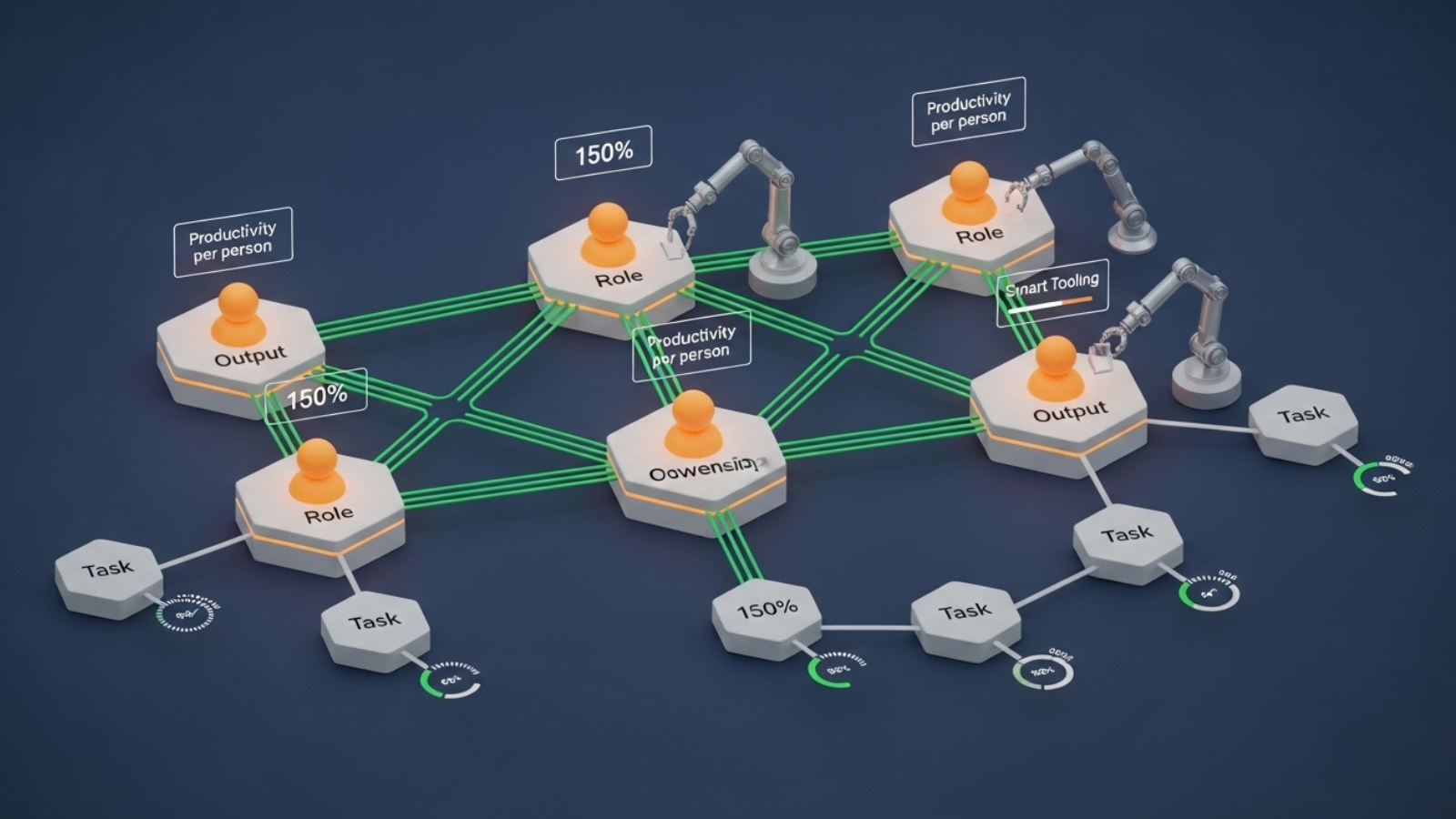
As a result, companies are hiring fewer people but expecting more ownership per role.

From Role Coverage to Outcome Ownership

Traditional model focused on role coverage:

  • Someone to manage
  • Someone to coordinate
  • Someone to support

Execution-driven hiring focuses on outcome ownership.

Modern job approvals answer:

  • What result will this person own?
  • What breaks if we don’t hire them?
  • How will success be measured in 90 days?

Roles without clear outcomes are quietly disappearing.

Why Generalist Roles Are Shrinking

Generalist roles thrived in growth-at-all-costs environments. In execution-focused organizations, they struggle.

Why?

  • Execution requires depth
  • Specialists unblock delivery faster
  • Clear ownership reduces handoffs

Companies now prefer:

  • Engineers who own systems
  • QAOps engineers who own quality pipelines
  • Marketers who own revenue outcomes
  • Consultants who own implementation

This doesn’t mean versatility is irrelevant but impact must be visible.

Hiring Is Now Tied Directly to ROI

In 2026, every hire competes with:

  • Automation
  • Process redesign
  • Internal upskilling

Leaders ask:

  • Is hiring the fastest path to impact?
  • Is it the most cost-effective option?
  • Can we upskill someone internally instead?

This financial discipline has made hiring deliberate and slower but far more effective.

Upskilling Is Replacing External Hiring

Many companies are executing more by transforming existing talent.

Examples include:

  • QA engineers becoming QAOps specialists
  • Developers learning AI-assisted workflows
  • Analysts moving into automation roles
  • Managers becoming hands-on operators

Upskilling:

  • Reduces ramp-up time
  • Lowers cultural risk
  • Preserves institutional knowledge

Execution improves without expanding headcount.

Why Managers Are Also Being Hired Differently

The shift to execution impacts leadership roles as well.

Companies are no longer hiring managers whose primary function is coordination. They want leaders who:

  • Can make decisions
  • Can remove blockers
  • Can deliver outcomes directly

In leaner organizations, managers are closer to the work. Execution-first hiring favors doers who can lead, not overseers who delegate.

Employer Branding Has Become an Execution Signal

In a selective hiring market, candidates evaluate companies as carefully as companies evaluate them.

High-impact candidates look for:

  • Clear expectations
  • Real ownership
  • Evidence of execution
  • Technical and operational maturity

Organizations that over-promise and under-deliver struggle to hire execution-oriented talent.

Employer branding now reflects how work actually gets done, not just culture slogans.

The New Hiring Questions Companies Ask

Execution-focused organizations consistently ask:

  • What business problem does this role solve?
  • How will we measure impact quickly?
  • What decisions will this person own?
  • How does this role scale with tools and automation?

If answers are vague, hiring stops.

What This Means for Candidates

For professionals, this shift raises the bar but also increases opportunity.

Execution-focused hiring rewards people who:

  • Own outcomes
  • Work independently
  • Leverage tools effectively
  • Communicate impact clearly

Job titles matter less than proof of execution.

Those who can show results move faster even in cautious markets.

What This Means for Leaders

If you’re leading a company in 2026, execution-based hiring requires:

  • Clear priorities
  • Honest assessment of bottlenecks
  • Willingness to say no to low-impact roles
  • Investment in tools and upskilling

The goal is not to be understaffed.
It’s to be over-leveraged.

Why This Model Is More Resilient

Execution-focused organizations:

  • Scale without bloat
  • Adapt faster to market shifts
  • Control costs more effectively
  • Maintain accountability

When conditions change, smaller, execution-oriented teams adjust faster than large, loosely aligned ones.

Final Thoughts: Execution Is the New Hiring Currency

Companies haven’t stopped hiring. They’ve stopped hiring by habit.

In 2026, hiring is no longer about:

  • Team size
  • Organizational optics
  • Future potential alone

It’s about what gets delivered.

Organizations that hire for execution build momentum with fewer people, less friction, and clearer accountability. Those that don’t will continue to grow teams without growing results.

The market has spoken:
Execution beats headcount. Every time. To Discuss more Contact Us

Why API-First Automation Is Transforming UI-Heavy Testing in 2026

Introduction: UI Automation Hit Its Limits

For years, UI automation was treated as the gold standard of test automation. If the test clicked buttons, filled forms, and mimicked real users, it was considered “end-to-end” and therefore valuable.

In 2026, that assumption no longer holds.

Modern software systems are faster, more distributed, and more complex than UI-heavy automation can reliably handle. As teams push for continuous delivery and faster feedback, UI-centric test suites are increasingly becoming a bottleneck rather than a safeguard.

This is why API-first automation is rapidly replacing UI-heavy testing as the backbone of modern quality strategies.

The Core Problem With UI-Heavy Automation

UI automation is not inherently bad. It’s just been overused and misapplied.

The common issues are well known:

  • Tests are slow
  • Tests are brittle
  • Minor UI changes break large test suites
  • Debugging failures is time-consuming
  • Pipelines become unstable

As applications adopt microservices, headless frontends, and dynamic UI frameworks, UI tests become increasingly fragile.

The result? Teams spend more time maintaining tests than validating quality.

Modern Applications Are API-Driven by Design

Most modern applications follow this architecture:

  • UI is a thin layer
  • Business logic lives in APIs
  • Data flows through services

In many systems, 90% of application behavior is driven by APIs, not the UI.

Testing only at the UI layer means:

  • You test logic indirectly
  • Failures are harder to diagnose
  • Coverage is shallow despite many tests

API-first automation aligns testing with where real logic lives.

What API-First Automation Actually Means

API-first automation does not mean “no UI tests.”

It means:

  • APIs are tested first and most thoroughly
  • UI tests are reduced to critical user flows
  • Business logic is validated directly
  • UI tests become confirmation layers, not primary defenses

This approach creates faster, more reliable, and more meaningful test coverage.

Why API Tests Are Faster and More Stable

1. Fewer Moving Parts

API tests don’t depend on:

  • Browsers
  • Rendering engines
  • Animations
  • Frontend timing issues

They run faster and fail for real reasons, not cosmetic ones.

2. Clearer Failure Signals

When an API test fails, you know:

  • Which service failed
  • Which endpoint
  • Which payload
  • Which validation broke

UI failures often require digging through logs, screenshots, and recordings just to understand what happened.

API-First Automation reduce diagnostic noise.

3. Earlier Feedback in the Pipeline

API tests can run:

  • On every commit
  • In parallel
  • Without heavy infrastructure

This enables true shift-left testing, catching defects before they reach the UI layer.

UI Automation Is Still Needed: Just Less of It

API-First Automation does not mean UI-free.

UI tests still matter for:

  • Critical user journeys
  • Visual regressions
  • Accessibility validation
  • Smoke testing production readiness

But instead of hundreds of UI tests, modern teams maintain:

  • A small, high-value UI suite
  • Focused on user confidence, not coverage numbers

This dramatically reduces flakiness and maintenance overhead.

The CI/CD Reality: Speed Beats Exhaustiveness

In continuous delivery environments, feedback speed matters more than exhaustive UI coverage.

API-first automation enables:

  • Faster pipelines
  • Predictable execution times
  • Reliable gating of releases

UI-heavy pipelines often become:

  • Slow
  • Unstable
  • Frequently bypassed

Once teams stop trusting pipelines, automation loses its value.

API-First Testing Fits QAOps and DevOps Models

As QA evolves into QAOps, automation is expected to:

  • Live inside CI/CD
  • Support observability
  • Enable rapid releases

API-First Automation testing fits naturally into this model:

  • APIs are stable integration points
  • Tests can be owned by teams
  • Automation aligns with service ownership

UI-heavy automation often sits outside these workflows, creating friction.

Contract Testing Strengthens API-First Strategies

Modern API-first approaches often include:

  • Contract testing
  • Schema validation
  • Consumer-driven tests

This ensures:

  • Services don’t break downstream consumers
  • Changes are validated before deployment
  • Teams can move independently

UI tests cannot provide this level of service-to-service confidence.

Cost Is Becoming Impossible to Ignore

UI automation is expensive:

  • Infrastructure costs
  • Maintenance time
  • Debugging effort

API tests are cheaper to:

  • Write
  • Run
  • Maintain

In an environment where automation ROI is scrutinized, API-first testing consistently delivers better cost-to-confidence ratios.

Why Teams Are Actively Reducing UI Test Suites

Across industries, teams are:

  • Deleting redundant UI tests
  • Migrating logic validation to APIs
  • Keeping only high-impact UI coverage

This is not a trend—it’s a correction.

Teams learned that:

More UI tests ≠ better quality

Better test design does.

Common Mistakes When Adopting API-First Automation

1. Treating APIs as Implementation Details

API tests should validate behavior and contracts, not internal logic.

Over-coupled tests create fragility.

2. Ignoring Data Management

API tests require:

  • Controlled test data
  • Isolated environments
  • Predictable states

Without this, API tests become flaky too.

3. Eliminating UI Tests Completely

Removing all UI tests creates blind spots.

Balance matters.

How to Transition From UI-Heavy to API-First

A practical approach:

  1. Identify business-critical flows
  2. Move logic validation to API tests
  3. Reduce UI tests to core journeys
  4. Introduce contract testing
  5. Measure pipeline stability and speed

The goal is confidence, not coverage metrics.

What This Means for Automation Engineers

The role is changing.

Automation engineers now need:

  • Strong API testing skills
  • Understanding of system architecture
  • CI/CD integration experience
  • Data and environment management expertise

Click-based automation alone is no longer enough.

Final Thoughts: Quality Lives Below the UI

UI automation made sense when applications were monoliths. Modern systems are not.

In 2026, quality is built:

  • At the service layer
  • At integration points
  • Inside pipelines

API-first automation reflects how software is actually built and deployed today.

UI testing still plays a role but it’s no longer the foundation.

The teams that succeed are those that stop testing appearances and start testing behavior. For More Details Contact Us

AI Is No Longer Innovation, It’s Infrastructure

Introduction: The AI Conversation is Fundamentally Transforming

For the last decade, artificial intelligence lived in the “innovation” bucket. It was explored through pilots, labs, proofs of concept, and experimental teams. Success was measured in demos, not durability.

That era is over.

In 2026, AI is no longer treated as a differentiator you experiment with. It is treated as infrastructure something organizations depend on daily, much like cloud computing, networking, or databases. Companies are no longer asking “Should we use AI?” They are asking:

“How do we run the business without it?”

This shift changes everything: investment models, governance, architecture, talent, and leadership accountability.

What It Means When AI Becomes Infrastructure

Infrastructure has a very specific meaning in business:

  • It must be reliable
  • It must scale
  • It must be secure
  • It must be governed
  • It must work quietly in the background

Once AI crosses into this category, experimentation gives way to operational discipline.

AI infrastructure supports:

  • Decision-making systems
  • Customer interactions
  • Risk assessment
  • Automation at scale
  • Revenue and cost efficiency

Failure is no longer an inconvenience it’s a business risk.

Why the Innovation Framing No Longer Works

1. AI Is Embedded Across Core Operations

AI is no longer isolated to R&D teams.

In most organizations today, AI already influences:

  • Marketing performance and personalization
  • Customer support and service automation
  • Fraud detection and risk scoring
  • Demand forecasting and pricing
  • Software development and testing

When AI touches core workflows, it stops being optional. Innovation budgets are discretionary. Infrastructure budgets are not.

2. Business Dependence Changes the Risk Profile

When AI systems fail, consequences are immediate:

  • Incorrect decisions
  • Operational disruption
  • Customer trust erosion
  • Regulatory exposure

This forces organizations to treat AI like any other critical system with redundancy, monitoring, and controls.

Innovation tolerates failure. Infrastructure cannot.

3. AI Delivers Ongoing Value, Not One-Time Breakthroughs

Innovation is often about breakthroughs. Infrastructure is about continuous utility.

AI delivers value incrementally:

  • Faster processes
  • Better decisions
  • Lower costs
  • Higher consistency

This aligns AI spend with operational budgets, not experimental funding.

The Market Shift: From Pilots to Production

Across industries, a clear pattern has emerged:

  • Fewer AI pilots
  • Fewer innovation showcases
  • More production-grade systems

Organizations are standardizing:

  • AI platforms
  • Data pipelines
  • Model lifecycle management
  • Governance frameworks

This industrialization of AI is the strongest signal that it has become infrastructure.

AI Infrastructure Requires Different Leadership Thinking

From “Championing Innovation” to “Owning Outcomes”

When AI was experimental, leadership roles focused on:

  • Sponsorship
  • Vision
  • Advocacy

Now, leadership is expected to:

  • Ensure uptime
  • Manage risk
  • Prove ROI
  • Guarantee compliance

This shifts accountability from innovation teams to core business leadership.

From Speed to Stability

Early AI adoption rewarded speed. Infrastructure rewards stability.

Organizations are prioritizing:

  • Explainability over novelty
  • Predictability over maximum accuracy
  • Governed deployment over rapid experimentation

The fastest AI is no longer the best AI. The most reliable AI is.

Data Becomes a Supply Chain, Not an Asset

Once AI becomes infrastructure, data stops being “fuel” and starts being a supply chain.

This introduces new priorities:

  • Data quality over data volume
  • Lineage and traceability
  • Consent and lawful use
  • Controlled access

Weak data foundations cripple AI infrastructure just as faulty power grids cripple cities.

Governance Is No Longer Optional

Infrastructure is regulated by nature.

As AI becomes foundational, regulators and boards expect:

  • Clear accountability
  • Auditable decision logic
  • Risk controls
  • Human oversight

Governance is no longer about slowing AI down it’s about making it safe to depend on.

Organizations that ignore this reality face:

  • Regulatory intervention
  • Forced shutdowns
  • Reputational damage

The Economic Signal: AI Spend Is Moving to Core Budgets

One of the clearest market indicators is financial.

In 2026:

  • AI spend is moving from innovation budgets to operational expenditure
  • CFOs are involved in AI prioritization
  • ROI expectations mirror other infrastructure investments

This reframes AI from “growth option” to business necessity.

Infrastructure Thinking Changes Architecture

Platform Over Point Solutions

Infrastructure demands standardization.

Organizations are consolidating:

  • AI tooling
  • Model platforms
  • Data environments

This reduces fragmentation and increases reliability.

Integration Over Isolation

AI infrastructure must integrate with:

  • Existing systems
  • Business workflows
  • Security and compliance frameworks

Isolated AI solutions create fragility. Integrated systems create resilience.

Talent Expectations Are Changing

When AI was innovation, organizations hired:

  • Researchers
  • Specialists
  • Experimenters

As infrastructure, they need:

  • Engineers
  • Platform architects
  • Risk and governance experts
  • Operators

The talent mix shifts from discovery to delivery and maintenance.

Why Some Organizations Are Struggling

Companies that still treat AI as innovation often face:

  • Pilot fatigue
  • Fragmented solutions
  • Inconsistent value
  • Regulatory surprises

They invest heavily but fail to scale because infrastructure thinking was never applied.

What Treating AI as Infrastructure Enables

Organizations that make the shift gain:

  • Predictable performance
  • Faster enterprise-wide adoption
  • Lower long-term costs
  • Easier compliance
  • Stronger trust with customers and regulators

AI stops being a conversation starter and becomes a business enabler.

What Leaders Must Do Differently in 2026

To treat AI as infrastructure, leaders must:

  1. Anchor AI to business-critical processes
  2. Fund AI as a long-term capability
  3. Invest in data and governance early
  4. Demand reliability, not demos
  5. Hold teams accountable for outcomes

This is not less ambitious it’s more serious.

Final Thoughts: Infrastructure Is the Highest Form of Maturity

Calling AI “infrastructure” is not a downgrade. It’s a recognition of success.

Infrastructure is what businesses rely on when they cannot afford failure. AI has reached that point.

In 2026, the most competitive organizations are not those experimenting the most—but those operationalizing AI responsibly, reliably, and at scale.

AI is no longer innovation.
It’s the backbone of modern business.

And like all infrastructure, it rewards discipline far more than excitement. lets’ Discuss at Contact Us

Marketing Platforms Compared on First-Party Data Readiness (2026 Guide)

Introduction: First-Party Data Is No Longer Optional

For years, marketing platforms differentiated themselves through features: automation, AI, dashboards, and channel integrations. In 2026, that differentiation has collapsed.

Most platforms now look similar on the surface.

What actually separates winners from laggards today is first-party data readiness the ability to collect, process, activate, and govern customer data without relying on third-party tracking.

With cookies disappearing, attribution weakening, and privacy enforcement tightening, marketing teams are being forced to rethink their platforms from a data ownership perspective. The question is no longer which tool has more features, but:

Which platform gives us control over our data and lets us use it safely and effectively?

This blog breaks down how modern marketing platforms compare when evaluated through that lens.

What “First-Party Data Readiness” Really Means

Before comparing platforms, it’s important to define the criteria. First-party data readiness is not a single feature it’s a capability stack.

A first-party-ready marketing platform must support:

  1. Direct data collection from owned channels
  2. Consent-aware data handling
  3. Centralized customer profiles
  4. Activation across paid, owned, and earned channels
  5. Server-side and privacy-safe tracking
  6. Clear data ownership and portability

Many platforms claim readiness. Few deliver it end-to-end.

Why First-Party Data Is the New Performance Foundation

The shift toward first-party data isn’t philosophical it’s forced by reality.

Key drivers include:

  • Loss of third-party cookies
  • Platform-level tracking restrictions
  • Modeled and delayed attribution
  • Regulatory scrutiny (GDPR, AI usage, consent UX)

Performance marketing now depends on how well platforms handle what you own, not what they can infer.

As a result, marketing platform comparisons have fundamentally changed.

Category 1: All-in-One Marketing Platforms (CRM-Centric)

Strengths

All-in-one platforms typically combine:

  • CRM
  • Marketing automation
  • Email and messaging
  • Lead tracking
  • Basic analytics

First-party data advantage:
These platforms naturally excel at data collection and ownership. They ingest data directly from:

  • Forms
  • Emails
  • Landing pages
  • CRM interactions

They offer:

  • Persistent customer profiles
  • Built-in consent handling
  • Strong identity resolution

Weaknesses

  • Limited flexibility for advanced data modeling
  • Paid media activation often depends on external connectors
  • Less control over raw event data

Best for

  • SMBs and mid-market teams
  • B2B marketing
  • Organizations prioritizing ownership over experimentation

Verdict:
Strong first-party foundations, but limited customization at scale.

Category 2: Customer Data Platforms (CDPs)

Strengths

CDPs are built specifically for first-party data.

They excel at:

  • Centralizing data from multiple sources
  • Identity resolution across devices and channels
  • Consent-aware data processing
  • Feeding clean data into downstream tools

They provide:

  • High data transparency
  • Strong governance controls
  • Advanced segmentation

Weaknesses

  • Not execution tools on their own
  • Require integration with ad platforms, CRMs, and marketing tools
  • Can be expensive and complex

Best for

  • Data-mature organizations
  • Multi-channel marketing teams
  • Enterprises with fragmented data stacks

Verdict:
Best-in-class for data control, but only valuable if activation is well integrated.

Category 3: Performance Marketing Platforms

Strengths

Traditionally optimized for:

  • Paid media execution
  • Attribution modeling
  • Campaign optimization

Some platforms are evolving to support:

  • Server-side tracking
  • First-party signal ingestion
  • CRM integrations

Weaknesses

  • Often depend heavily on platform APIs
  • Limited control over how data is stored or reused
  • First-party data is frequently treated as an input not an asset

Best for

  • Paid-media-heavy teams
  • Short-term optimization focus

Verdict:
Improving, but still secondary players in first-party data strategy.

Category 4: Analytics-First Platforms

Strengths

Analytics platforms have become central to first-party strategies.

They provide:

  • Event-level data capture
  • Server-side tracking support
  • Flexible data schemas
  • Integration with warehouses

These platforms shine at:

  • Data accuracy
  • Transparency
  • Custom analysis

Weaknesses

  • Limited native activation
  • Require technical setup
  • Not marketer-friendly out of the box

Best for

  • Product-led companies
  • Data-driven growth teams
  • Organizations with engineering support

Verdict:
Excellent for data collection and insight activation still requires additional tooling.

Category 5: AI-Driven Marketing Platforms

Strengths

AI-first platforms promise:

  • Automated personalization
  • Predictive segmentation
  • AI-driven recommendations

Some support:

  • First-party data ingestion
  • Behavior-based modeling

Weaknesses

  • Often opaque about how data is processed
  • Risk of training on customer data without clarity
  • Weak consent and governance tooling

Best for

  • Experimentation-focused teams
  • Use cases with low compliance risk

Verdict:
Powerful but risky if data governance is unclear.

Key Comparison Criteria That Matter in 2026

1. Data Ownership

Ask:

  • Can you export raw data easily?
  • Is data stored in a vendor-controlled format?
  • What happens if you leave the platform?

Ownership is non-negotiable.

2. Consent & Privacy Controls

Modern platforms must:

  • Respect consent across channels
  • Allow granular control
  • Support regional compliance

If privacy is bolted on, it will fail under scrutiny.

3. Server-Side & Event-Based Tracking

Client-side tracking is unreliable.

Platforms must support:

  • Server-side event ingestion
  • Custom events
  • Durable identifiers

Without this, first-party data remains fragile.

4. Activation Without Lock-In

First-party data is useless if it can’t be activated flexibly.

Look for:

  • Clean integrations
  • API access
  • Multi-channel activation

Avoid platforms that trap data inside proprietary workflows.

Why Many Tool Comparisons Miss the Point

Most comparison blogs focus on:

  • Feature lists
  • Pricing tiers
  • UI screenshots

In 2026, these factors matter far less than data posture.

Two platforms may look identical on the surface, but:

  • One gives you long-term control
  • The other creates hidden dependency

That difference determines future scalability.

The Strategic Trade-Off: Simplicity vs Control

There is no universal “best” platform.

Instead, there is a trade-off:

  • Simplicity: All-in-one tools, faster setup, less flexibility
  • Control: CDPs + analytics + activation stack, more complexity

Smart organizations choose based on:

  • Data maturity
  • Compliance exposure
  • Internal capabilities

The wrong choice isn’t complexity or simplicity it’s misalignment.

What Smart Buyers Are Doing Differently

In 2026, experienced buyers:

  • Audit data flows before choosing tools
  • Map consent and ownership explicitly
  • Prioritize portability over convenience
  • Reduce platform dependency

They treat marketing platforms as infrastructure decisions, not feature purchases.

Final Thoughts: First-Party Readiness Is the New Differentiator

Marketing platforms are converging in features but diverging in data philosophy.

The platforms that win in the next decade will be those that:

  • Respect data ownership
  • Enable privacy-by-design
  • Support flexible activation
  • Integrate cleanly into broader ecosystems

Choosing a platform without evaluating first-party data readiness is no longer a tactical mistake it’s a strategic risk.

In 2026, marketing performance is built on what you own, not what you borrow. For more details Contact Us

Why Digital Transformation Is About Execution, Not Vision in 2026

Introduction: The Vision Era Is Over

For years, digital transformation was sold as a vision problem. Companies hired consultants to define a “future state,” design roadmaps, and align leadership around bold ambitions. Slide decks flourished. Execution lagged.

In 2026, patience has run out.

Boards, CFOs, and CEOs are no longer impressed by transformation narratives. They want working systems, measurable outcomes, and operational change. Vision still matters but without execution, it’s meaningless.

Digital transformation has crossed a line. It’s no longer about where you want to go. It’s about what you actually deliver.

How Digital Transformation Lost Credibility

The term “digital transformation” didn’t fail because the idea was wrong. It failed because execution didn’t follow intent.

Common failure patterns included:

  • Multi-year roadmaps with no short-term wins
  • Tool-first initiatives without process redesign
  • Strategy decks disconnected from operational reality
  • Transformation offices producing reports instead of results

Organizations invested heavily in planning but underinvested in doing. Over time, transformation became synonymous with delay, disruption, and sunk cost.

That reputation change is why execution now dominates the conversation.

The Reality Check in 2026: Outcomes or Nothing

Today’s digital transformation buyers ask different questions:

  • What will change in the next 90 days?
  • Which process becomes faster or cheaper?
  • Where does revenue increase or cost reduce?
  • Who owns delivery not just direction?

If these questions can’t be answered clearly, funding doesn’t get approved.

Digital transformation is now judged by outcomes, not intent.

Why Vision Alone No Longer Moves the Needle

1. Vision Doesn’t Fix Broken Processes

Many organizations discovered that their biggest blockers weren’t technology they were:

  • Fragmented workflows
  • Manual handoffs
  • Poor data quality
  • Undefined ownership

A compelling vision doesn’t fix these issues. Only execution does.

Digital Transformation now starts with:

  • Process mapping
  • Bottleneck removal
  • Automation where it actually matters

Vision without operational change is noise.

2. Tools Don’t Transform Businesses Implementation Does

For years, transformation was equated with tool adoption:

  • New CRM
  • New ERP
  • New analytics platform

But installing software without changing how people work produces little value.

In 2026, leaders understand:

Buying technology is easy. Making it work is hard.

Execution means:

  • Configuring systems to real workflows
  • Integrating data properly
  • Training teams for adoption
  • Measuring real usage and impact

Without this, transformation stalls no matter how modern the stack looks.

3. AI Accelerated the Need for Execution

AI changed expectations dramatically.

AI can:

  • Automate tasks quickly
  • Deliver value fast
  • Expose inefficiencies immediately

This leaves no room for abstract planning cycles.

When AI initiatives fail, it’s rarely because the vision was unclear. It’s because:

  • Data wasn’t ready
  • Processes weren’t defined
  • Governance wasn’t in place
  • Teams weren’t enabled

AI makes execution gaps visible fast.

Transformation Is Becoming Finance-Led

Another major shift: CFOs are now deeply involved in transformation decisions.

Why?

  • Budgets are tighter
  • ROI expectations are clearer
  • Transformation is seen as an investment, not an experiment

This changes the conversation from:

“What could we become?”
to
“What will this deliver, and when?”

Execution-focused transformations:

  • Release funding in stages
  • Tie progress to metrics
  • Shut down initiatives that don’t perform

This discipline forces realism and rewards teams that deliver.

What Execution-First Transformation Looks Like

1. Small, Measurable Wins

Instead of grand launches, execution-led programs focus on:

  • Narrow use cases
  • Clear success criteria
  • Fast delivery cycles

These wins build momentum and credibility.

2. Cross-Functional Ownership

Execution fails when transformation is owned by a single department.

Successful programs involve:

  • IT and operations
  • Business and finance
  • Legal and compliance
  • Frontline users

Transformation happens where work actually happens, not in steering committees.

3. Embedded Change Management

Execution-first transformations assume resistance.

They plan for:

  • Training
  • Adoption tracking
  • Feedback loops
  • Iterative improvement

People don’t resist change they resist poorly executed change.

4. Real Accountability

In 2026, transformation leaders are expected to:

  • Own delivery timelines
  • Report on outcomes, not activities
  • Take responsibility when things don’t work

Execution demands accountability. Vision often avoids it.

Why Consulting Is Being Redefined

This shift is radically changing consulting expectations.

Clients no longer want:

  • High-level recommendations only
  • Generic frameworks
  • Slide-heavy engagements

They want partners who can:

  • Design and build
  • Integrate systems
  • Automate workflows
  • Stay accountable for outcomes

Consultants who can’t execute are being sidelined regardless of brand.

Legacy Modernization Proves the Point

Nothing highlights the execution gap more than legacy systems.

Most organizations already know:

  • What systems need to change
  • Why modernization matters

What they struggle with is doing it without disrupting operations.

Execution-first transformation:

  • Prioritizes stability
  • Phases change intelligently
  • Modernizes incrementally

Vision identified the problem. Execution solves it.

What This Means for Leaders

If you’re leading a transformation in 2026, the playbook is clear:

  • Start with execution constraints, not ambition
  • Tie initiatives to measurable outcomes
  • Demand working solutions not just plans
  • Invest in adoption, not just technology
  • Choose partners who deliver, not just advise

Transformation success now depends on operational discipline.

Final Thoughts: Vision Still Matters But Only After Execution

Vision isn’t dead. It’s just no longer the headline act.

In 2026, digital transformation succeeds when:

  • Vision sets direction
  • Execution creates value

Organizations that understand this distinction move faster, waste less, and build trust internally and externally.

Those that don’t will continue to talk about transformation while competitors quietly deliver it.

Digital transformation isn’t about imagining the future anymore.
It’s about building it one executed decision at a time. For more details Contact Us

How AI Adoption Is Transforming Data Privacy Playbooks in 2026

Introduction: AI Broke the Old Privacy Model

For years, data privacy programs were built around relatively stable systems: databases, applications, user inputs, and clearly defined processing purposes. Compliance focused on documentation, access control, and breach response.

AI changed that.

In 2026, It is no longer a standalone experiment. It is embedded across marketing, customer support, product development, analytics, HR, and decision-making systems. As a result, traditional privacy frameworks are no longer sufficient.

It doesn’t just process data differently it changes what data is used, how it is interpreted, and how long its influence persists. That reality is forcing organizations to rethink privacy from the ground up.

Why Traditional Privacy Frameworks Are Failing

1. AI Uses Data Indirectly, Not Just Explicitly

Classic privacy models assumed a direct relationship:

  • Data collected → Data processed → Outcome delivered

Artificial Intelligence break this chain.

Artificial Intelligence:

  • Learns patterns from historical data
  • Infers new information not explicitly provided
  • Makes probabilistic decisions
  • Applies learning across future interactions

This means organizations may impact users without actively processing their data again a scenario many existing privacy policies never anticipated.

2. Training Data Creates Long-Term Risk

In traditional systems, deleting data often ended the risk.

With AI, that’s no longer true.

Once personal or sensitive data influences:

  • Model weights
  • Behavioral patterns
  • Decision logic

The impact can persist long after the original data is deleted.

This raises hard questions regulators are now asking:

  • Can models “forget” data?
  • How do you honor deletion requests?
  • What constitutes ongoing processing?

Old answers no longer work.

3. Artificial Intelligence Blurs the Line Between Data Use and Profiling

Many systems perform advanced profiling by default:

  • Behavioral prediction
  • Risk scoring
  • Personalization
  • Automated recommendations

Under modern regulations, this often triggers:

  • Higher consent thresholds
  • Transparency obligations
  • User rights around automated decision-making

Organizations using tools even third-party ones are increasingly responsible for explaining how decisions are made, not just that data is processed.

Regulators Are Shifting Focus Because of Artificial Intelligence

The regulatory response to it is not just new laws it’s how existing privacy laws are enforced.

In 2026, regulators are prioritizing:

  • Real-world data usage
  • Operational safeguards
  • Evidence of privacy-by-design
  • Accountability at leadership level

Artificial Intelligence has exposed the weakness of “paper compliance” policies that look good but don’t reflect reality.

Key Privacy Pressure Points Introduced by Artificial Intelligence

1. Data Minimization Is Now Critical

This systems often tempt teams to collect “as much data as possible” to improve performance.

That approach is now dangerous.

Regulators are asking:

  • Why is each data point necessary?
  • Could the system function with less data?
  • Is historical data still justified?

In AI-driven environments, data hoarding increases risk without guaranteed benefit.

2. Consent Becomes Harder to Justify

Obtaining valid consent for Artificial Intelligence use is more complex because:

  • Future uses may not be fully known
  • Models evolve over time
  • Secondary use is common

Vague or blanket consent no longer holds up.

Organizations must now:

  • Be precise about Artificial Intelligence purposes
  • Re-evaluate consent as systems evolve
  • Avoid bundling unrelated data uses

Artificial Intelligence forces consent to become dynamic, not one-time.

3. Third-Party Artificial Intelligence Tools Expand Your Risk Surface

Many companies don’t build Artificial Intelligence they integrate it.

That doesn’t reduce responsibility.

Using Artificial Intelligence platforms, APIs, or copilots introduces questions around:

  • Data sharing
  • Model training on customer data
  • Sub-processing chains
  • Cross-border transfers

In 2026, “the vendor handles it” is no longer a defensible privacy position.

Privacy-by-Design Is No Longer Optional

Artificial Intelligence’s adoption has accelerated the shift from reactive compliance to privacy-by-design.

This means:

  • Assessing privacy impact before Artificial Intelligence deployment
  • Limiting training data by default
  • Applying anonymization and pseudonymization
  • Designing models with explainability in mind

Privacy must be embedded at:

  • Architecture level
  • Model selection stage
  • Data pipeline design

Retrofitting controls after deployment is too late and increasingly penalized.

The New Data Privacy Playbook for Artificial Intelligence

1. Treat Artificial Intelligence Systems as Ongoing Processing Activities

Privacy assessments should no longer be “set and forget.”

Artificial Intelligence’s systems require:

  • Continuous monitoring
  • Periodic reassessment
  • Clear ownership

If the model evolves, the privacy assessment must evolve with it.

2. Separate Model Training from User Interaction Data

Where possible:

  • Avoid training on live customer data
  • Use synthetic or anonymized datasets
  • Strictly control feedback loops

This reduces long-term exposure and simplifies compliance obligations.

3. Strengthen Transparency Without Over-Promising

Organizations must explain Artificial Intelligence usage honestly:

  • What data is used
  • What decisions are automated
  • What safeguards exist

Over-simplification is risky. So is technical obfuscation.

Clear, accurate communication builds trust and reduces enforcement risk.

4. Assign Clear Accountability

Artificial Intelligence privacy failures are increasingly treated as governance failures.

Best-practice organizations:

  • Assign Artificial Intelligence oversight roles
  • Involve legal, security, and product teams early
  • Ensure leadership visibility

Artificial Intelligence privacy is no longer just a DPO concern. It’s an executive one.

What This Means for Businesses in 2026

Artificial Intelligence adoption is accelerating but so is scrutiny.

Organizations that:

  • Deploy Artificial Intelligence without privacy strategy
  • Rely on outdated consent models
  • Ignore training data implications

are accumulating regulatory and reputational risk.

Those that adapt their privacy playbook gain:

  • Faster Artificial Intelligence adoption with fewer blockers
  • Stronger user trust
  • Lower enforcement exposure
  • Better long-term scalability

Privacy maturity is becoming a competitive advantage.

Final Thoughts: Artificial Intelligence Forces Honesty in Privacy

Artificial Intelligence has removed the illusion that privacy can be managed through paperwork alone.

In 2026, data privacy is about:

  • How systems actually behave
  • How decisions are made
  • How long data influence persists
  • Who is accountable when things go wrong

Artificial Intelligence didn’t make privacy harder it made weak privacy strategies visible.

Organizations that respond with discipline, transparency, and design-level controls will thrive. Those that don’t will spend years reacting to audits, fines, and trust erosion.

The new data privacy playbook isn’t optional.
It’s the cost of doing Artificial Intelligence responsibly.

For more details Contact Us