
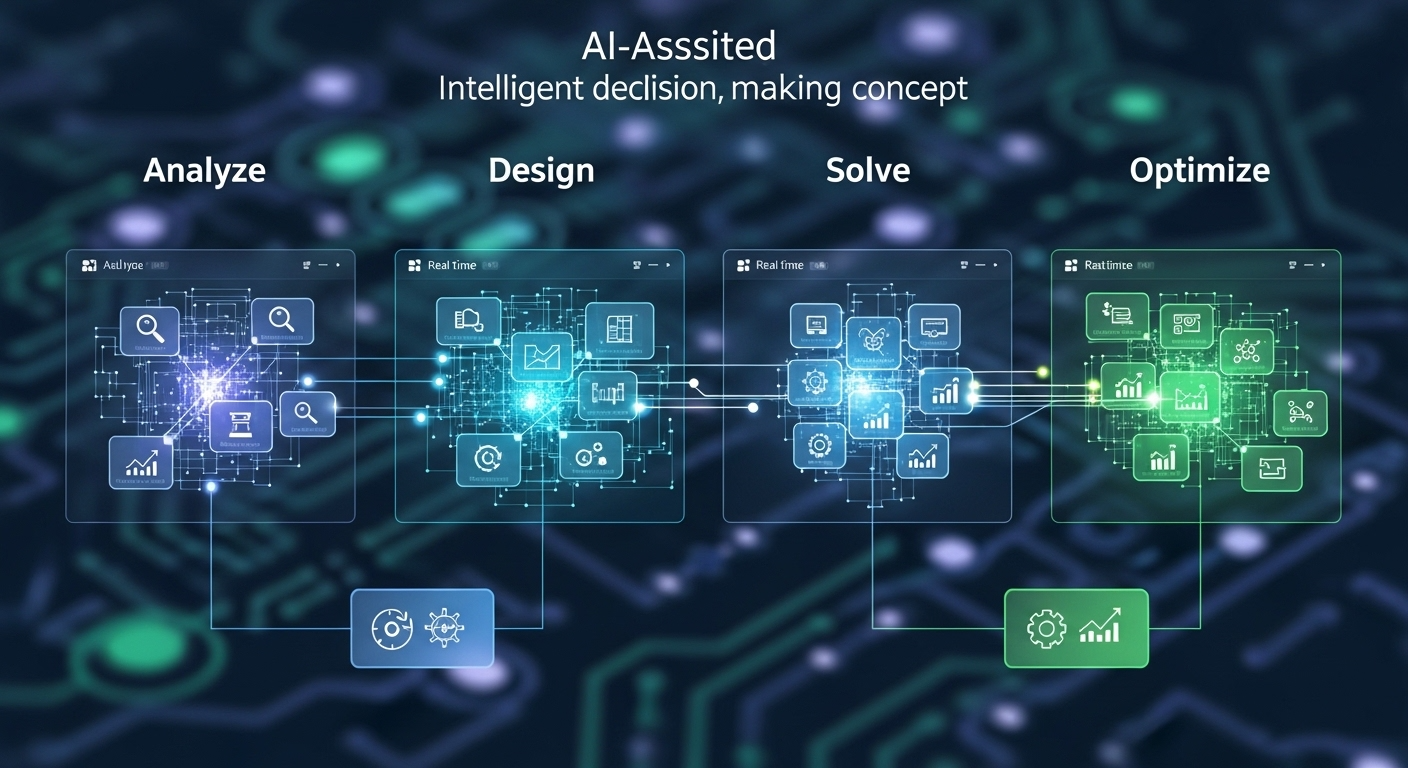
AI Automation in the Workplace: 5 Powerful Breakthroughs Transforming the Future of Work

Artificial Intelligence is no longer just a productivity enhancer. According to tech insiders across Silicon Valley and enterprise tech circles, AI is actively reshaping how work gets done from coding and compliance to marketing, finance, and operations.

What’s changing isn’t just speed. It’s structure, roles, and business models.

Let’s break down what this shift means for companies, professionals, and the future of work.

From Assistants to Autonomous Agents

For years, Artificial Intelligent tools acted like digital assistants helping write emails, summarize documents, or suggest code.

Now, companies like OpenAI and Anthropic are pushing Artificial Intelligent systems that can:

  • Execute multi step workflows
  • Make decisions within set constraints
  • Operate across multiple software tools
  • Complete tasks with minimal supervision

Instead of answering one prompt, Artificial Intelligent agents can:

  • Research → Analyze → Generate report → Send email → Update CRM

That’s not assistance. That’s task execution.

Automation Is Moving Up the Value Chain

Traditional automation (like RPA tools from UiPath) focused on rule-based repetitive tasks data entry, invoice processing, compliance checks.

Today’s Artificial Intelligent systems are automating:

  • Drafting legal documents
  • Writing production ready code
  • Creating marketing campaigns
  • Performing financial forecasting
  • Supporting medical documentation

This is white-collar workflow automation at scale.

Tech insiders suggest this wave could impact junior and mid-level roles first particularly in:

  • Administrative support
  • Customer service
  • Content production
  • Entry level finance
  • Junior development

The Shift from SaaS to Artificial Intelligent-Native Platforms

One of the biggest structural changes happening quietly:

It is changing how software is sold and used.

Traditional SaaS:

  • Human inputs data
  • Software processes
  • Human interprets output

Artificial Intelligent native workflow:

  • Human sets objective
  • Executes workflow
  • Human reviews results

This changes:

  • Pricing models
  • Headcount requirements
  • Software stack design
  • IT infrastructure planning

Companies are now asking:

“Do we need more tools or smarter automation across tools ?”

Productivity Gains vs. Workforce Disruption

Tech insiders remain divided on one issue:
Is this transformation net positive or disruptive?

Optimistic View

  • Workers become “Artificial Intelligent supervisors”
  • Output per employee increases
  • Smaller teams achieve enterprise level productivity
  • New job categories emerge ( Workflow designer, automation strategist)

Concerned View

  • Entry level roles shrink
  • Skill gaps widen
  • Security & governance risks grow
  • Overreliance on imperfect models increases business risk

The truth? Both are likely happening simultaneously.

What This Means for Businesses

Companies that adapt early will:

  • Redesign workflows around Artificial Intelligent
  • Upskill teams in prompt engineering & automation strategy
  • Build governance frameworks
  • Shift from tool-centric to outcome-centric operations

Those that resist change risk:

  • Slower execution
  • Higher operating costs
  • Competitive disadvantage

The key question is no longer:

“Should we use Artificial Intelligent?”

It’s:

“Where can it autonomously execute work today?”

The Rise of the Artificial Intelligent-Augmented Professional

The future professional will not compete against it but work alongside it.

Tomorrow’s top performers will:

  • Orchestrate it tools
  • Design automated workflows
  • Validate outputs
  • Focus on strategic thinking & relationship-building

In short:

Routine execution becomes automated. Strategic thinking becomes premium. For more Details let’s connect on Contact Us

IT Consulting Best Practices in 2026: What’s Changing and Why It Matters

Digital transformation is no longer a future initiative it is a continuous business requirement. Organizations across industries are modernizing infrastructure, automating operations, and redesigning digital experiences. In this rapidly evolving landscape, IT consulting best practices are also changing.

What worked five years ago is no longer sufficient.

In 2026, IT is shifting from advisory heavy models to execution-driven, measurable, and technology integrated approaches. Businesses now demand clarity, accountability, and outcomes not just recommendations.

What’s New in IT Consulting Best Practices?

Execution Over Presentation

Modern IT consulting prioritizes delivery. Clients expect consultants to move beyond strategy decks and actively support:

  • Implementation planning
  • Architecture validation
  • Risk management
  • KPI measurement

Consulting is no longer theoretical. It is operational.

Data-Driven Decision Frameworks

Best practices now require consultants to embed analytics into every roadmap. Recommendations must be backed by:

  • Real time performance metrics
  • Cost benefit modeling
  • Predictive growth scenarios

Data transparency builds trust and accelerates executive decision making.

Cloud Native & Modular Architecture Planning

Legacy modernization is no longer optional. Consultants are now expected to design:

  • Cloud first infrastructure
  • Microservices based architectures
  • API-driven integration frameworks

Flexibility and scalability are central to sustainable digital growth.

Security-Integrated Consulting

Cybersecurity is no longer a separate layer. Modern IT consulting integrates:

  • Zero trust architecture
  • Compliance mapping
  • Risk exposure analysis

Security is embedded in strategy from day one.

Agile Governance & Continuous Optimization

Best practices now emphasize iterative transformation instead of one time overhauls. Consultants implement:

  • Phased transformation roadmaps
  • Continuous feedback loops
  • Ongoing system optimization

Digital transformation is a journey not a milestone.

Why These Changes Matter

Organizations investing in digital transformation require consulting partners who:

  • Understand modern technology ecosystems
  • Provide execution accountability
  • Align IT with measurable business outcomes
  • Reduce risk while accelerating growth

IT consulting in 2026 is performance driven, technology enabled, and business aligned.

The Role of Strategic IT Consulting in Digital Transformation

A structured consulting approach ensures:

  • Clear technology roadmaps
  • Infrastructure scalability
  • Budget optimization
  • Improved operational efficiency
  • Competitive market positioning

Companies that adopt modern IT consulting best practices outperform competitors who rely on outdated advisory models.

Conclusion
IT consulting best practices in 2026 are defined by accountability, measurable impact, and execution excellence. Organizations can no longer afford advisory models that stop at recommendations. Modern digital transformation requires consultants who integrate strategy, architecture, security, and performance measurement into a unified framework. When IT consulting aligns directly with business objectives, technology investments become scalable growth drivers rather than operational expenses.

As digital ecosystems grow more complex, the need for structured, forward thinking IT consulting becomes even more critical. Businesses that adopt execution-driven best practices will move faster, mitigate risk more effectively, and maintain competitive advantage in rapidly evolving markets. In today’s environment, successful digital transformation depends not just on innovation but on disciplined, results-oriented IT consulting leadership. For more Details let’s connect on Contact Us

Why a Clear Digital Strategy Is the Foundation of Sustainable Business Growth

In today’s competitive environment, technology decisions influence nearly every aspect of business performance from operational efficiency and customer experience to revenue growth and market expansion. Organizations are investing heavily in cloud infrastructure, automation platforms, data analytics, cybersecurity frameworks, and custom software development.

Yet many of these investments fail to deliver expected returns. The issue is the absence of a clearly defined digital strategy.

Without structured direction, digital initiatives become fragmented, reactive, and disconnected from business objectives. A well-designed digital strategy transforms technology from a cost center into a long-term growth accelerator.

Digital Strategy Is More Than Technology Planning

A digital strategy is not simply an IT upgrade plan. It is a business growth framework powered by technology.

It defines:

  • How digital capabilities will create competitive advantage
  • How systems will scale as the company grows
  • How operational processes will be optimized through automation
  • How data will drive smarter decisions
  • How risk and compliance will be proactively managed

In short, digital strategy aligns business ambition with technical execution.

Why Digital Initiatives Fail Without Strategic Alignment

Many companies begin transformation efforts by implementing tools before defining outcomes. This often results in:

  • Technology silos across departments
  • Integration challenges between platforms
  • Redundant investments
  • Budget overruns
  • Low adoption among internal teams

When systems are implemented without a unified roadmap, complexity increases instead of efficiency.

Digital maturity requires structured governance, prioritized implementation phases, and executive-level oversight.

The Strategic Role of Leadership in Digital Direction

One of the most overlooked components of digital strategy is executive alignment.

Successful organizations ensure that:

  • C-level leadership defines measurable digital objectives
  • IT leaders translate business priorities into architecture plans
  • Department heads align operational workflows with system capabilities
  • KPIs are monitored continuously

It cannot be delegated solely to technical teams. It requires cross-functional leadership to ensure technology investments deliver real business value.

A Phased Approach to Digital Strategy Development

An effective digital strategy typically follows a structured progression:

Phase 1: Current State Assessment

Evaluate infrastructure, software ecosystem, data capabilities, security posture, and process inefficiencies.

Phase 2: Gap Analysis

Identify disconnects between current digital capability and future business goals.

Phase 3: Architecture Blueprint

Design scalable systems, integration models, security frameworks, and cloud environments.

Phase 4: Prioritized Roadmap

Develop a step-by-step execution plan based on business impact and technical feasibility.

Phase 5: Continuous Optimization

Monitor performance, measure ROI, and refine systems as the organization evolves.

Digital strategy is not static. It adapts as markets, technologies, and business models change.

The Financial Impact of a Strong Digital Strategy

A well-implemented digital strategy delivers measurable results, including:

  • Reduced operational costs through automation
  • Faster product or service delivery cycles
  • Increased customer retention through improved user experience
  • Stronger cybersecurity posture
  • Higher revenue through scalable infrastructure

Most importantly, it reduces uncertainty. Organizations with structured digital direction make confident decisions about investments, hiring, and expansion.

Digital Strategy in a Rapidly Evolving Technology Landscape

The pace of innovation continues to accelerate. Artificial intelligence, cloud-native applications, advanced analytics, and automation are reshaping industries at unprecedented speed.

Without strategic planning, companies risk:

  • Falling behind competitors
  • Over-investing in trends without clear ROI
  • Building systems that quickly become obsolete

A modern digital strategy anticipates change rather than reacting to it. It emphasizes flexibility, modular architecture, and long-term scalability.

How Nautics Technologies Supports Digital Strategy Execution

At Nautics Technologies OU, digital strategy consulting combines business analysis with technical execution expertise. The approach focuses on:

  • Translating executive vision into practical IT roadmaps
  • Designing scalable enterprise architectures
  • Integrating automation and data-driven processes
  • Strengthening cybersecurity foundations
  • Supporting implementation with full-stack engineering capabilities

The goal is not to create theoretical documents, but to build systems that perform under real-world conditions.

The Competitive Advantage of Clarity

In markets defined by disruption and digital acceleration, clarity becomes a strategic asset.

Organizations with a defined digital strategy:

  • Move faster with less risk
  • Scale operations efficiently
  • Adapt to technological change
  • Outperform competitors who operate reactively

Digital success is not determined by how many tools a company adopts.
It is determined by how intentionally those tools are integrated into a unified growth framework. For details Contact Us

Software Development in 2026: How AI Is Dramatically Transforming Workflows

Introduction: AI Is No Longer a Tool It’s the Workflow

In 2026, AI is no longer an optional productivity booster for developers. It has become a core layer of the software development workflow itself. Teams that still treat AI as a side tool something used only for code suggestions are already falling behind.

The real shift isn’t that AI writes code faster.
The shift is that AI changes how software is designed, built, tested, reviewed, and deployed.

This is not a future prediction. This is happening now.

From Code-Centric to Decision-Centric Software Development

Traditional software development workflows were built around writing code. AI has flipped that model.

In 2026:

  • Writing code is cheap
  • Generating boilerplate is trivial
  • Implementing patterns is automated

The new bottleneck is decision quality.

Developers now spend more time for Software Development:

  • Reviewing AI-generated logic
  • Validating assumptions
  • Checking edge cases
  • Ensuring architectural consistency

AI accelerates implementation, but humans remain responsible for correctness and intent.

Planning and Architecture Are Becoming More Important, Not Less

Here’s the uncomfortable truth: AI exposes weak planning instantly.

When architecture is unclear:

  • AI produces inconsistent implementations
  • Codebases fragment faster
  • Technical debt multiplies

Strong teams are adapting by:

  • Defining clearer system boundaries
  • Writing better specifications and acceptance criteria
  • Treating architecture as a living artifact

AI doesn’t replace architecture.
It punishes the absence of it.

AI Is Compressing Software Development Phases

In 2026, the traditional linear workflow design → software development → testing → release is collapsing.

AI enables:

  • Parallel development and testing
  • Instant refactoring suggestions
  • Continuous validation during coding

What used to take weeks across phases now happens within a single development loop.

But this only works when:

  • QA is integrated early
  • CI/CD pipelines are mature
  • Teams trust automation without surrendering control

Without discipline, speed becomes chaos.

Code Reviews Are Now the Most Critical Checkpoint

AI-generated code increases volume. It does not guarantee quality.

As a result:

  • Code reviews are no longer optional safeguards
  • Reviewers must evaluate intent, not just syntax
  • Senior engineers spend more time reviewing than writing

In 2026, the strongest software developer are not the fastest coders.
They are the best reviewers and system thinkers.

If your team skim-reviews AI output, you are quietly accumulating risk.

Testing Is Shifting from Coverage to Confidence

AI has flooded teams with autogenerated tests. On paper, coverage looks impressive.

In reality:

  • Many tests validate nothing meaningful
  • Failures are harder to interpret
  • Signal is buried in noise

Modern teams of software developers are responding by:

  • Reducing UI-heavy testing
  • Prioritizing API and contract tests
  • Using AI to remove redundant tests, not just create them

The goal in 2026 is not maximum coverage.
It is maximum confidence per test.

QA Roles Are Evolving, Not Disappearing

AI didn’t kill QA. It forced QA to grow up.

Today’s QA engineers:

  • Define quality rules, not just test cases
  • Validate AI-generated scenarios
  • Focus on risk, behavior, and failure modes

QA is moving upstream into quality engineering and decision support.

If your QA team is still clicking through scripts, you’re underusing them and AI will expose that weakness fast.

DevOps Is Becoming Invisible and Mandatory

AI thrives in well-instrumented systems.

In 2026:

  • Poor pipelines break AI-assisted workflows
  • Missing observability hides AI-generated defects
  • Weak deployment discipline negates speed gains

Modern DevOps is not about tools.
It’s about feedback loops, traceability, and rollback safety.

AI amplifies whatever pipeline you already have good or bad.

Security and Risk Are Now Continuous Concerns

AI accelerates change. Change increases risk.

As a result:

  • Static security testing is insufficient
  • Risk assessment must be continuous
  • Context matters more than severity scores

Security teams are shifting from:

  • “Find everything”
    to
  • “Fix what actually matters”

AI doesn’t reduce security responsibility.
It raises the cost of ignoring it.

Productivity Gains Are Real But Uneven

Let’s be clear: AI delivers massive productivity gains.

But those gains are not evenly distributed.

High-performing teams:

  • Gain speed and quality
  • Reduce cycle time
  • Ship more reliably

Low-maturity teams:

  • Generate more code
  • Increase technical debt
  • Break systems faster

AI rewards process maturity, not effort.

What Winning Teams Are Doing Differently

Teams successfully reshaping software development workflows around AI share common traits:

  • Clear architecture and ownership
  • Strong review culture
  • Integrated QA and DevOps
  • Disciplined use of automation
  • Willingness to delete as much as they generate

Software developers treat AI as a force multiplier, not a replacement.

The Hard Truth

AI is not making software development easier.

It is making:

  • Weak thinking more visible
  • Poor processes more expensive
  • Undisciplined teams more fragile

In 2026, AI doesn’t level the playing field.
It widens the gap between teams that understand software engineering and those that merely write code. For more Details let’s connect on Contact Us

Why False Positives Are the Biggest Risk in Modern Security

Introduction: The Security Problem No One Wants to Admit

For years, security success was measured by volume: more scans, more alerts, more findings. A noisy dashboard was treated as a sign of diligence. If everything was flagged, surely nothing was missed.

In 2026, that belief is collapsing.

Organizations are realizing that false positives are no longer just an inconvenience they are one of the biggest contributors to real security failures. Not because vulnerabilities don’t exist, but because signal is being drowned in noise.

Modern security doesn’t fail from lack of data.
It fails from lack of clarity.

What False Positives Really Cost

A false positive isn’t just a wasted alert. At scale, it causes systemic damage.

False positives:

  • Slow down remediation of real threats
  • Condition teams to ignore alerts
  • Erode trust in security tooling
  • Burn engineering goodwill
  • Create decision paralysis

Over time, they turn security programs into background noise always present, rarely acted on.

The most dangerous vulnerabilities today are often not the most severe ones but the ones hidden among hundreds of irrelevant alerts.

Why False Positives Are Exploding Now

1. Attack Surfaces Have Grown Faster Than Tooling

Modern environments include:

  • Microservices
  • APIs
  • Cloud resources
  • Ephemeral infrastructure
  • Third-party integrations

Security tools scan broadly but lack context. They detect patterns, not exposure.

The result:

  • Findings that are technically valid
  • But practically unreachable or irrelevant

Security teams are left sorting signal from static.

2. CVSS Scores Are Being Misused by False Positives

CVSS was designed to describe severity not risk.

Yet many organizations still prioritize remediation purely by:

  • Critical
  • High
  • Medium

Without considering:

  • Exploitability
  • Exposure
  • Business impact
  • Compensating controls

This leads teams to spend weeks fixing “critical” issues that pose no real threat while exploitable paths remain open.

3. Automation Increased Volume Without Improving Judgment

Automation made scanning faster. It didn’t make it smarter.

Modern pipelines can generate:

  • Thousands of findings per week
  • Repeated alerts for the same issue
  • Findings on unused or deprecated assets

Without intelligent filtering, automation amplifies noise faster than teams can respond.

Alert Fatigue Is Now a Security Vulnerability

Security fatigue isn’t hypothetical it’s measurable.

When teams experience:

  • Constant false alarms
  • No clear prioritization
  • Repetitive findings

They begin to:

  • Delay response
  • Deprioritize security tickets
  • Accept risk by default

This isn’t negligence it’s human adaptation.

At a certain point, false positives don’t just waste time.
They lower the probability of responding correctly when it actually matters.

Why Engineers Stop Trusting Security Tools

Engineering teams want to ship software. When security tools:

  • Block builds unnecessarily
  • Flag irrelevant issues
  • Lack clear remediation guidance

Security becomes friction not protection.

Over time:

  • Engineers bypass controls
  • Exceptions become the norm
  • Security loses influence

False positives don’t just waste engineering time they undermine security culture.

Context Is the Missing Layer

Modern security failures are rarely about unknown vulnerabilities. They’re about misjudged risk.

Context answers questions scanners can’t:

  • Is the asset exposed?
  • Is it reachable externally?
  • Is the vulnerable path actually executable?
  • Does this affect critical business flows?

Without context, every alert looks urgent.
With context, most alerts disappear.

How Leading Teams Are Reducing False-Positive Risk

1. Moving From Vulnerability Counts to Risk Scenarios

Instead of asking:

“How many vulnerabilities do we have?”

Teams ask:

“Which attack paths actually matter?”

This shifts focus from individual findings to real exploit chains.

2. Prioritizing Exposure Over Severity

High-severity vulnerabilities in non-exposed systems are often ignored correctly.

Teams now prioritize:

  • Internet-facing assets
  • Privileged services
  • Authentication and authorization flaws
  • Business logic weaknesses

This dramatically reduces remediation backlog while increasing real security.

3. Tuning Tools Aggressively

Modern security teams treat tooling like code:

  • Alerts are tuned
  • Rules are refined
  • Noisy checks are disabled

The goal is not coverage it’s confidence.

4. Embedding Security Into CI/CD With Guardrails

Instead of blocking everything, teams:

  • Gate only high-confidence issues
  • Surface others as advisory
  • Require justification for accepted risk

This preserves velocity while protecting critical paths.

Why Fewer Alerts Lead to Better Security

Counterintuitive but true:
Less alerting often means better outcomes.

When teams trust alerts:

  • Response is faster
  • Fix quality improves
  • Accountability increases

Security becomes actionable instead of theoretical.

Risk Acceptance Is Becoming a Leadership Decision

Another major shift: accepted risk is no longer buried in tickets.

Executives and product leaders are now:

  • Reviewing risk tradeoffs
  • Approving exceptions
  • Owning exposure decisions

False positives force leadership to engage in noise.
Reducing them allows leadership to focus on real threats.

The Dangerous Middle Ground

The riskiest posture today is not weak security. It’s over-alerting with low trust.

These organizations:

  • Scan constantly
  • Fix little
  • Assume coverage equals safety

When breaches happen, the question isn’t “Why didn’t we scan?”
It’s “Why didn’t we see this coming?”

The answer is almost always buried in ignored alerts.

What Modern Security Programs Optimize For

The most effective teams in 2026 optimize for:

  • Signal quality
  • Response speed
  • Contextual risk reduction
  • Organizational trust

They understand that security is a decision system, not a detection system.For details Contact Us

Why Performance Marketing Alone Can’t Build Growth Anymore

Introduction: The Performance Marketing Illusion

For over a decade, performance marketing was treated as the growth engine. If you could track clicks, attribute conversions, and optimize bids, growth felt predictable. Spend more, get more. Scale followed spreadsheets.

That model is breaking.

In 2026, performance marketing still matters but on its own, it no longer builds durable growth. Many companies are spending aggressively, optimizing endlessly, and still stalling. CAC rises, attribution weakens, and returns flatten.

The issue isn’t execution.
It’s overreliance.

Performance marketing has become a powerful amplifier but an increasingly poor foundation.

Why Performance Marketing Stopped Being Enough

1. Attribution Is No Longer Reliable

The promise of performance marketing was precision. That promise is gone.

Today’s reality:

  • Cookie loss and privacy restrictions
  • Modeled and delayed conversions
  • Platform-reported metrics that can’t be audited
  • Fragmented customer journeys

Teams still optimize but they optimize imperfect signals. Decisions feel data-driven, yet outcomes drift.

When attribution weakens, performance marketing loses its ability to guide strategy.

2. Performance Optimizes Demand It Doesn’t Create It

Performance marketing captures existing intent. It doesn’t generate trust, preference, or memory.

This leads to a ceiling effect:

  • Early gains are strong
  • Scaling becomes expensive
  • Incremental spend produces diminishing returns

Once you’ve exhausted high-intent demand, performance marketing starts competing for the same audiences at higher cost.

Growth stalls not because ads stopped working but because brand stopped compounding.

3. CAC Inflation Is Structural, Not Tactical

Rising acquisition costs aren’t caused by bad campaigns.

They’re caused by:

  • Platform competition
  • Audience saturation
  • Algorithmic bidding wars
  • Short-term optimization loops

Even well-run performance programs now face structural CAC pressure.

This means:

You can optimize performance but you can’t optimize your way out of economics.

What Performance Marketing Does Well and What It Doesn’t

Performance marketing is excellent at:

  • Capturing demand
  • Testing offers
  • Scaling proven messages
  • Driving short-term revenue

It struggles with:

  • Building trust
  • Creating differentiation
  • Increasing pricing power
  • Improving retention
  • Reducing long-term acquisition cost

Growth requires all of these.

Performance alone delivers none of them sustainably.

The Shift: Growth Is Becoming Brand-Led Again

This doesn’t mean returning to vague brand campaigns or awareness for awareness’ sake.

Modern brand-led growth looks different:

  • Clear positioning
  • Consistent narrative
  • Product-aligned messaging
  • Thought leadership
  • Trust built across touchpoints

Brand is no longer a “top-of-funnel expense.”
It’s a conversion multiplier.

Brands with strong memory and trust:

  • Convert better
  • Retain longer
  • Pay less for traffic
  • Close faster

Performance marketing works better when brand does its job.

Retention Is Overtaking Acquisition as the Growth Lever

One of the biggest shifts in 2026 is where growth comes from.

More companies are realizing:

  • Fixing churn beats scaling spend
  • Improving onboarding beats more leads
  • Lifecycle optimization beats funnel expansion

Performance marketing is optimized for acquisition.
Growth today is increasingly post-conversion.

Without strong retention, performance marketing becomes a leaky bucket.

Why Product and Brand Are Now Growth Channels

In high-performing companies:

  • Product experience reinforces brand promise
  • Onboarding teaches value quickly
  • Messaging matches reality
  • Support becomes part of positioning

This alignment creates:

  • Word-of-mouth
  • Organic inbound
  • Lower paid dependency

Performance marketing cannot compensate for weak product-brand alignment.

The Rise of Thought Leadership and Credibility-Driven Growth

In B2B and services markets especially, growth is being driven by:

  • Expertise visibility
  • Founder-led content
  • Credible opinions
  • Clear POVs

Buyers trust brands that teach them something, not just retarget them.

Performance ads increasingly act as reinforcement not discovery.

Performance Marketing Without Brand Creates Fragile Growth

Companies built purely on Marketing often share the same symptoms:

  • Constant budget pressure
  • Inconsistent demand
  • Heavy discounting
  • Weak loyalty
  • High churn

Growth depends on constant spend.

The moment budgets tighten, growth collapses.

That’s not growth. That’s dependency.

What Balanced Growth Looks Like in 2026

High-performing organizations now structure growth like this:

  • Brand creates trust, memory, and differentiation
  • Product delivers on the promise
  • Content & thought leadership build authority
  • Retention systems compound value
  • Performance marketing captures and scales demand

Marketing becomes a lever, not the engine.

How Leaders Should Rethink Growth Strategy

If you’re leading growth today, the questions have changed:

  • What do we stand for clearly?
  • Why should buyers remember us?
  • Where does trust come from in our funnel?
  • How much of our growth depends on paid spend?
  • What happens if ad costs double?

If the answers are uncomfortable, marketing is doing too much work.

The Hard Truth: Performance Marketing Is Easy to Start and Hard to Sustain

This thrives in early stages:

  • Clear ICP
  • Untapped demand
  • Cheap attention

As markets mature, growth shifts from efficiency to leverage.

Brand, retention, and trust create leverage.
Performance alone does not.

Final Thoughts: Performance Marketing Isn’t Dead It’s Just Not Enough

This still matters. It always will.

But in 2026, it is no longer a growth strategy on its own.

Growth today comes from:

  • Being remembered
  • Being trusted
  • Being clear
  • Being consistent

This works best when it amplifies these not when it replaces them.

The companies growing now aren’t spending the most.
They’re building brands that make every dollar work harder.

Performance marketing can scale growth.
Only brand can sustain it. For info Lets connect atContact Us

Reading Code Is Now More Important Than Writing It in 2026

Introduction: The Skill Developers Didn’t Prepare For

For decades, software engineering rewarded one visible skill above all others: writing code. The faster you could implement features, the more productive you appeared. Interviews focused on syntax, algorithms, and speed. Careers were built on output.

In 2026, that model is quietly breaking.

Developers are writing more code than ever but much of it is generated, assisted, or scaffolded by tools. What now separates strong engineers from average ones is not how quickly they can write code, but how well they can read, understand, evaluate, and reason about it.

Reading code has become the most important engineering skill and the least explicitly taught.

Why Writing Code Is No Longer the Bottleneck

AI-assisted development has fundamentally changed the economics of code creation.

Today:

  • Boilerplate is cheap
  • Syntax errors are rare
  • Code scaffolding is instant
  • Patterns are auto-suggested

The cost of writing code has dropped dramatically.

What hasn’t dropped is the cost of:

  • Understanding intent
  • Validating correctness
  • Assessing edge cases
  • Predicting downstream impact

As code volume increases, comprehension not creation becomes the limiting factor.

Most Developers Spend More Time Reading Than Writing

This has always been true but it’s now unavoidable.

A typical developer day includes:

  • Reviewing pull requests
  • Debugging unfamiliar code
  • Tracing production issues
  • Understanding legacy systems
  • Evaluating AI-generated suggestions

Writing new code often takes less time than understanding existing code well enough to change it safely.

In modern systems, progress depends on navigating complexity, not adding more of it.

AI Made Reading Skills Non-Optional

AI can generate plausible code extremely fast. What it cannot guarantee is:

  • Correct assumptions
  • Context awareness
  • Architectural consistency
  • Business rule accuracy

This shifts developer responsibility from author to editor, reviewer, and judge.

The new workflow looks like this:

  1. AI proposes code
  2. Human reads and validates
  3. Human decides what survives

Developers who can’t read code critically will ship bugs faster than ever.

Why Reading Code Is Harder Than It Sounds

1. Code Is Written for Machines, Not Humans

Many codebases optimize for execution, not clarity.

Common problems include:

  • Implicit behavior
  • Over-abstraction
  • Clever shortcuts
  • Framework magic

Reading such code requires patience, discipline, and systems thinking.

2. Context Is Rarely Local

In modern systems:

  • Logic is distributed
  • Behavior emerges from interactions
  • Changes ripple across services

Reading code now means reading across boundaries, not just files.

3. Legacy Code Isn’t Going Away

Most production code was written years ago, by people who are no longer there.

You cannot rewrite everything.
You must understand before you change.

Strong readers survive legacy systems. Weak readers break them.

Reading Code Is How Engineers Build Trust

Trust in software teams is built through predictability.

Predictability comes from:

  • Knowing what the code actually does
  • Understanding why it exists
  • Recognizing what might break

Engineers who read code well:

  • Review PRs effectively
  • Catch subtle bugs early
  • Reduce regressions
  • Improve team confidence

This is why senior engineers often write less code, but have more impact.

Code Reviews Are Now the Real Work

In many teams, code reviews have become the primary quality gate.

A good code review requires:

  • Understanding intent
  • Evaluating trade-offs
  • Spotting edge cases
  • Checking consistency with system design

These are reading skills, not writing skills.

Teams with poor readers rely on automated checks.
Teams with strong readers ship better software.

Debugging Is Advanced Code Reading

Debugging is not guessing. It’s forensic analysis.

It requires:

  • Tracing execution paths
  • Understanding state changes
  • Interpreting logs and metrics
  • Mapping symptoms to causes

None of this involves writing code until you understand what’s wrong.

The best debuggers are always the best readers.

Why Juniors Struggle and Seniors Don’t

Junior developers often:

  • Focus on making code “work”
  • Read only what they wrote
  • Avoid unfamiliar areas

Senior developers:

  • Read entire systems
  • Anticipate side effects
  • Spot design smells
  • Ask “what happens next?”

The gap is not intelligence it’s reading discipline and exposure.

Frameworks Made Reading More Important, Not Less

Modern frameworks abstract complexity but they don’t remove it.

They shift complexity into:

  • Configuration
  • Convention
  • Implicit behavior

Understanding a framework-heavy codebase requires reading:

  • Application code
  • Framework contracts
  • Configuration layers

Developers who only know “how to use” frameworks struggle to understand what’s actually happening.

What Strong Code Readers Do Differently

Strong readers:

  • Read code top-down and bottom-up
  • Follow data, not just control flow
  • Look for invariants and assumptions
  • Ask “why was this written this way?”
  • Slow down on critical sections

They treat code as a conversation, not a puzzle.

Why Simplicity Is the New Senior Skill

As reading becomes central, code quality is being redefined.

Readable code:

  • Uses boring patterns
  • Avoids clever tricks
  • Makes decisions explicit
  • Trades brevity for clarity

In AI-assisted development, clarity beats cleverness every time.

Engineers who write readable code are making a gift to future readers including themselves.

How Teams Can Adapt to This Shift

1. Teach Code Reading Explicitly

Most teams teach writing. Few teach reading.

Good practices include:

  • Walkthroughs of legacy systems
  • Shared debugging sessions
  • Reviewing “why” not just “what”

2. Reward Review Quality, Not Output Volume

Output metrics lie.

Recognize engineers who:

  • Improve clarity
  • Reduce complexity
  • Catch issues early
  • Raise the quality bar

3. Design for Readers First

When writing code, ask:

“Will someone understand this in six months?”

If the answer is no, rewrite it.

What This Means for Careers

In 2026, the most valuable engineers are not:

  • The fastest coders
  • The loudest contributors
  • The most framework-fluent

They are the ones who:

  • Understand systems deeply
  • Make fewer mistakes
  • Improve code they didn’t write
  • Reduce risk quietly

Reading code well is now a career accelerator.

Final Thoughts: Code Is Written Once, Read Forever

Writing code feels productive. Reading code feels slow.

But software systems don’t fail because code wasn’t written fast enough. They fail because code wasn’t understood well enough.

In an era of AI-assisted development, the skill that matters most is judgment and judgment is built through reading.

If writing code is how software is created,
reading code is how software survives.

The future belongs to developers who read carefully, think deeply, and change systems responsibly. For details Contact Us

Self-Healing Tests vs Root-Cause Intelligence: What Actually Improves Test Reliability

Introduction: Stability Isn’t the Same as Confidence

Over the last few years, self-healing tests have been marketed as the answer to flaky automation. Broken locators? Healed. Timing issues? Retried. UI changes? Adapted automatically.

At first, the results looked impressive. Pipelines got greener. Test failures dropped. Teams felt relief.

Then something uncomfortable happened: production bugs still escaped.

In 2026, many engineering teams are realizing a hard truth self-healing tests improve test stability, but they do not improve system understanding. And without understanding why failures happen, quality remains fragile.

This is where root-cause intelligence enters the picture.

What Self-Healing Tests Actually Do (and Don’t)

Self-healing tests are designed to adapt when something changes unexpectedly. They typically:

  • Auto-update UI locators
  • Retry failed steps
  • Adjust waits and timeouts
  • Mask transient failures

Their purpose is clear: reduce noise in automation pipelines.

And they succeed at that.

What they don’t do:

  • Explain why a test failed
  • Identify system instability
  • Detect architectural regressions
  • Surface hidden risk

Self-healing is reactive. It fixes symptoms, not causes.

Why Self-Healing Became Popular

The rise of self-healing tests wasn’t accidental.

They addressed real pain:

  • UI tests breaking on minor changes
  • Flaky pipelines blocking releases
  • High maintenance costs
  • QA teams overwhelmed by false failures

In fast-moving environments, self-healing felt like progress and in some ways, it was.

But over time, teams began confusing silence with reliability.

The Hidden Risk: Quietly Broken Signals

The biggest danger of self-healing tests is not what they break it’s what they hide.

When tests auto-heal:

  • Instability is masked
  • Regression signals are weakened
  • Failure patterns disappear
  • Engineers lose feedback loops

The pipeline stays green, but confidence erodes.

This creates what many teams now call “silent flakiness” systems that are unstable, but no longer visible through tests.

Root-Cause Intelligence: A Different Philosophy

Root-cause intelligence focuses on understanding, not suppression.

Instead of asking:

“How do we stop this test from failing?”

It asks:

“Why did this failure happen, and what does it tell us about the system?”

Root-cause intelligence uses:

  • Failure pattern analysis
  • Correlation across services
  • Change-impact detection
  • Signal classification (infra vs app vs test)

Its goal is not greener pipelines it’s better decisions.

Why Root-Cause Intelligence Matters More in 2026

Modern systems are:

  • Distributed
  • API-driven
  • Highly integrated
  • Continuously deployed

Failures rarely come from a single UI element. They come from:

  • Contract changes
  • Data inconsistencies
  • Environment drift
  • Dependency latency
  • Race conditions

Self-healing tests struggle in these environments because they operate too close to the surface.

Root-cause intelligence operates at the system level.

Self-Healing vs Root-Cause Intelligence: The Core Differences

Self-Healing Tests

  • Reactive
  • UI-focused
  • Symptom-oriented
  • Optimized for pipeline stability
  • Reduces visible failures

Root-Cause Intelligence

  • Proactive
  • System-focused
  • Cause-oriented
  • Optimized for confidence and learning
  • Reduces real defects

One keeps tests running.
The other keeps systems healthy.

Where Self-Healing Still Makes Sense

Self-healing is not useless. It just needs boundaries.

It works best when:

  • Used on low-risk UI paths
  • Applied to cosmetic or locator changes
  • Combined with strict reporting
  • Treated as noise reduction, not quality validation

Self-healing should buy time, not replace investigation.

Why Teams Are Shifting Toward Root-Cause Intelligence

Leading QA and platform teams are changing priorities because:

  • Green pipelines no longer equal safe releases
  • Flaky behavior reappears in production
  • Engineers distrust “auto-fixed” tests
  • AI-generated tests amplify noise without insight

Root-cause intelligence restores trust by making failures actionable.

How AI Changes This Equation

AI has made both sides stronger and more dangerous.

AI can:

  • Generate self-healing logic faster
  • Mask failures at scale
  • Create thousands of tests instantly

But AI can also:

  • Cluster failures
  • Detect anomalies
  • Trace change impact
  • Identify systemic risk

The difference is intent.

Using AI only for self-healing increases verification debt.
Using AI for root-cause intelligence increases organizational learning.

What Root-Cause-Driven Testing Looks Like in Practice

Teams adopting this approach focus on:

  • API and contract testing as the primary signal
  • Failure classification (test issue vs product issue)
  • Linking failures to recent code changes
  • Observability integration (logs, metrics, traces)
  • Reducing tests that don’t add signal

Tests are treated as sensors, not gatekeepers.

The Role Shift for Automation Engineers

This shift is changing roles dramatically.

Modern automation engineers are expected to:

  • Understand system architecture
  • Analyze failure patterns
  • Work closely with DevOps and SRE
  • Design signal-rich tests
  • Reduce test volume while increasing confidence

Click-level automation skills alone are no longer enough.

A Dangerous Middle Ground: Self-Healing Without Intelligence

The most risky setup today is:

  • Heavy self-healing
  • No failure analysis
  • No observability correlation
  • No test pruning

This creates the illusion of quality while increasing long-term risk.

Teams think they are stable until a major incident proves otherwise.

How to Balance Both Approaches

The right approach is not choosing one over the other it’s hierarchy.

A mature strategy looks like this:

  1. Root-cause intelligence as the foundation
  2. API and contract tests as primary signals
  3. Self-healing applied selectively to UI noise
  4. Human review for AI-generated changes
  5. Continuous pruning of low-value tests

Stability serves intelligence not the other way around.

Final Thoughts: Green Pipelines Are Not the Goal

Self-healing tests solve a visible problem.
Root-cause intelligence solves the real one.

In 2026, quality is no longer about how many tests pass it’s about how well failures teach you something.

Teams that chase silent stability will keep shipping surprises.
Teams that invest in understanding will ship with confidence.

Self-healing makes pipelines quieter.
Root-cause intelligence makes teams smarter.

And in modern software delivery, smart beats silent every time. For details Contact Us

10 Critical Reasons Smart Companies Are Hiring for Execution, Not Headcount

Introduction: The Hiring Mindset Has Fundamentally Changed

For years, hiring was treated as a growth signal. More people meant more momentum, more credibility, and more capacity. Headcount became a proxy for success.

In 2026, that mindset is gone.

Companies are still hiring but in a very different way. The focus has shifted from how many people we employ to what actually gets executed. Roles are approved not because teams are stretched, but because specific outcomes cannot be delivered without them.

This is not a temporary slowdown. It’s a structural change in how organizations grow.

The End of Headcount Driven Growth

The Traditional model was linear:

  • Work increases → hire more people
  • Complexity increases → add managers
  • Coordination slows → add processes

Over time, this led to:

  • Bloated teams
  • Rising costs without proportional output
  • Slower decision-making
  • Accountability dilution

Leadership teams have learned often the hard way that headcount growth does not guarantee execution capacity.

In fact, it often reduces it.

Execution Is Now the Scarce Resource

In 2026, most organizations don’t lack ideas, roadmaps, or strategies. They lack execution bandwidth.

Execution means:

  • Shipping working systems
  • Closing deals
  • Automating processes
  • Reducing operational friction
  • Delivering measurable outcomes

Hiring is now justified only when it clearly improves one of these.

If a role cannot be tied to execution, it doesn’t get approved.

AI Accelerated This Shift

AI didn’t eliminate jobs but it redefined leverage.

Tasks that once required entire teams can now be handled by:

  • Smaller, AI-augmented groups
  • Automated workflows
  • Integrated systems

This has changed the hiring question from:

“Do we need more people?”
to
“Can we execute this better with fewer, higher-impact people and better tools?”

The answer is increasingly yes.

As a result, companies are hiring fewer people but expecting more ownership per role.

From Role Coverage to Outcome Ownership

Traditional model focused on role coverage:

  • Someone to manage
  • Someone to coordinate
  • Someone to support

Execution-driven hiring focuses on outcome ownership.

Modern job approvals answer:

  • What result will this person own?
  • What breaks if we don’t hire them?
  • How will success be measured in 90 days?

Roles without clear outcomes are quietly disappearing.

Why Generalist Roles Are Shrinking

Generalist roles thrived in growth-at-all-costs environments. In execution-focused organizations, they struggle.

Why?

  • Execution requires depth
  • Specialists unblock delivery faster
  • Clear ownership reduces handoffs

Companies now prefer:

  • Engineers who own systems
  • QAOps engineers who own quality pipelines
  • Marketers who own revenue outcomes
  • Consultants who own implementation

This doesn’t mean versatility is irrelevant but impact must be visible.

Hiring Is Now Tied Directly to ROI

In 2026, every hire competes with:

  • Automation
  • Process redesign
  • Internal upskilling

Leaders ask:

  • Is hiring the fastest path to impact?
  • Is it the most cost-effective option?
  • Can we upskill someone internally instead?

This financial discipline has made hiring deliberate and slower but far more effective.

Upskilling Is Replacing External Hiring

Many companies are executing more by transforming existing talent.

Examples include:

  • QA engineers becoming QAOps specialists
  • Developers learning AI-assisted workflows
  • Analysts moving into automation roles
  • Managers becoming hands-on operators

Upskilling:

  • Reduces ramp-up time
  • Lowers cultural risk
  • Preserves institutional knowledge

Execution improves without expanding headcount.

Why Managers Are Also Being Hired Differently

The shift to execution impacts leadership roles as well.

Companies are no longer hiring managers whose primary function is coordination. They want leaders who:

  • Can make decisions
  • Can remove blockers
  • Can deliver outcomes directly

In leaner organizations, managers are closer to the work. Execution-first hiring favors doers who can lead, not overseers who delegate.

Employer Branding Has Become an Execution Signal

In a selective hiring market, candidates evaluate companies as carefully as companies evaluate them.

High-impact candidates look for:

  • Clear expectations
  • Real ownership
  • Evidence of execution
  • Technical and operational maturity

Organizations that over-promise and under-deliver struggle to hire execution-oriented talent.

Employer branding now reflects how work actually gets done, not just culture slogans.

The New Hiring Questions Companies Ask

Execution-focused organizations consistently ask:

  • What business problem does this role solve?
  • How will we measure impact quickly?
  • What decisions will this person own?
  • How does this role scale with tools and automation?

If answers are vague, hiring stops.

What This Means for Candidates

For professionals, this shift raises the bar but also increases opportunity.

Execution-focused hiring rewards people who:

  • Own outcomes
  • Work independently
  • Leverage tools effectively
  • Communicate impact clearly

Job titles matter less than proof of execution.

Those who can show results move faster even in cautious markets.

What This Means for Leaders

If you’re leading a company in 2026, execution-based hiring requires:

  • Clear priorities
  • Honest assessment of bottlenecks
  • Willingness to say no to low-impact roles
  • Investment in tools and upskilling

The goal is not to be understaffed.
It’s to be over-leveraged.

Why This Model Is More Resilient

Execution-focused organizations:

  • Scale without bloat
  • Adapt faster to market shifts
  • Control costs more effectively
  • Maintain accountability

When conditions change, smaller, execution-oriented teams adjust faster than large, loosely aligned ones.

Final Thoughts: Execution Is the New Hiring Currency

Companies haven’t stopped hiring. They’ve stopped hiring by habit.

In 2026, hiring is no longer about:

  • Team size
  • Organizational optics
  • Future potential alone

It’s about what gets delivered.

Organizations that hire for execution build momentum with fewer people, less friction, and clearer accountability. Those that don’t will continue to grow teams without growing results.

The market has spoken:
Execution beats headcount. Every time. To Discuss more Contact Us

Why API-First Automation Is Transforming UI-Heavy Testing in 2026

Introduction: UI Automation Hit Its Limits

For years, UI automation was treated as the gold standard of test automation. If the test clicked buttons, filled forms, and mimicked real users, it was considered “end-to-end” and therefore valuable.

In 2026, that assumption no longer holds.

Modern software systems are faster, more distributed, and more complex than UI-heavy automation can reliably handle. As teams push for continuous delivery and faster feedback, UI-centric test suites are increasingly becoming a bottleneck rather than a safeguard.

This is why API-first automation is rapidly replacing UI-heavy testing as the backbone of modern quality strategies.

The Core Problem With UI-Heavy Automation

UI automation is not inherently bad. It’s just been overused and misapplied.

The common issues are well known:

  • Tests are slow
  • Tests are brittle
  • Minor UI changes break large test suites
  • Debugging failures is time-consuming
  • Pipelines become unstable

As applications adopt microservices, headless frontends, and dynamic UI frameworks, UI tests become increasingly fragile.

The result? Teams spend more time maintaining tests than validating quality.

Modern Applications Are API-Driven by Design

Most modern applications follow this architecture:

  • UI is a thin layer
  • Business logic lives in APIs
  • Data flows through services

In many systems, 90% of application behavior is driven by APIs, not the UI.

Testing only at the UI layer means:

  • You test logic indirectly
  • Failures are harder to diagnose
  • Coverage is shallow despite many tests

API-first automation aligns testing with where real logic lives.

What API-First Automation Actually Means

API-first automation does not mean “no UI tests.”

It means:

  • APIs are tested first and most thoroughly
  • UI tests are reduced to critical user flows
  • Business logic is validated directly
  • UI tests become confirmation layers, not primary defenses

This approach creates faster, more reliable, and more meaningful test coverage.

Why API Tests Are Faster and More Stable

1. Fewer Moving Parts

API tests don’t depend on:

  • Browsers
  • Rendering engines
  • Animations
  • Frontend timing issues

They run faster and fail for real reasons, not cosmetic ones.

2. Clearer Failure Signals

When an API test fails, you know:

  • Which service failed
  • Which endpoint
  • Which payload
  • Which validation broke

UI failures often require digging through logs, screenshots, and recordings just to understand what happened.

API-First Automation reduce diagnostic noise.

3. Earlier Feedback in the Pipeline

API tests can run:

  • On every commit
  • In parallel
  • Without heavy infrastructure

This enables true shift-left testing, catching defects before they reach the UI layer.

UI Automation Is Still Needed: Just Less of It

API-First Automation does not mean UI-free.

UI tests still matter for:

  • Critical user journeys
  • Visual regressions
  • Accessibility validation
  • Smoke testing production readiness

But instead of hundreds of UI tests, modern teams maintain:

  • A small, high-value UI suite
  • Focused on user confidence, not coverage numbers

This dramatically reduces flakiness and maintenance overhead.

The CI/CD Reality: Speed Beats Exhaustiveness

In continuous delivery environments, feedback speed matters more than exhaustive UI coverage.

API-first automation enables:

  • Faster pipelines
  • Predictable execution times
  • Reliable gating of releases

UI-heavy pipelines often become:

  • Slow
  • Unstable
  • Frequently bypassed

Once teams stop trusting pipelines, automation loses its value.

API-First Testing Fits QAOps and DevOps Models

As QA evolves into QAOps, automation is expected to:

  • Live inside CI/CD
  • Support observability
  • Enable rapid releases

API-First Automation testing fits naturally into this model:

  • APIs are stable integration points
  • Tests can be owned by teams
  • Automation aligns with service ownership

UI-heavy automation often sits outside these workflows, creating friction.

Contract Testing Strengthens API-First Strategies

Modern API-first approaches often include:

  • Contract testing
  • Schema validation
  • Consumer-driven tests

This ensures:

  • Services don’t break downstream consumers
  • Changes are validated before deployment
  • Teams can move independently

UI tests cannot provide this level of service-to-service confidence.

Cost Is Becoming Impossible to Ignore

UI automation is expensive:

  • Infrastructure costs
  • Maintenance time
  • Debugging effort

API tests are cheaper to:

  • Write
  • Run
  • Maintain

In an environment where automation ROI is scrutinized, API-first testing consistently delivers better cost-to-confidence ratios.

Why Teams Are Actively Reducing UI Test Suites

Across industries, teams are:

  • Deleting redundant UI tests
  • Migrating logic validation to APIs
  • Keeping only high-impact UI coverage

This is not a trend—it’s a correction.

Teams learned that:

More UI tests ≠ better quality

Better test design does.

Common Mistakes When Adopting API-First Automation

1. Treating APIs as Implementation Details

API tests should validate behavior and contracts, not internal logic.

Over-coupled tests create fragility.

2. Ignoring Data Management

API tests require:

  • Controlled test data
  • Isolated environments
  • Predictable states

Without this, API tests become flaky too.

3. Eliminating UI Tests Completely

Removing all UI tests creates blind spots.

Balance matters.

How to Transition From UI-Heavy to API-First

A practical approach:

  1. Identify business-critical flows
  2. Move logic validation to API tests
  3. Reduce UI tests to core journeys
  4. Introduce contract testing
  5. Measure pipeline stability and speed

The goal is confidence, not coverage metrics.

What This Means for Automation Engineers

The role is changing.

Automation engineers now need:

  • Strong API testing skills
  • Understanding of system architecture
  • CI/CD integration experience
  • Data and environment management expertise

Click-based automation alone is no longer enough.

Final Thoughts: Quality Lives Below the UI

UI automation made sense when applications were monoliths. Modern systems are not.

In 2026, quality is built:

  • At the service layer
  • At integration points
  • Inside pipelines

API-first automation reflects how software is actually built and deployed today.

UI testing still plays a role but it’s no longer the foundation.

The teams that succeed are those that stop testing appearances and start testing behavior. For More Details Contact Us